



Pupillometer Market Size, Share and Trends 2026 to 2035
Pupillometer Market (By Mobility: Table-top, Hand-held; By Type: Video, Digital; By Application: Ophthalmology, Neurology, Oncology, Others; By End-use: Hospitals, Eye Clinics, Others) - Global Industry Analysis, Size, Trends, Leading Companies, Regional Outlook, and Forecast 2026 to 2035
Source: https://www.precedenceresearch.com/pupillometer-market
 Get a Sample
 Table Of Content


What is the Pupillometer Market Size?
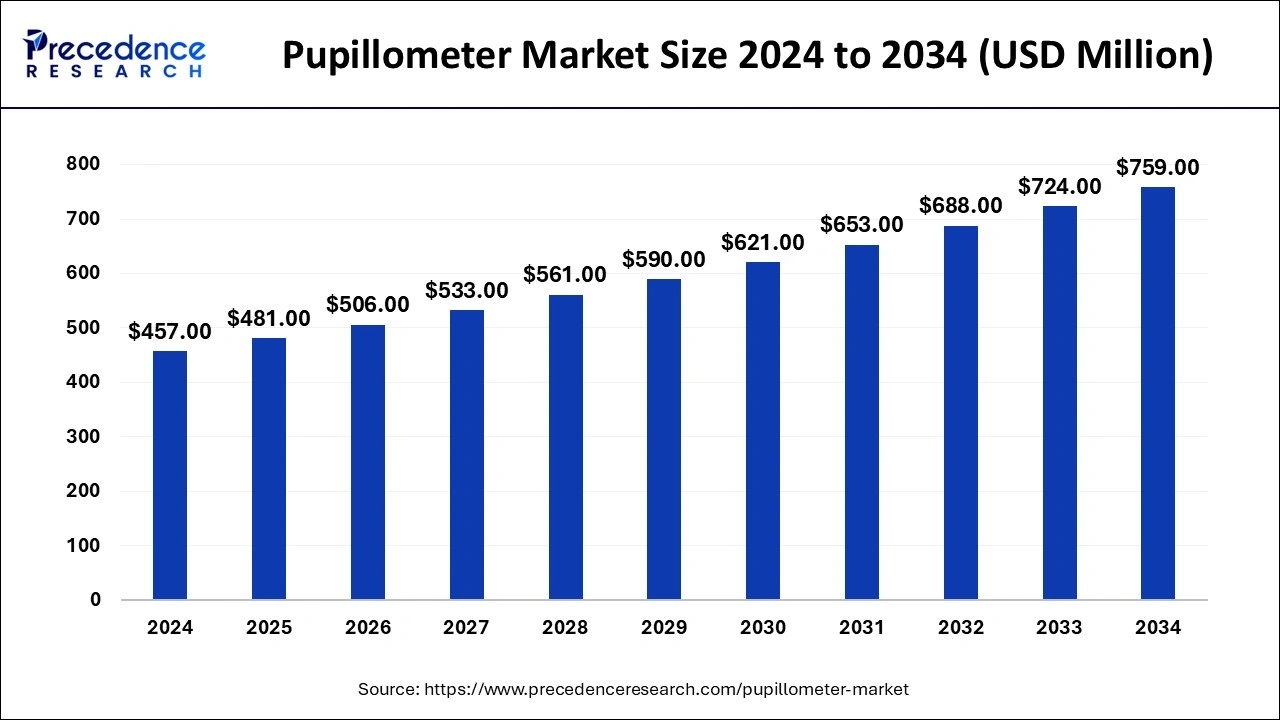
The global pupillometer market size was estimated at USD 481 million in 2025 and is predicted to increase from USD 506 million in 2026 to approximately USD 795 million by 2035, expanding at a CAGR of 5.15% from 2026 to 2035.
Pupillometer Market Key Takeaways
- The global pupillometer market was valued at USD 481 million in 2025.
- It is projected to reach USD 795 million by 2035.
- The pupillometer market is expected to grow at a CAGR of 5.15% from 2026 to 2035.
- North America dominated the pupillometer market in 2025 with a market share of 30%.
- Asia pacific will be the fastest growing region during the forecast period.
- By mobility, the table-top pupillometers segment reported for the largest share of 56% in 2025.
- By type, the video segment has accounted market share of 57% in 2025.
- By application, the ophthalmology segment has generated 50% market share in 2025.
- By end-use, the hospitals segment dominated the pupillometer market in 2025 and accounted for 50% market share.
Market Overview
Pupillometer is a device that is used to measure the size of a human pupil of the eye. This measurement of the pupillary dilation of the eye is called pupillometry. Using techniques like magnetic resonance imaging (MRI) and computed tomography (CT scan), there has been found a correlation between pupil dilation and brain activity. Hence pupillometry becomes useful when studying cognition. Studies show that people who suffer from mental health issues, anxiety, depression, or Parkinson's, show abnormal pupil activity.
Pupillometer Market Growth Factors
- Technological advancements in healthcare industry.
- Increase in the prevalence of mental and neurological disorders.
- Rising advancements in the product development also acts as a growth factor for the pupillometer market.
- The rising investments by private entities promote the product development.
- Governments' support for the production of medical devices play a significant role in the market's expansion.
Market Scope
| Report Coverage | Details |
| Growth Rate from 2026 to 2035 | CAGR of 5.15% |
| Market Size in 2025 | USD 481 Million |
| Market Size by 2035 | USD 795 Million |
| Largest Market | North America |
| Base Year | 2025 |
| Forecast Period | 2026 to 2035 |
| Segments Covered | By Mobility, By Type, By Application, and By End-use |
| Regions Covered | North America, Europe, Asia-Pacific, Latin America and Middle East & Africa |
Market Dynamics
Driver
Technological advancements
The growth in pupillometer market is driven by several factors. A major factor is technological advancements in the healthcare industry. People have become more aware of their ocular health, and many don't compromise in this case. Mental health is also being taken seriously, and there are several neurological disorders like brain injuries or strokes, that are prevalent.
A correlation between pupil dilation and mental health further drives the growth of pupillometer market. There is a growth in elderly population, and as a person ages, the eye health deteriorates too. Geriatric people suffer with diseases like glaucoma, or hypermetropia. In such cases, it becomes important to have high quality instruments while addressing the issues.
Restraint
Expensive devices
Although the pupillometer is having a lot of advantages and is booming in the market, there are some factors that restrain its growth. These devices are expensive, and the hospitals that don't have enough funds, can't afford them. Hence steps can be taken to produce pupillometers with affordable prices and high quality. Because of not having a proper knowledge about pupillometers, they can't be used to their maximum potential. Hence it also becomes important to train the hospital staff properly in order to ensure that the devices are used in the best way possible. Technology is constantly evolving, and when an alternative is found to pupillometers, they will be replaced by that technology. Once manufactured, they also need to be tested for their accuracy and reliability.
Opportunity
Rising research and development activities
A major improvement will happen in the healthcare industry as the pupillometer market grows. As pupillometer is not only useful for diagnostics in ocular health but also helpful while diagnosing mental health issues, this will promote research in the field of cognitive studies as well.
Old age leads to several eye diseases like cataract or glaucoma, leading to poor vision. Governments across the globe are promoting awareness on ocular health by introducing policies. As social media has gained popularity, several teenagers have increased their screen times. Additionally, more people have entered corporate and IT jobs, which makes them to spend more time working on the laptops. This results in poor eyesight, and pupillometer manufacturers can open opportunities for opticians and ophthalmologists too.
Segment Insights
Mobility Insights
The table-top pupillometers segment reported for the largest share of the pupillometer market in 2025. Pupillometers are not just used singly but are often integrated with other devices like corneal topographers, pachhymeters, keratometers. Integrating it with other devices provides a proper idea during diagnostics. Table-top pupillometers are more robust and have more features. Hence, they are found in hospitals more commonly. Doctors get an overall view of the problems a patient has and can take proper steps towards regulating their eye health. Advancements have happened in the table-top pupillometers, and industries are also committed towards improving the quality of patient care.
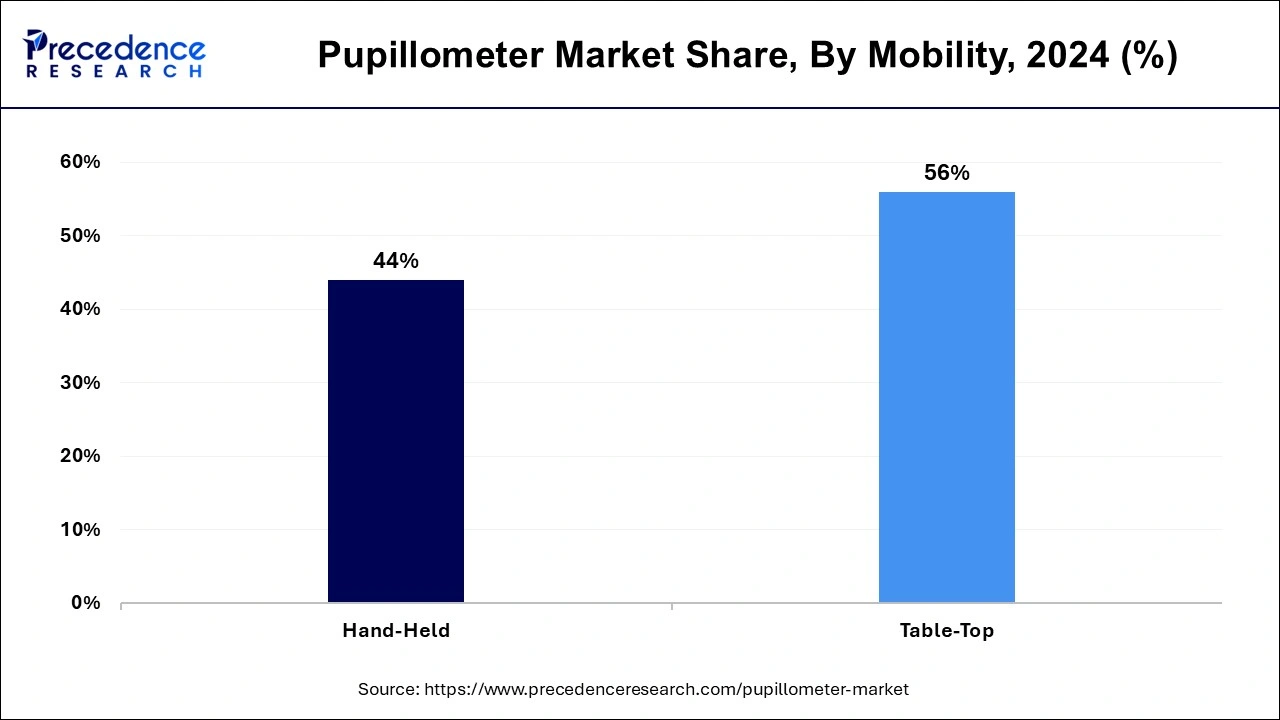
The hand-held pupillometers segment will grow at the fastest rate during the forecast period. They are being widely adopted because one can capture accurate images of the pupil, with a high efficiency. This can be useful when diagnosing cognitive disorders. Hand-held pupillometers are portable, and this is a factor contributing to the growth of pupillometers. The hand-held pupillometers will take the pupillometer market in a positive direction.
Type Insights
The video segment held the largest share of the pupillometer market in 2025. The segment is observed to continue the growth at a significant rate during the forecast period. The full process of pupil dilation is recorded by a video pupillometer. For recording videos of high quality, the video pupillometers have a processor, an infrared camera, LED source, and optics of high quality. Videos are recorded at different times, and doctors can track the pupil size changes with time.
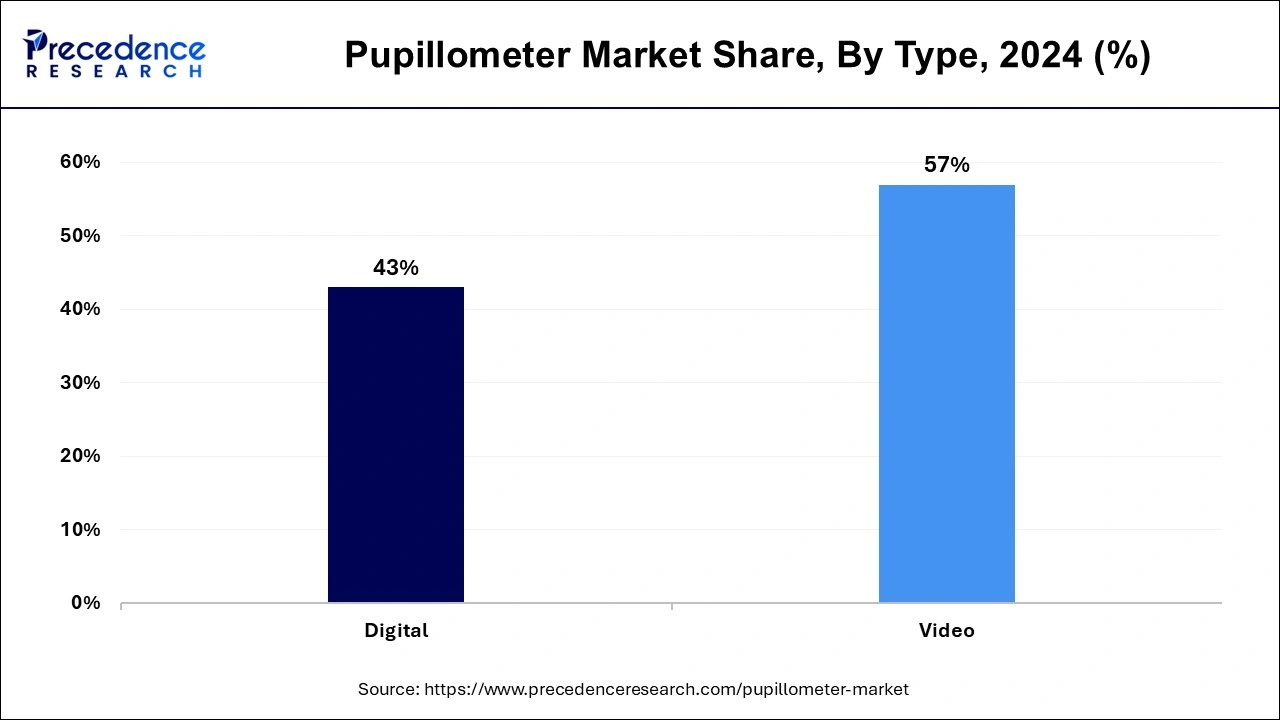
The digital segment will be the fastest growing segment in the forecast period in the pupillometer market. Digital pupillometers offer a high accuracy while measuring pupil size. Multiple frames of the pupil are recorded per second and an average of these measurements is taken to get an idea about the pupil dilation. Because digital pupillometers can record all variations in pupillary dilation, they are extremely useful while studying neurological disorders.
Application Insights
The ophthalmology segment was dominant in the market during 2025 and accounted for the largest share in the pupillometer market. A primary reason behind this was increase in the pupillary dilation study in order to diagnose retinal diseases and studying the visual system. Retinal damage can be detected using pupillometers. Retina is an extremely sensitive part of the eye, that comprises of rod and cone cells, that are useful for the image formation and processing. The rising rate of LASIK surgery has promoted the application of pupillometer, that helps in understanding the risk, and then decide whether or not to do it.
the oncology segment will be the fastest growing segment during the forecast period. Pupillometry is rising in the therapeutics for oncology. As visual signals are further relayed to the brain, there is a connection between the eyes and the brain. Pupillometry can be done to study brain tumours. The size of pupil and its behaviour also serves as indicator for brain trauma or strokes. Hence, more studies including the use pupillometry in oncology will take the pupilometer market in a positive direction.
End-user Insights
The hospitals segment dominated the pupillometer market and accounted for the largest share of revenue. Pupillometers are being used in the critical care units, which will show a further growth in the segment. Pupillometers are primarily used in medical settings for assessing neurological function, especially in critical care situations such as traumatic brain injury, stroke, or post-surgical monitoring. Hospitals are the primary locations where such patients are treated, making them the natural clientele for pupillometer usage.
Hospitals typically have more advanced medical equipment and resources compared to other healthcare settings. Pupillometers often require high precision and reliability, which hospitals can afford and prioritize in their budgets.
The eye clinics segment will show the fastest growth rate during the forecast period. In several eye clinics, pupillometry is included as a major diagnostic procedure. Ophthalmic clinics use pupillometry not just for diagnostics, but also for prevention and control. In order to avoid post-surgery problems in vision, pupillometry is useful. With the help of pupillometry, we can determine which type of surgery or laser treatment can be useful for the eye.
Regional Insights
What is the U.S. Pupillometer Market Size?
The U.S. pupillometer market size was estimated at USD 108.20 million in 2025 and is projected to surpass around USD 184.02 million by 2035 at a CAGR of 5.45% from 2026 to 2035.
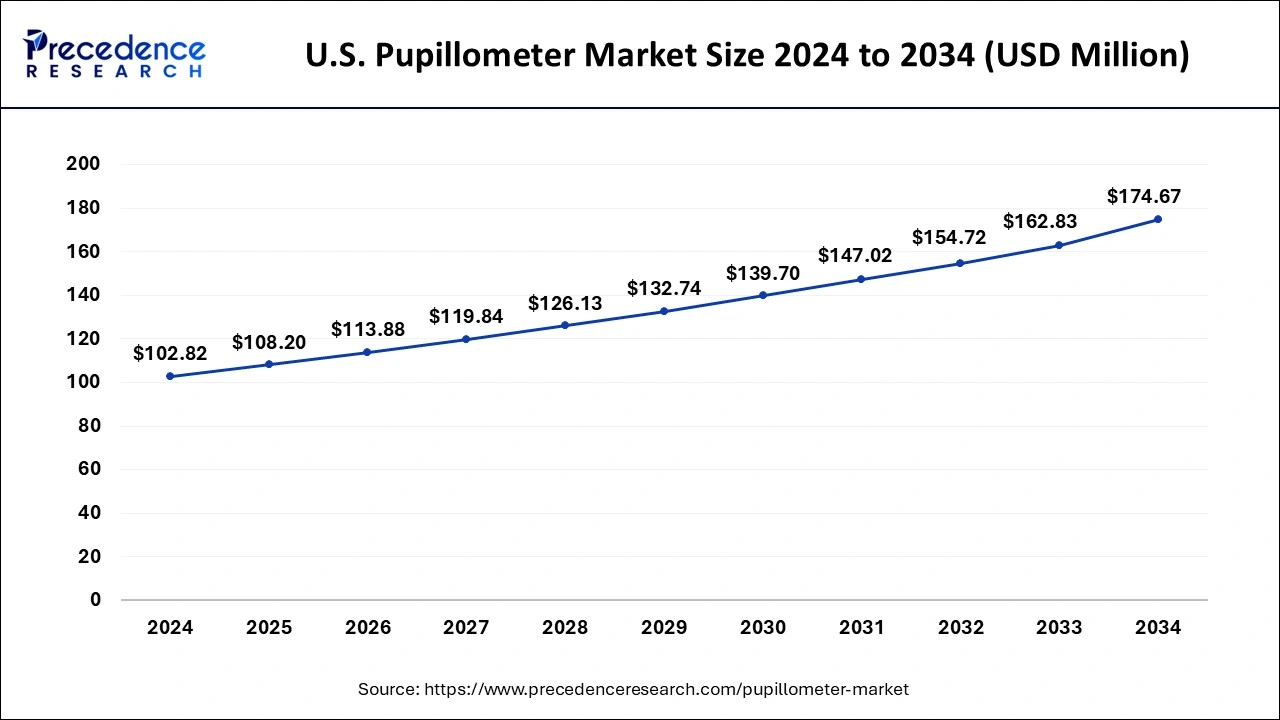
North America accounted for a large market share in the pupillometer market for the year 2025, because of a large population suffering from neurological disorders and eye health issues. Pupillometry is widespread in United States. US is a base for several market leaders in the pupillometry market, like the NeurOptics, which designs high quality pupillometers. North America is a hub for technological innovation, including in the healthcare sector. Many leading medical device manufacturers and innovators are based in North America, continually developing and refining pupillometry technology. This technological edge often gives North American companies a competitive advantage in the global market.
North America is home to numerous research institutions, universities, and medical schools conducting research in various medical fields, including ophthalmology and neurology. This research often leads to the development of new pupillometry techniques and applications, further driving market growth.
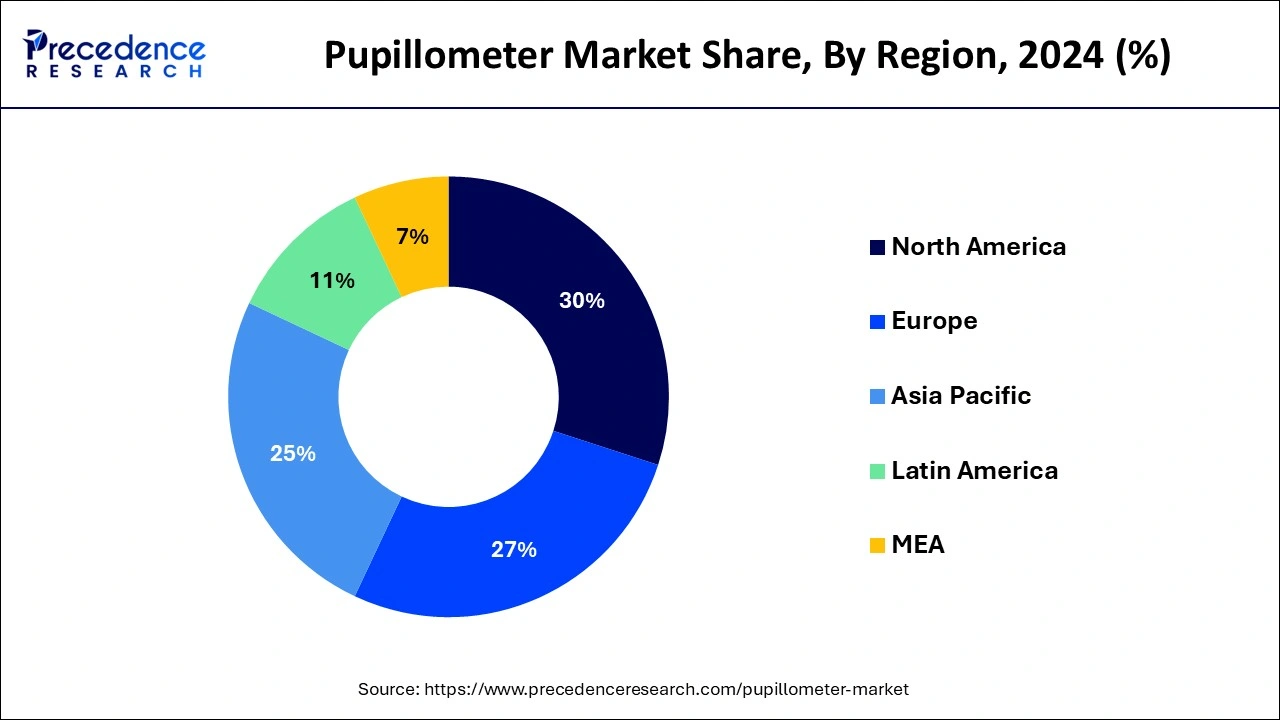
Asia Pacific will be the fastest growing region during the forecast period, and Japan is the fastest growing marketplace in the Asia Pacific pupillometer market. An increased number of online retailers and distributors have entered the market. Pupillometer market is growing in India because of increased prevalence of neurological disorders. India is a home for an increased ageing population. Not only the ageing population, but also the middle-aged population is seen to be suffering from stroke, epilepsy, migraines, etc.
Many governments in the APAC region have launched initiatives to improve healthcare access and quality. This includes policies to enhance medical research, incentivize healthcare investments, and subsidize medical equipment procurement. Such supportive measures create a conducive environment for the adoption of pupillometers and other medical devices.
Europe: Advancing Neurodiagnostic Precision
Europe demonstrates consistent pupilometer market growth driven by significant advances in critical care infrastructure, standardization of neurological monitoring protocols, and an increasing number of geriatric patients who are at-risk for experiencing a stroke or having a degenerative neurological disease. Advances in regulations, along with the digitization of hospitals and procedures, are supporting the adoption of objective pupil assessment technology.
Germany has a very strong hospital infrastructure and extensive use of advanced neuro-monitoring systems. The ongoing modernization of ICUs continues to build demand for digital pupillometers.
Latin America: Growing Critical Care Infrastructure
Latin America is slowly rolling out these technologies as well, due to the growth of new trauma care facilities, an improvement in emergency response services, and an increase in public awareness of neurological assessment technology. Upgrades of urban hospitals are responsible for much of the total penetration of this market.
With the increase in the amount of trauma cases in Brazil and the increase in private investment in hospital facilities there, there be increased demand for advanced diagnostic tools and pupillometers.
Middle East & Africa (MEA): Enhancing Acute Care Capabilities
MEA has emerging demand resulting from the establishment of tertiary hospitals, the opening of new trauma centers, and government programs that support the modernization of the health care delivery system. The use of neurological assessments on patients who are in ICUs (Intensive Care Units) is expected to continue to gain importance in major metropolitan areas.
Saudi Arabia is continuing to develop their health care infrastructure and is developing several new ICU facilities. The growth in the focus of advanced neurological assessment has led to increased adoption of pupillometers.
Value Chain Analysis of the Pupillometer Market
- R&D: Ongoing development of infrared lens technology and advanced algorithms for pupil tracking to continue to improve the quality of results obtained from these devices, which helps to improve the accuracy with which medical professionals use them to diagnose patients.
Key Players: NeurOptics, NPi Medical, and Essilor Instruments. - Clinical Trials and Regulatory Approval: The completion of several clinical studies to validate the efficacy of these devices as diagnostic tools for traumatic brain injuries and for assessing stroke is supporting the regulatory approvals that are being granted by the FDA and CE to ensure compliance with clinical standards and hospital procurement policies.
Key Players: NeurOptics, HAAG-STREIT Group, and Johnson & Johnson Vision. - Distribution to Hospitals and Pharmacies: Strategic partnerships between hospital purchasing networks, group purchasing organizations (GPOs), neurological clinics, and critical care centers, to make devices as accessible as possible, with training and service provided by distributors. Product distribution is supported by training provided by authorized distributors and follow-up services.
Key Players: NeurOptics, US Ophthalmic, and HAAG-STREIT Group.
Pupillometer Market Companies
- NeurOptics, Inc.
- Reichert Technologies
- Johnson & Johnson Vision
- Brightlamp, Inc.
- Adaptica
- Essilor Instruments USA
- HAAG-STREIT GROUP
- Luneau Technology Group
- NIDEK CO., LTD.
- SCHWIND eye-tech-solutions
- US Ophthalmic
- Konan Medical
Recent Developments
- In July 2021, NeurOptics launched NPi-300, an automated Pupillometer. It was made available in total 15 countries, that included Italy, Germany, UK and France. This pupillometer helps diagnose brain injury, and guide treatment. With the help of it, one can also diagnose traumatic brain injuries, strokes, and seizures. The device is durable, has a convenient design, upgraded keypad, and a barcode scanner. It has a large touchscreen display which shows the results such that they can be read easily.
Segments Covered in the Report
By Mobility
- Table-top
- Hand-held
By Type
- Video
- Digital
By Application
- Ophthalmology
- Neurology
- Oncology
- Others
By End-use
- Hospitals
- Eye Clinics
- Others
By Geography
- North America
- Europe
- Asia-Pacific
- Latin America
- Middle East and Africa
For inquiries regarding discounts, bulk purchases, or customization requests, please contact us at sales@precedenceresearch.com
Frequently Asked Questions
Tags





Ask For Sample
No cookie-cutter, only authentic analysis – take the 1st step to become a Precedence Research client
 Get a Sample




 sales@precedenceresearch.com
 Schedule a Meeting
