



Smart Bandages Market Size, Key Companies, Company Market Share, Patient Volume, Treatment Adoption Rates, Pricing Analysis, Regulatory Landscape, Competitive Positioning, and Demand Forecast
Deepa Pandey, a Healthcare Industry Expert, highlights that the smart bandages market has reached USD 1,100.72 million in 2026 and is on track to reach USD 2,532.93 million by 2035, advancing at a CAGR of 9.66%. Key smart bandages market companies shaping the market include Acelity L.P. Inc., Baxter International Inc., BioMedGPS while major growth segments span product, application, distribution channel, region.
Source: https://www.precedenceresearch.com/smart-bandages-market
 Get a Sample
 Table Of Content


What is the Smart Bandages Market Size?
The global smart bandages market size is calculated at USD 1,100.72 million in 2026 to approximately USD 2,532.93 million by 2035, expanding at a CAGR of 9.66% from 2026 to 2035.
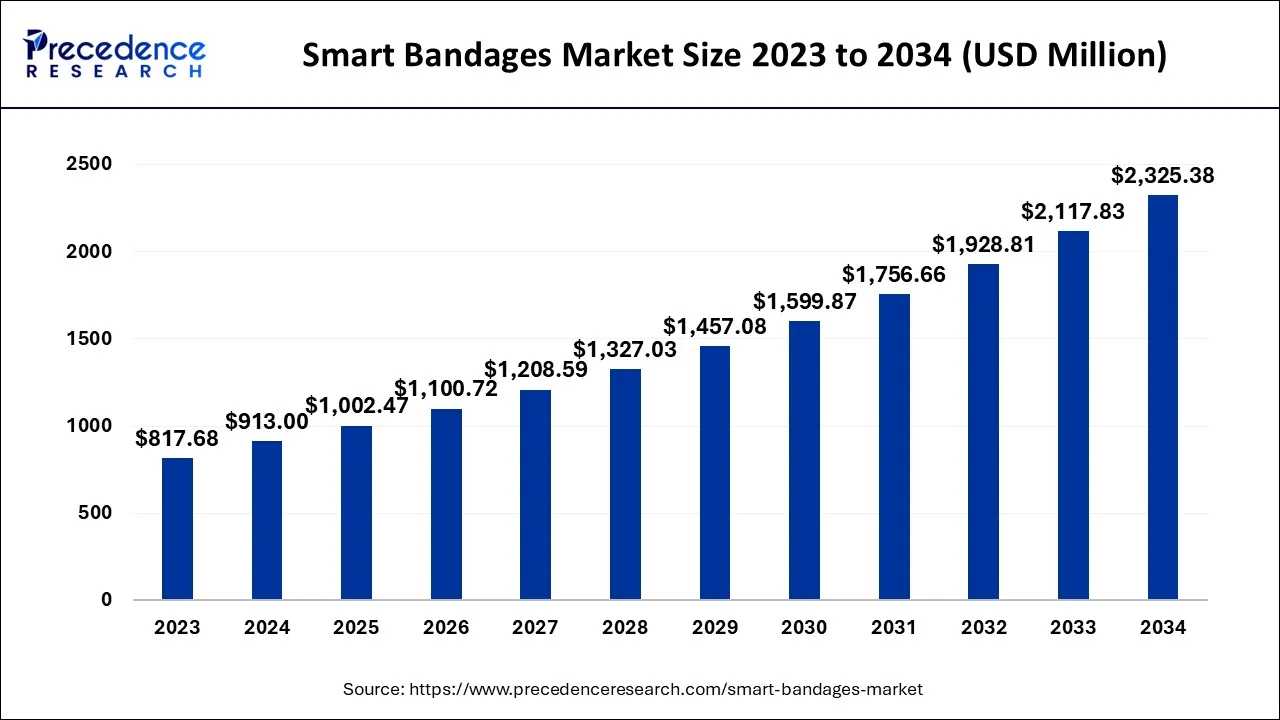
Smart Bandages Market Key Takeaways
- By Product, the graphene segment will hold the dominating position during the forecast period.
- By Application, Chronic skin wounds from burns held the highest market share in terms of revenue in 2026.
- By Distribution Channel, retail pharmacies segment is expected to hold a significant market share in the analyzed period.
- By Region, North America is expected to maintain its dominance during the forecast period.
What are Smart Bandages?
The term smart wound bandage generally refers to the medical industry for wound care management. Wounds can result from burns, accidents, or chronic conditions. Smart bandage dressings used microprocessors, microelectronic sensors, and wireless technology to increase wound diagnosis and therapies.
The smart bandage may treat the wound more clearly, effectively, and at a low cost. The technology of smart bandages was developed especially for long-duration wounds like burns, diabetes, and accidents. These are some long-lasting wounds that can create various other issues for the human body. The smart bandage is a quick and effective alternative to the traditional bandage and will expect market demand in the forecast period.
Grapheal is a Medtech startup, which deals with embedded and wearable biosensors, digital design, and minimalistic components. Grapheal raised 1.9Mn euros in funding on Feb 10, 2021, from the seed round.
How is AI contributing to the Smart Bandages Industry?
The use of artificial intelligence in smart bandages allows for the continuous monitoring of wounds, the interpretation of complex biosensor data, and the early detection of infections or healing problems. Besides this, AI literature helps in the decision-making process of treatments, provides automated therapeutic responses that are automated, gives predictive healing insights that are predictive, allows access to the clinician from a distance, and increases the efficiency of the material design. All these changes collectively turn the normal dressings into smart, self-governing systems for wound care.
Smart Bandages Market Growth Factors
The smart bandage is the smart alternative for the traditional bandage market. Which is more effective and less time-consuming than the traditional one. Market growth is attributed in part to the prevalence of injuries and chronic conditions that can lead to wounds requiring ongoing care. Increasing technological advancement in the medical industry is one of the major impacting growth factors for the smart bandage market. The increasing geriatric population in the world and their need for the healthcare industry would be the positively impacted factor for the smart bandage market.
High blood pressure, obesity, diabetes, ulcer, and other age-related issues frequently induce hard wounds and their prevalence worldwide. However, the smart bandage used technology to cure the tissue restoration process. Smart bandages use several technologies like sensors and microprocessors to detect the physical and chemical elements on the body that heal wounds.
The smart bandage market revolutionizes the market with the latest technological advancement in wound care management and increasing research and development programs in the market is expected to boost the demand of the growth in the smart bandages market.
Market Outlook
- Industry Growth Overview: The market is growing very fast, driven by technological innovations and a greater need for effective solutions for chronic wounds.
- Sustainability Trends: The focus of development has been turned to biodegradable materials and eco-friendly smart products in the wound care sector.
- Global Expansion: The adoption rate is increasing in both developed and developing economies, with robust momentum in the healthcare systems of the former and swift uptake in the latter.
- Major Investors: The main players are Medtronic, 3M, Smith & Nephew, Johnson & Johnson, ConvaTec, Grapheal, and Mölnlycke.
Market Dynamics
Driver
Growing Adoption of Wound-Monitoring Technologies
The traditional methods for curing chronic wounds are time-consuming yet less effective, sometimes such methods are expensive too. For the healing process of wounds, maintaining the moisture in the wounds is very important. In traditional bandages, there is no alternative to measure the healing process until it is removed, and it may remove the moisture and stop the healing process. The smart bandage contains a microprocessor and several sensors to detect the healing process and maintain moisture in the wound without removing it. The sensors give messages to the wireless devices that are connected to them and analyze the wound-healing process. Technology can be used by doctors to monitor the wound and cure it successfully.
Restraint
Risk of infection
Although there are many benefits associated with smart bandages it can monitor the healing process of the wound without removing it. But there are some limitations also there such as the permeability being too high so there are some chances of wound dehydration. Microbes are easily allowed to enter and have chances of having the infection again. These are some of the market restraining factors of the smart bandage market. In addition, maintaining good wound hygiene is crucial; to reduce the risk of infection, which requires regular cleaning of the wound, appropriate application of antiseptic solutions and covering the wounds. Failed maintenance of wounds can result in serious infection. Such chances of infections limit the adoption of smart bandages by restraining the market's growth.
Opportunity
Theragnostic technologies emerge as future opportunities for the market
Standard bandage materials are designed to prevent contamination while also creating a moist environment that is conducive to wound healing. These tasks and a whole lot more might be carried out by a "smart" bandage. Various bandage systems with integrated sensors that can wirelessly relay useful wound characteristics are now the subject of research. These devices have the ability to independently check on both the dressing and the state of the wound.
This data will enable more rapid and individualized wound care therapy by providing doctors with a quantitative, real-time perspective of the wound environment. Such smart bandages with advanced technologies are expected to open a plethora of opportunities for the market players to grow.
Segment Insights
Product Insights
The graphene segment had the largest market share in the smart bandage market in 2026. A smart bandage material based on graphene oxide has been created by researchers from the Institute of Advanced Studies in Science and Technology (IASST) in India. It has antibacterial and improved wound-healing capabilities. According to reports, nanoparticles and antimicrobials may be loaded onto cotton patches to provide them with wound-healing qualities. Due to graphene oxide's nanosize, a significant amount of medication may be put into the patch. The strength of the patch is also increased by graphene oxide, particularly when it is moist. While graphene oxide does not possess antimicrobial properties.
Synthetic Fiber is expected to grow in the smart bandage market in the forecast period. Synthetic Fibers have a lot of potential as wound-healing materials since they share morphological traits with the natural extracellular matrix. The process of electrospinning, which is the most popular, may be used to create these very thin strands.
Application Insights
The chronic skin wound from burns dominates the market in the analyzed period. The application segment consists of chronic skin wounds from burns, and chronic skin wounds from others. Patients who suffer from chronic wounds may undergo great misery and incapacity as a result of their condition. It can be difficult to heal these wounds, and several things, including temperature, glucose levels, and acidity, can have an impact on how well they heal. However, moisture levels are one of the most crucial. The tissue can become dehydrated if it is too dry if it is too wet, it can get white and wrinkled, as it occurs in the bath. Both of these circumstances impede the healing process.
Chronic skin wound form diabetes expected to increase its market share in the smart bandages market in forecast period. Diabetes chronic wounds, which affect 30.3 million Americans with diabetes mellitus, are a major issue due to their severity and lack of healing. A higher frequency of lower leg amputations results from these wounds because of peripheral artery disorders, neuropathy, and infection. Smart bandages are useful for the treatment on the infectious area cause by the diabetes wound it maintain the moisture level in the wound for better treatment and helps doctors to monitor the progress in the wound treatment. This will result in a higher market demand for the smart bandages market.
Distribution Channel Insights
A distribution channel is further divided into several segments like retail pharmacies, hospital pharmacies, clinics, and trauma centers. Retail pharmacies held the highest market share in 2026. The growth segment is increasing due to the increasing adoption of technologies in healthcare. The rising adoption of the latest technological innovations in the healthcare sector by generation will expect the demand of the segment in the smart bandages market.
Hospital pharmacies and clinics had a significant market share in 2026. The rising cases of chronic diseases and accidents in hospitals and clinics demand the smart bandages market.
Regional Insights
North America Smart Bandages Market
North America dominated the global smart bandages market in 2026, the region will sustain its dominance during the forecast period. The growth of the market in the region is due to the rising accident cases that would result in the higher demand of the market. The technological adoption in the pharmaceutical industry and the increasing adoption of the newest technologies from users will drive the smart bandages market in the forecast period.
U.S. Smart Bandages Market Trends:
Smart bandage sales in North America are led by the U.S. owing to a high number of patients suffering from chronic wounds, solid research ecosystems, and favorable regulations. Value-based healthcare, digital health implementation, and remote patient monitoring are some of the factors that really drive the creativity, commercialization, and almost instant acceptance of these products through hospitals and home care settings.
Canada Smart Bandages Market Trends
In North America, Canada is expected to grow at the fastest CAGR over the forecast period. The growth of the country can be attributed to the increasing prevalence of chronic wounds and a surge in the elderly population. Also, supportive regulatory policies with substantial investment in healthcare, such as emphasis on value-based care, can impact positive market growth.
What Are the Driving Factors of The Smart Bandages Smart Bandages Market in Europe?
Europe is the second most significant market, with governments investing public health funds, an ageing population, and an increasing focus on long-term disease treatment as the main factors responsible for the adoption. The adoption of advanced technologies in monitoring wounds is facilitated by harmonized regulations for medical devices, research collaboration, and the focus on the safety of the patients.
Germany Smart Bandages Market Trends:
Germany is one of the largest medical markets in Europe, with very good healthcare facilities and a strong production of medical devices. Clinical research, precision medicine, and managing geriatric conditions often keep the demand up for smart bandages that provide reliable monitoring, data-driven treatments, and better patient outcomes.
Asia Pacific Smart Bandages Market
China Smart Bandages Market Trends
The market for China is positively influenced by an ever-increasing elderly population and a higher chronic disease burden, along with government-backed digital healthcare programs. Moreover, the meteoric growth of telemedicine, hospital modernization, and a great deal of interest in scaling up technology-powered wound care units are some of the factors that will propel the market.
India Smart Bandages Market Trends
In the Asia Pacific, India is expected to grow at a fast CAGR over the forecast period. The growth of the country can be credited to the increasing prevalence of chronic conditions like diabetes, coupled with the surge in the geriatric population. Moreover, the ongoing transitions towards home-based care and the surge in telemedicine platforms can contribute to market growth soon.
Smart Bandages Market-Value Chain Analysis
- R&D (Research and Development): Sensor-integrated bandage innovation with electronics, biomaterials, and drug delivery for proactive wound monitoring.
Key Players: Medtronic, Smith & Nephew - Clinical Trials and Regulatory Approvals: The process of proving the safety and efficacy of the product to the regulatory authorities has been done to obtain entry to the commercial healthcare market.
Key Players: IQVIA, Parexel, FDA, EMA - Formulation and Final Dosage Preparation: Attachment of the therapeutic agents to the bandage matrices that have controlled, responsive release mechanisms.
Key players: Merck, GSK, Sanofi - Packaging and Serialization: Preparation for compliance with the regulated healthcare supply chains through sterilization, labeling, and traceability.
Key players: WestRock Company, Schreiner MediPharm, and AdhereTech - Distribution to Hospitals, Pharmacies of Smart Bandages: Effective management of the finished products to providers and patients through inventory management and logistics.
Key Players: McKesson, Cardinal Health, AmerisourceBergen
Top Companies in the Smart Bandages Market & Their Offerings:
- Acelity L.P. Inc.: A company that focuses on advanced wound therapies, such as negative pressure systems, which is the leading skill area for the smart bandage development.
- Baxter International Inc: Delivers a wide assortment of healthcare solutions that encompass acute and home care needs, and the wound management technologies and integrated care platforms are among them.
- BioMedGPS, LLC: The company that markets its services as providing not only detailed market intelligence but also powerful and strategic analytical insights supporting the decision-making process in the smart wound care sector.
- Coloplast A/S: Develops specialized dressings for intimate healthcare and chronic wound management.
- ConvaTec Group PLC: Focuses on advanced dressings and digital health applications for infection management.
- Epicore Biosystems, Inc.: Creates flexible microfluidic sensors that track health metrics through skin-integrated patches.
- Ethicon Inc.: A Johnson & Johnson subsidiary specializing in surgical sutures and advanced wound closure technology.
- Exci Inc.: No specific commercial smart bandage products are currently identified for this entity.
Fleming Medical Ltd: Supplies traditional and advanced first aid and wound care products globally. - Fleming Medical Ltd: Supplies traditional and advanced first aid and wound care products globally.
- Integra LifeSciences Corporation: Provides regenerative technologies and high-tech tissue repair solutions for complex wounds.
- Ionmed Inc.: Primarily known for developing plasma-based technology for wound healing and tissue sealing.
- Lohmann & Rauscher: Produces a wide variety of medical dressings and is cited as a key player in smart wound market growth.
Recent Developments
- In September 2025, Eli Lilly launched TuneLab, a federated AI platform granting biotech firms access to models based on over $1 billion of its internal R&D data. The platform, already attracting early partners, aims to enhance drug discovery. Analysts predict AI spending in this sector could reach $30–40 billion by 2040.
- In July 2025, BITS Pilani Hyderabad researchers created a smart bandage that eliminates infection-causing bacteria and visually indicates infections, eliminating the need for traditional antibiotics. The study was authored by Vaishnavi N, Ramakrishnan Ganesan, and Jayati Ray Dutta.
Smart Bandages Market Segments
By Product
- Graphene
- Synthetic Fiber
By Application
- Chronic Skin Wounds from Burns
- Chronic Skin Wounds from Diabetes
- Chronic Skin Wounds from Others
By Distribution Channel
- Retail Pharmacies
- Hospital Pharmacies
- Clinics
- Trauma Centers
By Region
- North America
- Europe
- Asia-Pacific
- Latin America
- Middle East and Africa
For inquiries regarding discounts, bulk purchases, or customization requests, please contact us at sales@precedenceresearch.com
Frequently Asked Questions
Tags





Ask For Sample
No cookie-cutter, only authentic analysis – take the 1st step to become a Precedence Research client
 Get a Sample
.webp)



 sales@precedenceresearch.com
 Schedule a Meeting
