



Smart Mobility Market Size, Key Companies, Company Market Share, User Adoption, Technology Deployment, Revenue Growth, Competitive Positioning, and Demand Forecast
Smart Mobility Market (By Element: Ride sharing, Car sharing, Bike commuting; By Solutions: Management of traffic, Management of parking, Management of mobility, Others; By Technology: 3G and 4G, Wi-Fi, GPS, RFID, Embedded system, Others; By End User: Civil work, Business development, Academics, Municipal sectors, Others) - Global Industry Analysis, Size, Trends, Leading Companies, Regional Outlook, and Forecast 2026 to 2035
Source: https://www.precedenceresearch.com/smart-mobility-market
 Get a Sample
 Table Of Content


What is the Smart Mobility Market Size?
The global smart mobility market size is accounted at USD 116.92 billion in 2026 to approximately USD 578.05 billion by 2035, representing a CAGR of 19.47% from 2026 to 2035.
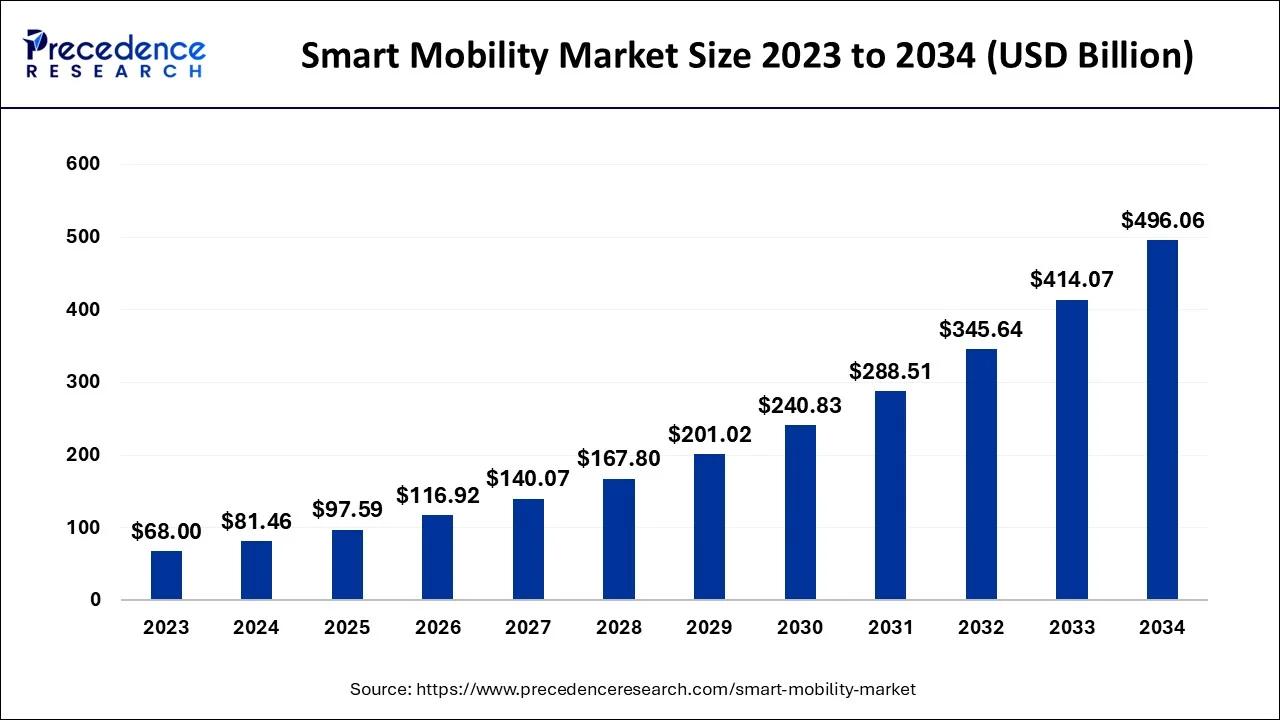
Smart Mobility Market Key Takeaways
- By solution, the traffic management segment contributed revenue share of around 31% in 2026. However, the parking management segment is predicted to reach at a notable CAGR from 2026 to 2035.
- By element, the ride sharing segment has had market share of over 36% in 2026. However, the car sharing segment is predicted to reach at strongest CAGR between 2026 to 2035.
- By technology, the ride sharing segment has garnered highest revenue share in 2026. However, the GPS segment is predicted to hit at a noteworthy CAGR from 2026 to 2035.
- By region, the North America region has garnered 40% market share in 2026. However, Asia-Pacific region is growing with a highest CAGR of 21% between 2026 to 2035.
What is Smart Mobility?
Smart mobility is generally explained as manner of transport. Which includes Mobility as a service, Mobility on demand, Car Sharing, ride sharing, bike commuting, autonomous transport, public transport, drones and many more. Improving of the new transportation technologies in the period of mobility. Increasing demand of the various ride sharing such as zip car, uber, Ola, zimride . Improved technologies and methods of transportation to gain the trust of customer with increased economic revenue and improve the experience with different modes of transport. Mobility of transportation with improved smart technology and increased demand for the advance technology with development of the smart city and reduced pollution which give raise to the market growth.
The continuous growth of the smart mobility and increased demand from the customers led to the increase incorporation of the business of smart mobility helped to boost the market high. The usage of car sharing, ride sharing and less use of personal individual vehicles and increased sharing of the cars which led to less emission of the pollutants from the vehicles which helped the smart mobility.
How is AI contributing to the Smart Mobility Industry?
AI is the functional heart of intelligent mobility systems, which decodes streaming data of cars, infrastructure, and customers. It facilitates autonomous driving control, traffic movement forecasting, traffic safety, energy efficiency, and demand-specific transit control. These will alleviate congestion, increase reliable transportation, safeguard passengers, and provide more flexible and cleaner transportation systems in cities.
Smart Mobility Market Growth Factors
Development of the transportation modes in to the modern changes in the transport industries. Smart mobility is rapidly growing the market rate. Usage of the digitalization mode to manage the mobility from one end to another end. Transportation can be done by two modes one by public transport and another can be done private car on rent which has thrived the market growth with increasing demand on the smart mobility. With the increasing number of population and urbanization and increased number of vehicles gave rise to traffic jams, parking problem an mobility and recently developed modes of transport helped to develop smart mobility across the regions with decreased number of accidents, zero emission of pollutants and safe driving all these reasons are the factors for rising the growth of the smart mobility with gaining technologies.
The smart mobility market is divided in to elements which includes car sharing, ride sharing, bike commuting. Another type is solution which includes management of traffic, management of parking, management of mobility and other end use. Type based on the technology. Which includes 3G, 4G Internet connection, RFID, GPS, and Wi-Fi. Increasing research and development to improve the smart mobility solutions and developing latest technologies such as mobility as a service, artificial intelligence are important services which help to boost the market growth during the forecast period.
The increasing population worldwide with the introduced smart mobility developments and rising demands from the customer for cab sharing, bike commuting, and ride sharing and increasing the solutions with environment awareness. Due to the outbreak of the pandemic covid-19 affected the smart mobility market. As by the rules and regulations imposed by the government such as lock down, social distancing which negatively affected the market. Stoppage of the transport there was no mobility of the transportation decreased the growth of the smart mobility.
Market Outlook
- Market Growth Overview: The smart mobility market is expected to grow significantly between 2026 and 2034, driven by rapid urbanization, technological advancements, and strong government initiatives aimed at sustainability and efficiency in transportation.
- Sustainability Trends: Sustainability trends involve electrification and zero-emission mandates, circular economy principles, sustainable urban planning and infrastructure, and mobility-as-a-service and shared transport.
- Major Investors: Major investors in the market include Toyota AI Ventures, Intel Capital, BMW I Ventures, and SoftBank Vision Fund.
- Startup Economy: The startup economy is focused on electrification and battery technology, autonomous vehicle (AV) technology and sensors, and connectivity and data management.
Market Dynamics
Key Market Drivers
- Improved transportation system- Increased modes of transportation includes bike sharing, car sharing are developed technology. Which shares the data between the individuals and vehicles. Which gives the route and direction and time required to reach the destination also gives an alert about the further traffic with the safe driving and decrease accidents.
- Role of Government for developing smart cities-Several government have imposed new development and technologies for the development of the smart mobility with the investments by several governments across the regions.
- Decreased rate of internet- Car sharing, ride sharing are between three domains such as customers, drivers and providers. Information is shared through smart phone of the cab which require internet connectivity for calculating the ride, time taken to reach the destination. Low Internet connection may reduce the growth of the market.
Key Market Challenges
- Internet Connectivity- Connectivity may be the challenge for the developing smart mobility. Low connectivity may led to disconnection between the individuals and the driver and decreased the market growth. Improved technologies developed with 3G, 4G, wife connection may led to improve the market.
- Investment funding's- Sufficient funding to be invested by the various countries for developing the smart mobility city with decreased emission of the fuels and developing the electric system based cars and increasing the market.
- Less Demand for smart mobility- Low demand for the smart mobility due lack of awareness among the individuals and lack of knowledge across various regions among the people about smart phones. Usage of the automotive learning which is cost saving and effective. Awareness to create among the people to increase the market.
- Electric Based system- Increased electric cars and bikes low emission, decreased sound pollution are another developed transport system. Power generation is utmost for the good productivity and efficiency.
Key Market Opportunities
Opportunities according to the increasing developed technology and the smart mobility. Give the increasing opportunities in the rising market. In increasing population and rising demands for the smart mobility led to the rapid urbanization and increased revenue of the market which thrived the market growth.
Digital transformation of the data through processing information over internet increased digitalization process. Cloud computing for sharing the information over internet connectivity wireless connections for sharing the information increased automation improved technologies in business development to gain the solutions and improve productivity.
Increased cyber security and improved technologies for identifying fraud calls enables with the use of wide connectivity of 5G with high seed and required information over internet.
Segment Insights
Element Insights
Based on product segmentation of smart mobility increased population with the rapid development of the urbanization. Increased demand with the developing technologies with the involvement of smart mobility and improved system in to the transportation system.
Cab sharing, bike sharing, ride sharing led to decreased usage of the personal vehicles less emission and decrease pollution. Improved the smart mobility market during the forecast period with the increased revenue market share.
Application Insights
Based on applications of smart mobility due to increased demand from the customers with the developed technologies and development used in sharing the vehicles with low cost which gives low emission of carbon dioxide gas and decrease the pollution in the environment also helps us to determine the traffic jam on the route, parking solution, technology development, and managing mobility help to boost the market growth during the forecast period. Usage at business level with improving technological solutions with fast speed and connectivity which improved productivity and efficiency.
End User Insights
Based on the end users of smart mobility likely to be used at business level due to improved technology with the great speed and sharing become easy through technological solutions and improved productivity and market rate. Alternatives for the transportation are electrical based systems cars, bikes with improved electrification system. For civil work, academics, municipal sectors and increasing research and development increased the market during the forecast period.
Regional Insights
The U.S. smart mobility market size is evaluated at USD 32.74 billion in 2026 and is predicted to be worth around USD 162.98 billion by 2035, rising at a CAGR of 19.55% from 2026 to 2035.
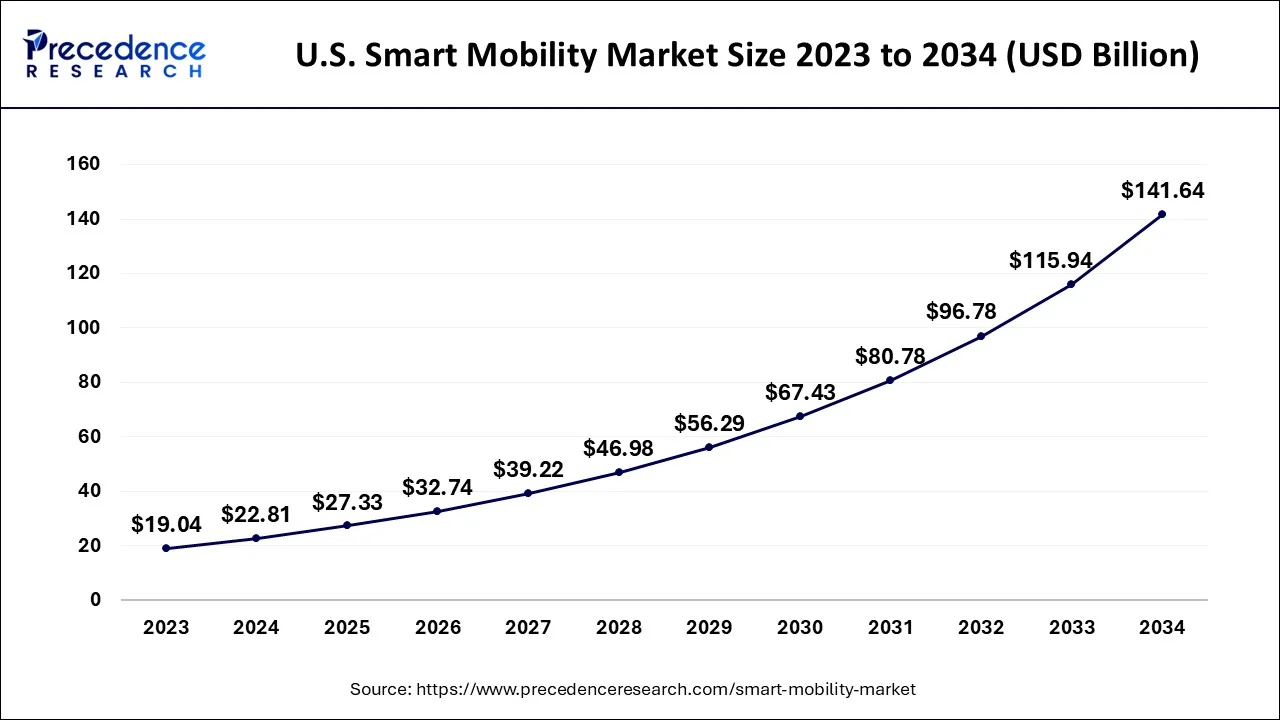
Based on the basis of geographical regions smart mobility have raised the market across various regions and increasing developments. Asia Pacific region to be the growing region with the increasing smart mobility market. North America also shown the significant growth of the smart mobility market. Europe, South America, Middle East and Africa also shown important growth in expanding the smart mobility market growth.
North America: U.S. Smart Mobility Market Trends
The U.S. market is experiencing significant growth, driven by the widespread adoption of electrified transport and integrated AI/IoT systems for enhanced efficiency and safety. The market is also seeing a shift towards flexible, shared MaaS models and the accelerated development of autonomous vehicle technology. Substantial federal funding and private investment are driving the creation of smarter, connected infrastructure across the nation.
How Is North America Leading in the Smart Mobility Market?
North America dominated the smart mobility market. North America is the pioneer of smart mobility innovation due to the early adoption of innovative automotive technology and linked infrastructure. The area focuses on the optimization of traffic with the help of AI in place of human operators, testing autonomous vehicles, and urban transportation planning with data at the center.
Well-developed electric vehicle infrastructure and effective cooperation between technology vendors and urban governments are more likely to implement it faster and enhance the safety, traffic flow, and overall efficiency of the transportation system.
How Is Asia-Pacific Performing in the Smart Mobility Market?
Asia-Pacific is expected to grow at the fastest rate during the forecast period, which is sustained by the intensive development of smart cities and the massive electric vehicle manufacturing. China is rooted in the regional adoption of integrated digital transport ecosystems, and India enhances urban mobility using city-level intelligent transport platforms. Powerful domestic technology platforms will make it possible to deploy AI rapidly in the areas of traffic, transit optimization, and connected mobility.
Asia Pacific: China Smart Mobility Market Trends
China's smart mobility market is rapidly evolving, primarily driven by strong government support and technological innovation. Key trends include the global leadership in NEV adoption and the development of extensive autonomous vehicle pilot programs. The market is further shaped by mature shared mobility services and a comprehensive approach to "vehicle-road-cloud integration" for a highly connected future.
How did the European Smart Mobility Market experience notable growth?
Europe's smart mobility growth is rooted in strong regulatory action and a clear push toward decarbonization via the EU Green Deal. Substantial investment from programs like the CEF is building out essential infrastructure across member states. The market's unique growth is defined by a focus on integrated MaaS platforms and the digitalization of urban data spaces.
Germany Smart Mobility Market Trends
Germany's smart mobility market is experiencing a rapid transition through a policy-led push for electrification and the development of progressive autonomous driving regulations. The nation is focused on implementing extensive MaaS platforms and leveraging data for sustainable urban planning. This dynamic growth is significantly bolstered by the robust R&D transformation within its powerful domestic automotive industry.
Value Chain Analysis of the Smart Mobility Market
- Infrastructure & Hardware Development:
This foundational stage involves designing and deploying the physical and digital infrastructure essential for smart mobility operations.
Key Players: Siemens AG, Cisco Systems, Inc., Thales Group, Huawei, Kapsch TrafficCom AG. - Vehicle Design and Manufacturing (Rolling Stock):
This stage focuses on the production of the actual mobility assets, from conventional and electric vehicles to micro-mobility options like e-bikes and e-scooters.
Key Players: Toyota Motor Corporation, Ford Motor Company, Daimler AG, Tesla, and Robert Bosch GmbH (components and embedded systems). - Technology Development and Analytics:
This stage is critical for processing data and generating actionable insights, encompassing big data management, AI and machine learning algorithms, GPS, and cloud platforms.
Key Players: IBM Corporation, TomTom International BV, Google/Waze (mapping/navigation data), Baidu (AI and mapping in China), Excelfore Corporation. - Service Provision and User Experience (UX) Platforms:
This stage delivers the integrated, user-facing solutions that consumers interact with daily, often through Mobility-as-a-Service (MaaS) platforms and apps.
Key Players: MaaS Global Oy (Jubail app), Lyft Inc., GrabTaxi Holdings Pte Ltd., Deutsche Bahn (mobility services), DiDi. - Operations and Fleet Management:
This stage involves the day-to-day management of smart mobility assets and services, ensuring efficiency, compliance, and reliability.
Key Players: Uber, Didi Chuxing (fleet operations/ride-hailing), Getaround (car-sharing), Populus (city management software), Swiftly (public transit software).
Smart Mobility Market Companies
- TOYOTA motor corporation: Toyota contributes to smart mobility through the manufacturing of a diverse range of vehicles, focusing heavily on electric and hydrogen fuel cell technology.
- Excelfore: Excelfore provides critical over-the-air (OTA) update and data insights platforms that keep connected and autonomous vehicles updated with the latest software and security patches.
- Cisco Systems, Inc.: Cisco plays a key role in providing the networking hardware and software infrastructure that enables vehicle-to-everything (V2X) communication within smart cities.
- Ford motor company: Ford is advancing smart mobility with significant investments in electrification and the development of connected vehicle platforms designed for both personal and commercial use.
- Siemens AG: Siemens provides comprehensive infrastructure solutions for smart mobility, including intelligent traffic management systems, railway electrification, and integrated smart grid technology for efficient EV charging networks.
- Robert Bosch GmbH: Bosch is a leading supplier of automotive components, sensors, and software that are essential for smart mobility functions like advanced driver-assistance systems (ADAS) and vehicle connectivity.
- Qualix Information System: Qualix specializes in software solutions for compliance and quality management within the automotive and aerospace industries. Their tools help ensure that the complex software systems used in smart mobility adhere to stringent safety and regulatory standards like ISO 26262.
- MaaS Global Oy: MaaS Global is a pioneer in the Mobility-as-a-Service (MaaS) space, offering the Whim app that integrates all urban transport options, public transit, ride-hailing, bike-sharing, and more, into a single subscription-based service.
- TomTom International N.V.: TomTom is a key provider of real-time mapping, navigation, and location technology services essential for smart mobility and autonomous driving applications.
- Innoviz Technologies: Innoviz develops high-performance, solid-state LiDAR sensors and perception software that are vital for enabling autonomous driving capabilities in smart vehicles.
Recent Developments
- In September 2025, Hyundai Motor Group launched the Next Urban Mobility Alliance (NUMA) to transform urban transportation with advanced mobility technologies. This public-private partnership addresses social and environmental challenges, promoting inclusive mobility innovation and smart city transitions, and was established during a ceremony at Grand Walkerhill Seoul. (Source: https://www.hyundai.com )
- In September 2025, Dubai's Roads and Transport Authority launched the Dubai Autonomous Zone, a 15-kilometer corridor for driverless vehicles and marine transport. The zone aims for 25% of daily trips to be autonomous by 2030, operational in early 2026. (Source: https://ddnews.gov.in )
Smart Mobility Market Segments Covered in the Report
By Element
- Ride sharing
- Car sharing
- Bike commuting
By Solutions
- Management of traffic
- Management of parking
- Management of mobility
- Others
By Technology
- 3G and 4G
- Wi-Fi
- GPS
- RFID
- Embedded system
- Others
By End User
- Civil work
- Business development
- Academics
- Municipal sectors
- Others
By Geography
- North America
- U.S.
- Canada
- Europe
- U.K.
- Germany
- France
- Asia-Pacific
- China
- India
- Japan
- South Korea
- Malaysia
- Philippines
- Latin America
- Brazil
- Rest of Latin America
- Middle East & Africa (MEA)
- GCC
- North Africa
- South Africa
- Rest of the Middle East & Africa
For inquiries regarding discounts, bulk purchases, or customization requests, please contact us at sales@precedenceresearch.com
Frequently Asked Questions
Tags





Ask For Sample
No cookie-cutter, only authentic analysis – take the 1st step to become a Precedence Research client
 Get a Sample




 sales@precedenceresearch.com
 Schedule a Meeting
