



Topical Drug Delivery Market Size, Key Companies, Company Production Capacity, Healthcare Infrastructure Growth, Product Utilization, Regulatory Compliance, Sales Analysis, and Investment Trends
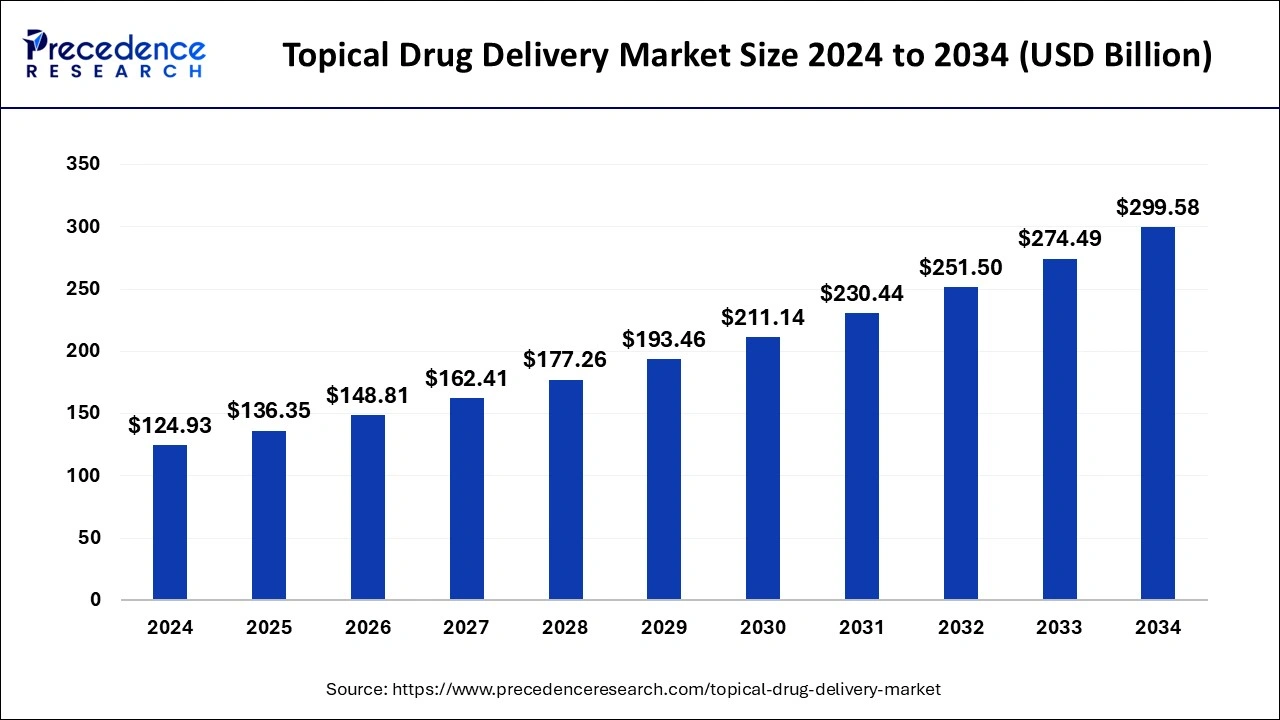
The global Topical Drug Delivery Market was valued at USD 148.81 billion in 2026 and is projected to reach approximately USD 324.67 billion by 2035, growing at a CAGR of 9.06% from 2026 to 2035. Market growth is driven by rising approvals, increasing self-administration, growing prevalence of skin disorders, and advances in topical formulations and nanocarrier technologies. North America held the largest market share in 2025, while Asia Pacific is expected to be the fastest-growing region. Semi-solid formulations dominated by product, dermal delivery led by route of administration, and retail pharmacies held the largest distribution share.
Source: https://www.precedenceresearch.com/topical-drug-delivery-market
 Get a Sample
 Table Of Content


What is Topical Drug Delivery Market Size?
The global topical drug delivery market accounted for USD 148.81 billion in 2026 and is expected to exceed around USD 324.67 billion by 2035, growing at a CAGR of 9.06% from 2026 to 2035. The global topical drug delivery market is attributed to the growing approvals and self-administration and increasing prevalence of targeted diseases during the forecast period.
Market Size and Forecast
- Market Size in 2025: USD 136.35 Billion
- Market Size in 2026: USD 148.81 Billion
- Forecasted Market Size by 2035: USD 324.67 Billion
- CAGR (2025-2034): 9.06%
- Largest Market in 2025: North America
- Fastest Growing Market: Asia Pacific
Market Overview
The topical drug delivery market encompasses the development, manufacturing, and distribution of topical dosage forms, such as creams, ointments, gels, lotions, and sprays. Topical dosage forms enable targeted drug delivery directly at the site of infection, bypassing the first-pass metabolism pathway. Topical drug delivery involves drug transport from a product on the skin to a local target site and then clearance by diffusion, metabolism, and dermal circulation to the rest of the body and deeper tissues.
How is AI changing the topical delivery market?
AI technology is significantly revolutionizing the topical drug delivery industry. AI technologies can predict behavior in various formulations and analyze vast datasets of chemical compounds. AI helps to enhance drug penetration, stability, and solubility through the skin. AI can predict the optimal composition, shape, and size of nanocarriers for enhanced drug delivery. In addition, AI can help to create personalized topical formulations by analyzing patient-specific data such as medical history and skin type. These advanced trends are expected to enhance the growth of the topical drug delivery market in the coming years.
Topical Drug Delivery Market Trends
- Growing Research Activities: Ongoing research activities lead to the development of novel carriers and modifying excipients to enhance transdermal absorption of drugs. Liposomes and nanocarriers are increasingly being developed to enhance their physicochemical properties, facilitating drug absorption.
- Computational Methods: Advanced computational methods like QSAR and molecular dynamics simulation (MDS) are used to simulate topical drug delivery before administering to patients. These methods help determine skin permeability, define dermal PBPK of drugs, and understand skin permeability.
- Rising Prevalence of Skin Disorders: The rising prevalence of skin disorders, primarily due to burns, skin infections, accidents, and other potential injuries, potentiates the demand for topical drug delivery systems. Eczematous, acneiform, and viral skin infections are the most common forms of skin disorders.
Topical Drug Delivery Market Outlook
- Industry Growth Overview: From 2025 to 2030, the topical drug delivery market was anticipated to experience meteoric growth propelled by the increasing demand for non-invasive treatments and novel formulations. Growth of the topical drug delivery market would be facilitated by continuous innovations in topical drug delivery formulations such as patches, gels, and creams, particularly in North America, Europe, and the Asia-Pacific regions.
- Sustainability Trends: Eco-friendliness was a key driver reshaping the topical drug delivery market. Companies began offering complimentary and bio-based creams and patches, while large companies like Johnson & Johnson and GlaxoSmithKline started investing in research and development to reduce chemical waste and improve compatibility with skin in a regulated environment.
- Global Expansion: Top players expanded production facilities and partnerships in emerging markets such as Asia-Pacific, Latin America, and Eastern Europe to reach the growing local healthcare needs. For example, Novartis and Sun Pharma expanded geographical presence to satisfy local healthcare and dermatology needs by establishing innovative distribution channels and collaborations with local dermatology clinics.
- Key Investors: Private equity and healthcare investors gravitated toward topical delivery technologies because of their unique margins and innovation potential. Investment firms like Blackstone and Bain Capital have helped scale skin therapy startups, as well as transdermal patch developers.
- Startup Ecosystem: The startup ecosystem matured with innovations in nano-formulations, patches based on peptides, and AI models of skin absorption. Emerging companies like MedPharm (UK) and SkinBio Therapeutics (India) raised funds to develop topical solutions and improve safety and speed of delivery, alongside patient experience.
Market Scope
| Report Coverage | Details |
| Market Size in 2025 | USD 136.35 Billion |
| Market Size in 2026 | USD 148.81 Billion |
| Market Size in 2035 | USD 324.67 Billion |
| Growth Rate from 2026 to 2035 | CAGR of 9.06% |
| Base Year | 2025 |
| Largest Market | North America |
| Fastest Growing Market | Asia Pacific |
| Forecast Period | 2026 to 2035 |
| Segments Covered | Product, Route of Administration, End User, and Regions |
| Regions Covered | North America, Europe, Asia-Pacific, Latin America, and Middle East & Africa |
The growing frequency of diabetes is a crucial driving factor for the topical drug delivery market growth. As per the World Health Organization, the number of people suffering from diabetes rose from 108 million in 1980 to 422 million in 2014. Likewise, roughly1.6 million deaths were caused by diabetes in 2016. Diabetes is a habitual complaint which occurs if the body cannot use the insulin it produces effectively or if the pancreas doesn't produce enough insulin. Since topical drugs are used considerably for treating diabetic neuropathic pain and bottom ulcers, their demand is adding with the growing frequency of diabetes.
Due to the rapid spread of COVID-19 and adding fear, drugs are being grazed by various patients and end users. This is anticipated to boost the growth of the market during 2020-2021. Various companies have witnessed an increase in profit in the first quarter of 2020 as compared to the first quarter of 2019. For illustration, AbbVie reported an increase of16.8% in its profit in the first quarter of 2020 as compared to the first quarter of 2019.
Raw material needed for manufacturing drugs, similar as drug component and equipment used in manufacturing, are at the threat of a supply shortage owing to the temporary lockdown of manufacturing hubs in areas affected by COVID-19 or travel restrictions impacting shipments. Still, presently, the trading and import of raw material has proceeded back owing to the uplifting of lockdowns and proceeded manufacturing and product of pharmaceutical companies.
The disruption caused by the COVID-19 has handicapped the global market considerably, performing in various problems in the supply chain of a various essentials, but the epidemic has caused a rise in the sector of healthcare majorly among the pharmaceutical industry. In addition, key players around the world are going through from cancellations of event and are preventing pharmaceutical companies from introducing new services and products. In addition, digitalization in the world of pharmaceutical incorporated literacy into unborn extremity processes and plans.
Segment Insights
Product Insights
The semi-solid formulation segment dominated the topical drug delivery market in 2025. Semi-solid formulations are important in the topical drug delivery market. Among these compositions are lotions, ointments, gels, and creams. Their versatility in treating a range of dermatological problems, ease of administration, and capacity to transfer active substances straight to the skin make them attractive. its effectiveness in localized treatment, patient compliance, and non-invasiveness are the main aspects that have contributed to its popularity. Their notable presence in dermatology and other therapeutic fields is largely due to advancements in formulation technology, which continue to improve their stability, bioavailability, and therapeutic efficacy.
The solid formulation segment is expected to be a fastest growing during the forecast period. Solid formulations are essential in the topical drug delivery market because of their application simplicity, stability, and convenience. Creams, ointments, gels, powders, and solid sticks (like lip balms) are some examples of these formulations. Because they can administer medications directly to the skin, where they can act locally or be absorbed systemically, they are favored. Solid formulations are useful for a variety of therapeutic applications in dermatology, pain treatment, and other fields because they preserve drug potency, lower the danger of contamination, and provide regulated release patterns.
Route of Administration Insights
The dermal segment dominated the topical drug delivery market in 2025. The application of pharmaceuticals or remedies directly into the skin is referred to as the dermal mode of administration in the topical drug delivery market. This technique enables the transdermal administration of drugs into the bloodstream for systemic effects as well as the localized treatment of skin diseases like dermatitis, psoriasis, and eczema. Creams, gels, ointments, patches, and sprays are examples of dermal formulations; all are intended to maximize medication absorption through the skin while reducing systemic side effects. This section is influenced by a number of factors, such as skin penetration enhancers, formulation technology, and the particular therapeutic goals of the medicine being administered.
Distribution Channel Insights
The retail pharmacies segment dominated the topical drug delivery market in 2025. In the topical drug delivery market, the retail pharmacies segment is essential for providing customers with direct access to topical pharmaceuticals. A large selection of topical formulations, such as creams, ointments, gels, lotions, and patches, are easily accessible at these pharmacies. Retail pharmacists can offer helpful advice and information on topical medicine use, ensuring correct administration and adherence to treatment plans. It's a convenient one-stop shop for all healthcare needs because patients may pick up their prescriptions together with other health-related products. A prescription is sometimes needed for many topical treatments, and retail pharmacies make it easier and faster to complete these prescriptions.
nline pharmacies are expected to be a fastest growing market. For a number of reasons, the topical drug delivery market's online pharmacies segment is growing in importance. Accessible and convenient, a large assortment of topical drugs and formulations are offered by online pharmacies. They provide competitive pricing and discounts to meet the growing demand for digital health services from consumers. Additionally, internet pharmacies frequently offer thorough product details and client testimonials, which boosts consumer confidence when buying topical medication delivery items online. This market is predicted to keep expanding as digital health services become more widely available worldwide.
The Topical drug delivery market is highly fragmented with the presence of several local and global companies. These key players are highly determined to gain huge market share by adopting various strategies, such as partnerships, investments, mergers and acquisition. Companies are also spending on the development of improved products. Moreover, these players are further focusing on maintaining pricing which is competitive in nature.
Regional Insights
Why Is North America Leading the Topical Drug Delivery Market?
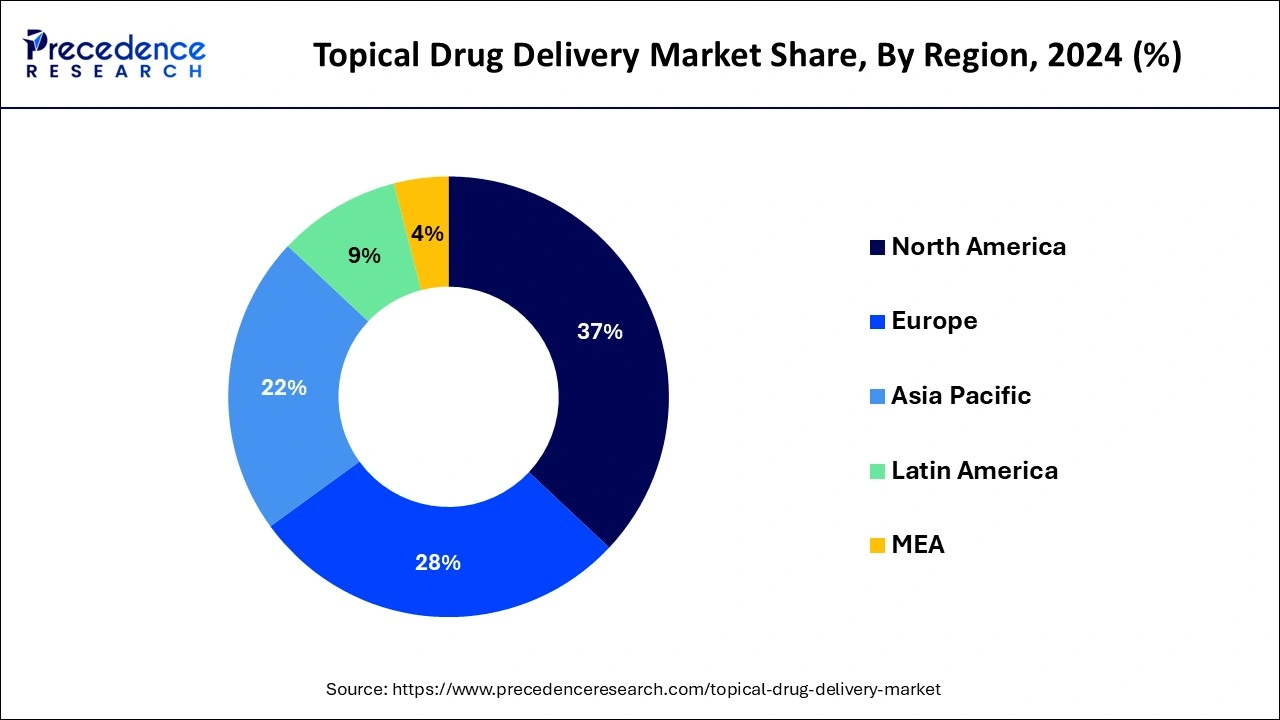
The largest topical drug delivery market share was held by North America, primarily because of the presence of large number of pharmaceutical companies. The Asia-Pacific (APAC) region is anticipated to grow at the fastest pace in the coming times. The reasons for this are the rising healthcare expenditure, adding focus of pharmaceutical companies in the market in developing countries, growing senior population, and surging disposable income.
U.S. Topical Drug Delivery Market Size and Growth 2026 to 2035
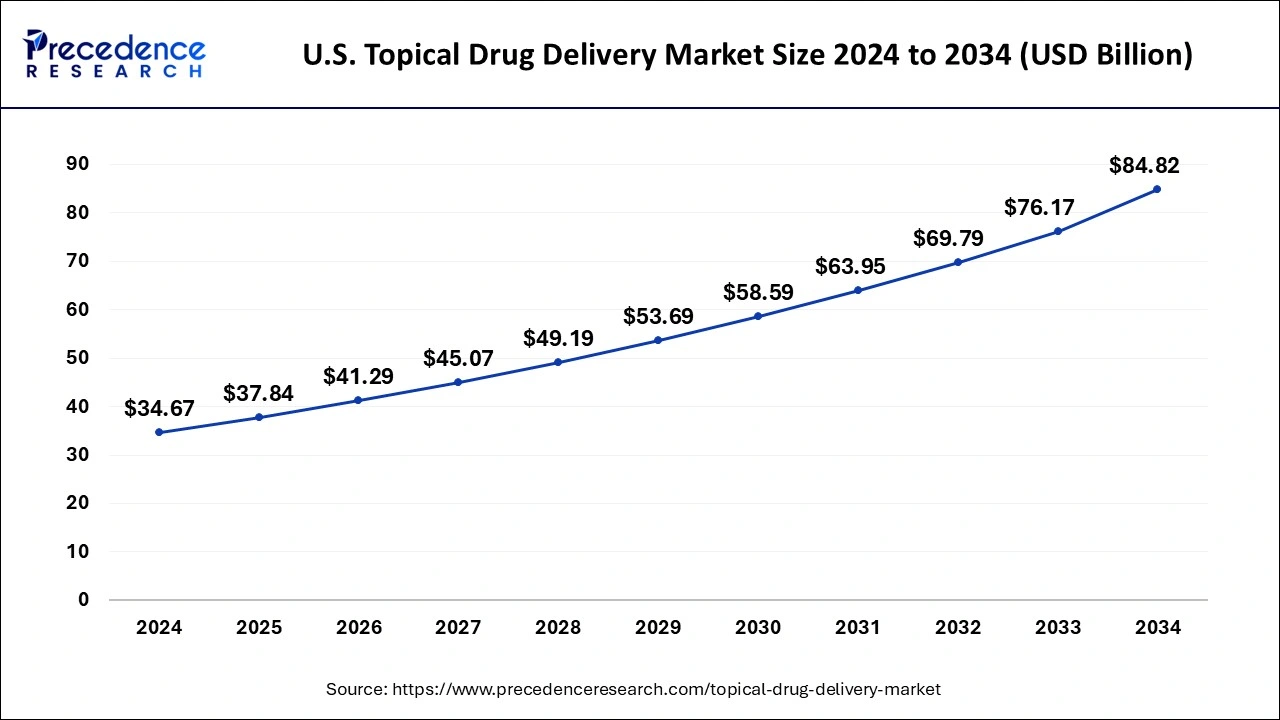
The U.S. topical drug delivery market is exhibited at USD 37.84 billion in 2025 and is projected to be worth around USD 93.47 billion by 2035, growing at a CAGR of 9.46%% from 2026 to 2035.
How Are U.S. Regulatory Policies and R&D Investments Driving Topical Drug Delivery Market Growth?
The market growth in the U.S. is driven by the increasing presence of robust regulatory bodies such as the FDA and favorable regulatory policies. Various pharmaceutical companies are investing significantly in the research and development of topical drug delivery systems in the U.S. In addition, the increasing availability of OTC topical products and increasing awareness about skin health are further expected to drive market growth in the U.S.
Asia-Pacific - The Fastest-Growing Skincare Revolution
The Asia-Pacific region is expected to be the fastest-growing region in this market due to rising health spending, a large number of patients, and many drug makers moving into the region. This created an opportunity for local manufacturers, telemedicine, low-cost formulations, partnerships with global companies, and growing export opportunities abroad.
China led the Asia-Pacific topical drug delivery market due to the presence of large factories, fast approvals, and growing dermatology clinics. Local firms scaled production, research improved, and exports increased. These dynamics made China important for patches, creams, and new topical technologies, and growing foreign partnerships.
Europe - The Laboratory of Advanced Topical Care
Europe has experienced strong growth in the topical drug delivery market due to advanced healthcare systems, strict safety regulations, and innovation in pain and skin therapies. Increased research funding, aging populations, and a growing trend toward non-invasive treatments provided substantial opportunities throughout the region.
Germany has led the way in Europe with prominent pharmaceutical companies, innovative R&D centers, and strong exports. In particular, Germany's sustained innovation in transdermal patches, pain creams, and skin gels kept the country at the forefront of technology and clinical research in topical drug delivery and made it a key exporter throughout the EU.
Latin America - The Emerging Skin Solutions Frontier
Latin America has experienced growth due to improved health care access, urbanization, and increased spending on skin and pain topical products. Companies actively targeted affordable topical drug alternatives and created digital platforms to enhance access and promote interest, creating enormous opportunities for domestic producers and foreign manufacturers to expand their supply.
Brazil has led the Latin America region, given its large base of consumers, cosmetics, and the pharmaceutical industry. Government support, along with increased levels of private research, is resulting in increased topical drug sales in Brazil's beauty industry, specifically in creams, lotions, and gels for skin and wound therapy.
Middle East & Africa - Leading the Healthcare Transformation
Healthcare evolution and hospital infrastructure have gradually improved awareness around skin and pain care, delivering a gradual exploration into the topical drug delivery market in the Middle East & Africa region. Opportunities arose from renovations to hospitals, foreign investments into the region, and the advancement of private healthcare facilities.
Saudi Arabia had led the region with pace in this evolution, continuing rapid modernization of healthcare, government financial support, and strong import co-operations. The demand for topical drugs in the healthcare and pharmacy sector has accelerated due to rising chronic cases, dermatology cases, and changing lifestyles.
Top Companies and Their Offerings
- Johnson & Johnson: Johnson & Johnson focuses on science-based innovations to address complex diseases related to oncology, immunology, neuroscience, and cardiopulmonary.
- Bayer Pharmaceuticals Pvt. Ltd.: Bayer addresses a wide range of pain types with both oral painkillers and topical treatments, including Apronax, gels, patches, and sprays.
- LEO Pharma A/S: LEO Pharma is a leading pharmaceutical company that offers topical products for various skin disorders, such as atopic dermatitis, psoriasis, and chronic hand eczema.
- Solventum: Solventum offers a range of medical-surgical products and advanced wound dressings. It also provides Smart Instill Feature software to simplify and automate the delivery of topical wound treatment solutions.
- Galderma S.A.: Galderma's therapeutic dermatology segment encompasses prescription treatments that target moderate to severe skin conditions, from acne to skin cancer. Soolantra, Cetaphil, and Differin are some of its products.
Other Companies
- Bausch Health
- GlaxoSmithKline plc
- Pfizer Inc.
- Antares Pharma, Inc.
- 3M
- Merck & Co., Inc.
- Sanofi
- Amgen, Inc.
Recent Developments
- In June 2026, researchers from the Terasaki Institute for Biomedical Innovation and the University of Arizona College of Medicine developed a topical gel formulation with 4-aminopyridine (4-AP) to treat burn wounds within 21 days. The laponite-gelatin gel offers a non-invasive alternative that delivers 4-AP directly to the skin. (Source: https://www.news-medical.net)
- In May 2025, DEBRA Research announced a collaboration with Dermaliq Therapeutics, Inc. to reshape topical therapy for epidermolysis bullosa (EB). The collaboration was made to explore and develop cutting-edge topical treatments for EB using Dermaliq's proprietary hyliQ technology platform. (Source: https://www.dermatologytimes.com)
Segments Covered in the Report
By Product
- Semi-Solid Formulations
- Creams
- Ointments
- Lotions
- Gels
- Pastes
- Liquid Formulations
- Solutions
- Suspensions
- Solid Formulations
- Powders
- Suppositories
- Transdermal Products
- Transdermal Patches
- Transdermal Semi-solids
By Route of Administration
- Oral
- Injectable
- Dermal
- Ocular
- Pulmonary
- Implantable
- Transmucosal
- Nasal
By End User
- Home Care Settings
- Hospitals & Clinics
- Burn Centers
- Other Facilities
By Region
- North America
- Europe
- Asia Pacific
- Latin America
- Middle East and Africa
For inquiries regarding discounts, bulk purchases, or customization requests, please contact us at sales@precedenceresearch.com
Frequently Asked Questions





Ask For Sample
No cookie-cutter, only authentic analysis – take the 1st step to become a Precedence Research client
 Get a Sample
.webp)



 sales@precedenceresearch.com
 Schedule a Meeting
