



3D Bioprinted Human Tissue Market Size, Companies, Share, Patient Volume, Treatment Adoption Rates, Pricing Analysis, Regulatory Landscape, Competitive Positioning, and Demand Forecast
3D Bioprinted Human Tissue Market (By Tissue Type: Skin Tissue, Liver Tissue, Cardiac Tissue, Bone & Cartilage Tissue, Other Tissues (kidney, neural, lung); By Technology: Extrusion-based Bioprinting, Inkjet-based Bioprinting, Laser-assisted Bioprinting, Other Bioprinting Technologies; By Cell Source: Primary Human Cells, Stem Cells (ESCs, iPSCs), Immortalized Cell Lines; By Application: Drug Discovery & Toxicity Testing, Disease Modeling, Regenerative Medicine Research, Other Applications) - Global Industry Analysis, Size, Trends, Leading Companies, Regional Outlook, and Forecast 2026 to 2035
Source: https://www.precedenceresearch.com/3d-bioprinted-human-tissue-market
 Get a Sample
 Table Of Content


What is the 3D Bioprinted Human Tissue Market Size?
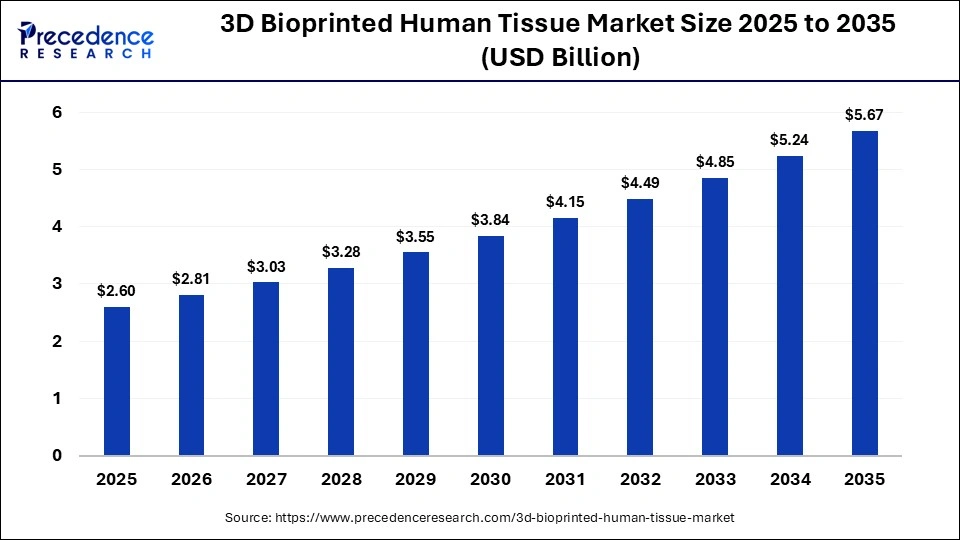
The global 3D bioprinted human tissue market size was calculated at USD 2.60 billion in 2025 and is predicted to increase from USD 2.81 billion in 2026 to approximately USD 5.67 billion by 2035, expanding at a CAGR of 8.13% from 2026 to 2035. The 3D bioprinted human tissue market is experiencing unprecedented growth, driven by the rising shortage of donor organs for transplantation.
3D Bioprinted Human Tissue Market Key Takeaways
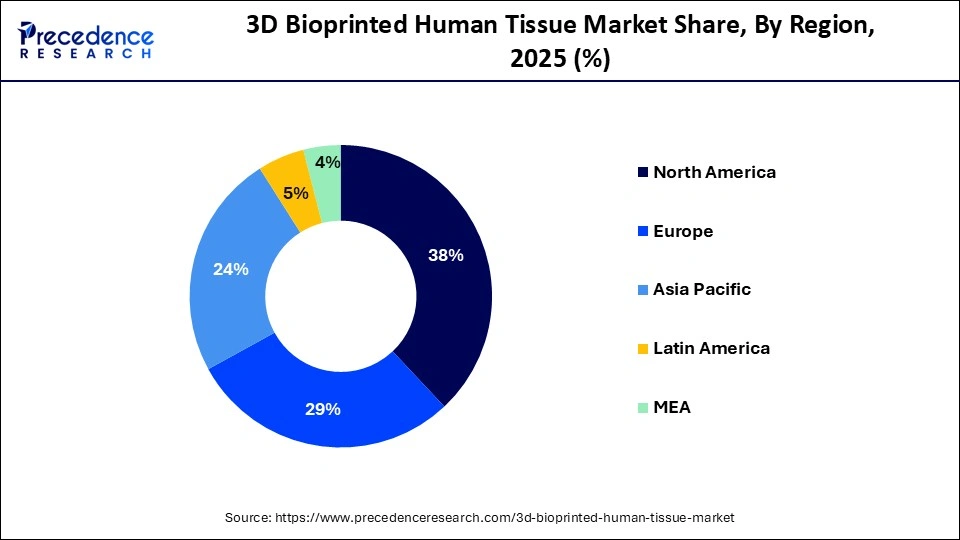
- North America dominated, holding the largest market share of 38% in 2025.
- Asia-Pacific is expected to grow at the fastest CAGR of 8.33% between 2026 and 2035.
- By tissue type, the skin tissue segment accounted for the biggest market share of 28% in 2025.
- By tissue type, the cardiac tissue segment is expected to grow at a remarkable CAGR between 2026 and 2035.
- By technology, the extrusion-based bioprinting segment held the major share of 41% in 2025.
- By technology, the laser-assisted bioprinting segment is set to grow at a notable CAGR between 2026 and 2035.
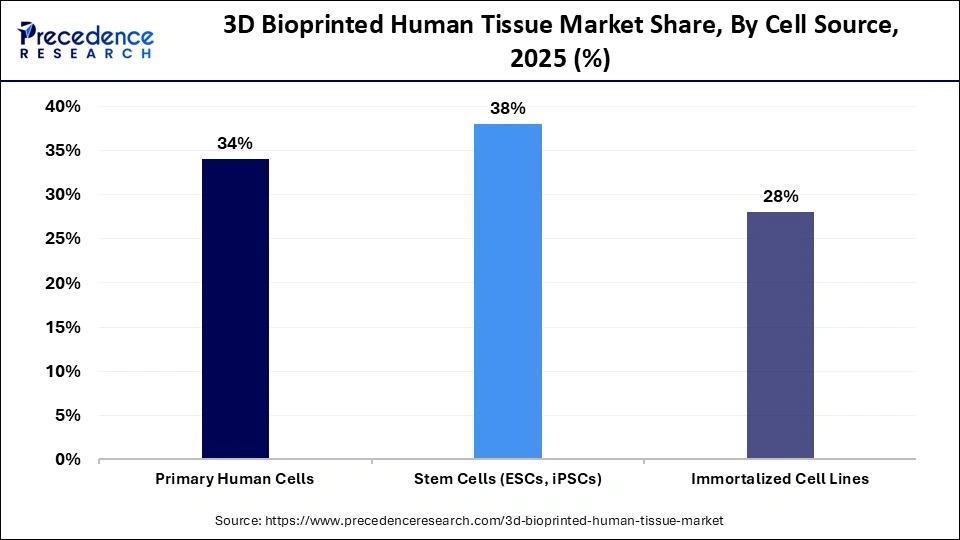
- By cell source, the stem cells segment contributed more than 38% of the market share in 2025.
- By application, the drug discovery & toxicity testing segment captured the highest market share of 44% in 2025.
- By application, the regenerative medicine research segment is expected to experience remarkable growth between 2026 and 2035.
Market Overview
The global 3D bioprinted human tissue market comprises the development, production, and application of human tissues fabricated using 3D bioprinting technologies that layer living cells, biomaterials, and bioinks to replicate native tissue architecture and function. These tissues are primarily used for drug discovery and toxicity testing, disease modeling, regenerative medicine research, and early-stage transplantation research
According to the article published in July 2024, researchers at Mayo Clinic are using technology to produce tissue models of different body parts to study damaged or diseased tissues and organs. They envision a day when a 3D bioprinter could mold living cells into a therapy or cure for complex disorders. 3D bioprinting intrigues researchers for its potential to study disease progression and screen new treatments for conditions such as end-stage organ failure, cartilage defects, and atopic dermatitis, also known as eczema. (Source: worldhealthexpo.com)
How Are AI-Driven Innovations Reshaping the 3D Bioprinted Human Tissue Market?
In the rapidly evolving technological landscape, the integration of Artificial Intelligence (AI) is driving innovation and accelerating the growth of the 3D bioprinted human tissue market by enhancing its functionality, precision, and scalability. AI provides crucial improvements in real-time process monitoring, error correction, and optimization of bioprinting parameters. AI integration enables automated quality control and predictive maintenance, which significantly improves bioprinting outcomes. The use of ML algorithms assists in predicting optimal bioprinting conditions and streamlining the bioprinting workflow.
AI-powered robotics allows the automation of complex and repetitive tasks in the biomanufacturing workflow, from cell handling to post-processing, as well as facilitates the construction of complex tissues. Deep learning enhances the ability to process complex datasets for precision tissue biofabrication. Bioprinted tissues created with AI serve as more accurate and human-relevant models for drug discovery and toxicology assessments, which reduces the dependency on animal testing.
What Are the Emerging Trends in the 3D Bioprinted Human Tissue Market?
- The strict regulations of regulatory bodies and ethical considerations on animal testing have led to an increasing demand for alternatives to animal testing, which in turn bolsters the growth of the 3D bioprinted human tissue market during the forecast period.
- The rapid advances in bioink formulations, stem cell biology, and printing resolution create significant growth opportunities for the 3D bioprinted human tissue industry during the forecast period.
- The global surge in chronic diseases and the rising aging population are anticipated to fuel the market's expansion during the forecast period.
- The increasing demand for 3D bioprinted human tissue for a wide range of applications, such as wound healing, orthopedic implants, skin tissue engineering, and disease modelling, significantly contributes to the overall growth of the 3D bioprinted human tissue market.
- The increasing integration with nanotechnology is expected to promote the growth of the 3D bioprinted human tissue market. 3D bioprinting focuses on integrating nanotechnology for better vascularization, advancing multi-material printing for complex organs, and leveraging bioprinted models for personalized drug testing.
- The increasing focus on personalized medicine is expected to drive the market's revenue during the forecast period. The 3D bioprinted human tissue enables patient-specific implants, customized models for testing drugs and toxicity, and advanced tissue models for better treatment outcomes.
Market Scope
| Report Coverage | Details |
| Market Size in 2025 | USD 2.60 Billion |
| Market Size in 2026 | USD 2.81 Billion |
| Market Size by 2035 | USD 5.67 Billion |
| Market Growth Rate from 2026 to 2035 | CAGR of 8.13% |
| Dominating Region | North America |
| Fastest Growing Region | Asia Pacific |
| Base Year | 2025 |
| Forecast Period | 2026 to 2035 |
| Segments Covered | Tissue Type, Technology, Cell Source, Application and Region |
| Regions Covered | North America, Europe, Asia-Pacific, Latin America, and Middle East & Africa |
Segmental Insights
Tissue Type Insights
What Causes the Skin Tissue Segment to Dominate the 3D Bioprinted Human Tissue Market?
The skin tissue segment held the largest market share of 28% in 2025. The growing demand for severe burns and chronic wounds creates a need for skin substitutes. 3D bioprinting serves as an animal-free model that offers better tissue substitutes than traditional grafts. 3D bioprinted skin provides testing for new drugs, chemicals, and skincare products, reducing dependency on animal testing. Moreover, the growing demand for facial reconstruction and aesthetic procedures is driving the segment's growth during the forecast period.
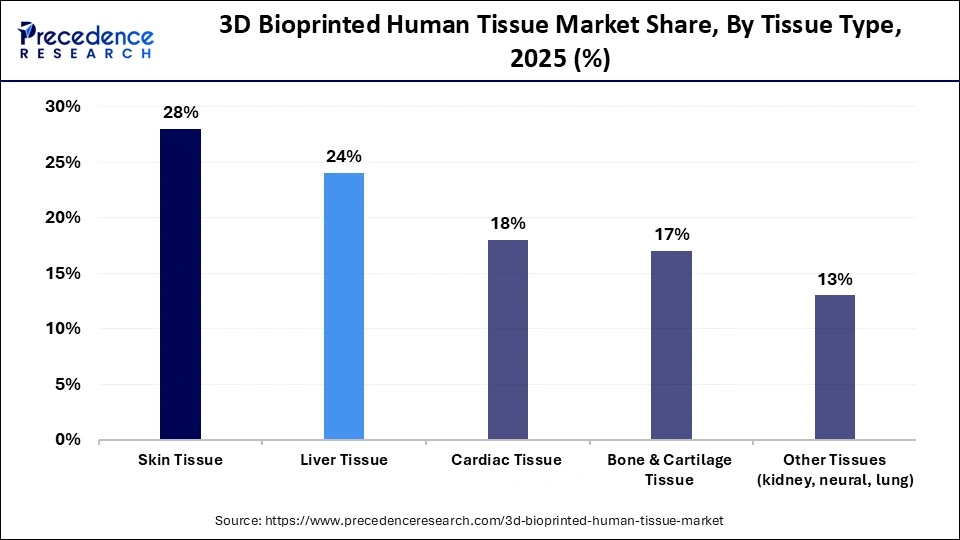
The cardiac tissue segment is expected to grow at a remarkable CAGR between 2026 and 2035, owing to the rising incidences of cardiovascular diseases and the increasing need to address the shortage of donor hearts for transplantation. The end-stage of heart failure often requires heart transplantation. 3D bioprinting allows the creation of patient-specific cardiac models based on medical imaging data to improve therapeutic outcomes.
Application Insights
Which Segment Is Dominating in the 3D Bioprinted Human Tissue Market?
The drug discovery & toxicity testing segment is dominating the 3D bioprinted human tissue market by holding a majority share of 44%. 3D Bioprinted tissues serve as more accurate and ethical in vitro human disease models, such as liver, kidney, skin, and cardiac tissue, which improve drug discovery and toxicity screening and potentially reduce the dependency on animal testing models. These models offer more relevant testing platforms compared to traditional 2D cell cultures or animal testing models. 2D cell cultures and animal testing models often fail to accurately predict human physiological responses. Bioprinted tissues better mimic native human tissues, which leads to more reliable data on drug efficacy and safety.
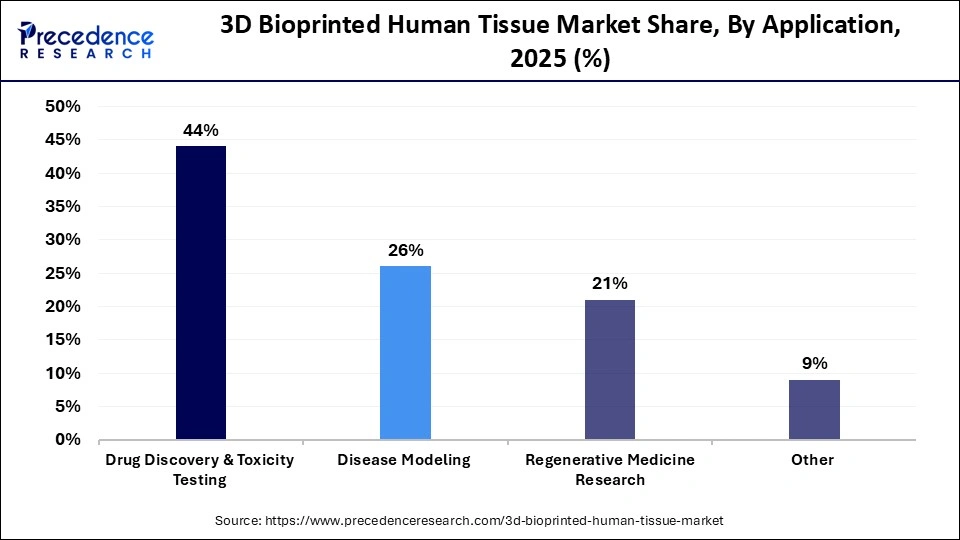
The regenerative medicine research segment is set to grow at a notable CAGR between 2026 and 2035. Regenerative medicine research has the potential to solve critical healthcare issues like organ shortages, chronic diseases, and transplant rejection; accelerate drug testing with realistic models; and address unmet needs in wound healing and organ failure. The rising addressing of organ shortages & transplant needs makes 3D bioprinting a crucial solution for creating functional tissues and organs like livers, lungs, and kidneys.
Cell Source Insights
What Causes the Stem Cells Segment to Dominate the 3D Bioprinted Human Tissue Market?
The stem cells segment contributed 38% of the revenue share and is expected to further grow at the fastest growth rate. Stem cells can develop into any type of specialized cell in the body, which makes them ideal for engineering complex human organs and tissues. The growth of the segment is mainly driven by the unique properties of stem cells and their potential properties for creating functional, living tissues and organs for regenerative medicine, transplantation solutions, and drug testing applications. The ongoing investment in R&D and various collaborations between academic institutions and biopharmaceutical companies are likely to improve the stem cell-based bioprinting solutions.
Technology Insights
What Has Led the Extrusion-Based Bioprinting Segment to Dominate the 3D Bioprinted Human Tissue Market?
The extrusion-based bioprinting segment is dominating the 3D bioprinted human tissue market with the largest market share of 41% in 2025. Extrusion-based bioprinting offers several benefits, such as affordability, reliability, scalability, and compatibility with various bioinks, which makes it crucial for research in organs, regenerative medicine, and drug screening. Its rising use, from creating tumor models and studying cell interactions to developing patient-specific implants, is boosting the segment's growth during the forecast period.
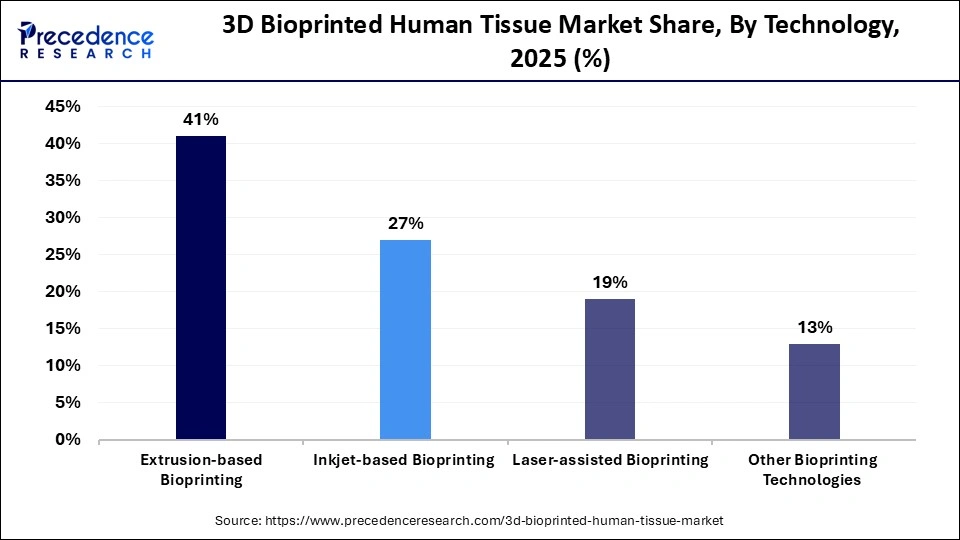
The laser-assisted bioprinting segment is a rapidly growing segment and is expected to experience remarkable growth between 2026 and 2035. Laser-based 3D bioprinting uses laser energy to accurately deposit or cure bioinks and has various methods, including stereolithography, holographic patterning, and laser-induced forward transfer (LIFT). 3D bioprinting with lasers is crucial for next-generation regenerative therapies. Additionally, the rising focus on producing functional tissues and organs for transplantation is anticipated to bolster the segment's expansion in the coming years.
Regional Insights
How Big is the North America 3D Bioprinted Human Tissue Market?
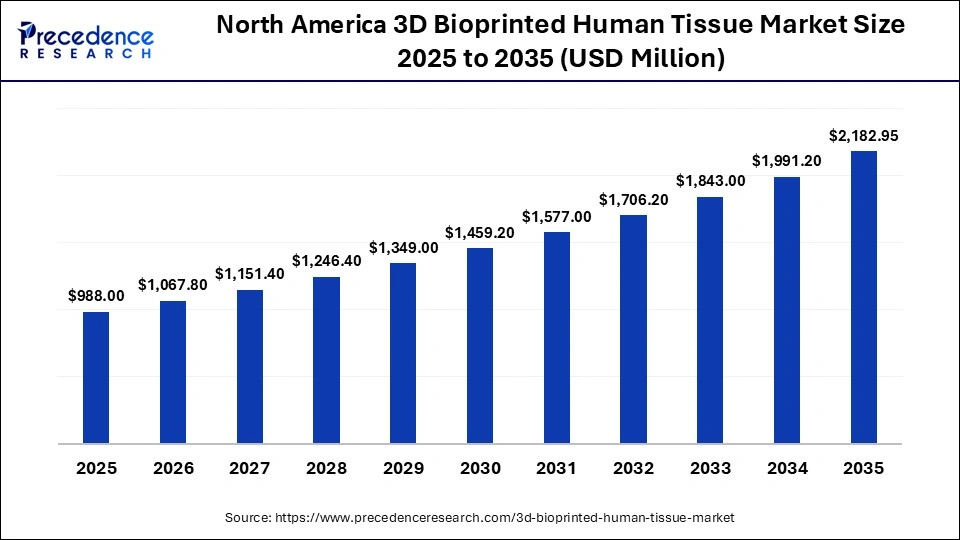
The North America 3D bioprinted human tissue market size was estimated at USD 988 million in 2025 and is projected to reach approximately USD 2,182.95 million by 2035, with a 8.25% CAGR from 2026 to 2035.
Why Did North America Lead the 3D Bioprinted Human Tissue Market During 2025?
North America dominates the 3D bioprinted human tissue market, holding the majority of the revenue share, 38%. The North America region has an advanced healthcare system and the presence of prominent key players, which include leading bioprinting companies and biotech firms. This leadership position is attributed to the high prevalence of chronic health conditions, substantial R&D investments, growing demand for organ/tissue transplants, growing geriatric population, and high adoption rates of advanced medical technologies. In addition, the increasing development of new bioinks, rapid innovation in printing technologies like inkjet and extrusion-based methods, and the integration of artificial intelligence (AI) and Machine Learning (ML) in optimizing the bioprinting process are expected to drive the expansion of the 3D bioprinted human tissue industry during the forecast period.
- In October 2025, Researchers at Wake Forest Institute for Regenerative Medicine (WFIRM) successfully engineered liver tissues in the lab that have survived for 30 days. Researchers wanted to see if the microgravity on the space station changes cell distribution and behavior and how the cells stick together. The theory is that with less gravity, the cells will grow omnidirectionally (in all directions) and thus more evenly. That would help preserve the integrity of the 3D-printed organ and its blood vessels. This could provide insight into how to advance tissue engineering and manufacture better, longer-lasting tissues for disease research and patients on Earth. (Source: pbsnc.org)
What is the U.S. 3D Bioprinted Human Tissue Market Size?
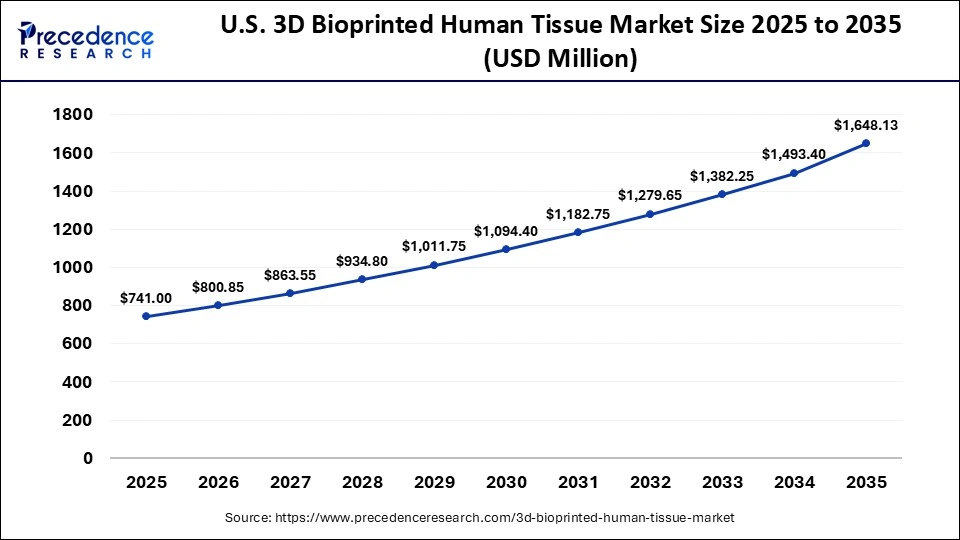
The U.S. 3D bioprinted human tissue market size is calculated at USD 741 million in 2025 and is expected to reach nearly USD 1,648.13 million in 2035, accelerating at a strong CAGR of 8.32% between 2026 and 2035.
United States' 3D Bioprinted Human Tissue Market Analysis
The United States leads the 3D bioprinted human tissue market. The United States is a major contributor to the 3D bioprinted human tissue market in the North American region. The region has a robust and sophisticated healthcare infrastructure that facilitates the adoption and integration of groundbreaking bioprinting technologies in various research and clinical applications. The country is home to leading key market players such as Organovo Holdings, Inc., Advanced Solutions Life Sciences, LLC (ASLS), Cellink (BICO Group), Stratasys Ltd., and others. The growth of the country is fueled by the high incidence of chronic diseases, the critical shortage of organ donors, the growing demand for personalized treatments, and increasing government funding for regenerative medicine research. Favorable regulatory frameworks and rising government initiatives for bioprinted medical products are driving innovation and commercialization in the country.
- In September 2025, Researchers at the University of Minnesota College of Science and Engineering successfully 3D printed realistic human tissue simulants that can be used for medical training for surgeons and doctors. The researchers were able to make the simulated tissues more realistic by adding tiny fluid-filled capsules to imitate blood. This is done by printing small microcapsules that contain the liquid, preventing it from drying out or interfering with the printing process. (Source: twin-cities.umn.edu)
In December 2025, Stratasys announced the full U.S. release of RadioMatrix, a proprietary 3D printing material used with the company's PolyJet material jetting printers, including the J5 and J5 Digital Anatomy systems. Already tested in selected pilot programs, the material is now available to American hospitals and stands out as the first broadly available commercial 3D printing material that offers controlled, tunable radiopacity, which measures how visible different tissues appear on X-rays and CT scans for anatomically realistic, CT-compatible models for surgical practice, preoperative planning, and education. (Source: all3dp.com)
What is the Asia Pacific 3D Bioprinted Human Tissue Market Size?
The Asia Pacific 3D bioprinted human tissue market size is evaluated at USD 624 million in 2025 and is anticipated to reach USD 1389 million in 2035, accelerating at a strong CAGR of 8.33% between 2026 and 2035.
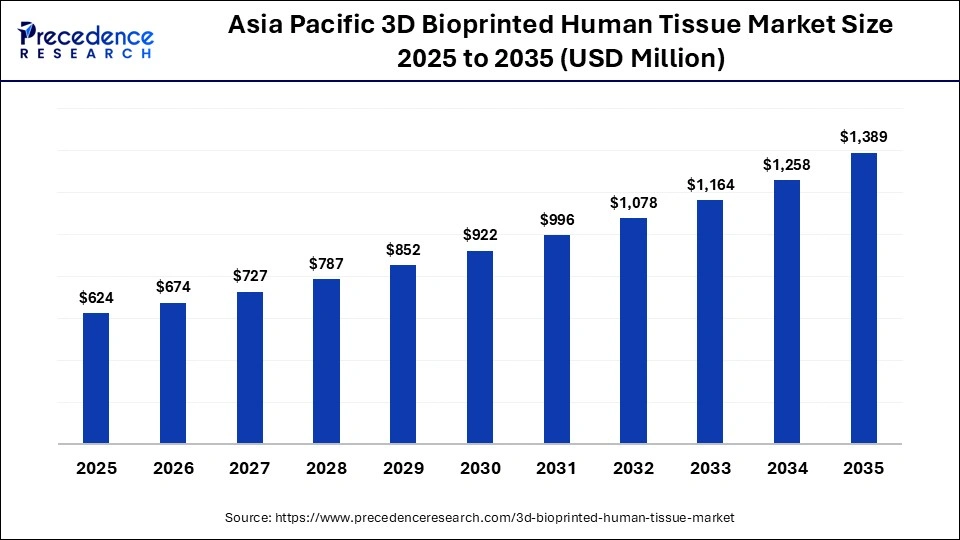
Why Is Asia Pacific the Fastest-Growing in the 3D Bioprinted Human Tissue Sector?
Asia Pacific is the fastest-growing region and is expected to expand at the fastest CAGR of 24% in the 3D bioprinted human tissue sector between 2026 and 2035. The growth of the region is attributed to the developing healthcare infrastructure, surge in aging population, growing demand for alternatives to animal testing, rising critical shortage of organ donors, the rising shift towards personalized medicine, and rapid technological advancements in tissue engineering. The increasing prevalence of chronic diseases in the region, such as cancer, cardiovascular diseases (CVDs), kidney diseases, liver diseases, and neurodegenerative disorders, is anticipated to drive demand for advanced regenerative solutions and advanced drug testing models. Moreover, a rise in healthcare expenditure and supportive government-backed initiatives promoting biomedical innovation are anticipated to expand the growth of the 3D bioprinted human tissue industry in the coming years.
India 3D Bioprinted Human Tissue Market Analysis
The country is experiencing significant growth. The 3D bioprinted human tissue market growth is supported by the rising investment in healthcare expenditure, an increase in the number of patients requiring transplants, a large aging population susceptible to chronic diseases, increasing funding for bioprinting research, supportive government initiatives for better healthcare infrastructure, and rapid technological progress. The country's market is projected to grow substantially, driven by the increasing demand for personalized treatments, regenerative medicine, and organ transplantation alternatives. The rising investment by both government bodies and private entities supports extensive research in tissue engineering and regenerative medicine, accelerating the country's growth during the forecast period.
Who are the Major Players Operating in the 3D Bioprinted Human Tissue Market?
The major players operating in the 3D bioprinted human tissue market are Organovo, Stratasys, Poietis, Aspect Biosystems, RegenHU, Prellis Biologics, Cyfuse Biomedical, FabRx, 3D Bioprinting Solutions, Inventia Life Science, CELLuink, and Viscient Biosciences
Recent Developments
- In July 2025, Altasciences, a fully integrated drug development solution company, and VoxCell BioInnovation, a leader in 3D bioprinting and human-like tissue modeling, announced a strategic collaboration aimed at enhancing preclinical research and accelerating the path from discovery to clinical trials. This partnership combines Altasciences' comprehensive early-phase drug development capabilities with VoxCell's cutting-edge 3D tissue technology to offer a more predictive and human-relevant preclinical testing environment. (Source: businesswire.com)
- In October 2025, CTIBIOTECH, a leading innovator in human tissue engineering and 3D bioprinting, announced its selection by SATT AxLR and CILCARE to support the development of the OrgaEar project. This strategic collaboration aims to create the world's first 3D bioprinted inner ear organoids from human induced pluripotent stem cells (hiPSC). This innovative project addresses a critical need in hearing disorders research by developing advanced pharmacological screening tools, positioned as intermediaries between traditional cell lines and animal models. (Source: prnewswire.com)
Segments Covered in the Report
By Tissue Type
- Skin Tissue
- Liver Tissue
- Cardiac Tissue
- Bone & Cartilage Tissue
- Other Tissues (kidney, neural, lung)
By Technology
- Extrusion-based Bioprinting
- Inkjet-based Bioprinting
- Laser-assisted Bioprinting
- Other Bioprinting Technologies
By Cell Source
- Primary Human Cells
- Stem Cells (ESCs, iPSCs)
- Immortalized Cell Lines
By Application
- Drug Discovery & Toxicity Testing
- Disease Modeling
- Regenerative Medicine Research
- Other Applications
By Region
- North America
- U.S.
- Canada
- Mexico
- Rest of North America
- South America
- Brazil
- Argentina
- Rest of South America
Europe
- Western Europe
- Germany
- Italy
- France
- Netherlands
- Spain
- Portugal
- Belgium
- Ireland
- UK
- Iceland
- Switzerland
- Poland
- Rest of Western Europe
- Eastern Europe
- Austria
- Russia & Belarus
- Türkiye
- Albania
- Rest of Eastern Europe
Asia Pacific
- China
- Taiwan
- India
- Japan
- Australia and New Zealand
- ASEAN Countries (Singapore, Malaysia)
- South Korea
- Rest of APAC
MEA
- GCC Countries
- Saudi Arabia
- United Arab Emirates (UAE)
- Qatar
- Kuwait
- Oman
- Bahrain
- South Africa
- Egypt
- Rest of MEA
For inquiries regarding discounts, bulk purchases, or customization requests, please contact us at sales@precedenceresearch.com
Frequently Asked Questions





Ask For Sample
No cookie-cutter, only authentic analysis – take the 1st step to become a Precedence Research client
 Get a Sample
.webp)



 sales@precedenceresearch.com
 Schedule a Meeting
