



Artificial Intelligence in Genomics Market Size, Key Companies, Company Product Portfolio, Hospital Procurement Trends, Manufacturing Capacity, Sales Performance, Regulatory Approvals, Company Market Share, and Forecast
Artificial Intelligence in Genomics Market (By Offering: Software, Services; By Application: Drug Discovery & Development, Precision Medicine, Diagnostics, Animal Research and Agriculture, Others; By End User: Pharmaceutical & Biotech Companies, Government Organizations, Research Organizations, Others; By Technology: Machine Learning, Computer Vision, Other Technologies; By Functionality: Genome Sequencing, Gene Editing, Others) - Global Industry Analysis, Size, Trends, Leading Companies, Regional Outlook, and Forecast 2026 to 2035
Source: https://www.precedenceresearch.com/artificial-intelligence-in-genomics-market
 Get a Sample
 Table Of Content


What is the AI in Genomics Market Size?
The global artificial intelligence in genomics services market size is valued at USD 1,086.61 million in 2025 and is predicted to increase from USD 1,503.86 million in 2026 to approximately USD 25,860.87 million by 2035, growing at a CAGR of 37.3% from 2026 to 2035. Factors such as increasing demand for precision medicine, rising R&D expenditure, and growing demand for effective handling tools for managing large data are some of the major factors driving the growth of the global artificial intelligence in genomics market in the coming years.
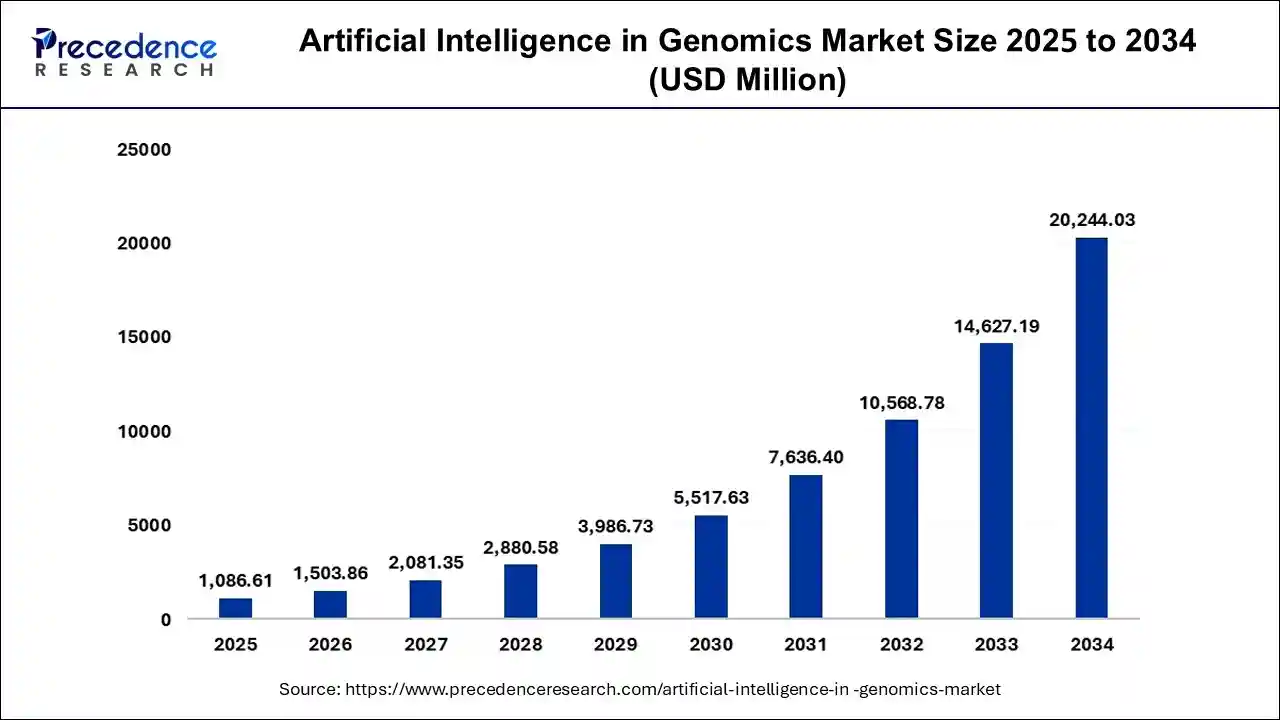
Artificial Intelligence in Genomics Market Key Takeaways
- North America dominated the global market with the largest market share of 30% in 2025.
- Asia Pacific is anticipated to grow at the fastest rate in the market during the forecast period.
- By offering, the software segment accounted for the dominating share in 2025.
- By offering, the services segment is expected to witness a significant share during the forecast period.
- By application, the drug discovery & development segment held a dominant presence in the market in 2025.
- By application, the precision medicine segment accounted for considerable growth in the global artificial intelligence in genomics market over the forecast period.
- By end user, the pharmaceutical & biotech companies segment registered its dominance over the global artificial intelligence in genomics market in 2025.
- By end user, the healthcare providers segment is projected to expand rapidly in the market in the coming years.
- By technology, the machine learning segment held the largest share of the artificial intelligence in genomics market in 2024, the segment is expected to sustain the position throughout the forecast period.
- By technology, the computer vision segment is expected to grow significantly during the forecast period.
- By functionality, the genome sequencing segment accounted for the highest revenue share in 2025.
- By functionality, the gene editing segment is expected to grow at the fastest rate during the forecast period of 2024 to 2034.
Strategic Overview of the Global Artificial Intelligence in Genomics Industry
Genomics is the popular branch of molecular biology that involves the study of the entire genetic makeup of living beings. The Artificial Intelligence (AI) integration is significantly revolutionizing the healthcare. Artificial Intelligence (AI) offers endless potential applications in the field of genomics. AI algorithms and sophisticated software solutions assist in automating several manual tasks involved in genomic research and reducing the need for human labor which makes the process more cost-effective. By effectively analyzing individual genomic profiles, Artificial Intelligence (AI) algorithms assist in identifying disease risk, recommending targeted therapies, and improving patient outcomes.
Artificial Intelligence in Genomics Market Growth Factors
Rising demand for clinical diagnostics: Over the years, a significant rise in clinical diagnostic workflows has been increasingly integrated with AI-powered processes to help in disease diagnosis, prognosis, and treatment selection. AI algorithms assist clinicians in making more informed decisions and improving patient outcomes.
Rapid advancements in AI technology: With the rapid advancements in AI technology, AI-powered software solutions are increasingly being developed that are designed for the genomics industry. These solutions are more becoming sophisticated, allowing researchers to analyze and manage genomic data more effectively.
Increase in new product launches: The major market players operating in the AI in genomics market are increasingly focusing on introducing new products to meet the evolving demand for advanced genomic analysis tools. The introduction of new products is expected to enhance the capabilities of researchers and clinicians in leveraging AI for genomics research, diagnosis, and treatment.
Increasing need for big data management: The growing demand for effective handling tools of large data is expected to propel the growth of artificial intelligence in the genomics market in the coming years. Artificial Intelligence (AI) technologies are capable of handling huge datasets with ease, which allows researchers to achieve the results with greater efficiency and accuracy.
Market Outlook
- Market Growth Overview: The Artificial Intelligence in Genomics market is expected to grow significantly between 2025 and 2034, driven by the rising demand for trailoring treatments to individual genetic profiles, the pharmaceutical industry uses AI to streamline drug discovery, reducing time and costs by more efficiently sifting through vast datasets, and rising in demand diagnostics and precision medicine.
- Sustainability Trends: Sustainability trends focus on reducing the optimizing resource usage in agriculture and developing climate-resilient crops, while also addressing the energy consumption of AI models through energy-efficient hardware and renewable energy partnerships.
- Major Investors: Major investors in the market includes, NVIDIA and Microsoft, pharmaceutical giants such as F. Hoffmann-La Roche and Novo Nordisk, and a significant number of venture capital firms including ARCH Venture Partners and Casdin Capital.
- Startup Economy: The startup economy in the market is the dynamic ecosystem of new, innovative companies leveraging AI and machine learning to analyze massive biological datasets and develop groundbreaking solutions.
Market Scope
| Market Size in 2025 | USD 1,086.61 Million |
| Market Size in 2026 | USD 1,503.86 Million |
| Market Size by 2035 | USD 25,860.87 Million |
| Growth Rate from 2026 to 2035 | CAGR of 37.3% |
| Largest Market | North America |
| Base Year | 2025 |
| Forecast Period | 2026 to 2035 |
| Segments Covered | By Offering, By Application, By End User, By Technology, By Functionality, and Region |
| Regions Covered | North America, Europe, Asia-Pacific, Latin America, and Middle East & Africa |
Market Dynamics
Driver
Rising preference for precision medicine
The increasing preference for precision medicine is expected to boost the growth of the artificial intelligence in genomics market. Precision medicine is increasingly becoming popular as it considers an individual's unique genetic makeup, lifestyle, and other external conditions to create personalized treatment plans for a particular chronic disease. With the rapid advances in algorithms, data sharing, and AI capabilities, the technology has become a crucial tool for unleashing genomic insights. Artificial Intelligence can process large genomic data to identify patterns and correlate them which led to an assisting in initiating personalized treatments. Moreover, AI integration in precision medicine applications in healthcare and treatment concerns, mainly cancer. AI assists in analyzing genomic data, the genetic makeup of a mutation in cancer, and developing the best therapies beneficial for the patient's recovery. Thereby, driving the market's growth.
Restraint
Lack of skilled workforce
The lack of skilled workforce is anticipated to hamper the market's growth during the forecast period. Skilled expertise is required in both AI and genomics. To extract and label unstructured data demands a proficient workforce in addition to patient information is very sensitive and also subject to strict privacy regulations. Such factor in restricting the expansion of the market in the coming years.
Opportunity
Increasing Investments by Industry Players
The rising investment by prominent market players is projected to offer lucrative growth opportunities to the market during the analysis period. Artificial Intelligence (AI) has nearly endless potential applications in the field of genomics in revolutionizing healthcare. The rising investments in the fields of AI and genomics, as organizations, governments, research institutes, and private companies are increasingly focusing on developing effective treatments for chronic diseases, particularly cancer. Therefore, these investment assists in promoting and facilitating the adoption of AI tools and technologies in the genomics industry to benefit patients, clinicians, and the overall healthcare system.
Segments Insights
Offering Insights
Based on the offering, the software segment dominated the global AI in genomics market in 2025. This growth is attributed to the increased adoption of the AI-based software in the research and development phase of the drug discovery and drug development activities. Moreover, the presence of several number of leading pharmaceutical companies along with the numerous contract research organization and the higher adoption of software for collecting, storing, and analyzing data has led to the growth of the software segment in the global AI in genomics market. The rising number of contract research organizations, biotech companies, and healthcare providers coupled with the rising adoption of the AI technology is expected to have a significant and positive impact on the growth of the software segment in the forthcoming years.
On the other hand, the services is expected to be the fastest-growing segment during the forecast period. The lack of availability of the AI skilled workers is a major factor behind the rising demand for the services in the market. The operation of AI-based systems needs special skills and understanding of this latest technology and hence the demand for services is expected to grow significantly during the forecast period.
Technology Insights
The machine learning segment held the largest share of artificial intelligence in genomics market in 2025, the segment is expected to sustain the position throughout the forecast period. Machine learning has become a crucial tool in genomics research. Machine learning assists scientists or researchers to make relevant discoveries and improve the comprehension of the genetic basis in chronic diseases. The algorithms of machine learning assist in automating tasks that would be time-consuming with manual efforts including the identification of potential drug targets.
On the other hand, the computer vision segment is expected to grow significantly during the forecast period. The segment's growth is majorly driven by the advancement of genomics research. Computer vision involves the use of algorithms to effectively analyze data and interpret images are increasingly being applied to genomics. Moreover, it also assists in automating tasks and offering more accurate results. Such factors are driving the growth of the segment in the coming years.
Application Insights
The drug discovery & development segment dominated the global AI in genomics market in 2025. The rising prevalence of various chronic, infectious, and gene related diseases among the global population is significantly attracting investments towards the drug discovery & development activities. The rising need to control costs and enhance efficiency and provide desired results, the adoption of the AI in genomics significantly fostered in the past decade. Drug discovery and development became the highest adopter of the AI technology in the genomics industry. Moreover, the growing government and corporate efforts to decrease the healthcare costs has resulted in the adoption of the AI in the drug discovery and development activity.
The precision medicine is expected to be the most opportunistic segment during the forecast period. The rising advances in the oncology and cancer biologics is driving the growth of the precision medicine segment. The rising adoption of AI in the precision medicine in the prevention and management of cancer is expected to significantly drive the growth of the precision medicine segment in the global AI in genomics market.
Functionality Insights
The genome sequencing segment accounted for the highest revenue share in 2025 and is anticipated to grow at a robust CAGR over the forecast period. The segment's growth is majorly attributed to the rising use of AI in genomics to accelerate the process of sequencing genomes to find genetic patterns. AI integration in genomic data analysis to personalize medicines based on individual's genetics. AI minimizes the time and expense associated with genome sequencing. AI reduces errors and improves the accuracy of genome sequencing. AI rapidly and correctly pinpoints genetic variations related to any diseases or traits. Thus driving the growth of the segment during the forecast period. In addition, the companies involved in genome sequencing collaborate with Artificial Intelligence to accelerate the procedures. For instance, in May 2024, Bangalore-based informatics startup G-KnowMe entered into a partnership with researchers at the University of Cambridge and the Cambridge University Hospitals NHS Foundation Trust (CUH) to develop an automated workflow for interpreting data from sequencing the entire genome of cancers. As genome sequencing costs drastically fall, the line between its usage in clinical research and clinical management of the disease is blurred. The lure to extract maximum patient-relevant information is increasing, for better management of the disease. This partnership aims to automate clinical interpretation of data from sequencing the entire genome of cancers.
The gene editing segment is expected to grow at the fastest rate during the forecast period of 2024 to 2034. AI-driven genomic analysis is widely used in identifying genetic variations associated with diseases or patients' responses to any specific treatment for rare and chronic diseases. Artificial Intelligence (AI) plays an important role in guiding the genome editing process by assisting in the selection of optimal editing strategies. Artificial Intelligence (AI) algorithms significantly contribute to the identification of well-suited delivery strategies for the genome editor. Thereby, bolstering the market's expansion in the coming years.
End User Insights
Based on the end user, the pharmaceutical and biotech companies segment dominated the global AI in genomics market in 2025. The presence of the leading pharmaceutical companies across the globe is significantly driving the demand for the AI technology for various activities like making precision medicine, drug discovery, drug development, and manufacturing of diagnostic devices using AI technology. Further, the rapidly growing biotechnology companies across the globe is significantly responsible for the growth of the AI in genomics market owing to its rising adoption of the AI technology.
Healthcare providers is expected to be the fastest-growing segment during the forecast period. The growing geriatric population and rising prevalence of diseases is significantly boosting the number of hospital admissions. The healthcare providers are under immense pressure to provide quick and enhanced services to the patients at low cost. Therefore, the healthcare sector is significantly investing in the adoption of the AI-based services and software to reduce healthcare costs, improve care quality, and provide quick treatment services to the patients.
Regional Insights
U.S. Artificial Intelligence in Genomics Market Size and Growth 2026 to 2035
The U.S. artificial intelligence in genomics market size is estimated at USD 228.19 million in 2025 and is predicted to be worth around USD 5,634.23 million by 2034, at a CAGR of 38.73% from 2026 to 2035.
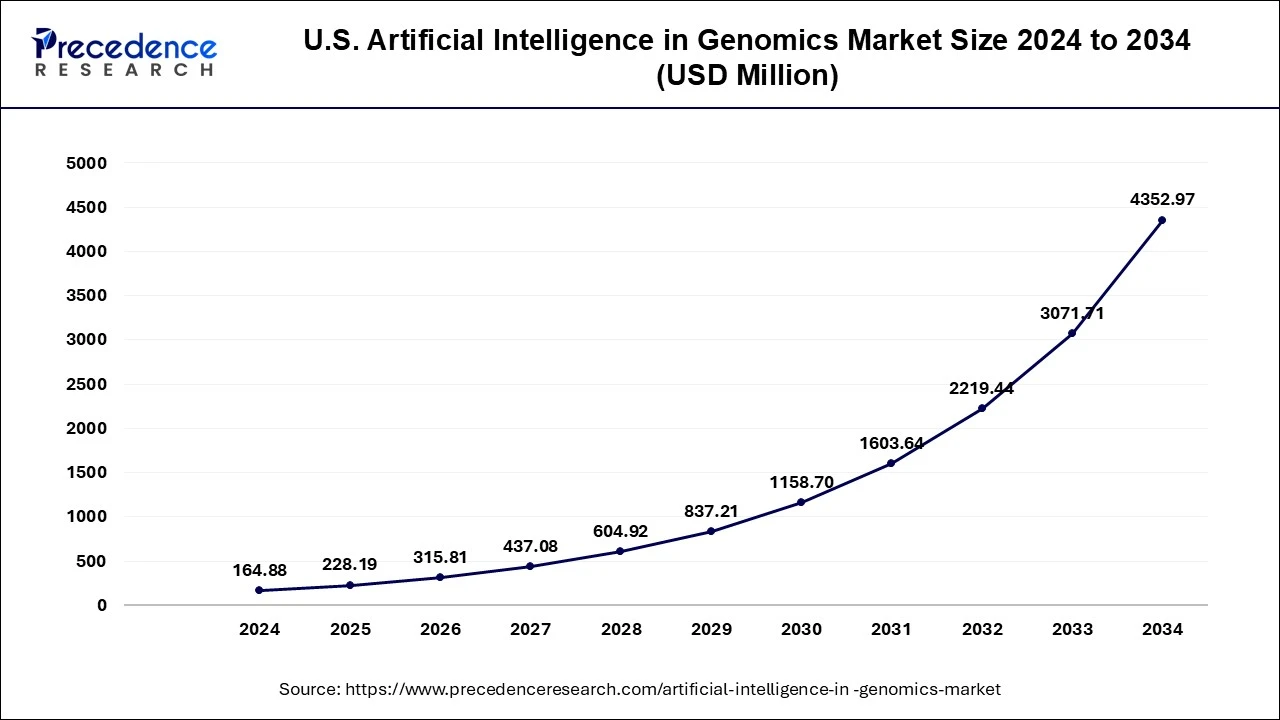
Based on the region, North America dominated the global AI in genomics market in 2025. North America is the home to several leading pharmaceutical and biotechnology companies that has significantly contributed to the growth of the AI in genomics market. The huge investments in the adoption of AI technology in the pharma sector of North America has led to the huge market growth. Further, the presence of huge patient population owing to the presence of high geriatric population and increased prevalence of chronic diseases has resulted in the huge adoption of the AI-based technology in the healthcare sector. It is estimated that more than half of the US population is suffering from one or more chronic diseases. Moreover, by 2060, about 24% of the US population would be of age 65 years or above. Thus the rising demand for innovative medicines and quick treatment services is expected to boost the growth of the North America AI in genomics market.
U.S. Artificial Intelligence in Genomics Market Trends:
The integration of multi-omics data for deeper biological insights and advancements in diagnostics for more accurate and early disease detection. Strong government funding, regulatory support, and the demand for transparent and ethical AI practices are also significant drivers shaping the market's trajectory.
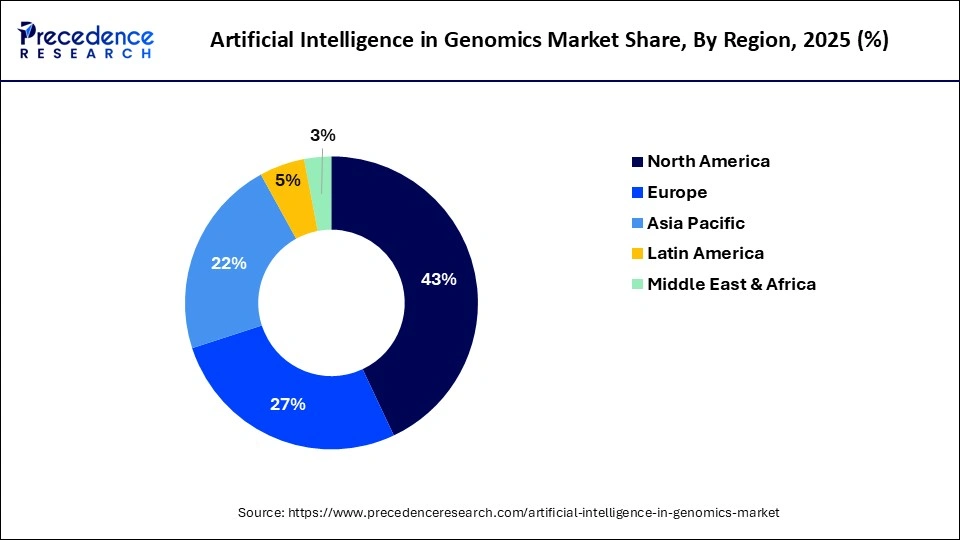
Asia Pacific is expected to be the fastest-growing market during the forecast period. The surging uses of AI across various application such as agriculture, animal research, diagnostics, and drug discovery is driving the market growth significantly. Moreover, the presence of several top research organizations in the region and rising demand for the AI technology among them is fostering the growth of the AI in genomics market in Asia Pacific region.
China Artificial Intelligence in Genomics Trends
The accumulation of vast national genetic databases and a strong focus on practical, integrated applications in diagnostics and medical imaging. The market is also characterized by close industry-academia collaboration and an evolving regulatory landscape that prioritizes data management as a strategic national resource.
Germany Artificial Intelligence in Genomics Trends
The robust government funding and strategy, emphasis on Trustworthy AI and Ethics, and strong research and industry collaborations.
Brazil Artificial Intelligence in Genomics Trends
The significant investments in drug discovery applications and large-scale government-backed genomic programs provide essential data for training AI models. This ecosystem is further supported by an evolving regulatory framework and increasing private investment.
Saudi Arabia Artificial Intelligence in Genomics Trends
The high incidence of genetic and chronic disorders in the population, supportive government programs, and integration of next-generation sequencing and AI, rising focus on drug discovery and development.
Artificial Intelligence in Genomics Market Value Chain Analysis
- Genomic Data Generation
This foundational stage involves generating large volumes of high-quality genomic and multi-omics data through next-generation sequencing (NGS) and other technologies. The process includes sample collection, sequencing, and quality control to ensure reliable input for AI models. Companies in this stage provide the instrumentation and consumables needed for research and clinical sequencing efforts.
Key Players: Illumina Inc., Thermo Fisher Scientific, and Oxford Nanopore Technologies. - Bioinformatics and Data Analysis
At this stage, raw genomic data is processed, organized, and annotated using bioinformatics pipelines. AI and machine learning (ML) algorithms are then applied to identify patterns, classify genetic variants, and predict disease associations. This involves complex computational analysis to turn raw data into meaningful biological insights.
Key Players: DNAnexus, Sophia Genetics, LifebitAI, and specialized bioinformatics startups like Fabric Genomics and Genomenon. - AI Platform Development
This stage involves creating and commercializing software platforms and tools that integrate AI capabilities for genomic analysis. These platforms enable researchers and clinicians to manage, analyze, and visualize genomic data more efficiently, often utilizing cloud-based infrastructure. Major tech companies, alongside specialized startups, provide these essential software and service offerings.
Key Players: Microsoft Genomics (Azure Cloud), Google DeepMind, IBM Watson Health, NVIDIA Corporation, and startups like BenevolentAI and Insitro. - Clinical Integration and Applications
In this crucial stage, AI-derived genomic insights are integrated into clinical workflows and used for real-world applications. This includes clinical decision support tools for diagnostics, precision oncology, and personalized treatment planning. The effective integration with Electronic Health Records (EHRs) and other hospital systems is critical for translating genomic data into actionable patient care.
Key Players: Tempus Labs, F. Hoffmann-La Roche Ltd. (for diagnostics), and healthcare IT companies like Epic Systems and Oracle. - Drug Discovery and Development
This segment of the value chain leverages AI to accelerate the drug discovery process. AI algorithms are used to identify drug targets, optimize drug design, and predict drug interactions and efficacy based on genetic profiles, significantly reducing the time and cost of drug development. The stage involves collaborations between AI companies and pharmaceutical firms.
Key Players: Atomwise, BenevolentAI, Deep Genomics, and pharmaceutical companies such as Novo Nordisk and GSK that have dedicated AI divisions or partnerships.
Artificial Intelligence in Genomics Market Companies
- IBM: IBM contributes to the AI in genomics market through its Watson Health platform, which provides AI-powered analytics to interpret genomic data and integrate it with clinical information for precision medicine and research. The company's technology helps healthcare providers and researchers analyze complex genetic information to find new insights.
- NVIDIA Corporation: NVIDIA is a fundamental enabler of AI in genomics, providing powerful GPU-accelerated computing platforms essential for the massive parallel processing required for sequencing data analysis and training deep learning models. Their hardware and software, such as the Clara Parabricks suite, significantly speed up genomic workflows.
- BenevolentAI: BenevolentAI is a UK-based company that uses AI and machine learning to accelerate drug discovery by analyzing genomic and clinical data to identify novel drug targets and design more effective therapeutic compounds. Their platform helps pharmaceutical companies find new ways to treat diseases by leveraging AI to uncover previously hidden biological insights.
- Verge Genomics: Verge Genomics focuses on using AI to develop treatments for neurological diseases by integrating genomic data from human patients with preclinical models. The company's unique platform analyzes vast datasets to pinpoint the most promising drug targets and accelerate the development of therapies for complex disorders.
- MolecularMatch, Inc.: MolecularMatch, Inc. offers an AI-powered platform that helps oncologists match cancer patients to the best available therapies, including clinical trials, based on their unique genomic and molecular profiles. Their technology integrates genomic sequencing results with a vast database of clinical evidence to personalize cancer treatment decisions.
- SOPHiA GENETICS: SOPHiA GENETICS provides a cloud-native platform that uses AI and machine learning to analyze complex genomic data for hospitals and clinical laboratories globally. The company's technology helps healthcare professionals interpret genetic variations to improve diagnostic accuracy in oncology and rare diseases.
- PrecisionLife Ltd.: PrecisionLife uses AI to decode the complex biology of chronic diseases by identifying combinations of genetic and clinical factors that drive disease progression. Their platform uncovers new drug targets and diagnostic biomarkers by mapping the most detailed and comprehensive understanding of disease biology available.
- Lifebit: Lifebit offers a federated learning platform that allows genomic data to be analyzed in place, without being moved, thereby ensuring privacy and security. The company's technology enables researchers to securely collaborate on massive datasets across different organizations to accelerate biomedical discoveries.
- FDNA, Inc.: FDNA uses AI to analyze facial and other phenotypic features to help diagnose rare genetic syndromes and congenital disorders. Their Face2Gene platform uses deep learning to suggest possible genetic conditions based on patient photos, significantly aiding clinicians in the diagnostic process.
- Empiric Logic: Empiric Logic develops AI-driven software solutions to improve the efficiency and accuracy of genetic testing and clinical diagnostics. Their technology helps labs and healthcare providers streamline workflows, from genomic data analysis to final report generation.
- Microsoft: Microsoft contributes to the market through its Azure cloud platform, providing the scalable computing power and AI services necessary for genomics research and clinical applications. Their technologies are used by many genomics companies to store, manage, and analyze massive datasets while ensuring data security and compliance.
- Deep Genomics: Deep Genomics is a company that uses AI to program and predict the effects of genetic mutations and to discover novel RNA-based therapies. Their technology predicts how genetic variations alter molecular functions, helping to accelerate the development of life-saving drugs.
- Fabric Genomics Inc.: Fabric Genomics offers an AI-powered software platform that helps clinical laboratories interpret genomic data to identify disease-causing variants. Their solution streamlines the bioinformatics and diagnostic process, providing faster and more accurate results for patients with genetic diseases.
- Freenome Holdings, Inc.: Freenome is a company focused on early cancer detection using multi-omics data and AI. Their technology analyzes both genomic and proteomic information from blood samples to identify the earliest signs of cancer, enabling timely intervention.
- Cambridge Cancer Genomics: This company provides AI-powered software that analyzes genomic data from cancer patients to guide clinical treatment decisions and monitor disease progression. Their technology helps oncologists make more informed, data-driven choices for personalized cancer care.
- Data4Cure Inc.: Data4Cure provides a real-time, AI-driven knowledge network that helps researchers and clinicians interpret genomic and clinical data for precision medicine. Their platform enables a deeper understanding of disease mechanisms and therapeutic pathways by integrating disparate data sources.
- Engine Biosciences Pte. Ltd.: Engine Biosciences uses a proprietary AI platform to map out the complex interactions of genes and develop new therapeutic approaches for cancer and other diseases. They leverage AI to find novel genetic dependencies and identify promising drug targets with greater precision.
- Genoox Ltd.: Genoox offers an AI-powered platform for the analysis and interpretation of genomic data, particularly for rare diseases and oncology. Their technology helps clinicians and researchers identify relevant genetic variants and share knowledge across a global community.
- Diploid: Diploid specializes in AI-powered tools that accelerate the diagnosis of rare genetic diseases by automating the interpretation of genomic data. Their Moon software uses AI to prioritize and identify disease-causing variants, reducing diagnostic time for patients.
- DNAnexus Inc.: DNAnexus provides a cloud-based platform for managing, analyzing, and collaborating on large-scale genomic and multi-omics data. The company's scalable and secure infrastructure is a foundational tool for researchers and bioinformaticians worldwide who are developing AI-driven solutions.
Latest Announcements by Industry Leaders
In November 2024, Dante Genomics announced the integration of Generative AI capabilities into its first product, the Dante Labs Whole Genome Platform. This milestone represents a significant step in the company's mission to make genomic data more usable and accessible to researchers and individuals.
Recent Developments
- In October 2024, researchers at Yale School of Medicine (YSM), the Jackson Laboratory, and the Broad Institute of MIT and Harvard University developed a new generative AI method to design never-before-seen regulatory elements that precisely control how genes are switched on, or expressed, in cells. The AI-designed synthetic DNA can switch on genes only in specific kinds of cells in the body.
- In September 2024, Debiopharm, has signed a partnership with WhiteLab Genomics (WLG), a Paris and Boston-based biotech company specializing in Artificial Intelligence for Genomic Medicine R&D. This collaboration aims to achieve two key objectives. The first is to identify cancer-specific receptors that are overexpressed on the surface of cancer cells. The second is to find lead candidates capable of binding to these receptors. Once identified, these agents will be attached to the surface of lipid nanoparticles (LNPs) to enhance active tissue targeting.
- In November 2024, Verge Genomics, a clinical-stage biotechnology company pioneering the use of artificial intelligence (AI) and human data to transform drug discovery and development, unveiled that Eli Lilly & Company has opted to pursue the development of therapeutics against two validated drug targets for amyotrophic lateral sclerosis (ALS) as part of the companies' collaboration, which was initiated in July 2021.
Segments Covered in the Report
By Offering
- Software
- Services
By Application
- Drug Discovery & Development
- Precision Medicine
- Diagnostics
- Animal Research and Agriculture
- Others
By End User
- Pharmaceutical & Biotech Companies
- Government Organizations
- Research Organizations
- Others
By Technology
- Machine Learning
- Computer Vision
- Other Technologies
By Functionality
- Genome Sequencing
- Gene Editing
- Others
By Geography
- North America
- U.S.
- Canada
- Europe
- U.K.
- Germany
- France
- Asia-Pacific
- China
- India
- Japan
- South Korea
- Malaysia
- Philippines
- Latin America
- Brazil
- Rest of Latin America
- Middle East & Africa (MEA)
- GCC
- North Africa
- South Africa
- Rest of the Middle East & Africa
For inquiries regarding discounts, bulk purchases, or customization requests, please contact us at sales@precedenceresearch.com
Frequently Asked Questions





Ask For Sample
No cookie-cutter, only authentic analysis – take the 1st step to become a Precedence Research client
 Get a Sample
.webp)



 sales@precedenceresearch.com
 Schedule a Meeting
