



Construction Equipment Market Trends, Leading Companies, Company Revenue / Sales Performance, Production Capacity, Equipment Utilization, Pricing Analysis, Distribution Performance, Competitive Landscape, and Demand Forecast
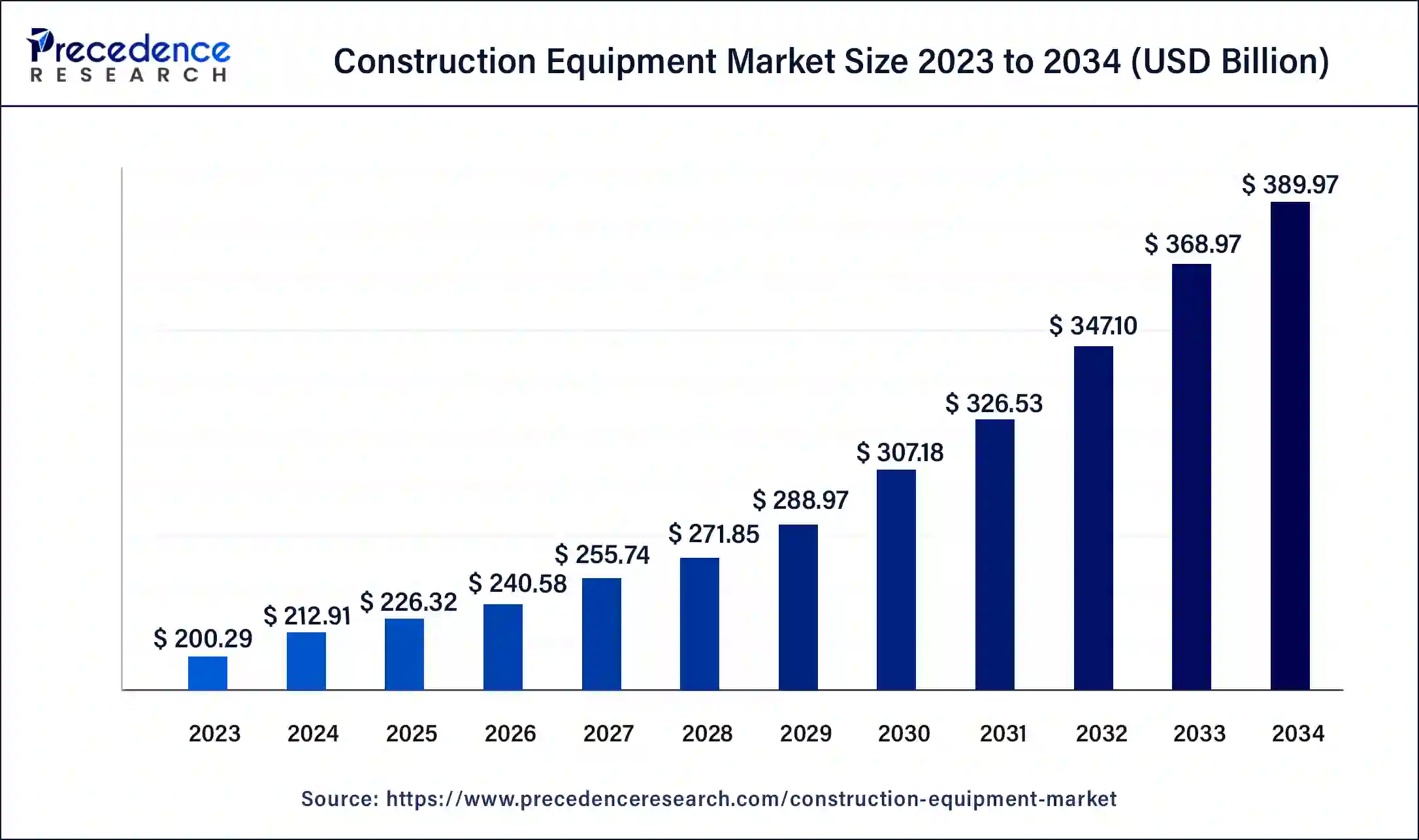
The global construction equipment market is projected to grow from USD 240.58 billion in 2026 to USD 411.55 billion by 2035, registering a CAGR of 6.16%. Growth is driven by rapid urbanization, rising infrastructure investments, increasing adoption of AI-enabled and smart construction equipment, and growing demand for sustainable, fuel-efficient machinery through rental and subscription models. Asia Pacific dominates the market due to extensive infrastructure development and urbanization, while Europe is expected to witness the fastest growth, supported by green construction initiatives, electrification, and advanced digital technologies.
Source: https://www.precedenceresearch.com/construction-equipment-market
 Get a Sample
 Table Of Content


What is the Construction Equipment Market Size?
The global construction equipment market size accounted for USD 240.58 billion in 2026 and is expected to reach around USD 411.55 billion by 2035, expanding at a CAGR of 6.16% from 2026 to 2035. The government investments and sustainable technologies supporting green projects are accelerating the market strategies on a large scale. The strict emission regulations and rental models are driving additional valuable revenue to the market. The leasing and rental models ensure smart revenue into the market, a high revenue spectrum, benefiting the service providers and the online subscription trend.
Market Highlights
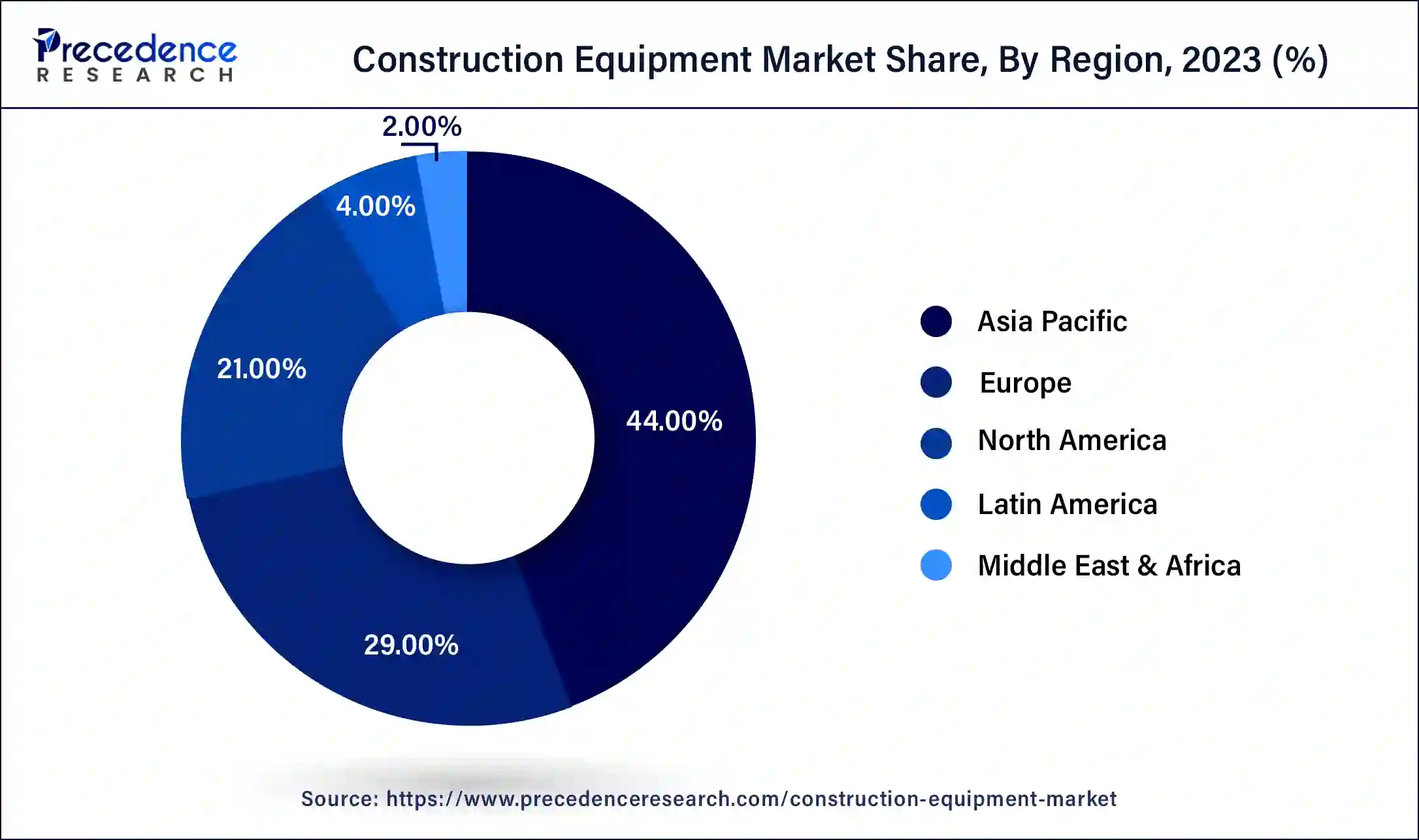
- Asia Pacific led the global market with the highest market share of 44% in 2025.
- Europe region is estimated to expand the fastest CAGR between 2026 and 2035.
- By Equipment Type, the earthmoving segment has held the largest market share of 52% in 2025.
- By Equipment Type, the material handling segment is anticipated to grow at a remarkable CAGR between 2026 and 2035.
- By Application, the residential segment captured the biggest revenue share in 2025.
- By Application, the industrial segment is expected to expand at the fastest CAGR over the projected period.
What is the Construction Equipment Market?
The construction equipment industry comprises a wide range of heavy machines required for construction and demolition tasks. This market is responsible for the production of various types of equipment, including cranes, bulldozers, excavators, and mixers, among others. The evolution of construction equipment dates back to ancient Rome and has progressed prominently since the Industrial Revolution, with major technological advancements improving efficiency, safety, and operator comfort.
AI's Impact on the Construction Equipment Market
AI's impact on the construction equipment market is pumped by data-driven asset solutions and modern computer vision that requires smart tech integration featuring AI brilliance. AI algorithms manage the responsible real-time machine data such as operational stress, fluid levels and engine temperature. This enhances the machinery predictive maintenance, covering the betterment and efficient mechanism serving great service to modern infrastructure and high-volume operations. The AI-sponsored proximity sensors and cameras are a boon to the systems unification approaches. The end-to-end construction projects involve AI to check excavation intensity and depth; the autonomous vehicles' potential highlights the importance and effectiveness of mapping.
Alongside, AI software helps operators in sequencing and allocating work perfectly to further contribute to clean energy while reducing carbon emissions. Efficient and robust equipment management is a benefit to smart building projects. The responsible manufacturers are confirming the best of smart tech innovations in their operations. The heavy construction volume, irrespective of regions otherwise development, ensures smart alliances with the tech and market leaders.
Construction Equipment Market Growth Factors
The global construction equipment market is majorly driven by the factors such as rapid urbanization, rapid industrialization, rising government investments in the development of infrastructure, and expansion and growth activities of the real estate and construction companies across the globe. The increased investments by the market players in the research and developmental activities to develop new automated equipment to replace traditional construction equipment is expected to drive the market growth in the upcoming future. The construction equipment manufacturers are constantly engaged in securing the supply chains to improve efficiency that will increase productivity of the construction industry. The global construction equipment market is expected to be driven by the increasing government expenditure on various infrastructural projects in Asia Pacific in the upcoming years. According to the Asian Development Bank, Asia is rapidly being urbanized as compared to rest of the world. East Asia is developing (Urbanizing) at a CAGR of 3.7%, followed by South-East Asia at 3.6%, South Asia at 3.3%, and Central Asia at 1.6%. The Pacific region is urbanizing at a CAGR of 2.9%. Therefore, the increased urbanization of Asia Pacific region is a major factor that is expected to drive the growth of the global construction equipment market in the upcoming future.
The adoption of smart automated construction equipment is another major factor boosting the demand for the construction equipment across the globe. The automated smart construction equipment are fuel-efficient, reduces labor cost, increase productivity, and reduces the overall operational costs. The introduction of Internet of Things (IoT) and ICT is boosting the demand for the latest advanced construction equipment. These cost saving benefits and advanced technologies installed in the latest construction equipment is expected to drive the global construction equipment market all over the globe. Further, the growth of the construction equipment rental services industry is fostering the development of the construction equipment market. The nations such as China and India, where the urbanization rate is highest is expected to witness a significant demand for the construction equipment rental services during the forecast period.
Market Outlook
- Global Expansion: The market is expanding globally with investments and partnerships. Major government investments in the construction industry for large public infrastructure projects such as roads, highways, schools, hospitals and so on are observed in many parts of the world, including North America, Europe, and Asia Pacific.
- Sustainability Trends: Construction equipment manufacturers are creating eco-friendly equipment, which helps the road construction industry meet sustainability goals. These advancements deliver greener, high-performance construction products by using innovative technology and materials. Construction equipment manufacturers are incorporating sustainable materials in their products, including biodegradable components and recyclable metals.
- Startup ecosystem: The startup ecosystem is maturing with collaboration and solutions, essential for improving productivity, sustainability and affordability in construction. There exists a total of 1,696 startups within the Construction Equipment and Machinery sector, which includes industry leaders such as Cat, John Deere, JCB, Caterpillar, and Liebherr. Of these, 157 startups have received funding, with 271 having secured Series A+ financing. The United States hosts the largest number of companies in this sector, totaling 286, followed by the United Kingdom with 211 and Germany with 199.
Construction Equipment Market Trends
- Hybrid Models - The promising hybrid models featuring electric loaders and excavators are known for the potential of zero-tailpipe emissions. The compatibility of hybrid loaders with the construction equipment brings the combination of batteries and compact diesel engines that reduce the fuel consumption rate.
- Digitization Advancements - The rising high-volume operations due to intensified infrastructure development are stimulating the use of heavy machinery that further integrates sensors. The modernization in auto-guidance, machine-level computing and AI is promoting the benefits of digitization supporting the modern integration.
- Demand for Compact Equipment - The growing demand for strong compact equipment in the infrastructure projects involving urban areas is increasingly engaging with mini track loaders and zero-tail-swing excavators to proceed with the projects.
- Subscription Models - The equipment on rent is unveiling the subscription models, which is a powerful business strategy in the market. Following this, the SMEs and OEMs' moves have been noted to prove profitable for their respective business as well. OEMs' alliance with the rental providers and SMEs' idea of ‘machinery on rent' are gaining traction in the market.
Future Outlook and Strategic Recommendation
- Emerging Business Model: The concept of Equipment-as-a-Service (EaaS) is gaining popularity. Instead of purchasing a machine outright, customers pay for the output it provides, such as cubic yards moved or hours operated. Regionalization is becoming a key strategy, with manufacturers establishing factories closer to their markets. This approach helps reduce shipping times and mitigate tariff risks. Additionally, hybrid technology represents a significant opportunity in the heavy construction equipment market.
- Strategic Recommendations for Stakeholders: To enhance the lifespan and productivity of your construction equipment, it is essential to implement effective management strategies. Establishing a regular maintenance schedule is critical for identifying and addressing potential issues before they escalate. Well-trained operators can significantly extend the lifespan of construction equipment by fully understanding its capabilities and limitations. Utilizing a Construction ERP System can help you save time and money in managing your machinery. Additionally, consider employing an automated Asset Management System to keep track of your equipment details effectively.
Market Scope
| Report Coverage | Details |
| Market Size in 2025 | USD 226.32 Billion |
| Market Size in 2026 | USD 240.58 Billion |
| Market Size by 2035 | USD 411.55 Billion |
| Market Growth Rate from 2026 to 2035 | CAGR of 6.16% |
| Largest Market | Asia Pacific |
| Fastest Growing Market | Europe |
| Base Year | 2025 |
| Forecast Period | 2026 to 2035 |
| Segments Covered | Equipment, Application, and Region |
| Regions Covered | North America, Europe, Asia-Pacific, Latin America, and Middle East & Africa |
Segment Insights
Equipment Type Insights
Why Did the Earthmoving Segment Dominate the Construction Equipment Market in 2025?
The earthmoving segment dominated the market in 2025 and is expected to grow at the fastest rate during the forecast period, driven by government support for transport by investing heavily in the development of a strong and well-connected road network. The earthmoving equipment includes excavators, loaders, and others. Further, the extensive need for digging in confined spaces during construction has led to the extensive use of excavators that significantly contributed towards the growth of this segment. Moreover, the government regulations regarding emissions and noise are boosting the development of less noisy and eco-friendly excavators, which is expected to drive the growth of this segment in the forecast period.
The material handling segment is expected to witness a significant growth rate during the forecast period. This is attributed to the growing demand for machinery handling equipment like cranes in developed economies because of the construction of skyscrapers and commercial buildings. Further, the government investments in building highways in developing countries are expected to boost the demand for material handling equipment during the forecast period.
Application Insights
Which Application Segment Dominated the Construction Equipment Market in 2025?
The residential segment held a dominant revenue share of the market in 2025 and is expected to sustain as a leader in the upcoming period. This is attributed to the increased number of housing projects in the developed and developing nations in the past years. Rising urbanization is a major factor that fueled the growth of this segment. According to U.S. Census Bureau data published in December 2024, the U.S. approved 1.48 million building permits and completed 1.54 million new housing units, with residential output up 2.6% year-over-year. Such high volumes of residential construction require agile equipment like skid-steer loaders and mini excavators capable of working in tighter quarters.
The industrial segment is estimated to be the most opportunistic segment during the forecast period. The rising government policies to attract Foreign Direct Investments and rapid industrialization in the developing and underdeveloped economies are the major factors that are anticipated to drive the growth of this segment in the forthcoming years. In addition, construction companies are offering autonomous equipment to improve productivity, address the skilled labor shortage, and increase worker safety on the job site.
Regional Insights
What is the Asia Pacific Construction Equipment Market Size?
The Asia Pacific construction equipment market size is estimated at USD 99.58 billion in 2025 and is predicted to be worth around USD 181.09 billion by 2035, at a CAGR of 6.16% from 2026 to 2035.
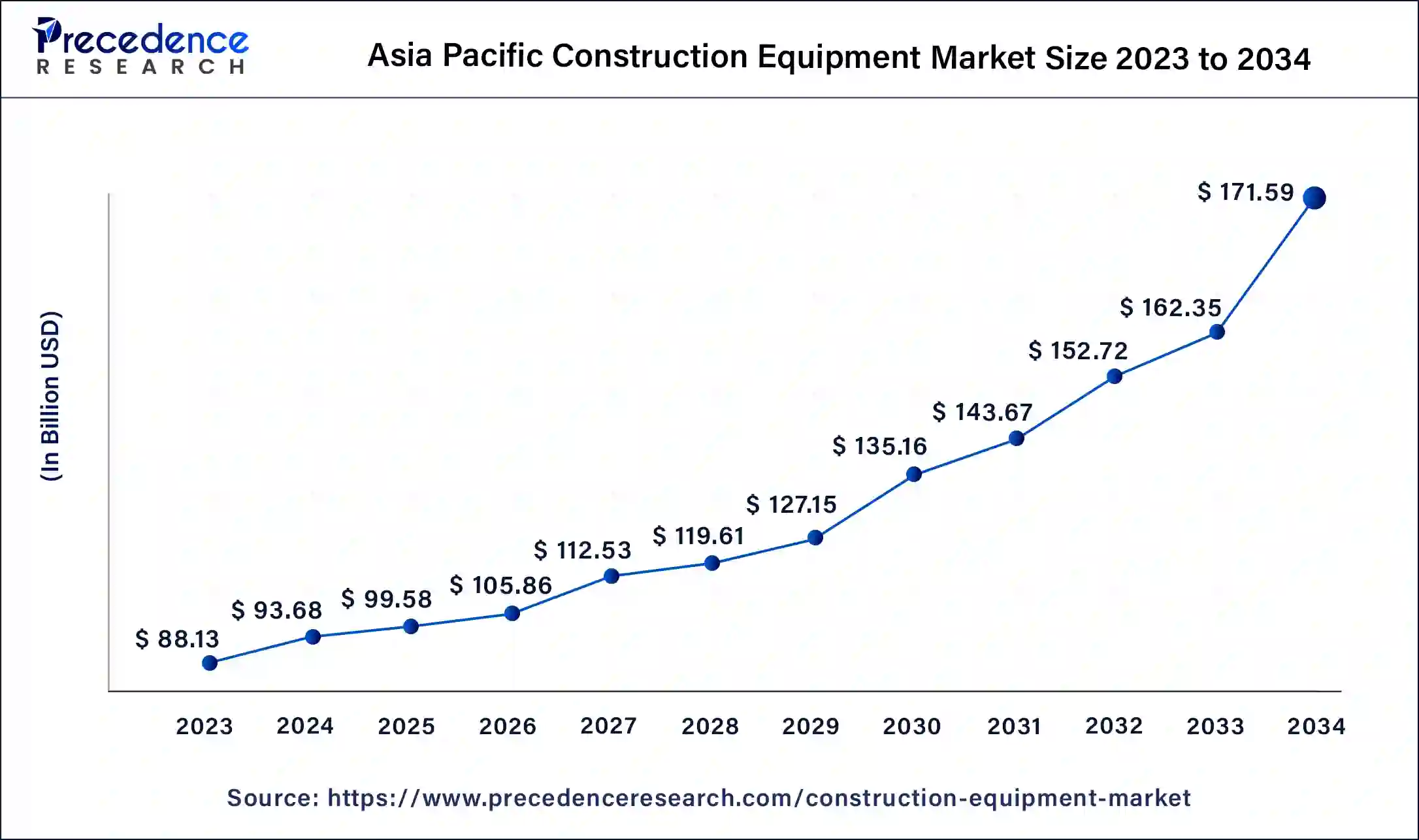
Based on region, Asia Pacific dominated the global construction equipment market in 2025, in terms of revenue and is estimated to sustain its dominance during the forecast period. According to the Asian Development Bank, Asia Pacific is the fastest urbanizing region in the globe. The Asia Pacific region has witnessed an increase in urbanization by five-folds since 1970. The increased government expenditure on the development of infrastructure in major economies like India and China has had boosted the growth of the Asia Pacific construction equipment market. In fact, according to the Asian Development Bank, India and China are the two most prominent economies that augments the growth rate of the Asia region.
China's construction equipment market trends are its constant transitions in electrification, involving great support for the zero-emission and battery electric equipment that eventually strengthen the foundation of the regional market. The smart machinery and incredible international deals with the real estate and innovative manufacturers encourage regional trends to promote infrastructural development and green projects. National policies for saving energy are accelerating the incentive deals for contractors to equip advanced green equipment.
On the other hand, Europe is estimated to be the most opportunistic market during the forecast period. Europe has shown a positive growth in the construction sector. The development of various skyscrapers, industrial and commercial buildings, and residential units is expected to foster the growth of the Europe construction equipment market. Further, the rising popularity of advanced and latest technologies installed in the construction equipment is a prominent factor that will drive the growth of the market in this region.
UK construction equipment market trends are pushed by sustainable pressures and robust alternative fuels. The electric/hybrid machinery and Hydrotreated Vegetable Oil (HVO) trend is aligned with regional sustainable standards. The heavy spending on connected equipment highlights the potential of IoT, telematics and AI. The modern anti-theft systems and Equipment-as-a-Service dominance are unveiling innovations in the regional market. The valuable national infrastructure plan is reshaping the regional innovators plan to proceed with the excellent transport networks, such as roadways and railways.
Germany construction equipment market trends involve rental services, digitalization and eco-friendly solutions. The battery-operated machinery and AI-managed systems are spurring tech interventions in the regional market strategies. The well-known Wacker Neuson and Volvo CE concentrate on small sustainable machinery for urban assignments. The automation and telematics, along with the Building Information Modeling and IoT, are enhancing safe output and remarkable productivity. The digital fleet management promotes a digitization boon in the regional market.
Growing Investments in Infrastructure Projects Fueling the North America Construction Equipment Market
North America shows a significant growth during the forecast period. It is driven by large-scale investments in energy, semiconductor, along with battery plants, and the development of industrial parks. Stricter emission regulations alongside government incentives are thus, accelerating the shift toward electric and hybrid construction machinery, and then replacing older, conventional models.
Rising Demand for Excavators and Loaders Supporting the Latin America Construction Equipment Market Growth
Latin America shows a notable growth during the forecast period. It is driven by rapid urbanization, massive infrastructure projects like roads, mining, and a demand for versatile, efficient machinery to lower operating expenses. Backhoe loaders and excavators are thus, favored for their ability to perform multiple tasks, like digging, lifting, and grading, which is ideal for numerous, complex, or space-limited job sites.
Government Infrastructure Initiative Driving the MEA Construction Equipment Market
MEA shows a rapid growth during the forecast period. By funding large-scale projects such as Saudi Arabia's Vision 2030, the Riyadh Metro, and numerous regional solar or wind projects, the country is targeting at economic diversification and urbanization. This drives high need for earthmoving along with heavy machinery. Governments are thus, heavily investing in roads, airports, and transport to improve regional connectivity, increasing the demand for construction machinery.
Saudi Arabia construction equipment market trends are measured by the rising demand for excavators and smart transitions in electric power. The intelligent site tech and extended investments backing warehouses, ports, and logistics parks are bolstering the financing base of the regional market. The metro projects in Riyadh are highlighting the commitments, the promises to the smart infrastructure contributing to the regional market's worth. The material advancements and dominance of Earth-moving machinery are at the heart of innovation for the regional market rise.
Government Initiatives
- India is fortifying its construction equipment financing framework as part of a broader capital expenditure initiative to position the country as a global leader in this sector. The Minister highlighted the proposed Scheme for Enhancement of Construction and Infrastructure Equipment, which is being facilitated by the Ministry of Heavy Industries and seeks to strengthen domestic manufacturing of high-value and technologically sophisticated equipment.
- The national government of Germany has earmarked approximately EUR 500 billion for infrastructure and climate investments by 2037, in addition to its regular spending commitments. Green building has been identified as a principal investment strategy by the German government, which is anticipated to boost demand for compact powered construction equipment.
Trade Analysis
- The construction equipment sector in India recorded total sales of 1,40,191 units during the year, representing a 3% rise compared to the previous financial year, as per the Ministry of Heavy Industries. The most significant growth came from exports, which increased by 31.5% year-on-year to 16,885 units.
- Between Jun 2024 and May 2025, through 1,193 verified exporters and 811 buyers, 19,600 Construction Equipment shipments were exported globally.
- India, Russia, and the United States are the top Construction Equipment importers, while China with 17,906 shipments, India with 12,699, and South Korea with 11,562 rank as the top construction equipment exporters.
Value Chain Analysis
- Raw Material Sourcing - The essential materials such as electronics, rubber, steel and iron ore for the high volume operations support the heavy machinery. The growing sustainability trends and infrastructure developments are expanding engagements with the modern raw materials within the budget.
- Key Players - Jindal Steels & Power, Hindalco Industries and Reliance Industries Limited.
- Component Fabrication and Machining - The arms, booms, chassis, and frameworks are formed via smart fabrication. The raw steel and sheet metal transitions manage extreme environments and rugged terrain. The machined connectors and joints for accurate structural parts fittings alleviate material waste and assembly disturbance.
- Key Players - Trumpf Group, Mazak Corporation and Komatsu Ltd.
- Distribution and Sales - The expanded coal production and earthmoving machinery expanded the networks of the distribution channel, involving third parties confirming the assignments. The smart building projects and infrastructure development ensure heavy revenue for the market.
- Key Players - JCB, John Deere, and Volvo Construction Equipment.
Competitive Landscape
The construction equipment market is experiencing significant competition as manufacturers adopt sustainability trends and smart technologies. Companies are implementing various strategies, such as strategic collaboration, market forecast, partnerships, mergers and acquisitions, geographical expansion, and product and service launches, to improve their presence in the market.
The use of automation, artificial intelligence, and the Internet of Things is transforming operational efficiency and safety standards. Industry players should align their strategies with sustainable practices, investing in alternative fuel technologies and promoting energy-efficient equipment to meet changing consumer preferences and regulatory standards. Manufacturers are increasingly competing on fleet connectivity, software capabilities, maintenance support, emissions performance, and lifecycle operating costs.
Construction Equipment Market Companies
- Hitachi Construction Machinery: Hitachi Construction Machinery aims on fuel-efficient, durable equipment, incorporating advanced technology such as ICT, autonomous systems, and even ConSite predictive maintenance to enhance safety and productivity.
- Liebherr: Liebherr provides a comprehensive range of high-performance construction equipment, thus, specializing in earthmoving like excavators, dozers, loaders, tower and mobile cranes, deep foundation rigs, and even concrete technology.
- Volvo Construction Equipment: Volvo Construction Equipment offers, for the global market, a range of electric compact machines, digital services such as CareTrack, and financial solutions engineered to maximize uptime and productivity.
- Doosan Infracore Co. Ltd.: Doosan Infracore Co. Ltd. provides a wide range of heavy and compact construction equipment, thus, specializing in excavators, wheel loaders, together with articulated dump trucks.
Other Major Key Players
- Caterpillar Inc.
- Komatsu
- J.C. Bamford Excavators Ltd.
- CNH Industrial NV
- SANY Group
- Hyundai Construction Equipment Co.
Recent Collaboration
- In July 2026, Hitachi Construction Machinery and Pronto, a San Francisco-based company co-founded by Anthony Levandowski, signed an MoU to establish a strategic partnership designed to advance open mine automation solutions. As part of its planned transition to the LANDCROS brand, anticipated in April 2027, Hitachi Construction Machinery aims to foster co-creation by integrating products, technologies, and partnerships to deliver new value to its clientele.
Recent Developments
The market is moderately fragmented with the presence of several local companies. These market players are striving to gain higher market share by adopting strategies, such as investments, partnerships, and acquisitions & mergers. Companies are also spending on the development of improved products. Moreover, they are also focusing on maintaining competitive pricing.
- In June 2026, Amazon Leo partnered with Hitachi Construction Machinery on a service collaboration deal. Under this agreement, Hitachi will install portable Amazon Leo antennas at the construction sites in Germany and the U.K. (Source: https://www.satellitetoday.com)
- In June 2026, HD Construction Equipment confirmed the expansion of its robust machinery portfolio, further serving the niche industries such as waste recycling, demolition, and foundation engineering. Continuing the efforts of the companies, the 40-ton-class DEVELON pile will soon be a part of a robust portfolio benefiting the market. (Source: https://themachinemaker.com)
- In June 2026, JCB India hit a milestone with the best-in-class 600,000th construction machine profitable production and sales in the promising and dominant domestic industries. For more than a year of promising deals, JCB India has proved its expansion and footprint in India. (Source: https://ackodrive.com)
- In November 2018, Caterpillar, Inc. launched the new Next Generation D6 dozer that has improved fuel efficiency.
- In December 2019, Hitachi Construction announced the product development of a battery operated mini-excavator.
- In January 2020, Volvo Construction Equipment launched a new excavator with enhanced productivity, improved fuel efficiency, and installed with boom down motion that can reduce the operational cost.
The various developmental strategies like new product launches with latest and innovative features fosters market growth and offers lucrative growth opportunities to the market players.
Segments Covered in the Report
By Equipment Type
- Earthmoving
- Material Handling
- Concrete
- Road Building
- Civil Engineering
- Crushing & Screening
- Others
By Application
- Commercial
- Residential
- Industrial
By Region
- North America
- Europe
- Asia-Pacific
- Latin America
- Middle East & Africa
For inquiries regarding discounts, bulk purchases, or customization requests, please contact us at sales@precedenceresearch.com
Frequently Asked Questions





Ask For Sample
No cookie-cutter, only authentic analysis – take the 1st step to become a Precedence Research client
 Get a Sample




 sales@precedenceresearch.com
 Schedule a Meeting
