



Cosmetic Packaging Market Size, Key Companies, Company Market Share, Production Volume, Sales Performance, Export & Import Dynamics, Adoption Rates, Recycling Rate, Material Efficiency, and Demand Trends
Cosmetic Packaging Market (By Type: Flexible Plastics, Aerosol Cans, Containers, Tubes, Folding cartons, Blister & Strip Packs, Jars, Others; By Application: Oral Care, Skin Care, Hair care, Beauty Care Products, Nail Care; By Components: Paper-based, Glass Metal, Flexible Packaging, Rigid Plastic; By Capacity: < 50 ml, 50 ml – 100 ml, 100 ml – 150 ml, 150 ml – 200 ml, >200 ml) - Global Industry Analysis, Size, Trends, Leading Companies, Regional Outlook, and Forecast 2026 to 2035
Source: https://www.precedenceresearch.com/cosmetic-packaging-market
 Get a Sample
 Table Of Content


What is the Cosmetic Packaging Market Size?
The global cosmetic packaging market size is accounted for USD 40.17 billion in 2026 and is anticipated to reach around USD 62.61 billion by 2035, growing at a CAGR of 5.21% from 2026 to 2035. The cosmetic packaging market is driven by growing demand for eco-friendly, high-quality, and innovative packaging solutions.
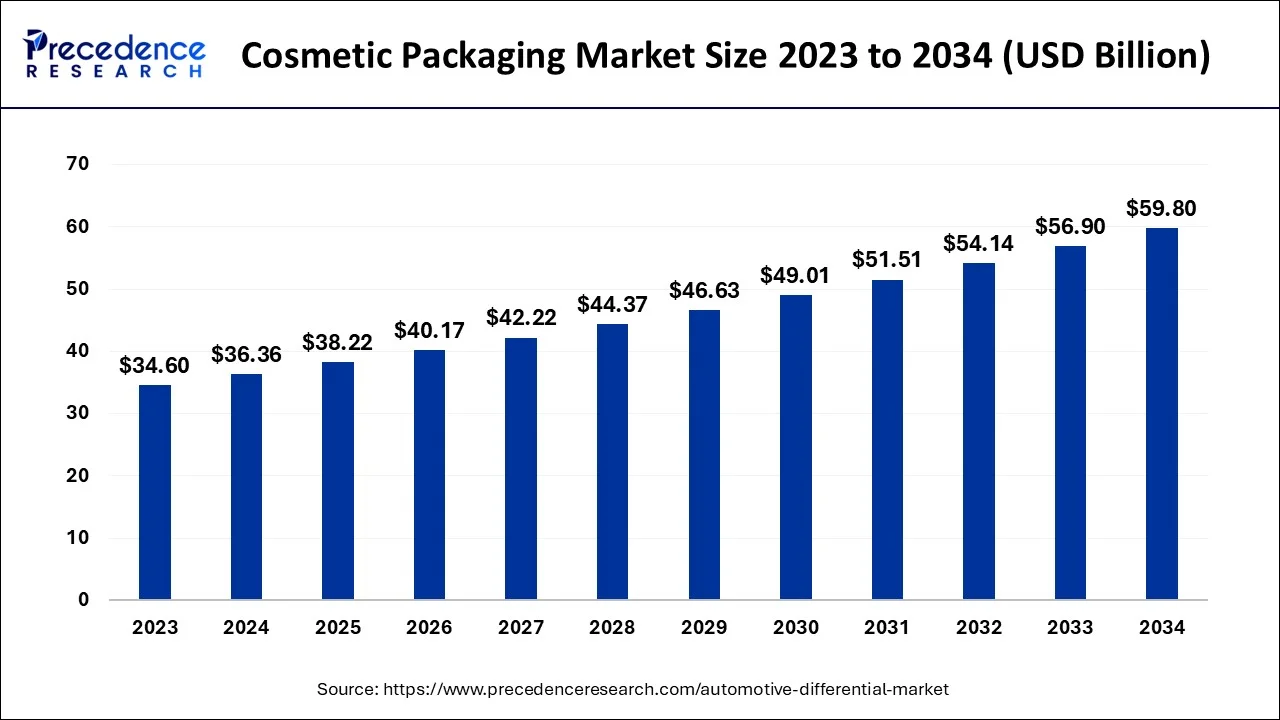
Cosmetic Packaging Market Key Takeaways
- By Region, Asia Pacific held a majority revenue share of the cosmetic packaging market in 2025.
- By Region, North America is expected to grow at the fastest CAGR in the market during the forecast period.
- By type, the containers segment held a dominant market in 2025.
- By type, the flexible plastics segment is expected to grow at the fastest CAGR in the market between 2026 and 2035.
- By application, the skin care segment accounted for a considerable revenue market in 2025.
- By application, the beauty care products segment is expected to grow with the highest CAGR in the market during the studied years.
- By components, the rigid plastic segment led the global market in 2025.
- By components, the paper-based segment is expected to expand rapidly in the market with a CAGR in the coming years.
Market Overview
The worldwide effect of COVID-19 has been extraordinary and frightening, with bundling materials encountering a drop popular across all region because of the pandemic. As per our estimations, the overall market will shrink by 1.7% in 2020. The unexpected expansion in CAGR is because of this market's interest and development, which will return to pre-pandemic levels once the pandemic, is finished. Cosmetic packaging is significant in the advertising of different beauty care products things since it draws the shopper's consideration. Different illustrations and bundling plans are fundamental for making the bundle appealing. This includes both principal and auxiliary pressing. Paper and board-based bundling is generally utilized for optional bundling because of its effortlessness of assembling and capacity to be tweaked to fulfill explicit needs.
Coronavirus has fundamentally modified the worldwide business, organic market chain, and calculated elements. The scourge has hit producers in each industry. The pandemic has sped up the move from worldwide to neighbourhood economy. Rising joblessness, restricted adaptable spending, social distance, and more tight limitations have all adjusted buyer conduct. Restorative shop income diminished by 32% in the beginning stages of the COVID-19 plague, as per Fashion and McKinsey and Company. The disturbance of the worth chain has affected market development; yet, to get by with new requirements, alleviate the effect of the worldwide pandemic, and adjust to changing client tastes, organizations are embracing new strategies.
Key AI Integration in the Cosmetic Packaging Market
AI will revolutionize the cosmetic packaging industry by enhancing packaging design, production, quality control, and supply chain efficiencies. Due to AI analytical tools, brands can determine what their customers will require and design their packaging based on the proper functional and visual elements. By leveraging AI's capabilities for demand forecasting, inventory optimization, and package customization, manufacturers can be agile and responsive to market demands.
Cosmetic Packaging Market Growth factors
The makeup business is quickly filling in both created and non-industrial nations. Shoppers' optional income has expanded because of their inclination for top of the line beauty care products and excellence things. To draw in additional clients, beauty care products organizations are upgrading their item plan while likewise actually marking their items through creative bundling. Accordingly, the area is supposed to increment fundamentally all through the estimate period.
Besides, as additional clients become mindful of the things presented in the area through virtual entertainment and online channels, computerized change is giving appealing opportunities to the market. Because of the fast computerized change, contest in the particular and custom tailored restorative bundling area is warming up. Besides, to expand their market presence and gain an upper hand over laid out undertakings, creating restorative makers are utilizing extraordinary bundling choices. This opposition among rivals is projected to support market development.
Moreover, the overall restorative bundling market is being pushed by a development in the quantity of business foundations. The worldwide business is supposed to develop because of variables, for example, changing individuals' ways of life and excellence and skincare area administrations. Moreover, variety beauty care products are used at a higher rate in the work environment than in the home. This pattern is supposed to go on during the projected period, provoking interest for restorative bundling. Worked on financial circumstances in developing business sectors, as well as a rising accentuation on prepping, are driving interest for restorative bundling. Plastic, then again, is the most generally involved bundling material around here, with by far most winding up in landfills. As per the EPA, roughly 70 percent of the plastic trash created by the makeup business isn't reused and on second thought winds up in landfills.
Besides, the main part of the bundling is made of single-utilize plastic paper, with countless them being stacked to give them a more superior appearance, adding to the abuse of plastics. Since to rising public mindfulness and government measures, extreme plastic utilization is supposed to hinder industry advancement.
Consumer demand for sustainable packaging materials such as glass, bio-based plastics, and recyclable components.
High penetration of e-commerce platforms leading to smart, tamper-proof packaging solutions that enhance unboxing experiences.
A shift towards minimalist and functional designs backed by technology integration, like QR codes and NFC chips for product authentication
Market Outlook
- Industry Growth Overview: With sustained increases due to increased demand for high-end beauty products, consumer preferences towards personalized items, and the growing popularity of durable, aesthetically attractive, & e-commerce friendly protective packaging globally, the cosmetic packaging market has continued to grow.
- Sustainability Trends: Innovative eco-friendly packaging solutions, such as refillable, mono materials, and post-consumer recycled materials, are gradually changing packaging manufacturers' approaches as regulatory compliance pressures coming from brands and environmentally conscious customers intensify.
- Global Expansion: Emerging beauty markets, along with an increase in global trade of cosmetics, are prompting packaging suppliers to expand their production capabilities, diversify sources of supply, and to develop scalable solutions that satisfy compliance across regions.
Market Scope
| Report Coverage | Details |
| Market Size in 2025 | USD 38.22 Billion |
| Market Size in 2026 | USD 40.17 Billion |
| Market Size by 2035 | USD 62.61 Billion |
| Growth Rate from 2026 to 2035 | CAGR of 5.21% |
| Base Year | 2025 |
| Forecast Period | 2026 to 2035 |
| Segments Covered | Type, Application, Components, Capacity, Geography |
Market Dynamics
Driver
Rising Demand for Sustainable and Premium Packaging
Consumers' desire for cosmetics that are mainly environmentally friendly, recyclable, and attractive is contributing to significant growth in the market. To meet regulations as well as drive the reduction of the environmental footprint, brands are getting more and more into customizable formats, light packaging, and eco-friendly materials. Moreover, packaging innovation, the development of new intelligent labels, and new product designs strengthen product differentiation and boost growth in the skincare, fragrances, and cosmetics industry.
Restraint
High Cost of Sustainable Materials and Advanced Packaging
Using sustainable materials and advanced packaging technologies can sometimes be cost-competitive, and difficult to scale for small- to medium-sized manufacturers. Furthermore, applying eco-friendly raw materials, smart packaging features, and the use of the latest finishing techniques demands a significant amount of R&D, production, and investment in technologies. The environmental protection regulations and fluctuating raw prices impact operating costs.
Opportunity
Expansion of Smart and Personalized Packaging Solutions
The rising popularity of smart packaging and personalized cosmetics, the market is expected to grow at a fast rate. Localised products like Tupperware or Colaflakes have the potential to offer more consumer interaction elements like QR codes, NFC tags, and augmented reality, thus giving a more immersive experience. Companies can tailor their packaging to their customers' needs with customer data, leading to higher customer satisfaction and loyalty.
Segment Insights
Type Insights
Which Containers Segment Dominated the Cosmetic Packaging Market?
The containers segment held a dominant position in the market in 2025. Boxes, bottles, and small containers are utilized in a lot of skin care products, hair care products, and beauty products. The acceptance rate of their cosmetic products by the brands has been accelerated due to their product protection as well as functionality and appearance of the high-end cosmetic products. An innovative packaging design has further strengthened the development of the segment.
The flexible plastics segment is expected to witness strong growth during the forecast period as the demand to meet low-cost, lightweight, and versatile packaging needs grows. The benefits of flexible plastic packaging are ease of handling, material savings, and enhanced product protection. Used in packaging refill products, flexible plastics are being used in cosmetic pouches and sachets.
The aerosol cans segment is projected to grow at a notable pace since they are applied in many customer-care products such as deodorants, hair sprays, and many others because they make application and dispensing easy, and also provide long shelf life and convenience. As people need to groom and be clean, the segment is expanding.
The tubes segment is expected to witness steady growth during the forecast period owing to their portability, convenience, and product-effective dispensing features. They are a fundamental ingredient in many creams, lotions, gels, and cosmetics. They are particularly popular among consumers and producers for being light and having minimal product waste.
Glass Packaging will maintain its revenue dominance
The overall market is divided by material into glass, paper and board, plastic, metal, and others. In view of its somewhat significant expense in contrast with other bundling materials and high reception in the extravagance bundling class, glass bundling represents an impressive extent of the market. Glass gives the products an extravagance appearance and is likewise respected an eco-accommodating bundling elective since it is promptly reused. Besides, because of moving purchaser inclinations, materials, for example, paper and board and metal are anticipated to increment at a fairly higher rate with regards to volume and worth than plastics. The quickest developing class is paper and board-based bundling. Hot stepping and overlaying upgraded the lavish allure of paper-based optional bundling decisively.
Application Insights
Why Did the Skin Care Segment Dominate the Cosmetic Packaging Market?
The skin care segment dominated the market in 2025 as consumers focus on skin care routines and premium beauty products. With the number of product offerings like moisturizers, serums, anti-aging products, and cleansers increasing, so has consumer demand for innovations in new packaging. Brands are investing in functional and, of course, attractive packages to help the product's appeal and User Experience.
The beauty care products segment is expected to grow significantly during the forecast period, due to the rising usage of beauty care products such as make-up articles, high-premium brands, etc. Beauty trends and consumers' habits to spend more on cosmetics are fueling the demand for innovative pack formats. It is important to have a clear and distinctive brand that is driven by attractive, customized, and luxury packaging designs.
The hair care segment is projected to grow at a notable pace demand for hair care products including shampoos, conditioners, treatments, and hair styling products. With an increasing awareness of their hair health and care, consumers are buying more hair products. Manufacturers are spearheading the initiative and designing numerous packaging formats such as bottles, tubes, and flexible containers.
The nail care segment is expected to witness steady growth during the forecast period, due to the rising trend of post-exercise nail care masks. With the rise of love and nail care products by nail care professionals and nail polishes, nail packaging is increasing in popularity as well. Cosmetic companies have been shifting their efforts to luxury packaging to enhance products' visibility and brand value.
Healthy skin items utilize the most superficial bundling. The overall market is fragmented by application into skincare, hair care, beauty care products, and nail care. Skin health management items represent the huge greater part of the overall market because of their boundless use in Asia Pacific, Europe, and North America. Be that as it may, in Latin America, the Middle East, and Africa, comparative bundling is frequently utilized for beauty care products. The rising entrance of multi-reason healthy skin items, for example, face creams, lotions, and others advances the extension of cosmetic packaging in the skin health management application type.
Components Insights
How the Rigid Plastic Segment Dominated the Cosmetic Packaging Market?
The rigid plastic segment dominated the market in 2025 due to its strength, low weight, and low price. In cosmetics, PET, glass, or plastic containers are being used in numerous cosmetic applications, particularly for bottles, jars, and containers. Safe from a safety standpoint, offers flexibility in terms of design/structure and is a preferred material among manufacturers.
The paper-based segment is expected to grow steadily during the forecast period as there is a growing demand for sustainable and eco-friendly packaging solutions. There is a rise in the use of paper-based materials, as consumers and brands look to minimize the amount of plastic in use. Paper is recyclable and lightweight, and offers good branding opportunities.
The glass and metal segment is projected to grow at a healthy pace as it offers premium quality, durability, and recyclability. Aesthetics would be an important factor if it were in use with luxury cosmetics and premium skin care products, in which personalized glass containers would be widely used. Metal packaging provides strength, protection of the product, and creates a superior image in a wide range of cosmetic product uses.
The flexible packaging segment is expected to experience considerable growth during the forecast period, due to the increasing demand for lightweight and convenient packaging solutions. Displacing materials, transportation costs, and environmental impacts are some of how flexible packaging. It has become one of the common ingredients in skin care, hair cosmetics, and personal care products.
As far as material, the paper-based area is supposed to be the quickest developing classification in the cosmetic packaging market. Factors including as recyclability, practicality, and the utilization of eco-accommodating materials in the production of bundle merchandise pursue it a well known decision for cosmetic packaging. Plastic bundling is utilized for most of beauty care products since it is the most secure and generally clean. While plastic can crack and break, it happens altogether less often than glass bundling, attributable to its nuclear and compound cosmetics and nature.
Plastic is additionally less challenging to work with all through the creation interaction. It is lighter and more affordable to acquire and deliver. This decreases complete creation costs. Producers could give these reserve funds to clients looking like inflated costs. Notwithstanding, many firms are searching for paper and other harmless to the ecosystem bundling choices. This has been generally affected by customer pressure. The justification for this is on the grounds that the creation of plastic produces and emanates a lot of carbon particles into the climate. This has expanded a worldwide temperature alteration and the nursery impact. Many firms reuse plastic materials while creating restorative bundling since it is better for the climate. It additionally essentially decreases their complete creation costs.
Wood is another elective that beauty care products bundling makers are progressively considering in light of the fact that it has not been tried on lab creatures. It is additionally better for the climate. Besides, organizations are forcefully putting resources into and exploring different avenues regarding new innovations that can give all the more harmless to the ecosystem items and arrangements. They are considerably spending in innovative work to do this.
Regional Insights
What is the Asia Pacific Cosmetic Packaging Market Size?
The Asia Pacific cosmetic packaging market size is evaluated at USD 18.08 billion in 2026 and is predicted to be worth around USD 28.58 billion by 2035, rising at a CAGR of 5.21% from 2026 to 2035.
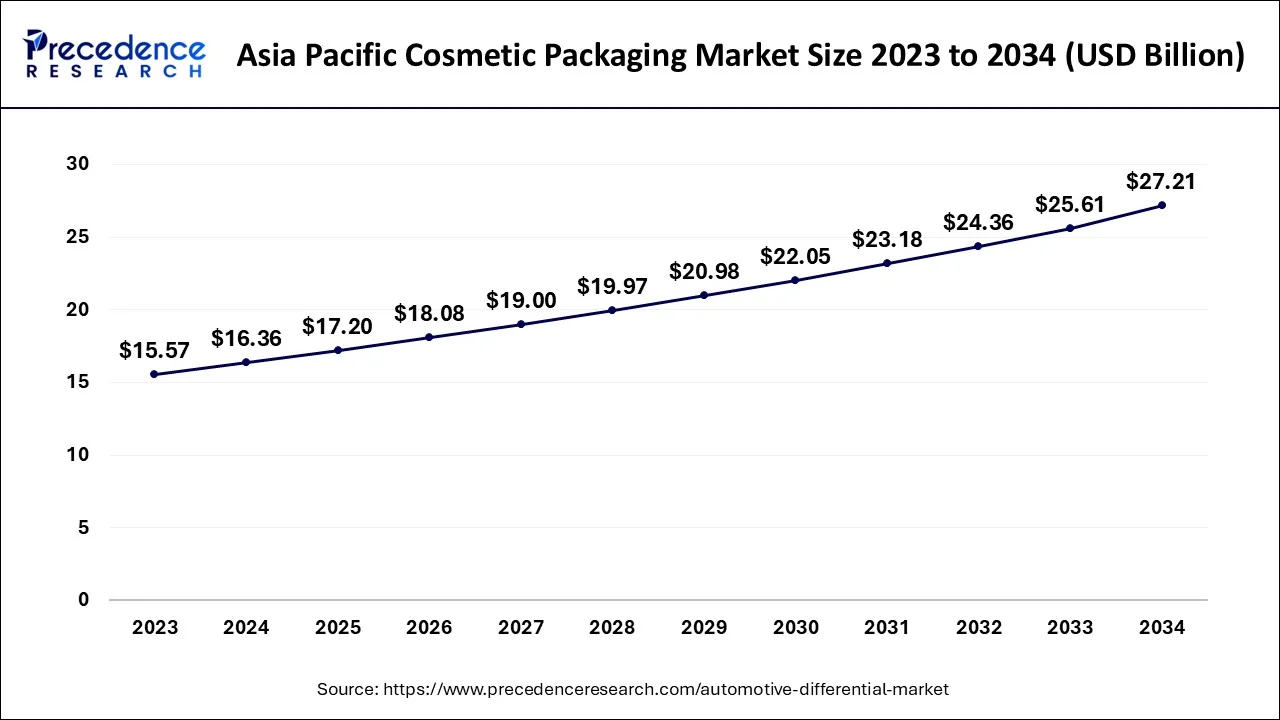
In 2024, the Asia Pacific market was worth USD 16.36 billion, with china representing more than three-fifths of the aggregate. After the United States, China has the world's second-biggest beauty care products market. The fast development in discretionary cashflow, along with the developing number of youngsters, is anticipated to upgrade utilization of restorative things in the nation and region. As web-based entertainment forces to be reckoned with have further developed means to contact and impact the energetic individuals via virtual entertainment stages, computerized change is extensively impelling business sector development nearby. Reception of practical and green bundling choices, for example, hardwood originator bundling (especially bamboo), paper and board, and glass has expanded because of rising natural awareness among adolescents. Be that as it may, the flare-up of COVID 19 pandemic is assessed to decline the market by 1.05 percent throughout the year 2019 in Pacific region locale.
Asia Pacific: The Beauty Packaging Powerhouse
Asia Pacific dominates the global cosmetic packaging market due to its immense consumer base, rising disposable incomes, and a flourishing beauty and personal care industry. Countries like China, India, South Korea, Japan, and Indonesia are major contributors. These nations not only host significant domestic cosmetic brands but also serve as manufacturing hubs for global giants due to their cost-effective production and skilled labor. Government initiatives in countries such as India's “Make in India” and China's 14th Five-Year Plan have supported industrial growth, promoting domestic manufacturing capabilities, including the packaging sector. Furthermore, South Korea's support for K-beauty exports has encouraged innovation in aesthetic and sustainable packaging formats, while Japan's regulatory advancements in recyclable packaging have influenced global standards.
China Market Trends
China's cosmetic packaging market is anticipated to grow significantly, attributed to increasing cosmetics consumption and rapid growth of the beauty industry. The packaging demand is being bolstered by high demand for high-quality personal care, cosmetics, and medicines. People are realizing what sustainable packaging solutions look like, and more people are choosing to invest in recycled, biodegradable materials.
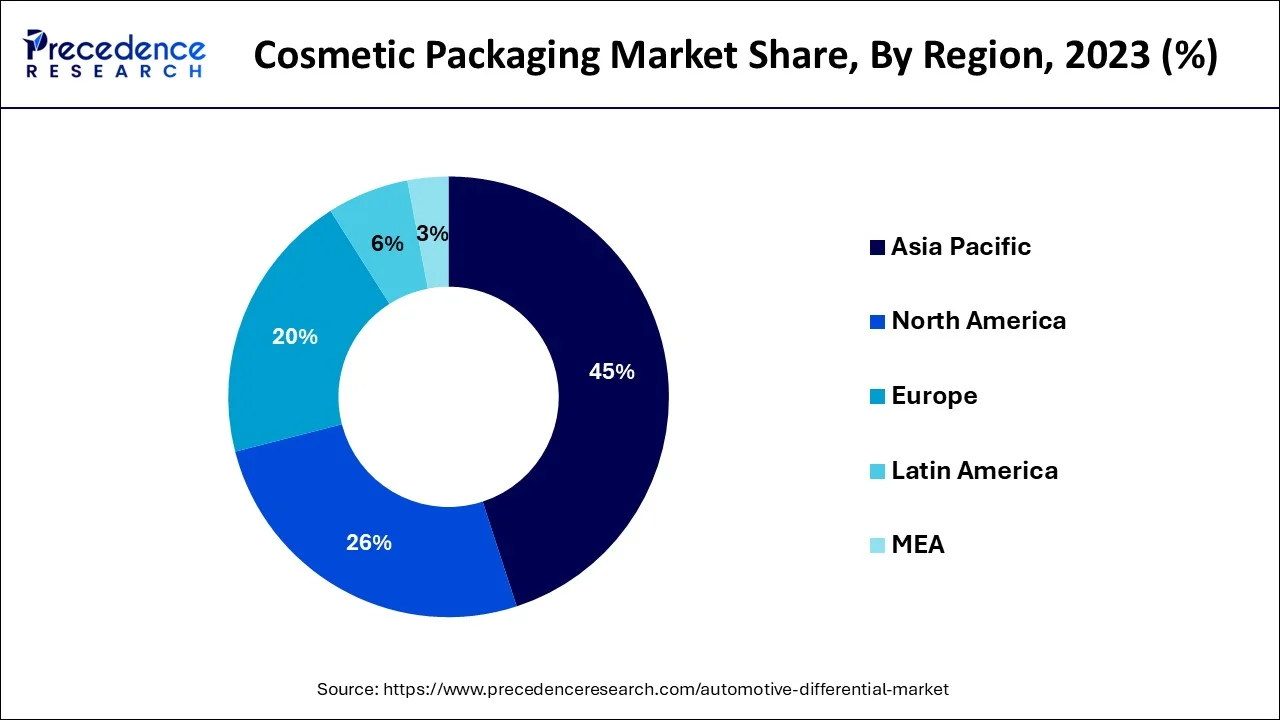
North America positions second on the lookout, exceptionally overwhelmed by the United States. The U.S. is the biggest maker of beauty care products and its bundling. It trades high volumes of restorative items in many regions of the planet. The makers in the locale are selecting green bundling arrangements as well as regular items. Likewise, shoppers in the European district are additionally selecting practical bundling arrangements. The purchasers in the locale are changing to post-customer reused (PCR) bundling thus the beauty care products makers are in the bleeding edge to take on PCR plastic bundling in their items at every possible opportunity. The COVID 19 flare-up is anticipated to decrease market size in 2020.
North America: Innovation and Sustainability Driving Growth
North America is one of the fastest-growing regions in the cosmetic packaging market, with a strong emphasis on eco-friendly, high-tech, and customizable packaging. The region benefits from a strong R&D infrastructure and is home to numerous premium and indie cosmetic brands that continuously push the envelope in product design.
U.S. Market Trends
U.S. market is anticipated to grow significantly, due to the growing popularity of premium cosmetic formulations coupled with innovative packaging options. The market is being fueled by the preference of customers for sustainable, environmentally friendly, reusable, and recyclable packages. With specialized brands and advanced manufacturing, mass production is still possib
Europe An Innovation Hub for The Future of Beauty
Sustainable packaging in cosmetics in Europe is an extremely developed market that continues to be driven by innovation due to regulations on sustainable packaging, the market's preference for premium quality items, and the widespread acceptance of recyclable and refillable packaging. The growth of France's cosmetics manufacturing base is helping accelerate the pace toward sustainable luxury packaging production.
Germany Market Trends
Germany market is anticipated to grow significantly with the increasing need for sustainable and quality packaging solutions. The German market is expected to expand quite extensively. The strict environmental standards have a positive impact on manufacturers' choice to use materials that are recyclable and environmentally protective. There are opportunities for sustainable packaging formats, such as the increase in consumers turning to natural and organic beauty products
Latin America Growth in Beauty Industry through Affordable Packaging
Latin America has significant growth potential with expanding middle-class demographics, increasing awareness of the beauty industry, and growing demand for inexpensive yet visually appealing cosmetics packaging within mass-market brands. Brazil is leading in growth due to its large base of cosmetic consumers and increasing local production of both flexible and rigid packaging solutions.
Brazil Market Trends
Brazil cosmetic packaging market is anticipated to grow significantly, driven by the increasing trend of beauty product consumption and the expansion in the personal care industry. Local brands are on the rise, and custom and appealing package designs will be an opportunity. Going green is increasingly becoming a focus, leading to the adoption of packages that are recyclable and environmentally friendly.
Middle Eastern and African Regions: Luxurious & Innovative Packaging Solutions
The Middle East and Africa are other significant business sectors for this business. Clients in the space buy a ton of things, particularly extravagance ones, because of the great pay rates in the Middle Eastern created countries like Saudi Arabia and the UAE. Brazil is third in the overall market, after the United States and China, and rules in Latin America. Because of the rising utilization of make-up items in the locale, make-up application type represents a huge restorative bundling piece of the pie in the cosmetic packaging market.
Saudi Arabia Market Trends
Saudi Arabia market is anticipated to grow significantly, driven by increasing demand for premium and luxury cosmetics and personal care products. Development of innovations is required to help boost demand by using them to package more international and regional beauty brands. The demand for sustainable packaging is increasing as it inspires manufacturers to create environmentally friendly packaging solutions.
The UAE Cosmetic Packaging Market Trends
The United Arab Emirates is emerging as one of the fastest-growing countries in the Middle Eastern and African regions as it has a strong retail infrastructure; large numbers of luxury brands are establishing a presence in the U.A.E., which helps to create a growing demand for packaging solutions that are innovative, luxurious, and provide high quality.
Value Chain Analysis of the Cosmetic Packaging Market
- Raw Material Sourcing & Processing: In this stage, cosmetics manufacturers obtain and refine raw materials such as plastics, glass, metals, and paper for the creation of cosmetic packaging.
Key Players: BASF, Dow, SABIC - Packaging Manufacturing & Design Integration: Manufacturers will take raw materials (inputs) and create packaging (finished product) into various functional and aesthetic formats used in cosmetics, including bottles, tubes, jars, or airless packaging.
Key Players: Amcor, AptarGroup, and Albéa - Filling, Distribution & Brand Collaboration: The finished packaging is combined with the final formulation of the cosmetic product and can then be manufactured in mass quantities for distribution to both national and global beauty brands and brick-and-mortar retailers.
Key Players: Berry Global, Gerresheimer, Silgan Holdings
Competitive Landscape
The competitive nature of the cosmetic packaging market is defined by the key players, such as Libo Cosmetics Co., Ltd, World Wide Packaging LLC, Amcor plc, Sonoco Products Company and Huhtamaki Oyj, who are leading the market with their innovation in packaging solutions, sustainability and quality product development. Smart manufacturers are striving to shift to sustainable materials, personalization capabilities, and superior packaging formats to meet the evolving demand from consumers.
The increasing use of AI and automation, and digitisation of technologies in packaging, has increased to optimise, monitor, and provide personalised packaging solutions for specific products. Challenges for the market are raw material costs, regulatory requirements, and continued innovation and sustainability in packaging.
Cosmetic Packaging Market Companies
- Libo Cosmetics Co., Ltd
- World Wide Packaging LLC
- Amcor PLC
- Sonoco
- Huhtamaki Oyj
- HCP Packaging
- AptarGroup, Inc
- DS Smith PLC
- Berry Global Inc
- Albea SA
- TriMas Corporation
Recent Developments
- In May 2025, Paris Hilton introduced her new skincare line, Parívie, under her 11:11 Beauty brand in collaboration with Guthy-Renker. The collection features six products, each housed in vibrant metallic packaging that reflects the brand's luxurious aesthetic. Notably, the packaging incorporates a proprietary blend called "inPHinite Youth Technology," which includes an AI-discovered peptide aimed at combating modern stress-induced skin damage. ( Source: https://www.allure.com )
- In May 2025, WWP Beauty launched its "Refill Revolution" collection, focusing on refillable packaging solutions that promote sustainability and a circular design system. This initiative aims to reduce environmental impact by offering packaging options that are both eco-friendly and consumer-convenient. ( Source: http://wwpbeauty.com )
- In May 2025, Eva NYC announced a relaunch of its hair care products in May 2025, introducing new packaging made from a minimum of 50% post-consumer recycled plastic. This change aims to reduce greenhouse gas emissions by approximately 30%. The updated packaging features a simplified color palette inspired by the products' hero ingredients, aligning with the brand's commitment to sustainability and consumer-friendly design. ( Source: https://www.byrdie.com )
- Amcor, a worldwide packaging association, accelerated its organization in viable packaging game plans in January 2021. The firm is endeavoring to additionally foster packaging recyclability and reusability.
- erry Global, a packaging game plan provider, collaborated with RAW Elements USA in June 2021 to offer sugarcane-based tubes for sunscreen, salves, and hand sanitizer things.
Segments covered in the Report
By Type
- Flexible Plastics
- Aerosol Cans
- Containers
- Tubes
- Folding cartons
- Blister & Strip Packs
- Jars
- Others
By Application
- Oral Care
- Skin Care
- Hair care
- Beauty Care Products
- Nail Care
By Components
- Paper-based
- Glass Metal
- Flexible Packaging
- Rigid Plastic
By Capacity
- < 50 ml
- 50 ml – 100 ml
- 100 ml – 150 ml
- 150 ml – 200 ml
- >200 ml
By Geography
- North America
- U.S.
- Canada
- Europe
- U.K.
- Germany
- France
- Asia-Pacific
- China
- India
- Japan
- South Korea
- Malaysia
- Philippines
- Latin America
- Brazil
- Rest of Latin America
- Middle East & Africa (MEA)
- GCC
- North Africa
- South Africa
- Rest of the Middle East & Africa
For inquiries regarding discounts, bulk purchases, or customization requests, please contact us at sales@precedenceresearch.com
Frequently Asked Questions
Tags





Ask For Sample
No cookie-cutter, only authentic analysis – take the 1st step to become a Precedence Research client
 Get a Sample




 sales@precedenceresearch.com
 Schedule a Meeting
