






 Request Consultation
Explore sustainable liquid packaging, materials, technologies, and trends across industries. Learn how eco-friendly solutions improve safety and efficiency.
Liquid packaging plays an essential role in how products are stored, transported, and used by consumers. Liquid products such as beverages, cleaning supplies, pharmaceutical and cosmetic products require specialized packaging solutions that ensure quality, safety, and stability.
What is the Liquid Packaging Market Size?
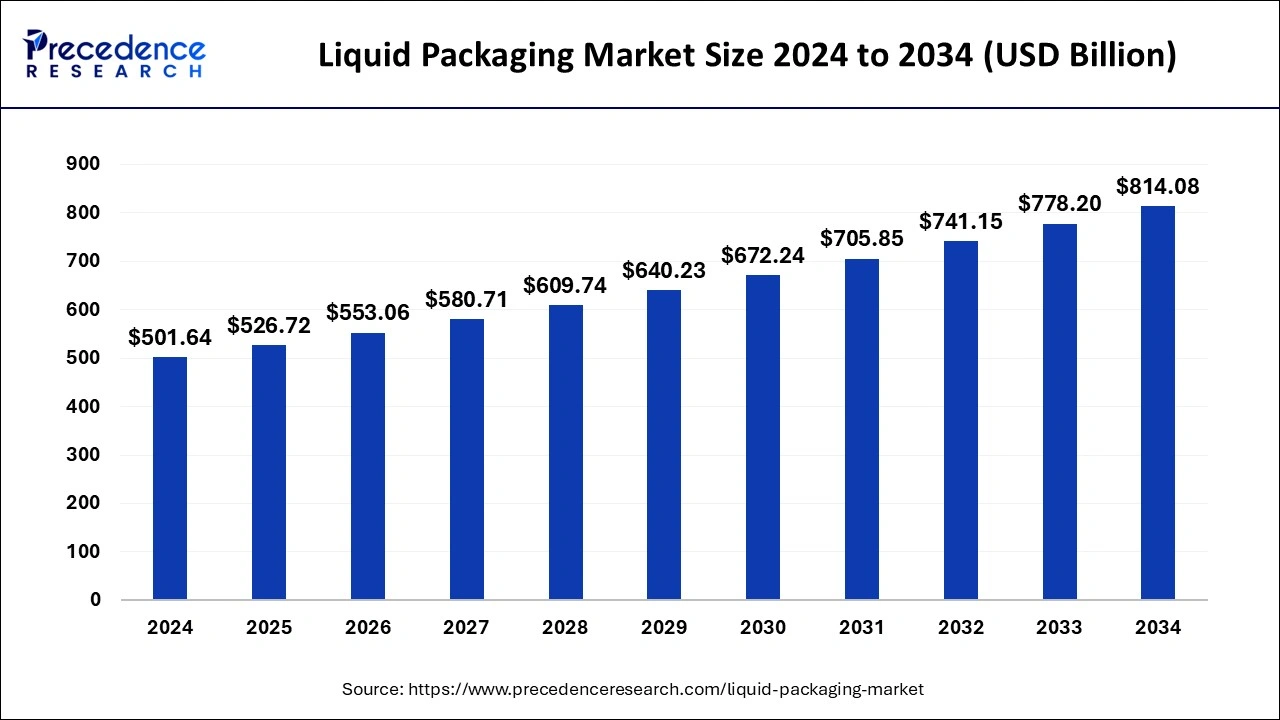
The global liquid packaging market size surpassed USD 526.72 billion in 2025 and is estimated to increase from USD 553.06 billion in 2026 to approximately USD 850.74 billion by 2035, rugistuiring a CAGR of 4.91% between 2026 and 2035.
What is liquid packaging ?
Liquid packaging refers to materials and methods used to store and protect liquid products. Packaging of liquid products is tricky, unlike that of solid items. The liquid goods are more sensitive to environmental conditions, contamination, and leakage, which makes packaging design critical and complex. These products require packaging that can be successfully filled, stored, transported, purchased, used, and disposed of while maintaining the quality of the product.
Importance of liquid packaging across industries
Food and beverages – liquid packaging is widely used in products such as milk, juices, sauces, oils, and beverages. Packaging must maintain the freshness, safety, and shelf life of liquid products. Liquid packaging prevents contamination, reduces waste, and helps in the safe transport and storage of liquid products. This liquid packaging also serves as a branding tool.
A recent update in the food and beverage industry is that Futamura has launched compostable liquid sachet packaging. The laminate is based on NatureFlex technology, which helps in reducing environmental pollution. This is certified as compostable packaging used in industrial and home settings.
Pharmaceutical industry – Medicines such as syrups, injectables and IV fluids require highly sterile and tamper-proof packaging. The liquid packaging material and methods help to prevent contamination, maintain product quality, while ensuring precision dosing and regulatory compliance.
In November 2025, Zydus Lifesciences Ltd., a life sciences company, collaborated with SIG, a packaging solution provider, to launch India’s first single serve spouted pouch for liquid cough and cold medication. This product highlights a precise dose of medication with improved hygiene and reduced product waste. A Zydus product, Deriphyllin CoughGo is 5ml and 10 ml mini-portions of ready-to-consume medicines in spouted pouches known as siplets. The SIG StrawCap 30, spout solutions with a straw, allow direct and mess free consumption of medication with precise dosing.
Personal care and cosmetics – the personal care and cosmetic industry includes liquid products such as shampoo, lotions, and serums that rely on packaging that focuses on sustainable, functional, and aesthetically appealing. The pumps, droppers, and squeeze bottles enhance user experience while maintaining the quality of the product.
Eleeo brand introduced a Boogie Bubbling Vapour Bath for babies in innovative packaging. Eleeo partners with AeroFlexx, a sustainable liquid packaging company, to deliver eco-friendly and easy-to-use solutions without impacting the environment. The Boogie Vapour Bath helps in soothing and relieving children when suffer from cold, congestion, and flu.
L’Oréal is a French-based beauty company that is promoting refillable packaging solutions to reduce environmental impact. In 2023, L'Oréal launched a multi brand refill fountain in Europe and North America for bestselling fragrances, but now refills are allowed in haircare, skincare, hygiene, and makeup. This programme has successfully reduced plastic use by 60% and reduced environmental impact.
Quadpack, a global cosmetic packager, launched a mono material PET liquid makeup bottle. The recycled, Lola bottles come in 6 mL and 6.5 mL sizes and are compatible with high-alkali formulas. These recycled bottles can be designed according to the company's style and aesthetics.
Household and industrial chemicals – the liquid packaging selection for cleaning agents, detergents, and industrial liquids is critical. The packaging must ensure resistance to chemical reactions, safety, and regulatory compliance. It is also leak resistant and durable for handling and storing chemicals. The materials used for chemical packaging are intermediate bulk containers (IBC), plastic, glass, carbon or stainless steel, and lined drums.
Material used in Liquid Packaging
- Glass – glass is often used to package beverages, sauces, and perfumes due to its non-reactive and impermeable qualities. Glass offers a premium feel, preserves flavour and purity and is 100% recyclable. The only disadvantage of using glass as a packaging material is its fragile nature.
- Plastic – plastics are the most widely used material due to their versatility, lightweight, and cost-effectiveness. The materials like PET (Polyethylene Terephthalate), HDPE (High-Density Polyethylene) and LDPE (Low-Density Polyethylene) are used in the packaging of juices, milk, detergents, and oils. The environmental concerns and recycling challenges are concerning in the use of plastic in liquid packaging.
- Metal – metal packaging, particularly aluminium and steel, is ideal for carbonated drinks and industrial liquids. Metal packaging has durability, excellent sealing properties and can be recycled. But the metals are expensive and require coating to prevent reactions, which also adds cost in packaging.
- Paperboard – paper based packaging, when laminated with a plastic or aluminium layer, can be used as cartons for milk. Juice and similar liquids offer a recyclable option. These are lightweight but have limited durability without coating.
Key Technologies in Liquid Packaging
1. Aseptic Packaging Technology –
In aseptic technology, the product and the packaging are sterilised separately before being sealed in a sterile environment. It is widely used for dairy products and beverages. It offers the benefits of an extended shelf life. No need for preservatives and reduced refrigeration requirement.
2. Vacuum Packaging –
In this packaging, the air is removed from the packaging to prevent oxidation and microbial growth and maintain freshness and extend shelf life. It is used for soups, oils, and sauces.
3. Advanced Filling and Sealing Machinery –
The modern filling machines focus on precision, speed, and hygiene to maintain the integrity of the product. Techniques such as form-fill-seal (FFS) machines, rotary filling systems, induction sealing, ultrasonic sealing, and clean-in-place (CIP) systems.
4. Smart and Active Packaging –
Integrating smart digital technologies such as IoT enabled sensors, QR codes, NFC tags, and intelligent indicators into advanced packaging for better consumer engagement and supply chain visibility.
5. Flexible liquid packaging technology –
Flexible packaging, such as pouches and bags, is widely used due to its lightweight and space-saving efficiency.
6. Modified Atmosphere Packaging (MAP)
The internal atmosphere is replaced by using gases like nitrogen or carbon dioxide to enhance preservation.
Sustainability in Packaging
In modern packaging, sustainability is not an option; it is a necessity. It focuses on reducing environmental impact through materials like recyclable PET, HDPE, Paper-based cartons, and biodegradable plastics (PLA). The sustainability packaging includes source materials like bio-based plastics, recyclability or compostability of material, refill and reuse of systems and production, disposal emissions. The European Union Packaging and Packaging Waste Regulation (PPWR) and the Extended Producer Responsibility (EPR) laws in the United States are enforcing strict design standards for recyclability.
Challenges
Regulatory compliance and standards
Industries like pharmaceuticals, personal care, household, and food must adhere to strict safety and quality regulations. The regulatory bodies, such as the Environmental Protection Agency (EPA) and the Food and Drug Administration (FDA), have strict guidelines for packaging liquids that are intended for human consumption. These regulations cover guidelines for material safety, labelling, and prevention of contamination. Packaging material must be tested to ensure its safety and reliability. Proper labelling also plays an important role in packaging, as it gives the user proper information and direction for the safe use of the product. Regular inspection and compliance with quality standards are essential to maintain product integrity and avoid penalties.
For example,
- Food and beverage containers must use FDA – approved food grade plastics or coatings.
- Over the counter drugs and supplements may require sterilization and regulated liquid labelling formats
Environmental Impact
Increasing pollution and plastic usage are concerning and affect the environment heavily. Environmental sustainability is one of the considerations in regulatory compliance. Businesses are increasingly adopting eco-friendly packaging solutions to reduce the environmental impact. The use of recycled materials and designing packaging that can be easily disposed of or repurposed reduces waste. By adopting this approach, businesses can build trust with consumers and provide safe, quality, and sustainable services.
Eco Friendly Liquid Packaging
To reduce the environmental impact, companies are adopting an eco-friendly liquid packaging approach. The polypropylene sachets are ideal for single use of cosmetics. The polypropylene is lightweight and can be recycled, making it eco-friendly. The fillcon offers spouted pouches, which are eco-friendly, and has an anti-microbial varnish that protects the product from harmful microbes like MRSA.
Future Innovations
The advancements in technology and shifting consumer preferences are driving innovation in liquid packaging. The use of automation and robotics in liquid packaging will allow for precise bottle filling without spilling the products and can help in lifting heavy weights. This will reduce manual labour, minimise errors and increase productivity. The advanced technology is making versatile filling machines that help in smooth and efficient working. Along with this, advanced sealing technology is also reshaping the liquid packaging outcomes. Modern sealing machines create airtight seals, preventing leaks and keeping products fresh. Techniques like induction sealing use an electromagnetic field to seal bottles without touching them. This keeps the product safe and hygienic.
AI Influence in Liquid Packaging
Artificial intelligence is transforming the liquid packaging industry by enhancing operational efficiency, sustainability, and quality control. Integration of AI-powered technologies such as machine learning, computer vision, and robotics manufactures are optimizing life cycle of liquid products. AI systems can help in precision filling at a constant speed. An AI-powered vision system can analyse micro-level defects in bottles, labelling errors, and improper seals, which helps in reducing waste and improving product safety and quality.
Conclusion
Liquid packaging plays a critical role in modern industries to deliver products safely and efficiently. As the expectations of consumers grow, the demand for innovative, sustainable, and eco-friendly packaging solutions continues to grow. From traditional bottles to smart pouches, the liquid packaging is growing rapidly. Companies are also investing in new technologies to deliver safe, effective, and environmentally friendly solutions along with regulatory compliance.
About the Authors

Aditi Shivarkar
Aditi, Vice President at Precedence Research, brings over 15 years of expertise at the intersection of technology, innovation, and strategic market intelligence. A visionary leader, she excels in transforming complex data into actionable insights that empower businesses to thrive in dynamic markets. Her leadership combines analytical precision with forward-thinking strategy, driving measurable growth, competitive advantage, and lasting impact across industries.



Aman Singh
Aman Singh with over 13 years of progressive expertise at the intersection of technology, innovation, and strategic market intelligence, Aman Singh stands as a leading authority in global research and consulting. Renowned for his ability to decode complex technological transformations, he provides forward-looking insights that drive strategic decision-making. At Precedence Research, Aman leads a global team of analysts, fostering a culture of research excellence, analytical precision, and visionary thinking.

Piyush Pawar
Piyush Pawar brings over a decade of experience as Senior Manager, Sales & Business Growth, acting as the essential liaison between clients and our research authors. He translates sophisticated insights into practical strategies, ensuring client objectives are met with precision. Piyush’s expertise in market dynamics, relationship management, and strategic execution enables organizations to leverage intelligence effectively, achieving operational excellence, innovation, and sustained growth.