



Leather Goods Market Size, Key Companies, Company Market Share, Sales Volume, Consumer Demand, Pricing Trends, Distribution Performance, Competitive Positioning, and Growth Forecast
Vidyesh Swar, a Consumer Goods Industry Expert, finds that the leather goods market has reached USD 528.24 billion in 2026 and is projected to reach USD 874.80 billion by 2035, growing at a CAGR of 5.78%. Leading leather goods market brands and companies such as Adidas AG, Puma SE, Nike, Inc., are competing across high-demand segments including by product, by type.
Source: https://www.precedenceresearch.com/leather-goods-market
 Get a Sample
 Table Of Content


What is the Leather Goods Market Size?
The global leather goods market size is calculated at USD 498.81 billion in 2025 and is predicted to increase from USD 528.24 billion in 2026 to approximately USD 874.80 billion by 2035, expanding at a CAGR of 5.78% from 2026 to 2035. Leather is gaining traction in the industry because it is a repairable, natural, and breathable material, and it lasts significantly longer than any alternative.
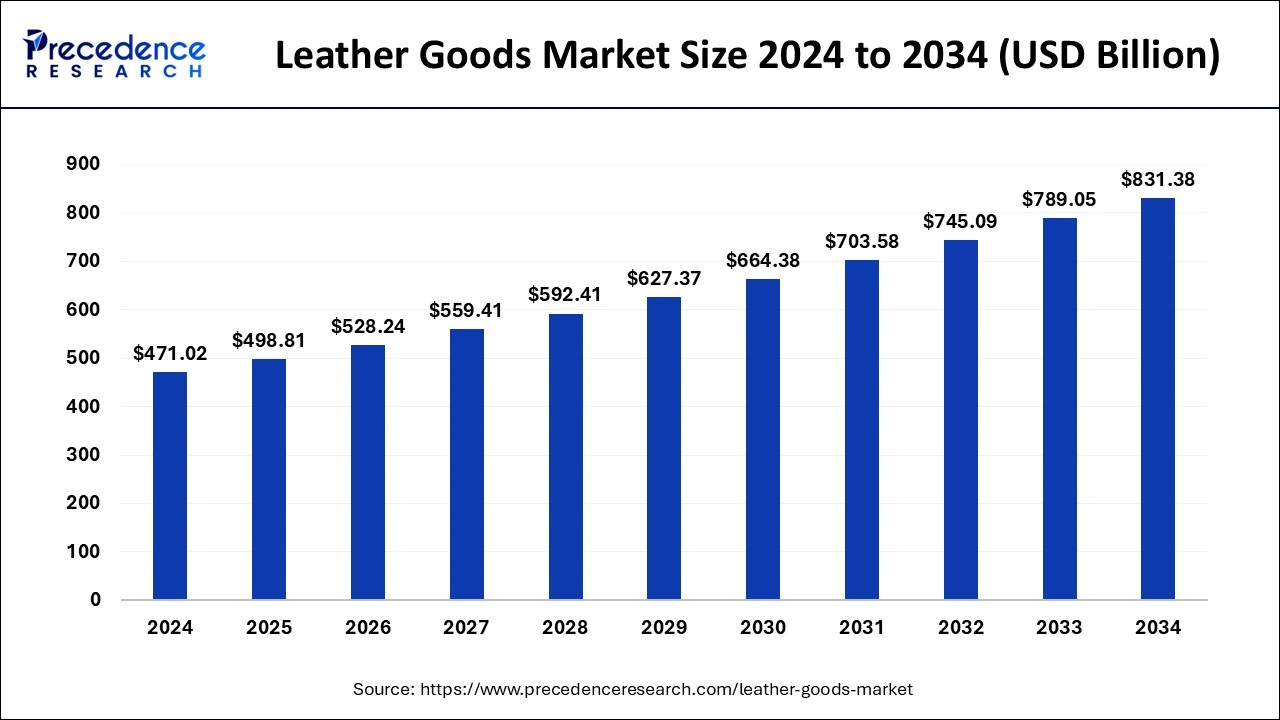
Leather is a durable and stretchable material derived from the skin of animals like goats, horses, camels, Buffalo, sheep, cattle, and hogs. It is used in the manufacturing of furniture, clothes, bags, gloves, footwear, watches, harnesses, and other articles, due to its flexibility, durability, and strength. It is scratch-resistant and fire-resistant, which makes it a long-lasting product. It is comfortable and repairable which is preferred in the manufacturing of various articles. The use of leather in apparel and sports equipment has increased in recent times.
Leather Goods Market Key Takeaways
- North America led the global market with the highest market share of 38% in 2025.
- Asia Pacific region is estimated to expand the fastest CAGR between 2026 and 2035.
- By Type, the genuine leather segment has held the largest market share of 54.1% in 2025.
- By Type, the synthetic leather segment is anticipated to grow at a remarkable CAGR of 7.5% between 2026 and 2035.
- By Product, the footwear segment captured the biggest revenue share of 44% in 2025.
- By Product, the automotive accessories segment is expected to expand at a notable CAGR of 7.4% over the projected period.
What is the Leather Goods Market?
Leather goods are made of animal skin. To avoid any decay, the skin goes through a tanning process for a better lifespan of leather-based products. There is a lengthy range of categories featuring leather, most popularly, the belts and wallets are some of the historically recognised products from decades.
After the fashion hyped and trends rolled at the brands stage, the outerwear, footwear, and branded handbags leveraged the growth of these goods. The quality is judged by the material and the choices of full and top-grain leather, which affects the pricing system accordingly.
How is AI utilised in the Leather Goods Industry?
AI is utilised in the leather goods industry as a damage detector, predictive analyser, and controller. The AI-sponsored computer vision system, along with the help of machine learning, addresses stitching errors, color differences, and surface unmatched element.
AI improves and meets all the perfection ends needed in essential operational systems and alleviates waste altogether. The Io sensors are equipped in the tanning process and finishing machinery promotes AI use to detect failures before time, saving time and repair costs.
Trends of the Leather Goods Market
- A major trend that the leather goods market is witnessing is increasing demand for environmentally friendly and sustainable leather goods, as consumers are becoming more aware of the impact of leather production on the environment. Leather products and synthetic products are some of the most demanding goods by many consumers, fueling the market growth.
- Many brands with an eco-conscious approach are adopting vegetable-tanned leather and minimizing their carbon footprints to comply with stringent government regulations for environmental safety and CO2 production.
- By understanding the consumers preferences, many reputed and luxury brands are incorporating cruelty-free practices and goods production with an eco-friendly angle. They also look after reducing material waste for ethical business practices, further giving momentum to the leather goods market.
- Many consumers are looking for personalized and sustainable leather goods at a reasonable price. By knowing the growing shift of customization, manufacturers are also providing leather goods with various customization options.
Leather Goods Market Growth Factors
- Rapid urbanization is playing a significant role in the growth of the market.
- Income levels of various consumer groups are inflating which is creating more demand for leather goods.
- The standard of living of the people in developed, as well as developing nations, will play a significant role in catalyzing the need for leather products.
- The demand for branded and premium products has grown significantly.
- As the tourism industry is booming, the sales of customized leather goods have increased.
- Growth opportunities will be provided due to the promotion of leather products through various fashion shows.
- Brand awareness is expected to play a significant role in the growth of the market.
- Celebrity endorsements and social media are also expected to play a significant role in the growth of the market.
- The need for automotive upholstery which is customized according to the needs of the consumers for commercial vehicles and passenger vehicles has increased.
Market Outlook
- Start-up Ecosystem: The start-up wave is unstoppable with the rising demand for lavish and luxury items, either to follow a trend or live a brand life. The start-ups are levelling up with their alternative solutions, interactive packaging, and keeping the specific preferences of all class individuals. The packaging enthusiasts are also emerging due to their impeccable design and printing ideas.
- Industry Growth Overview: The E-commerce, accessories store, and automotive industries are accelerating the leather goods sector. The luxury fashion industry is a living example of industrial growth, which is continuing to drive demand for the same. Hence, fashion businesses have gained traction in the innovation and packaging area.
Leather Goods Market Scope
| Report Coverage | Details |
| Market Size in 2025 | USD 498.81 Billion |
| Market Size in 2026 | USD 528.24 Billion |
| Market Size by 2035 | USD 874.80 Billion |
| Growth Rate from 2026 to 2035 | CAGR of 5.78% |
| Largest Market | North America |
| Base Year | 2025 |
| Forecast Period | 2026 to 2035 |
| Segments Covered | By Type and By Product |
| Regions Covered | North America, Europe, Asia-Pacific, Latin America and Middle East & Africa |
Market Dynamics
Key Market Drivers
The durability and resistance offered by this product.
- Leather is used in the manufacturing of various articles as this material is dust, water, fire, and crack resistant. Leather is comfortable and it is used in the manufacturing of footwear, watches, bags, clothes, and furniture.
Growing demand for leather upholstery in automotive
- As this material is comfortable and stretchable, it is used in automotive upholstery. These products can be customized according to the need of the consumers for the interiors of commercial or passenger vehicles. As the automotive industry across the globe is booming, the market for leather goods is also expected to grow significantly in the coming years.
Key Market Restraints
Strict regulation imposed by the government
- Natural leather is being controlled by the prevailing strict regulations enacted by the government of various nations and these regulations will hamper the production of various goods that make use of leather.
Key Market Opportunities
Growing demand for luxury products
- As the disposable income of people across the globe is increasing, the demand for leather goods of premium quality has also increased. High self-esteem is associated with the use of luxury goods. Most of the luxury goods purchased by the North Americans and the Europeans consist of leather goods. Affluent individuals make maximum purchases of leather accessories, handbags, shoes, and other exclusive products.
Availability of competitive workforce in Asia Pacific nations
- India, Vietnam, and China are some of the major competitors that provide labor at a lower cost and hold a strong position across the globe. As this is an export-oriented industry, it will provide a strong advantage for these nations and generate a good amount of revenue in the coming years.
Vegan leather products introduced in the market.
- Leather can be derived from apples, fungi, grass, wine, coffee, and other things. This is expected to provide immense opportunity for the growth of the leather market in the coming years. As many organizations are engaged in making use of vegan leather for the production of footwear and purses, the revenue of these organizations has increased significantly.
Key Market Challenges
Growing awareness among the consumers
- Various organizations are engaged in conducting awareness drives to reduce the usage of leather products. Animal welfare associations are constantly taking efforts to increase awareness among the European and North American regions where the use of premium leather products is maximum.
Constantly evolving fashion industry and inadequate knowledge of the market
- Even though a large number of products are imported from various nations in North America and in European regions, inadequate information about the buying patterns and the taste of the consumers will hamper the market growth. The constant change in fashion will make changes to the material and the design required in the market.
High cost associated with high-tech equipment used in the manufacturing of leather products.
- Skilled personnel is required for operating the high-tech machinery which is used by the designers for customizing the leather products and this becomes an expensive task due to which the market growth will be hampered to a great extent during the forecast period.
The constant demand for high-quality products
- In the European and North American nations, consumers constantly seek high-quality products for affordable costs due to the presence of various competitors in the market and this is also expected to pose a major challenge to the growth of the market.
Segments Insights
Type Insights
The genuine leather segment has contributed extensively to the market, and it has held a share of about 54.1% in 2025. Premium leather products have great demand in the North American and the European market and consumers readily pay well for these products. Genuine leather is used extensively in the fashion industry, and it is imported by prominent market players that are present in the North American region.
As the disposable income of consumers across the globe has increased, the demand for genuine leather is also expected to grow significantly during the forecast period. Less expensive options are available in the market and synthetic leather goods are quite attractive, due to which the demand for these synthetic leather goods is also expected to grow in the coming years.
Polyvinyl chloride and polyurethane are the sources of synthetic leather. Polyurethane is considered an eco-friendly option due to which the use of this product in the manufacturing of leather goods will be more in the long run.
The synthetic leather segment will show significant growth during the forecast period and register a compound annual growth rate of 7.5%. Other sustainable options are also available in the market. Such materials are flexible, and they can be used for heavy-duty products. These products can be crack resistant. All of these factors will drive market growth.
Product Insights
The automotive accessories segment is expected to grow at the fastest CAGR in the market during the forecast period due to the robust manufacturing of leather accessories, which is a complex and multi-stage process. It involves tanning, sourcing raw materials, shaping, cutting, finishing, and stitching to create several types of products such as wallets, bags, shoes, belts, and jackets.
About 44% of the market share was held by the footwear segment. Major competitors like Reebok, Adidas, and Nike, are engaged in the manufacturing of athletic shoes as the demand for such footwear has grown to a great extent. Different types of sneakers are launched by these market players and this serves to be an affordable option available in the market. These brands are considered the most reliable brands available in the market apart from Converse, All Birds, and New Balance.
In recent times, the demand for automobile upholstery has grown tremendously and the use of leather for the manufacturing of these accessories has also increased. Premium cars available in the market are customized according to the need of the consumers and premium quality leather is used for this purpose. As the sales of automotive have grown significantly in developed as well as in developing nations, the need for automotive upholstery is also expected to grow.
The home-type car segment contributes significantly to the growth of the market. Expenditure made on renovating the house and furnishing the house is another prime factor contributing to the growth of the leather goods market. The housing market across the globe is showing steady growth due to which the need for leather products is also expected to grow.
The automotive accessories segment is poised to reach a CAGR of 7.4% from 2026 to 2035.
Regional Insights
What is the U.S. Leather Goods Market Size?
The U.S. leather goods market size was estimated at USD 131.38 billion in 2025 and is predicted to be worth around USD 242.94 billion by 2035, at a CAGR of 6.34% from 2026 to 2035.
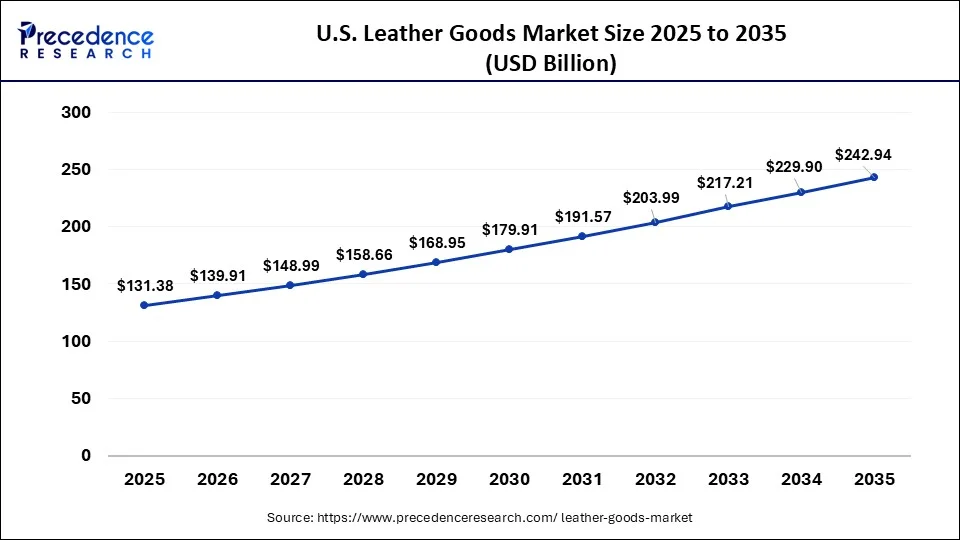
38% of the market share was held by the North American region in the past and this shall continue in the coming years. Online purchases available for the North American region and other nations of the world will play a significant role in the growth of the market. The popularity of premium leather products has taken the industry by storm. The constantly evolving fashion industry creates more demand for leather. Premium quality bags, shoes, accessories, and other products are purchased on a large scale in the North American and European regions.
High self-esteem is associated with these products due to which the consumption of these products in the high-income groups is more. The consumption of leather goods is maximum in the U.S., Mexico, and Canada.
U.S. Market Trends
The U.S. market focuses on the concept of omnichannel personalization, with customized and limited-edition leather products available. Luxury goods based on athleisure are becoming increasingly in demand, such as footwear and travel accessories. The idea of conscious consumerism is changing the way people make their purchases, as there is a growing desire to learn more about the sources of their products and adopt methods of buying eco-friendly or synthetic leather alternatives in the most luxurious segments.
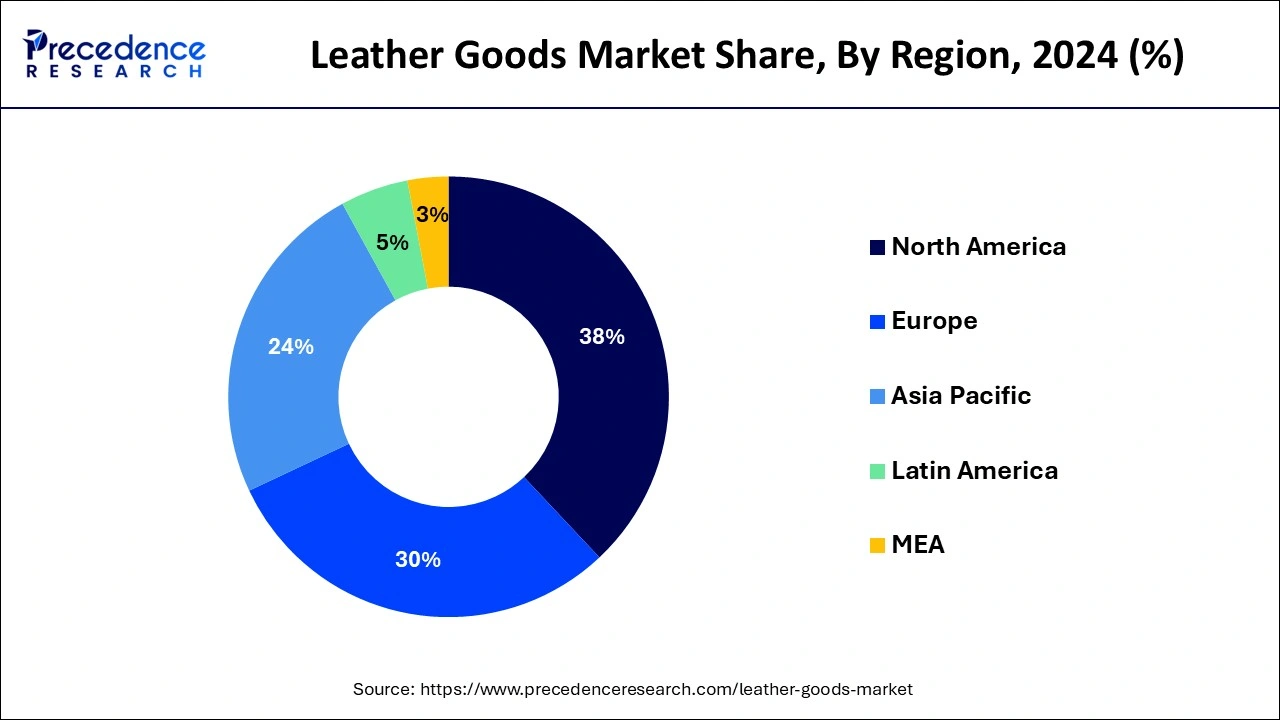
The fastest growth will be registered in the Asia Pacific nations, especially India and China. Luxury products and premium products have a good demand in the Asia Pacific region. Pakistan and Bangladesh are the major exporters of leather in the Asian region. Fitness-conscious and health-conscious consumers are also expected to fuel market growth in the coming years.
One of the attractive markets in the Asia Pacific region is Bangladesh which has fewer tariff rates for the export of leather goods. In recent times every year, about 15 to 20 manufacturing plants for leather goods were opened in Bangladesh.
China Market Trends
The Chinese market is driven by digital-first luxury consumption with the use of e-commerce platforms and social platforms. Younger consumers are moving towards domestic brands. The trends toward sustainability are forcing the demand towards new and environmentally friendly leather materials and bio-based leather alternatives, particularly in the city, which will guide the consumption trends of high-end and middle-range leather products in the future.
Europe is expected to grow at a CAGR of 6.8% over the forecast period.
Europe's advanced use of Leather Goods
The luxury-branded leather goods are used smartly in accessories with tracking devices and wireless charging to attract the youth population. Germany and Italy could afford to choose marine upholstery, private aviation, and luxury car interiors due to leathers long standing life cycle without any stubborn stain to the walls of the products.
The use of alternative leathers is attracting animal friendly population through its lab-grown leather and bio-based options made of mushrooms, apples, or pineapple leaves. This idea aims for heavy engagements and investments.
Italy Market Trends
The Italian market is exposed to high-quality Made in Italy craftsmanship and a robust luxury culture. Tourism recovery supports the demand for handbags, luggage, and accessories. Sustainability is also evolving in the form of environmentally-friendly tanning techniques, which are in harmony with tough environmental standards, as well as enhance the stance of Italy with regard to quality leather production and innovation.
Latin America's Craze in the Leather Goods Industry
The craze for leather seems to be just an affordability game, but Latin America adds value to the price of leather with its sustainable alternatives, promoting vegan leather. The coconut leather is an eye-catching innovation visible in the range of handbags on the shopping shelves.
The region dares to experiment with innovation in this fancy industry by squeezing out some great potential and ideas to bolster the regional business and attract more engagement and investments in their future endeavours.
Brazil Market Trends
The Brazilian market is growing with the modernization of the leather processing to enhance product quality and exports. Urbanization is contributing to the demand for stylish and durable leather products. The growing use of synthetic leather facilitates the cost-efficient production, especially in fast-fashion areas and balancing the affordability and the rising consumer demand for fashionable accessories.
How does the Leather Goods Market Majorly Impact the Significant Growth of MEA?
MEA is expected to grow significantly in the market in the coming years, propelled by the expansion of luxury tourism and premium retail, government-backed economic diversification, adoption of logistics and e-commerce, and material innovations. The regional government frameworks are designed to drive the regions growth toward automotive integration, luxury retail, and domestic value addition. Governments in the GCC are utilizing national diversification plans to build advanced manufacturing setups and retail and fashion setups.
What is the Major Footprint of Saudi Arabia in the Leather Goods Market?
Saudi Arabia is transforming due to Vision 2030 industrial diversification, sustainable innovations in bio-leather and materials, and the Saudi 100 brands initiative. Certain initiatives driving the national industrial strategy and infrastructure support provide financial incentives to domestic manufacturers.
Government Initiatives in the Leather Goods Market
China
- In April 2026, Research studies stated that the industrial policy of China revolves around a dual mandate of productivity and autonomy, and the core framework is shaping resource allocation, strategy, and long-term planning. The dual mandate is ideally adopted across major policies, including the 15th Five-Year Plan for critical input security, technological self-sufficiency, efficiency, and sectoral upgrading. (Source: https://www.spglobal.com)
United States
- In February 2026, the U.S. and India announced that they have introduced a framework, which reaffirms the commitment of the countries to the wide U.S.-India Bilateral Trade Agreement (BTA) negotiations. It will support more resilient supply chains and include additional commitments to market access. (Source: https://www.whitehouse.gov)
Germany
- In April 2026, Germany announced that it has published the German textiles law that places a significant burden on footwear brands and manufacturers. Moreover, Germanys Environment Minister introduced important points for an Extended Producer Responsibility (EPR) scheme for textiles. (Source: https://www.worldfootwear.com)
Brazil
- In August 2026, the Brazilian government launched a plan to expand market access to companies that are affected by Trump tariffs. It was stated that around 5,600 Brazilian companies were affected by the new trade barriers of America. Priority is given to food and beverages, agribusinesses, machinery, equipment, leather, and footwear. The other priority areas are furniture, electrical and electronic materials, medical devices, pharmaceuticals, seafood, textiles and apparel, and gems, jewelry, and stones. (Source: https://www.plataformamedia.com
Saudi Arabia
- In January 2026, research stated that silicone solutions in Saudi Arabia were introduced by the leather and textiles industry. This growth is driven by the increasing demand for high-performance materials in the automotive and fashion sectors. It is also driven by the growing focus on eco-friendly and sustainable production processes. (Source: https://www.kenresearch.com)
Investments/Revenue in the Leather Goods Market
- In January 2026, research stated that Vietnams textile and garment industry plays an important role in the economic growth of the country. It has also been reported that the industry was expected to reach export revenues of US$46 billion in 2025, reflecting a 5.6% rise from 2024. (Source: https://www.vietnam-briefing.com)
- In October 2025, Nike Inc. announced that the company has created an innovation engine to power athletes faster. Jordan Brand, Nike, and Converse are uniting their design, innovation, and product teams in an athlete-focused, single creation engine. (Source: https://about.nike.com)
- In March 2026, Adidas reported record revenues for 2025, leading to €â€¯6.1 billion in net sales, and expected strong sales and profit growth to continue over the next few years. The company sells products for comfort, sport, fashion, and lifestyle. (Source: https://www.adidas-group.com)
Collaborations in the Leather Goods Market
- In April 2026, Knoll Inc. announced a collaboration with the US-born and Portugal-based sculptural artist. This strategic partnership aims to advance a sustainability-driven vision. (Source: https://news.millerknoll.com)
- In May 2026, BOMBAYDC made a partnership with VIP Industries to reimagine its digital brand ecosystem. This engagement will prioritize establishing a cohesive digital ecosystem for the portfolio of brands for VIP Industries. (Source: https://bombaydc.com)
- In September 2025, Almost Gods and FILA announced their first global collaboration, which aims to explore cross-cultural design, elemental power, and sculptural silhouettes. This partnership has merged global legacy with premium contemporary fashion. (Source: https://www.prnewswire.com)
Value Chain Analysis of the Leather Goods Market
- Product Conceptualisation and Design: The products conceptualisation and design is a creative part which is first flashed in mind, then paper, but has to be suitable to the manufacturing/production process, keeping preferences clear. The choice of quality and pricing plays an important role in the leather goods business foundation.
Key Players - Kering, Hermes, and LVMH. - Raw Material Procurement: The raw material procurement is the analysis of addressing the right acquisition of materials, which will be apt to cover the artificial content and skin to meet the final product polishing. It measures sustainability and cost certainty.
Key Players - Tanneries, International Traders & Associations, and Luxury Brands. - Branding and Packaging: The luxury branding of leather needs luxury personalised packaging to justify the worth and the quality of the product, giving more value to the customers choice. Most of the brands spends massive amount on packaging to attract more customers. The packaging is the voice and story of the brand.
Key Players - Chanel S.A., Prada S.p.A., and Capri Holdings Limited.
Competitive Landscape
The leather goods market is driven by surging demand for premium and luxury products, urbanization and evolving lifestyles, supply chain digitization, and next-gen tech integration. It is also accelerated by the expansion of retail, automotive interiors, a surge in omnichannel and e-commerce, and government-backed modernization. The global players in premium and luxury products are LVMH, Hermès International S.A, Kering S.A., and Prada S.p.A. Moreover, the major commercial footwear and manufacturing exporters are VF Corporation, Superhouse Limited, Mirza International Ltd., and Mayur Uniquoters Ltd.
On the other hand, the leading players in premium accessible luxury and travel are Tapestry, Inc., Samsonite International S.A., and Capri Holdings Limited. The core product offerings of these leading industrial players are all-season leather apparel, recycled luxury leather, signature leather bags and saddlery, small leather goods, iconic handbags, and premium embossed accessories. The major R&D innovation trends include next-gen bio-based materials, digital authentication, traceability, and cleaner tanning chemicals.
Top Companies in the Leather Goods Market and Their Offerings
- Adidas AG: Leather footwear, performance tech, accessories, sports equipment, 100% certified tanneries, animal-derived materials, bovine leather products, etc.
- Nike, Inc.: High-end, crafted leather accessories, premium leather goods, full-leather wallets, alligator-print leather belts, carbon-neutral bio-leather, tech-leather synthetics, etc.
- Puma SE: Premium footwear and high-end leather, small leather goods and accessories, animal-free alternatives, bags and pouches, etc.
- Fila, Inc.: Premium footwear, bags and small leather goods, wallets, athletic travel gear, shoulder and crossbody bags, etc.
- New Balance Athletics, Inc.: Premium and artisan footwear offerings, lifestyle and smart casual leather goods, lifestyle athletic footwear lines, etc.
Leather Goods Market Companies
- Adidas AG
- Nike, Inc.
- Puma SE
- Fila, Inc.
- New Balance Athletics, Inc.
- Knoll, Inc.
- Samsonite International S.A.
- VIP Industries Ltd.
- Timberland LLC
- Johnston & Murphy
- Woodland Worldwide
- Hermès International S.A.
- Louis Vuitton Malletier
- VF Corp.
- COLLAR Company
- LUCRIN Geneva
- Nappa Dori
- Saddles India Pvt. Ltd.
- Lear Corp.
Recent Developments
- In February 2026, Louis Vuitton launched a new womens wallets and leather goods collection, showcasing the iconic Monogram canvas with vibrant leather linings. Featuring clover charm designs, this collection symbolizes good fortune and is ideal for embracing the new season. (Source: https://www.haveagood-holiday.com )
- In May 2025, Emirates organized the MIITE 2025 forum, a dedicated pavilion for handcrafts where 100% biodegradable leathers and finished goods are showcased by leading brands in the Emirates, known as AI Khazanah, to preserve their cultural legacy. (Source: Al Khaznah Leathers - Ethically produced, high-quality leather made in the Emirates)
Segments Covered in the Report
By Type
- Genuine Leather
- Synthetic Leather
- Vegan Leather
By Product
- Handbags
- Tote Bag
- Clutch
- Satchel
- Others
- Small Leather Goods/ Accessories
- Wallets
- Pouches
- Card Holders
- Phone Covers/Cases
- Watch Straps
- Others (Luggage Tags, Pencil Cases, etc.)
- Apparel
- Men
- Shirts
- Pants
- Suits, Coats & Jacket
- Overalls
- Others (Kilts, Vests, Chaps, etc.)
- Women
- Skirts
- Coats & Jackets
- Pants
- Others (Vests, Chaps, etc.)
- Children
- Suits, Coats & Jackets
- Vests
- Pants
- Skirts
- Chaps
- Men
- Footwear
- Athletic
- Men
- Women
- Children
- Non-athletic
- Men
- Women
- Children
- Athletic
- Home Décor and Furnishing
- Decorative Wall Hangings
- Tabletop decorative items
- Hanging Storage
- Leather Furniture
- Other
- Pet Accessories
- Pet Collar and Leads
- Leather Pet Toys
- Automotive Accessories
- Seating Systems
- Others
By Geography
- North America
- Europe
- Asia-Pacific
- Latin America
- The Middle East and Africa
For inquiries regarding discounts, bulk purchases, or customization requests, please contact us at sales@precedenceresearch.com
Frequently Asked Questions
Tags





Ask For Sample
No cookie-cutter, only authentic analysis – take the 1st step to become a Precedence Research client
 Get a Sample




 sales@precedenceresearch.com
 Schedule a Meeting
