



Medical Supplies Market Size, Key Companies, Company Product Portfolio, Hospital Procurement Trends, Manufacturing Capacity, Sales Performance, Regulatory Approvals, Company Market Share, and Forecast
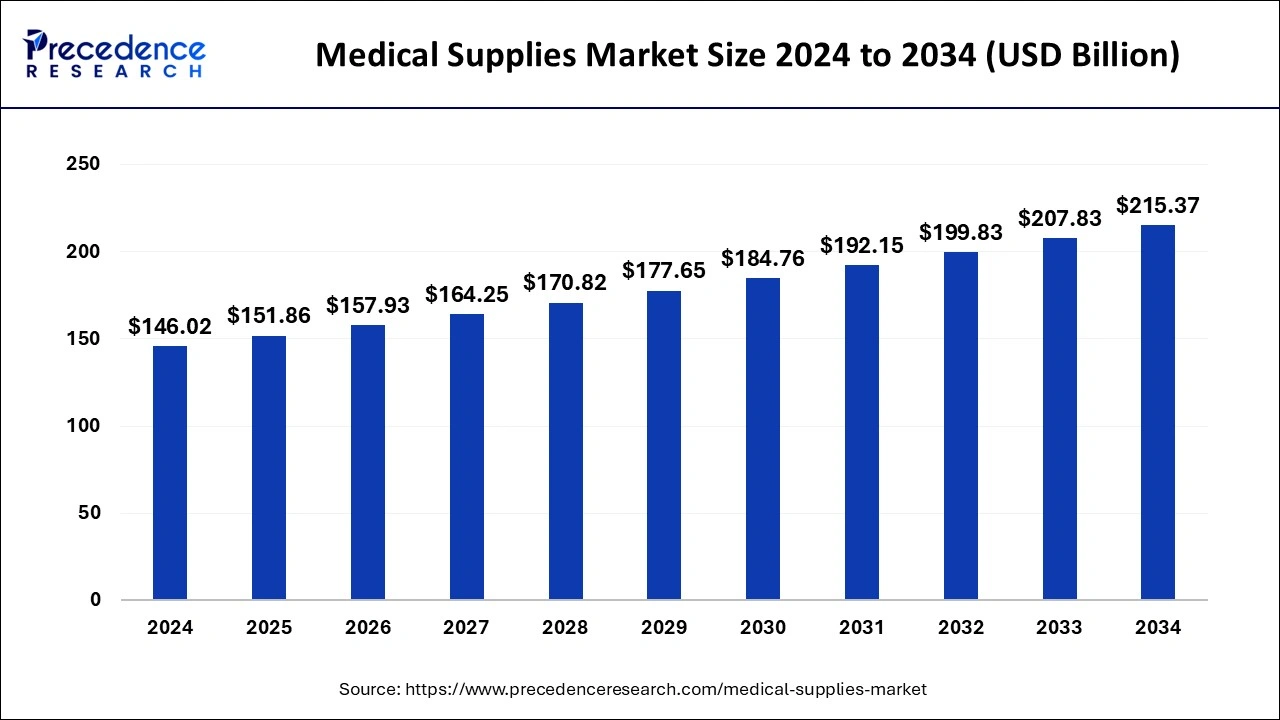
The global medical supplies market was valued at USD 157.93 billion in 2026 and is expected to reach USD 223.22 billion by 2035, expanding at a CAGR of 3.39% during the forecast period. Market growth is driven by increasing healthcare infrastructure investments, a rising prevalence of chronic diseases, an aging global population, and growing demand for surgical procedures. Technological advancements, expanding clinical trials, and the adoption of AI in manufacturing, inventory management, and supply chain optimization are further supporting market expansion. Additionally, increasing awareness of infection prevention and the growing use of disposable medical supplies are creating significant opportunities for industry participants.
Source: https://www.precedenceresearch.com/medical-supplies-market
 Get a Sample
 Table Of Content


What is the Medical Supplies Market Size?
The global medical supplies market was estimated at USD 157.93 billion in 2026 and is expected to reach USD 223.22 billion by 2035, poised to grow at a compound annual growth rate (CAGR) of 3.39% during the forecast period 2026 to 2035. The increasing number of clinical trials, the rising investments in healthcare infrastructure, and technological advancements drive the market.
Medical Supplies Market Key Takeaways
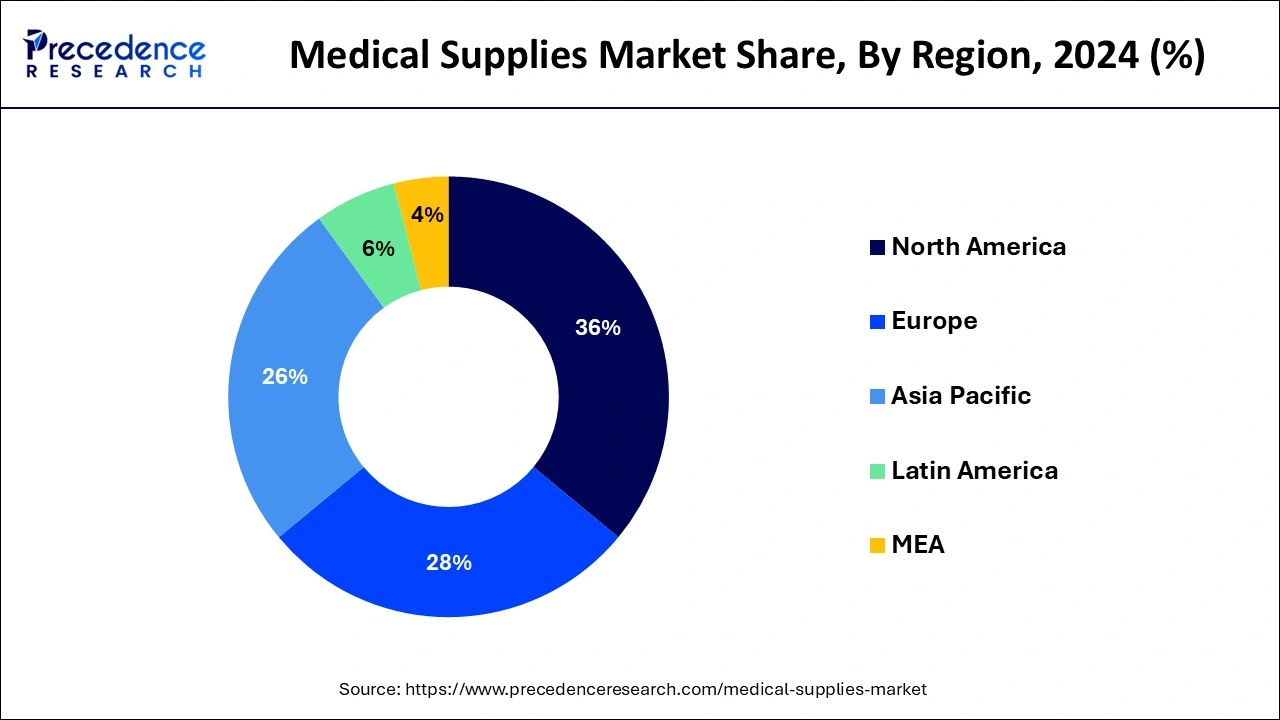
- North America led the global market with the highest market share of 36% in 2025.
- By type, the catheters segment held the largest market share in 2025.
- By type, the disinfectant segment is expected to grow at a remarkable CAGR during the forecast period.
- By end user, the hospitals segment captured the biggest revenue share in 2025.
- By end user, the clinics segment is expected to expand at the fastest CAGR over the projected period.
Market Overview
The medical supplies market refers to the development and commercialization of medical tools, instruments, devices, and consumables for the diagnosis, treatment, and monitoring of patients. Medical supplies comprise a wide range of equipment from basic items like band-aids and syringes to more complex equipment such as heart monitors and ventilators. They ensure patient safety, enhance treatment efficiency, and improve patient comfort.
AI in the Market
Artificial intelligence is disrupting the market for medical supplies through manufacturing, logistics, and patient care. In manufacturing, AI is deployed to maximize production efficiency, and in quality control, it is used to spot defects early, thereby reducing downtimes through rapid process execution and predicting equipment failures. AI ingests demand data to predict supply levels in the supply chain, tracks inventory in real-time, maintains the best layout for warehouses, and determines supplier compliance and risk factors to ensure smooth operation. From the point of cost savings, AI reduces waste, automates simple tasks, and optimizes logistics at the same time. That said, AI sustains and improves patient care through its capacity to ensure critical supplies are never out of stock, to prevent expired products from entering use, and to support personalized treatment plans through the development of customized medical devices. Overall, AI sustains more efficient, reliable, cost-effective, and patient-compatible healthcare delivery, with its influence growing rapidly with evolving technology.
Medical Supplies Market Growth Factors
- The rapid growth in global hospitals and clinics is driving increased demand for medical supplies in support of healthcare infrastructure.
- Rising prevalence of chronic diseases, aging populations, and higher road traffic incidents constitute the primary forces necessitating medical supplies.
- Government investments in healthcare infrastructure development, especially in lower-developed countries, are setting forth new avenues in the medical supplies market.
- To a greater extent, burgeoning healthcare expenditures and advancements in medical technology are driving the demand for medical supplies.
- Increasing awareness on issues regarding Hospital Acquired Infections and the acceptability of non-invasive surgeries are propelling the market, more so in developing countries with an expanding private healthcare sector.
Market Scope
| Report Coverage | Details |
| Market Size in 2026 | USD 157.93 Billion |
| Market Size by 2035 | USD 223.22 Billion |
| Growth Rate from 2026 to 2035 | CAGR of 3.39% |
| Largest Market | North America |
| Base Year | 2026 |
| Forecast Period | 2026 to 2035 |
| Segments Covered | By Type, By Application, and By End Use |
| Regions Covered | North America, Europe, Asia-Pacific, Latin America, and Middle East & Africa |
Market Dynamics
Drivers
Increased Surgical Procedures
The increased number of surgical interventions, driven by societies' keenness on medical technology and minimally invasive technologies, has been the predominant demand force on surgical supplies. A minimally invasive procedure will require the support of tools and disposables specific to its special nature, thus requiring a high consumption of different types of surgical products. In all, with a growing world population and especially better access to healthcare, the volume of surgeries will further increase. Such of scenario, therefore, is considered to be pushing further the surgical supplies market, requiring manufacturers across countries to deliver reliable and cutting-edge products so that they may address all kinds of surgical interventions being carried out in hospitals and clinics.
Restraint
Stringent Regulations and Compliance
Medical supplies manufacturers are usually subjected to very stringent approval systems, which drill down to product development and even manufacturing processes. To comply with such regulations as RoHS and the European Directive on Electronic Waste would surely increase the cost, which, in turn, affects entering the market. The regulatory institutions demand strict control over the materials and manufacturing processes to ensure compliance with criteria laid down for the safety of patients and for environmental concerns. While the motives behind such requirements are just, the enforcement itself can cause unreasonable delays in product launch, lead to an increase in their operational cost, thereby creating an obstacle for market penetration especially for small companies.
Opportunity
Disposable Medical Supplies
Due to mounting concerns about infections and cross-contamination, there is an increased demand for disposable medical supplies. Single-use medical supplies like gloves, syringes, or surgical implements lessen the possibilities of infection and improve patient safety. The disposables provide time-effective cost consideration from the healthcare institutions in managing and preventing infections. Therefore, with hospitals prioritizing matters of hygiene and contamination, the market for disposable medical supplies will witness rapid growth, thereby opening novel avenues for manufacturers to explore and prosper.
Segments Insights
Type Insights
Based on type, the catheters segment dominated the market in 2025, in terms of revenue and is projected to witness notable CAGR during the forecast period. This can be attributed to the growing prevalence of chronic diseases such as diabetes, stroke, dementia, and chronic obstructive pulmonary disease, which are the major cause of urinary incontinence. Urinary incontinence is highly prevalent among the old age population, and hence growing geriatric population across the globe is expected to drive the demand for the catheters in the forthcoming years. According to the WHO, urinary incontinence is prevalent among 9.9% to 36.1% of the population. It is twice higher in older women as compared to that of older men.
On the other hand, the disinfectant segment is estimated to be the most opportunistic segment during the forecast period. The rising prevalence of hospital acquired infections and rising awareness regarding this is expected to drive the growth of this segment. The number of surgeries is rising rapidly and it is a significant factor that is expected to drive the demand for the disinfectants during the forecast period.
Application Insights
Based on application, the others segment accounted largest revenue share in 2025 and is estimated to sustain its dominance during the forecast period. This is attributed to the availability of wider variety of consumables in the others segment. The rising demand for the surgeries, increased number of hospitals and clinics, growing popularity of disposable supplies, and growing focus on the proper waste disposal of the medical supplies is fostering the growth of this segment.
On the other hand, the wound care segment is expected to be the fastest-growing segment during the forecast period. The rising cases of accidents on roads, especially in the developing nations is fueling the demand for the wound care supplies. According to WHO, road accidents is one of the most prominent cause of death among the children and young adults aged between 5 years to 29 years. Around 93% of the road accidents are occurred in the low and middle income countries. Hence, this segment is expected to grow rapidly in the upcoming future.
End User Insights
Based on end user, the hospitals segment dominated the market in 2025, in terms of revenue. The increased popularity and presence of government hospitals attracts a huge customer base, which results in the higher consumption of medical supplies in the hospitals. Moreover, the rising investments by the government and the corporate sector for the development of healthcare sector is expected to foster the market growth.
On the other hand, the clinics segment is expected to be the most opportunistic segment during the forecast period. This is attributed to the increasing penetration of the private clinics in the developed and developing nations. Moreover, rising incidences of various diseases and rapidly growing demand for the disinfectants is positively impacting the market.
Regional Insights
Why Did North America Dominate the Medical Supplies Market in 2025?
North America dominated the global medical supplies market with revenue share of 36% in 2025, in terms of revenue. North America is characterized by the increasing prevalence of chronic diseases, rising geriatric population, increased healthcare expenditure, developed healthcare infrastructure, and increasing demand for the surgeries among the population. Moreover, the higher adoption of health and medical insurance encourages the population to opt for hospital facilities. All these factors are expected to contribute positively in the growth of the medical supplies market in North America.
What is the U.S. Medical Supplies Market Size?
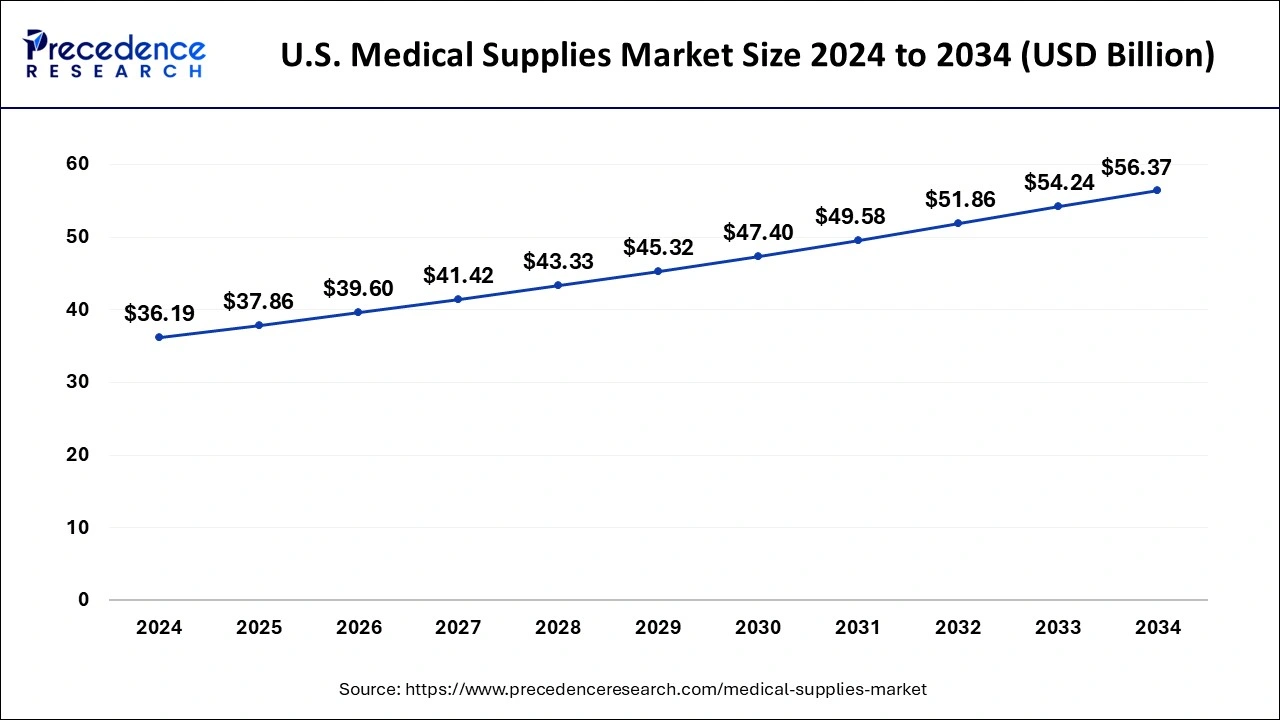
The U.S. medical supplies market size was estimated at USD 37.86 billion in 2025 and is predicted to be worth around USD 58.67 billion by 2035, at a CAGR of 4.48% from 2026 to 2035.
U.S. Market Trends
The U.S. leads the market in North America due to advanced healthcare infrastructure and stringent regulatory policies. The U.S. conducts the highest number of clinical trials in the world, potentiating the demand for medical supplies. McKesson Corporation, Henry Schein, and Medline are major contributors to market growth.
Why Is Asia Pacific Expected to Be the Fastest-Growing Medical Supplies Market?
Asia Pacific is expected to be the most opportunistic market during the forecast period. The increased investments by the government and the corporate sector in the development of the healthcare infrastructure. The huge population, rising awareness regarding the non-invasive surgeries, rising healthcare expenditure, and increasing awareness regarding hospital acquired infections are the various factors that can be held accountable for the growth of the medical supplies market during the forecast period.
China Market Trends
China has a well-established infrastructure for the manufacturing of medical supplies, offering disposable consumables, diagnostic equipment, and surgical instruments. BKA MED, United Imaging, and Perlong Medical are major manufacturers of medical supplies in China. As of July 2026, 52,765 trials were registered on the clinicaltrials.gov website in China.
How is Europe Growing in the Medical Supplies Market?
Europe is expected to grow at a notable CAGR in the foreseeable future, due to growing healthcare infrastructure, the rising prevalence of chronic disorders, and favorable government support. Government organizations are making constant efforts to establish a robust manufacturing and clinical trial infrastructure, encouraging foreign companies to conduct their advanced research activities in the region. The increasing investments in medical supplies boost the market.
UK Market Trends
The Medicines and Healthcare products Regulatory Agency (MHRA) regulates the approval and use of medical supplies. Medtech is a fast-growing industry with the number of active companies expanding by over 200% over the last decade. There are more than 4,000 businesses involved in medical technology in the UK.
Medical Supplies Market Comapanies
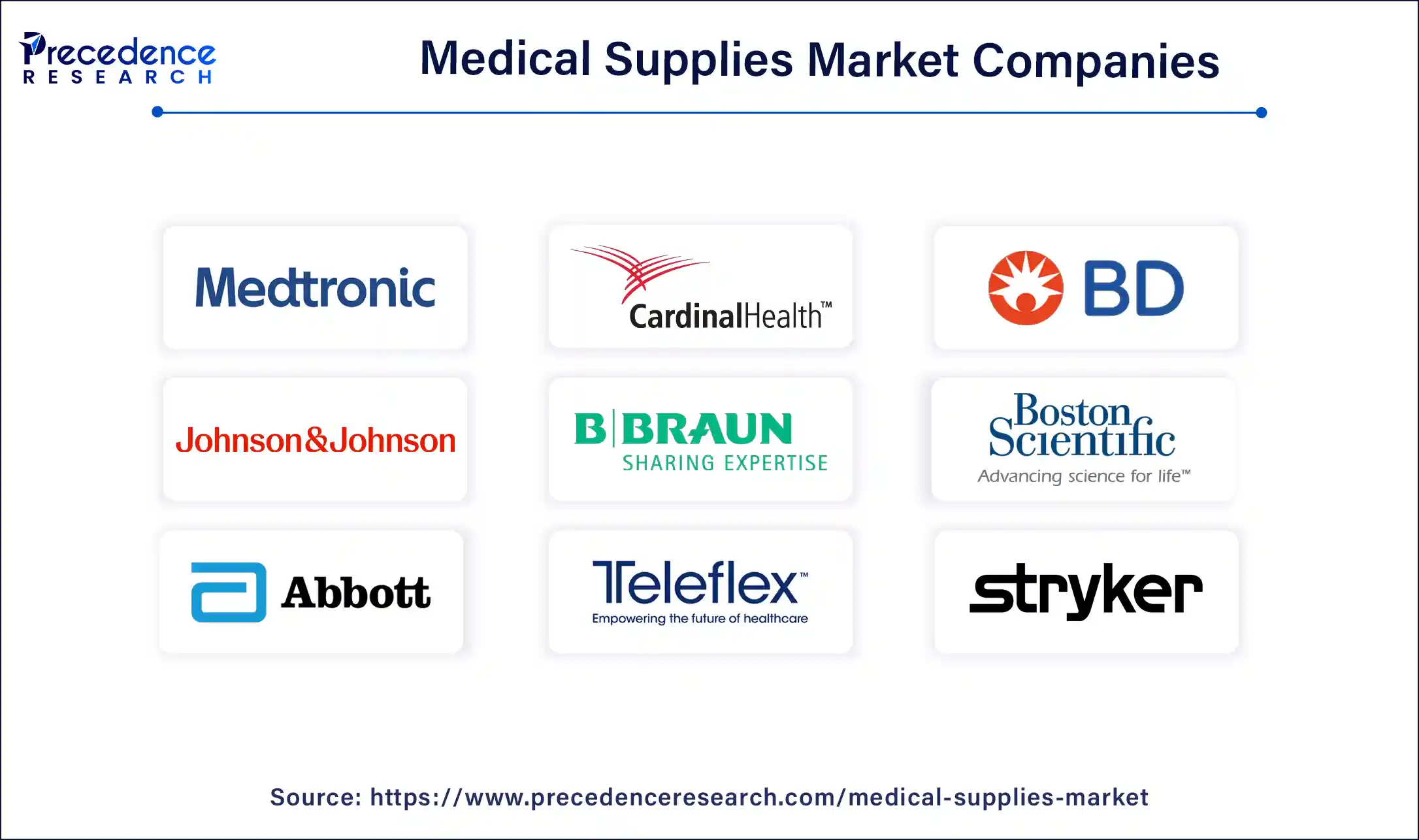
- Medtronic
- Cardinal Health, Inc.
- BD
- Johnson & Johnson
- B. Braun Melsungen AG
- Boston Scientific Corporation
- Thermo Fisher Scientific, Inc.
- Baxter International, Inc.
- Avanos Medical, Inc.
- 3M
- Smith & Nephew
- ConvaTec Group Plc.
- Abbott
- Teleflex Incorporated
- Fresenius Medical Care AG & Co. KGaA
- Coloplast Group
- Cook Medical
- Merit Medical Systems
- Stryker
- Terumo Corporation
How Do Regulatory Bodies Authorize Medical Supplies?
Several regulatory bodies strive to enhance access to essential medical supplies. Some instances are listed below:
- In July 2026, Barbados strengthened its regulatory capacities for medicines and other health technologies towards the establishment of the Barbados Medical Products Authority (BMPA), with the support of the Pan American Health Organization (PAHO). The country aims to reinforce its commitment to achieve WHO Maturity Level 3 by 2029. (Source: https://www.paho.org)
- In June 2026, the Administration for Strategic Preparedness and Response (ASPR) launched the Digital Stockpile and Manufacturing Response Network Challenge, a three-phase competition to improve the rapid domestic production of key medical supplies for emergencies. (Source: https://www.aha.org)
- In April 2026, the International Federation of Red Cross and Red Crescent Societies (IFRC) and Turkish Red Crescent delivered medical supplies and humanitarian relief items from Türkiye to Iran. The shipment includes trauma kits, tents, blankets, and hygiene items. (Source: https://www.ifrc.org)
Recent developments
- In July 2026, BayCare Health System announced the launch of Tampa Bay's first healthcare drone delivery service in late 2027 with the help of autonomous aircraft to transport medications, laboratory samples, and critical medical supplies across the Florida west coast region. This will be accomplished in collaboration with Zipline. (Source: https://www.airmedandrescue.com)
- In July 2026, Nonprofit Health Care Sharing Ministry, netWell, launched netWell DME, a new resource that provides convenient access to quality healthcare supplies from the comfort of home. The platform offers access to medical-grade products to support a variety of healthcare needs, including routine care supplies and specialized equipment. (Source: https://natlawreview.com)
- In June 2025, the Andhra Pradesh MedTech Zone (AMTZ) introduced the International Biomed Cross (IBC), a global effort focused on supporting the upkeep and repair of medical equipment during disasters and health crises. The launch occurred at the MedTech Policy Mahotsav, held at the Constitution Club of India. A joint project between AMTZ and the Universal Clinical Engineering Federation (UCEF), the IBC unites biomedical and clinical engineers worldwide to provide technical support in regions affected by crises with limited medical resources.
- On November 27, 2025, Union Chemicals and Fertilizers Minister JP Nadda launched a Rs 500 crore scheme aimed at strengthening India's medical devices industry. The scheme focuses on key areas like manufacturing critical components and accessories, skill development, support for clinical studies, developing shared infrastructure, and promoting the industry. It has five main components: shared facilities for medical device clusters, building capacity and skills, a small investment scheme to reduce import reliance, support for clinical studies, and a scheme to promote medical devices.
- June 2025 marked the start of the Marcos administration's efforts to promote healthier lifestyles among young people. As part of this initiative, the Department of Health (DOH) introduced health packages and medical services at the launch of Brigada Eskwela 2025. This move acknowledged the crucial role schools play in supporting student well-being. Led by Health Secretary Ted Herbosa, the DOH recognized 83 schools nationwide as "Health Champions" at the launch event, held at Bacacay East Central School in Albay. The health packages included vital medical tools like blood pressure monitors, weighing scales, first aid kits, and other clinic supplies.
Segments Covered in the Report
By Type
- Diagnostic Supplies
- Infusion & Injectable Supplies
- Disinfectants
- PPE
- Sterilization Consumables
- Wound Care Consumables
- Dialysis Consumables
- Catheters
- Radiology Consumables
- Others
By Application
- Radiology
- Wound Care
- Cardiology
- Urology
- Respiratory
- Infection Control
- IVD
- Others
By End User
- Hospitals
- Clinics
- Others
By Region
- North America
- Europe
- Asia-Pacific
- Latin America
- Middle East and Africa
For inquiries regarding discounts, bulk purchases, or customization requests, please contact us at sales@precedenceresearch.com
Frequently Asked Questions
Tags





Ask For Sample
No cookie-cutter, only authentic analysis – take the 1st step to become a Precedence Research client
 Get a Sample
.webp)



 sales@precedenceresearch.com
 Schedule a Meeting
