



Nebulizer Market Size, Key Companies, Company Market Share, Healthcare Infrastructure Growth, Product Utilization, Regulatory Compliance, Sales Analysis, and Investment Trends
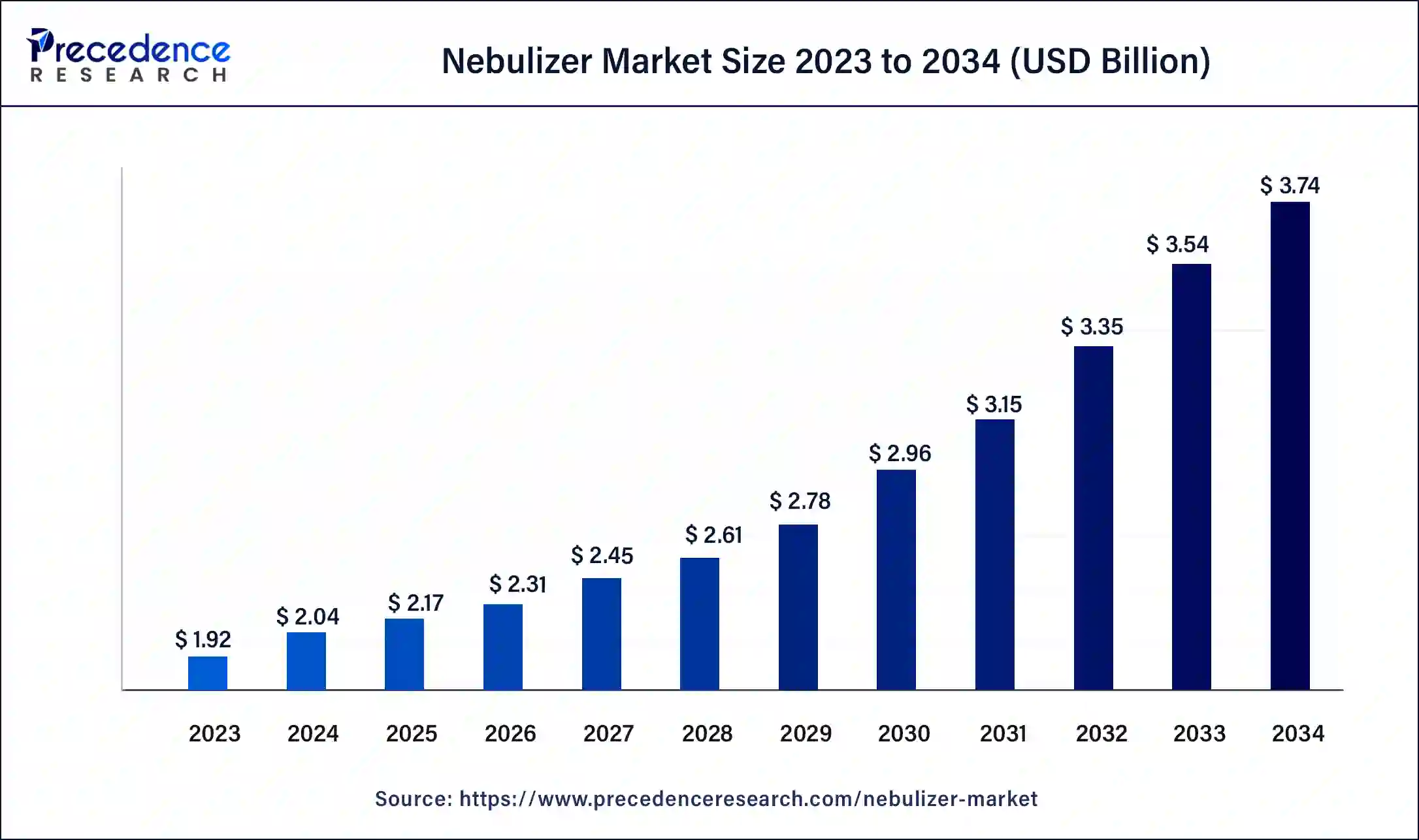
The global nebulizer market was valued at USD 2.31 billion in 2026 and is projected to reach USD 3.93 billion by 2035, expanding at a CAGR of 6.12% from 2026 to 2035. Market growth is driven by the rising prevalence of asthma and COPD, increasing demand for home-based respiratory care, and continuous advancements in portable, smart, and efficient aerosol drug delivery technologies.
Source: https://www.precedenceresearch.com/nebulizer-market
 Get a Sample
 Table Of Content


Why is the Nebulizer Market Growing Steadily Worldwide?
The global nebulizer market size accounted for USD 2.17 billion in 2025, and is anticipated to hit around USD 2.31 billion by 2026, and is predicted to reach around USD 3.93 billion by 2035, growing at a CAGR of 6.12% from 2026 to 2035. The nebulizer market is driven by the rise in prevalence of asthma. The market is experiencing consistent growth driven by factors including the growing number of patients living with chronic respiratory conditions, a growing need for home-based respiratory treatments, and continuing improvements in portable, quieter, and more effective aerosol drug delivery systems.
Nebulizer Market Key Takeaways
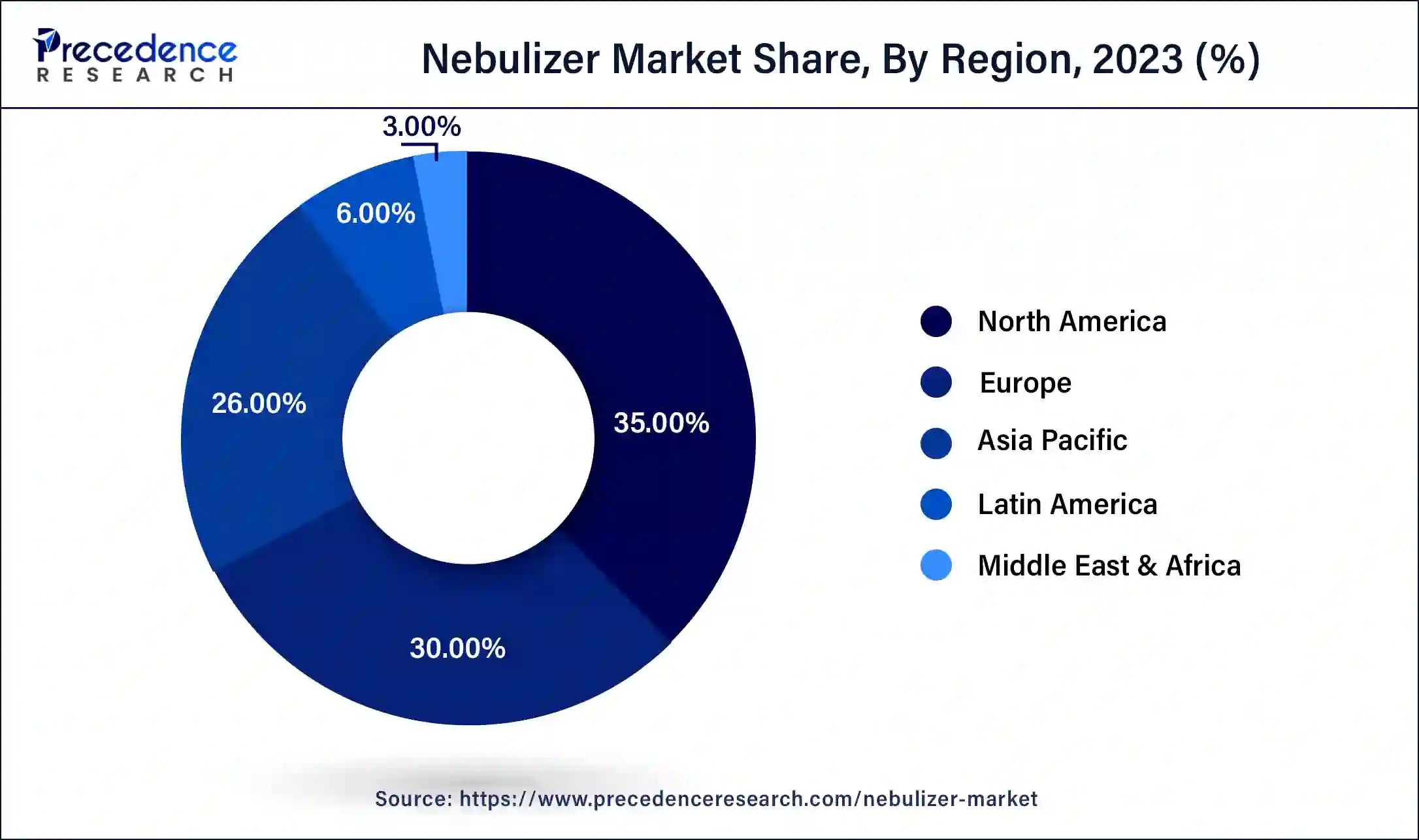
- North America led the global market with the largest market share of 35% in 2025.
- By type, the jet segment has held the largest revenue share of 65% in 2025.
- By type, the mesh segment held the largest share in the prepaid card market for 2025.
- By end user, the hospital & clinic segment held the largest share in the prepaid card market for 2025.
- By end user, the hospital & clinic segment is expected to be the fastest growing in the prepaid card market in the forecast period between 2026 and 2035.
Market overview
A nebulizer facilitates the delivery of drugs in the form of mist into the lungs. The rising prevalence of respiratory diseases such as chronic obstructive pulmonary disease, asthma, and cystic fibrosis is a major factor that boosts the demand for nebulizers across the globe. The growing investments and advancements in the drug delivery devices have fostered the growth of the global nebulizer market. The rising geriatric population and rising incidences of various respiratory diseases are augmenting the demand for nebulizers.
How is AI enhancing the nebulizer industry?
Artificial intelligence is enhancing the nebulizer industry by permitting smart nebulizers with features such as personalized treatment, remote monitoring, and predictive maintenance. Data analytics permits healthcare providers to better understand patient demands and adjust treatment plans accordingly. This contributes to improved patient results and reduced hospitalizations. AI algorithms can determine patient data (including medical history, genetic information, and treatment response) to forecast how a patient will respond to a particular treatment. This allows healthcare professionals to monitor treatment strategies to individual patient needs.
Growth Factors for Nebulizer Market
- Increasing Impact of Lung Diseases: The growing incidence of asthma, chronic obstructive pulmonary disease (COPD), bronchitis, and lung infections puts pressure on the demand for nebulizers. The increasing number of elderly people in cities is pushing up the demand for inhalation therapy.
- Increased Preference of Patients for Treatment at Home: There is a growing preference among patients of chronic lung diseases for portable nebulizers that can be used at home. The use of these devices at home means fewer hospital visits, decreased healthcare expenses, and greater convenience of treatment.
- Development of New Technologies: Companies are now making compact and portable battery operated nebulizers, mesh nebulizers and smart nebulizers which are able to deliver medication faster, work silently, and connect to the Internet. These technologies bring better treatment quality and improve patient experience.
- Increasing Old Population: As the number of old people increases, the need for long-term treatment with inhalation devices also increases. With the increase in life expectancy and occurrence of lung diseases in older people the need for effective nebulizers increases.
Nebulizer Market Trends
- Lightweight and Mesh Nebulizers Going Popular: Patients are using light, portable, and mesh nebulizers increasingly for their faster medication delivery, quiet operation, and increased convenience for home use and travel.
- Increasing Need for Home Treatment Services: Home management of chronic respiratory diseases is leading to increased demand for easy-to-use nebulizers that allow patients to manage their own therapy without frequent trips to the hospital.
- Integration of Smart Technologies: Manufacturers of nebulizers embed Bluetooth connectivity, mobile applications, and digital monitoring capabilities into their devices, enabling medication adherence and facilitating remote patient care.
- Increasing Focus on pediatric-friendly devices: Manufacturers are producing nebulizers for children specifically, to keep them appealing to the eye, quiet, and comfortable in terms of operation and masks, thus ensuring they help in compliance with treatment in the young child.
- New Advances in Aerosol Drug Delivery Technology: Continuous developments of nebulizer technology are enhancing the control of aerosol particles, effectively delivering drugs into the lungs and reducing medication waste.
- Growing Need to Develop Battery-Based Devices: There is an increasing demand for rechargeable and battery-operated nebulizers as their ease of use and longevity during travel or outages are significant.
- Government's Support for the Development of Respiratory Disease Management Programs: Government-supported initiatives combined with healthcare establishments are reinforcing respiratory care programs with an increase in the use of nebulizers in chronic disease management over a longer period.
- Dedication to Sustainable Product Design: For this, companies are designing resilient, reusable, and energy-efficient nebulizers to reduce environmentally harmful effects as well as decrease long-term costs related to treatment.
Nebulizer Market Outlook
- Long-Term Industry Perspective: The market for nebulizer is likely to experience a consistent upsurge in demand because of the rising occurrences of respiratory diseases, the aged population, and the growing home healthcare industry. Development in the word of portable, smart, and mesh nebulizer technology along with increased awareness on respiratory disease management is expected to boost the demand in the future across the healthcare sectors in both advanced and developing countries.
- Innovative Models of Business: The Company is increasingly investing in developing a digital health ecosystem by connecting nebulizers to mobile applications, remote patient monitoring, and telehealth systems among them. New models like subscriptions-based maintenance, consumer-based distribution, and connected respiratory care have come up offer opportunities of recurrent revenue generation while at the same time improving patient compliance and outcomes.
- Strategic Recommendations for Stakeholders: Companies are advised to focus on investment in enhancing the technology of nebulizers making them lighter, quieter, and more connected.
Market Report Coverage and Key Metrics
| Report Coverage | Details |
| Market Size by 2035 | USD 3.93 Billion |
| Market Size in 2025 | USD 2.17 Billion |
| Market Size in 2026 | USD 2.31 Billion |
| Growth Rate from 2026 to 2035 | CAGR of 6.12% |
| Largest Market | North America |
| Base Year | 2025 |
| Forecast Period | 2026 to 2035 |
| Segments Covered | Type, End User, Portability, and Region |
| Regions Covered | North America, Europe, Asia-Pacific, Latin America, and Middle East & Africa |
Market Dynamics
Drivers
How is the rising prevalence of respiratory diseases the driving force for the nebulizer market?
Nebulizers convert liquid medication into a mist that can be inhaled, delivering the medication directly to the lungs where it is required most. This targeted approach is mainly important for treating conditions such as asthma and COPD. Innovations in nebulizer technology, like vibrating mesh nebulizers, are also driving market expansion by providing more efficient and convenient alternatives for patients.
Restraint
How are clinical limitations a restraint for the nebulizer market?
Clinical limitations, mainly concerns about infection transmission as well as potential side effects, can restrain the nebulizer market by restricting its adoption and recommendations by healthcare professionals. These concerns include the risk of infection from unsterile chambers or tubing along with the potential for respiratory side effects such as irritation or inflammation of the airways. Nebulizers can generate a high volume of respiratory aerosols, which increases the risk of disease transmission, especially in settings with vulnerable individuals. Patients may also be hesitant to usage nebulizers due to these concerns, potentially influencing the overall market demand.
Opportunity
How are innovations in nebulizer technology an opportunity for the nebulizer market?
Innovations in nebulizer technology, such as mesh nebulizers and smart nebulizers, are creating significant opportunities for the nebulizer market by improving drug delivery, enhancing patient convenience, and permitting remote monitoring. These advancements are boosting market expansion by making nebulizers more effective, easier to usage, and better integrated with healthcare systems. Innovations such as portable, battery-operated nebulizers along with smart nebulizers with features like real-time monitoring and remote data transfer are creating nebulizer therapy more convenient along with the accessible for patients. This is mainly essential for patients with chronic respiratory conditions who require frequent treatments, as it allows for greater flexibility and ease of use, leading to improved adherence to treatment plans.
Segments Insights
Type Insights
Based on the type, the jet segment dominated the global nebulizer market. This segment accounted for a market share of around 65% in 2025. This is attributed to the increased demand for the jet nebulizers owing to its low cost availability. The nebulizers based on the jet technology had been traditionally used for the administration of aerosolized medications. The increasing demand for the jet nebulizers in the low and middle income countries has fostered the growth of this segment.
On the other hand, the mesh is estimated to be the most opportunistic segment during the forecast period. The new technology and advancements used in the mesh nebulizers is spurring its demand among the patients across the globe. The introduction of advanced technologies in these nebulizers is augmenting its growth in the developed nations and hence, it is expected to grow at highest CAGR.
Portability insights
The tabletop segment dominated the nebulizer market in 2025. This is because of the combination of factors, including operational advantages, the existence of a large number of manufacturers, along with favorable reimbursement policies in developed markets. Tabletop nebulizers are frequently used in hospitals and clinics due to their suitability for treating a large number of individuals simultaneously and their ability to deliver consistent medication doses.
The portable segment is the fastest growing in the nebulizer market during the forecast period. This is due to rising respiratory disease prevalence, developments in technology, and a growing choice for home healthcare. Chronic respiratory diseases such as asthma and COPD are becoming increasingly common, contributing to a greater need for nebulizers, especially portable ones that provide flexibility in treatment. Portable nebulizers assist individuals manage their conditions more effectively, potentially decreasing the need for frequent hospital visits.
End User Insights
The hospital & clinic segment accounted for the largest revenue share and dominated the global nebulizer market in 2025. The increased penetration of hospitals and the availability of various types of nebulizers in hospitals and clinics have resulted in the dominance of this segment. Hospitals and clinics are the primary preference of the patients for receiving the treatment for respiratory diseases. The rising investments in equipping the healthcare units with latest and advanced technologies and devices are presenting promising growth opportunities for the market players.
The home healthcare is expected to be the fastest-growing segment during the forecast period. The technological advancements in the drug delivery devices have encouraged the miniaturization of nebulizers that makes them suitable for use in a home healthcare setting. The growing geriatric population, rising need for reducing healthcare costs, and growing prevalence of pulmonary diseases are the major factors that drives the growth of the home healthcare segment. Further, the growing popularity of online pharmacies and the easy availability and home delivery are the major factors that drive the growth of this segment.
Regional Insights
What Made North America the Dominant Region in the Nebulizer Market?
North America dominated the global market with the largest market share in 2025, due to a high prevalence of chronic respiratory illnesses such as asthma and chronic obstructive pulmonary disease (COPD), and has an established healthcare system leading to increased utilization of modern technologies such as advanced respiratory care equipment. Portable and mesh nebulizers are in demand as home healthcare is booming and the reimbursement system is being very supportive of these services. Ongoing product innovations, rising healthcare expenditures, and growing awareness surrounding early intervention of respiratory diseases have fueled further market expansion. Also, the presence of various leading medical device manufacturers and continuous approvals of advanced nebulizer technologies in the regulations have continued to position North America as a dominant market in this area.
U.S. Market Trends
The U.S. accounted for the largest share of the North American market due to its significant population affected by chronic respiratory ailments, alongside considerable healthcare investment and swift adoption of innovative medical technology. Increased interest in at-home respiratory treatment options with the support of an aging population has fueled demand for portable, as well as smart, nebulizers. Such personalized care approaches are in great demand among healthcare professionals, who are also encouraging connected nebulizer solutions through remote patient monitoring systems.
U.S. Nebulizer Market Size and Growth 2026 to 2035
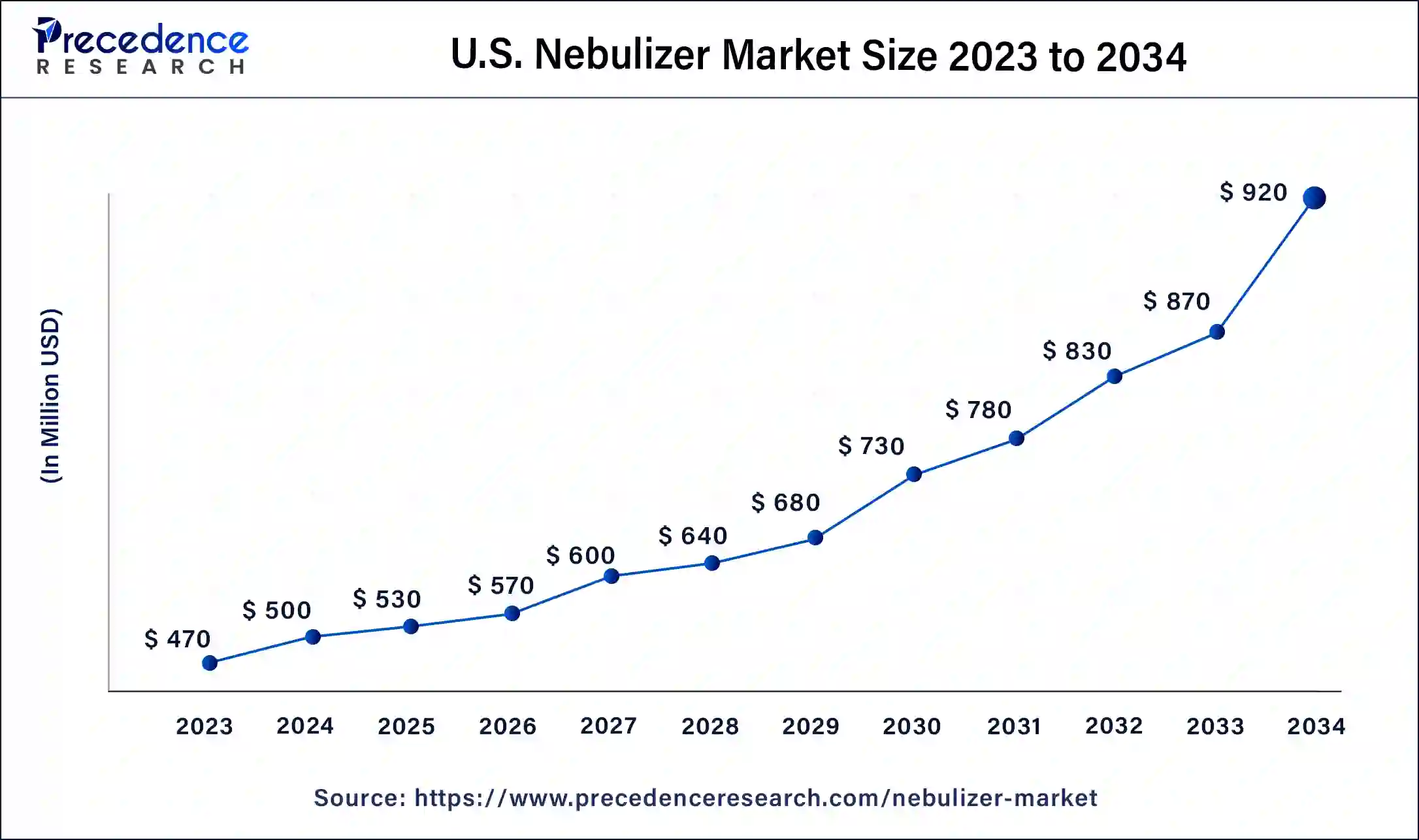
The global nebulizer market size was valued at USD 530 million in 2025 and is expected to be worth around USD 960 million by 2035, growing at a CAGR of 6.12% from 2026 to 2035.
Asia Pacific Nebulizer Market Analysis
On the other hand, Asia Pacific is estimated to be the most opportunistic market during the forecast period. Asia Pacific is witnessing rapid industrialization, rapid urbanization, rising prevalence of smoking, changing lifestyle, and growing geriatric population are the major factors that are expected to drive the growth of the nebulizer market. According to the World Health Organization, around 80% of the global geriatric population is expected to live in low and middle income countries by 2050. The geriatric people spends more in the healthcare and thus are expected to drive the market growth. According to the WHO, around 80% of the death due to COPD occurs in the low and middle income countries. Therefore, the demand for the nebulizers is expected to grow rapidly in Asia Pacific.
China Market Analysis
China is excelling in the nebulizer market, fueled by a rising prevalence of respiratory disorders, an increasing demand for home healthcare, and a growing acceptance of nebulization therapies. Additionally, technological advancements, heightened healthcare awareness, and a surge in respiratory conditions are driving market growth.
Powerful presence of Europe in the nebulizer market
Europe is expected to grow at a notable rate in the foreseeable future in the nebulizer market owing to the high prevalence of respiratory diseases, a strong emphasis on innovative healthcare solutions, and an increasing focus on home healthcare. The presence of many prominent key players like Omron Corporation, Drive DeVilbiss Healthcare, GE HealthCare Technologies, and Allied Healthcare Products. Additionally, many countries like Germany and the UK also have well-established healthcare infrastructures coupled with a strong focus on patient care, which further contributes to market expansion.
Germany Market Analysis
Germany is experiencing substantial growth in the market, supported by regulatory initiatives and a strong emphasis on home healthcare. The incorporation of smart technology and IoT in nebulizers is transforming treatment approaches.
Will the Middle East and Africa Grow in the Nebulizer Market?
The Middle East and Africa region is considered to be a significantly growing area, due to improvements in healthcare infrastructure and a growing adoption of advanced medical technologies. The rising prevalence of conditions such as asthma and COPD is contributing to the market's expansion.
UAE Market Analysis
In the UAE, the market is thriving, largely due to the increasing incidence of asthma, which is attributed to airborne pathogens linked to changing weather conditions. This growth is also driven by high rates of inpatient and outpatient management for asthma, COPD, and acute lower respiratory tract infections.
How is Latin America Growing in the Nebulizer Market?
Latin America is expected to grow at a notable CAGR in the foreseeable future, driven by technological advancements, heightened consumer awareness, and expanded distribution channels. Improvements in healthcare infrastructure and the adoption of advanced medical technologies are also key factors.
Brazil Market Analysis
The Brazilian market is driven by increased awareness of early diagnosis, government initiatives aimed at enhancing healthcare infrastructure, a growing geriatric population, and the integration of IoT and AI in devices. The demand for home healthcare solutions, the expansion of telemedicine, and ongoing industry innovations are further boosting growth.
Value Chain Analysis
- Research and Development: It concentrates on understanding various nebulized drugs and advancing apparatus technology.
Key Players: Omron Healthcare, Inc., Koninklijke Philips N.V. - Clinical Trials and Regulatory Approvals: It undertakes procedures necessary for assuring safety, efficacy, and overall compliance before products are introduced in the market.
Key Players: AstraZeneca, Boehringer Ingelheim, GlaxoSmithKline (GSK), Novartis - Formulation and Final Dose Preparation: This group works on preparing optimized liquid formulations for administration via nebulizers.
Key Players: GlaxoSmithKline (GSK), Novartis, Vectura Group Plc - Packaging and Serialization: The purpose here is protective packaging and implementing a serialization system that follows the product through the supply chain.
Key Players: Amcor Plc, AptarGroup, Inc., Gerresheimer AG - Distribution to Hospitals and Pharmacies: The distribution can involve proper storage and transport for healthcare providers.
Key Players: Omron Healthcare, Inc., Koninklijke Philips N.V., PARI Respiratory Equipment, Inc. - Patient Support and Services: This group educates patients on nebulization therapy and provides information on its appropriate use.
Key Players: Omron Healthcare, Inc., Koninklijke Philips N.V., PARI GmbH
Key Market Developments
The key market players in the global nebulizer market are constantly engaged in various developmental strategies such as product launches, collaborations, and partnerships in order to establish their supremacy in the market and gain competitive edge over others. These developmental strategies are expected to provide new growth prospects in the forthcoming future and will foster the growth of the global nebulizer market.
Market Competitive Landscape: Leading Companies and Strategies
The global nebulizer market is characterized by a semi-consolidated structure, with companies primarily targeting clinical and hospital environments. Additionally, manufacturers are increasingly focusing on travel-friendly devices and home care solutions, driven by the rise in medical tourism and the demand for inpatient services. A significant barrier in this market is the high cost of devices and their maintenance, which raises concerns among many consumers. Brand reputation is particularly important in the medical equipment sector, often limiting opportunities for small to medium enterprises. However, adherence to regulatory guidelines, obtaining certifications, and embracing innovative technologies such as eFlow technology and user-friendly designs are key factors that can attract consumers.
Nebulizer Market Companies
- Allied Healthcare Products, Inc.
- Omron Healthcare Co.
- Covidien plc
- GE Healthcare Ltd.
- Philips Healthcare
- Agilent Technologies, Inc. Ltd
- CareFusion Corporation
- PARI Respiratory Equipment, Inc.
- GF Health Products, Inc.
- BD
Leaders Announcements
- Guenter Nadler, Director Business Development, Aptar Pharma, announced this newest Aptar Pharma innovation, PureHale. He also commented that they have seen a real demand for a device because the traditional nebulizers come with a set of challenges, such as complexities in setup, manual dexterity requirements, along with poor inhalation technique, duration of nebulization, and optimal efficacy concerns. Meanwhile, PureHale has been designed specifically to address these challenges by simplifying the entire process.
Recent Developments
- In May 2026, Dr. Odin introduced Odin Buddy, a child-friendly nebulizer designed to simplify pediatric respiratory therapy. The device features a playful design, quiet operation, and efficient aerosol delivery to improve treatment adherence among young patients. (Source: https://theindianpractitioner.com)
- In May 2026, Lupin Limited achieved tentative approval from the U.S. Food and Drug Administration (FDA) for Revefenacin Inhalation Solution, which acts as a generic substitute for Yupelri. This authorization has also expanded the company's broad range of respiratory products while providing better access to long-acting inhalation therapies for patients with chronic obstructive pulmonary disease (COPD). (Source: https://www.lupin.com/)
- In May 2025, Glenmark Pharmaceuticals transferred its nebulizer brands to its wholly owned subsidiary, Glenmark Specialty, in a ₹223 crore business restructuring aimed at strengthening respiratory care operations, improving portfolio management, and supporting future growth initiatives. (Source: https://scanx.trade/stock-market-news)
- In November 2025, Glenmark Pharmaceuticals launched the world's first nebulized fixed-dose triple therapy for COPD, combining glycopyrronium, formoterol, and budesonide in a single treatment to improve lung function and simplify respiratory disease management. (Source: https://pharma.economictimes.indiatimes.com)
- In July 2025, Synchrony Medical Ltd. obtained clearance from the U.S. FDA under the 510(k) regulation for its LibAirty™ Airway Clearance System, a home-based respiratory therapy device designed to improve mucus elimination in patients with chronic respiratory conditions. This approval broadens the company's menu in respiratory care and reinforces a greater dedication to developing premium pulmonary solutions for patients to use at home.
(Source: https://www.prnewswire.com/) - In July 2025, HCmed Innovations Co., Ltd. announced that its AdheResp Smart Breath-Actuated Mesh Nebulizer received U.S. FDA 510(k) clearance as the first breath-actuated mesh nebulizer equipped with integrated connectivity features. This innovation allows synchronized aerosol delivery, reduces medication waste, and supports advancements in next-generation inhalation treatments. (Source: https://www.hcmed-inno.com/)
- In May 2024, Medline launched its Hudson RCI TurboMist small-volume nebulizer for delivering medication in respiratory care. This TurboMist can deliver medication in just three minutes by making it the fastest small-volume nebulizer on the market, whereas traditional nebulizers can take at least 10 minutes to provide treatment. Overall, the nebulizer delivers better deposition, with faster delivery and an optimal respirable fraction to speed patient relief.
- In September 2024, Veridian expanded its respiratory device portfolio with the acquisition of Zewa. This acquisition expands the consumer medical product portfolio, featuring respiratory devices such as a compressor nebulizer system, along with oximetry, connected and non-connected blood pressure monitors, pain management, and thermometry. Also, remote patient monitoring (RPM) and telehealth segments of Veridian, positioning the company as a leading supplier in the diagnostic medical and telehealth product categories in North America.
Segments Covered in the Report
By Type
- Jet
- Mesh
- Ultrasonic
By End User
- Hospital & Clinic
- Home Healthcare
- Emergency Centers
By Portability
- Tabletop
- Portable
By Region
- North America
- Latin America
- Europe
- Asia-pacific
- Middle and East Africa
For inquiries regarding discounts, bulk purchases, or customization requests, please contact us at sales@precedenceresearch.com
Frequently Asked Questions
Tags





Ask For Sample
No cookie-cutter, only authentic analysis – take the 1st step to become a Precedence Research client
 Get a Sample




 sales@precedenceresearch.com
 Schedule a Meeting
