



Abu Dhabi Health Delegation Concludes Inaugural Visit to China, Opening New Pathways to Advanced AI, Precision Medicine and Next-Gen Therapies
Published: 21 Oct 2026
Author: Gautam Mahajan



The global healthcare industry is increasingly focused on international partnerships that can accelerate medical innovation, improve diagnostics capabilities, and translate scientific discoveries into better patient outcomes. Artificial intelligence (AI), precision medicines, advanced therapeutics, and genomics are creating new opportunities for healthcare providers, biotechnology companies, and research institutions to develop more personalized and efficient treatment approaches.
On October 17, 2026, the Department of Health Abu Dhabi (DoH) announced the successful conclusion of its inaugural health and life sciences mission to China. The delegation completed 32 meetings and site visits across Beijing, Shanghai, and Shenzhan, engaging with healthcare institutions, universities, and technology innovators. The mission identified potential opportunities for collaboration in medical technology, clinical research, advanced diagnostics, drug development, and next-generation therapies, strengthening connections between the healthcare ecosystem of Abu Dhabi and China.
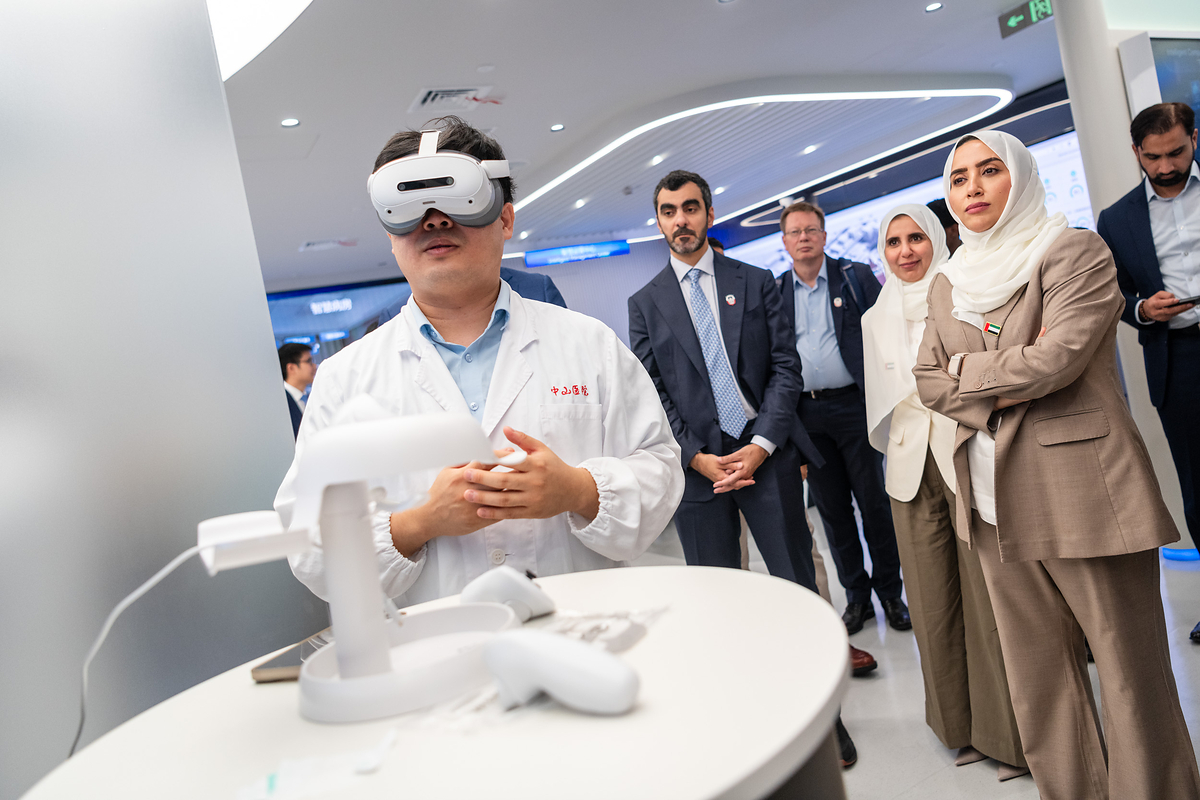
International Collaboration Opens New Healthcare Opportunities
Led by H.E. Dr. Noura Khamis AI Ghaithi, Undersecretary of DoH, the mission aimed to connect China’s scientific, technological, and manufacturing capabilities with Abu Dhabi’s integrated healthcare infrastructure, population-scale data resources, genomic programmes, and regulatory environment.
The discussions extended beyond technology exchange to explore practical approaches for developing, evaluating, and implementing healthcare innovations. Potential collaboration pathways include joint research, clinical studies, technology validation, specialized training, knowledge transfer, and manufacturing partnerships.
China’s expanding biotechnology sector and advanced manufacturing capabilitites offer opportunities to support the development of innovative medical solutions. Meanwhile, Abu Dhabi’s connected healthcare ecosystem could provide an environment for evaluating technologies, generating clinical evidence, and integrating suitable innovations into patient care.
The collaboration could also help companies explore opportunities to develop and scale healthcare solutions across regional and international markets. However, translating discussions into operational partnership will depend on future agreements, regulatory requirements, clinical evidence, and the ability of participating organisations to implement their proposed initiatives.
Artificial Intelligence and Robotics Transform Healthcare Delivery
Artificial intelligence and robotics were important areas for focus during the delegation’s engagements. Discussions covered AI-enabled hospitals, surgical robotics, laboratory automation, advanced imaging, and brain-computer interfaces, highlighting opportunities to improve healthcare delivery through technology-driven solutions.
AI applications can support medical imaging analysis, clinical decision-making, hospital workflow management, and the identification of patterns in complex health data. When appropriately validated and integrated into clinical systems, these technologies may help healthcare professionals improve efficiency, support earlier detection of diseases, and make better-informed treatment decisions.
Surgical robotics and advanced imaging technologies also offer potential opportunities to improve procedural precision and support specialized medical services. Laboratory automation can strengthen testing workflows, improve consistency, and help laboratories manage increasing diagnostic demands.
The delegation explored possible approaches for clinical evaluation, joint development, specialized training, and responsible technology adoption. Another area of interest was the development of connected healthcare intelligence across the patient journey rather than relying exclusively on isolated AI applications.
For healthcare providers, adopting these technologies required investment in infrastructure, workforce training, cybersecurity, and data governance. Abu Dhabi and Chinese innovators could help identify practical implementation models while ensuring that patient safety and clinical effectiveness remain central to technology adoption.
Precision Oncology and Advanced Diagnostics Gain Attention
Precision oncology emerged as another important area of collaboration. The approach combines information from molecular diagnostics, genomics, medical imaging, and other clinical assessments to support more individualized cancer care.
The discussions explored how Chinese diagnostic technologies could connect with Abu Dhabi’s genomic resources, health data, and clinical research infrastructure. Such partnerships could support the evaluation of emerging technologies across different patient populations, generate additional clinical evidence, and facilitate the adoption of appropriate diagnostic solutions.
Advanced diagnostics can help clinicians identify disease charateristics, assess treatment options, and monitor changes during care. In oncology, these capabilities may contribute to earlier detection, improved treatment selection, and more informed monitoring of disease recurrence.
However, incorporating innovative diagnostic technologies into routine practice requires evidence of accuracy, reliability, and clinical usefulness. Healthcare institutions must also consider accessibility, affordability, regulatory approvals, and the integration of diagnostic information into existing clinical workflows.
Collaboration between researchers, hospitals, and technology developers could help address these challenges and strengthen the development of diagnostic approaches suited to diverse populations.
Next-Generation Therapies and Drug Development
The mission also explored opportunities across advanced cell therapies, biologics, drug discovery, and organoid-based research. These fields are becoming increasingly important as pharmaceutical and biotechnology companies pursue treatments designed to address complex diseases and unmet medical needs.
Cell therapies and other advanced treatment approaches may offer new options for certain conditions, while biologics continue to play an important role in modern therapeutic development. Organoid-based research can provide laboratory models for studying disease biology and investigating potential treatment responses.
Discussions considered opportunities for clinical research, evidence generation, and knowledge transfer. Abu Dhabi’s clinical research environment and diverse patient population could potentially support the evaluation of treatments across different groups, subject to appropriate study design, ethical oversight, and regulatory approvals.
Connecting research capabilities with clinical infrastructure may help strengthen the pathway from early scientific discovery to patient access. Nevertheless, new treatments must undergo appropriate preclinical assessment, clinical evaluation, and regulatory review before they can be made available for routine medical use.
Potential cooperation in these areas could create opportunities for research institutions, biotechnology companies, pharmaceutical developers, and healthcare providers to share expertise and explore collaborative development models.
Genomics and Personalised Healthcare Strengthen Research Potential
Abu Dhabi’s existing genomics and biobanking capabilities formed another important foundation for potential collaboration. The delegation explored opportunities to connect population-level biological data with advanced multi-omics research, AI capabilities, and scientific expertise.
Combining these resources could help researchers improve their understanding of disease affecting local population, identify potential health risks earlier, and investigate new approaches to diagnosing rare conditions.
Genomic information, when combined with clinical evidence, can lead to a deeper understanding of disease mechanisms. These insights may support the development of more targeted diagnostic tools, personalized treatment strategies, and preventive healthcare approaches.
However, the effective use of genomic data requires robust privacy safeguards, appropriate consent procedures, secure data management, and responsible research practices. International partnerships must also address data-sharing requirements and the ethical use of sensitive biological information.
Abu Dhabi’s Future Health Summit Creates Next Steps
The relationships established during the China mission are expected to progress through the Abu Dhabi Future Health Summit 2026. Organisations from China have been invited to participate, providing an opportunity to continue discussions and explore potential research, clinical, investment, and innovation partnerships.
The delegation included representatives from Cleveland Clinic Abu Dhabi, PureHealth, the Abu Dhabi Investment Office, Mohamed bin Zayed University of Artificial Intelligence, and L’IMAD, reflecting the partnership of organisations across Abu Dhabi’s healthcare, investment, and research ecosystem.
The summit could help move initial discussions towards more defined collaborative initiatives. Progress will depend on identifying shared priorities, agreeing on responsibilities, securing resources, and establishing measurable objectives.
Conclusion
Abu Dhabi’s inaugural health and life sciences mission to China highlights the growing importance of international cooperation in healthcare innovation. Through 32 meetings and site visits across three major Chinese cities, the delegation explored opportunities spanning AI, robotics, precision oncology, advanced diagnostics, genomics drug discovery, and next-generation therapies.
By connecting China’s technological and manufacturing strengths with Abu Dhabi clinical infrastructure, research capabilities, and integrated healthcare ecosystem, potential partnerships could support the development, evaluation, and adoption of innovative medical solutions. The next phase will depend on converting discussions into practical agreements that meet regulatory requirements and deliver meaningful benefits for patients.
As healthcare systems continue to pursue personalized treatment and technology-enabled care, international collaboration could become an important driver of scientific progress, responsible innovation, and improved healthcare outcomes.