



Olympus Launches New Peripheral EBUS Bronchoscope in the U.S.
Published: 16 Oct 2026
Author: Deepa Pandey



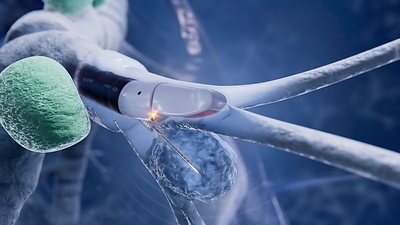
On October 15, 2026, Olympus Corporation announced the launch of its BF-UCP190F endobronchial ultrasound (EBUS) bronchoscope, which aims to allow doctors access to deeper areas of the lungs and collect tissue samples. The bronchoscope not only reaches the mediastina lymph nodes but also segmental and sub-segmental airways, increasing the company’s capabilities for lung cancer diagnostic and staging.
The BF-UCP190F bronchoscope has a width of only 5.9 mm at its distal end, allowing the doctor to assess parts of the lungs that are usually difficult to access through standard bronchoscopy. Moreover, it offers endobronchial ultrasound-guided trans bronchial needle aspiration (EBUS-TBNA), a technique that makes use of high-quality ultrasound images to perform needle sampling.
The design of the bronchoscope offers 170-degree upward angulation, 14-degree forward oblique perspective, and shorter distal tip of the endoscope for better access and visibility in hard-to-reach points in the lungs. Furthermore, it is compatible with Olympic’s ViziShot 2 25G EBUS-TBNA needle, EVIS X1 Endoscopy System, and EU-ME3 ultrasound processor.
Impact On The Bronchoscopy and Endoscopy Market
With the introduction of this new product, the continued evolution of technology focused on ensuring that peripheral lung anatomy can be reached has been highlighted. Thanks to a slimmer probe and improved angulation, clinicians should be able to access difficult-to-reach tumours with great precision further solidifying the position of such advanced bronchoscopic devices as vital components in respiratory diagnostics. Moreover, integrating these technologies with existing imaging and ultrasound systems will facilitate their penetration into healthcare institutions already equipped with similar products developed by Olympus.
Impact on the lung cancer diagnostics Market
BF-UCP190F offers broadening horizons for the EBUS-guided procedures beyond managing the central airways and lymph nodes located in the mediastinum. Reaching deeper areas of the lungs will allow clinicians to perform various tests on sampled tissues including tests for accurate diagnosis and proper treatment strategies.
Impact on Minimally Invasive Diagnostic Procedures
The apparatus boosts demand for techniques bringing diagnostic information along with decreased dependence on invasive surgical methods in the suitable patients. Ultrasound scans taking place in real-time along with targeted needle sampling may help physicians with the tissue collection process in bronchoscopy; however the applicability and performance vary depending on the patient, lesion localization and clinical circumstances.