



Oshkosh Defense Announces Collaboration with Michigan Technological University’s APS LABS to Enhance Mobile Energy Generation
Published: 16 Oct 2026
Author: Laxmi Narayan



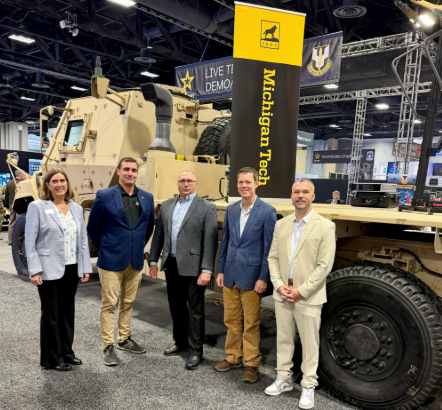
October 2026, Oshkosh Defense teamed up with Michigan Technological University’s APS LABS to improve the Vehicle Integrated Power Kit (VIPK). This system is designed for tactical vehicles and can deliver up to 120kW at 600 V DC. These steps could assist in delivering more mobile power for future military missions.
It supports tough defense uses like counter-drone systems, directed-energy weapons, missile defense, and field work. Overall, the strategy is to move the VIPK from prototype to production by testing it, improving manufacturing, getting feedback from soldiers, and making sure it fits well with vehicles.
Impact on the Defense Electronics Sector
The global defense electronics market size accounted for USD 185.86 billion in 2025 and is predicted to increase from USD 195.38 billion in 2026 to approximately USD 303.54 billion by 2035, expanding at a CAGR of 5.03% from 2026 to 2035.
According to Precedence Research, the VIPK project could help the military be more prepared by providing mobile, high-power electricity for advanced battlefield technology. Building power generation into tactical vehicles could lower the requirement for external generators and make operations more flexible.
With a 120kW output, it can support counter-drone systems, directed-energy weapons, missile defense, and other key equipment. If testing goes well, this system could promote defense forces using more energy-demanding equipment and improve mission success in remote areas with limited infrastructure.
Impact on the Automotive OEM Sector
The global automotive OEM market size accounted for USD 42.23 billion in 2026 and is anticipated to reach around USD 61 billion by 2035, growing at a CAGR of 4.17% between 2026 to 2035.
According to Precedence Research, Oshkosh Defense can use its vehicle design and manufacturing skills together with Michigan Tech’s research to prepare VIPK for automotive components. The alliance shows the increasing need for advanced power systems in military vehicle production.
This cooperation could lead to tactical vehicles with more built-in electrical power and better system integration. In the automotive OEM sector, testing prototypes, verifying durability, and improving manufacturing will be key to ensuring the system is reliable, mobile, cost-effective, and performs well in tough conditions.
Impact on the Power Electronics Sector
The global power electronics market size was recorded at USD 53.95 billion in 2026 and is anticipated to reach around USD 89.17 billion by 2035, expanding at a CAGR of 5.75% from 2026 to 2035.
According to Precedence Research, more engineering work and field testing will be crucial to prove efficiency, heat management, safety, and reliability, possibly improving mobile power solutions for power electronics and other special uses. Its 600-volt DC design can support high-power equipment and tactical small power grids.
he VIPK project highlights the need for mobile power generation and advanced power electronics in tough surroundings. Additionally, the strategic approach may create opportunities for new ideas in power conversion, energy distribution, load control, and electrical system design.
Expert Opinion
From an expert point of view, the Oshkosh Defense and Michigan Tech collaboration reflects a crucial trend in modern military engineering by seeing electrical power as a main operational need instead of just a support function. The VIPK’s 120kW output could back next-generation defense systems while increasing energy access in remote areas.
Its value for business and operations will depend on successful testing, fitting with vehicles, ease of maintenance, safety, and the ability to produce it on a large-scale framework. If these challenges are met, the project could speed up turning university-developed technologies into real defense, military, automotive and power electronics uses.