



Acrosian Launches as AI-Era Biometrics CRO, Built by the Team Behind One of the Industrys Largest Independent Biometrics CROs
Published: 05 Aug 2026
Author: Towards Healthcare



Acrosian LLC announced its launch as a next-generation biometrics CRO purpose-built for the AI era. Founded by Benjamin Jackson, Soumitra Chowdhury, MBA, and Vladimir Mats, Ph.D., Acrosian reunites the management team that previously built one of the biosphere’s massive independent biometrics CROs, along with processes spanning three continents, before its acquisition. Rather than familiarizing legacy infrastructure to artificial intelligence, the founders selected to build again from the ground up.
Acrosian offers combined healthcare data management, biostatistics, statistical programming, and medical writing solutions for biopharmaceutical, biotechnology, and medical tools organizations, integrating proven operational execution with AI-driven workflows intended to meet GxP validation needs before placement.
“After 18 years of building our previous company, we reached a simple conclusion: rebuilding for the AI era would ultimately be more powerful than retrofitting a legacy organization,” said Soumitra Chowdhury, Co-Founder and Chief Executive Officer. “Large organizations inevitably accumulate processes, systems, and assumptions that make fundamental change difficult. We chose a clean architecture instead designed for the era we’re entering, not the one we’re leaving.”
Acrosian’s executive leadership includes:
- Benjamin Jackson, Co-Founder and Chairman
- Soumitra Chowdhury, MBA, Co-Founder and Chief Executive Officer
- Vladimir Mats, Ph.D., Co-Founder and Chief Commercial Officer
- Yurii Kartashov, Ph.D., Chief Research & Development Officer
- Aparna (Tanya) Chowdhury, CISA, CDPSE, MIT CSO, Chief Audit and Compliance Officer
“Sponsors are not betting on a new team,” said Vladimir Mats, Ph.D., Co-Founder and Chief Commercial Officer. “They’re working with professionals who have already built and scaled a global biometrics organization. Our clients receive the same scientific rigor, operational discipline, and delivery standards they have trusted for years now built on an entirely new technological foundation.”
Building AI That Sponsors Can Trust
While most of the organizations are significantly focused on AI-based abilities, Acrosian’s approach begins with AI governance.
Every AI-based workflow is advanced in a unified GxP validation agenda before being part of consumer delivery. Human responsibility, validation, auditability, safety, and recognized oversight are built into the organization’s quality technology as needed for every implementation, under a regulatory framework led by the organization’s Chief Audit and Compliance Officer. Each consumer deliverable remains under skilled human responsibility, while sponsors get complete transparency about which AI-based capabilities are recently operational and that remain under active advancement.
“The industry doesn’t need more AI claims,” said Yurii Kartashov, Ph.D., Chief Research & Development Officer. “It needs confidence in how AI is implemented. We believe sponsors deserve complete transparency not only about what AI can do today, but also about what it cannot yet do. Trust is built through validation, governance, and honesty.”
This viewpoint reflects Acrosian’s wider confidence that the future of biometrics will not be clear by replacing specialists with artificial intelligence, but by allowing experienced professionals to deliver quickly, more reliably, and with significant quality via carefully governed AI-based augmentation.
Acrosian is vigorously appealing to sponsors ranging from developing biotechnology organizations to worldwide healthcare organizations, offering support for specific biometrics functions via fully integrated biometrics delivery.
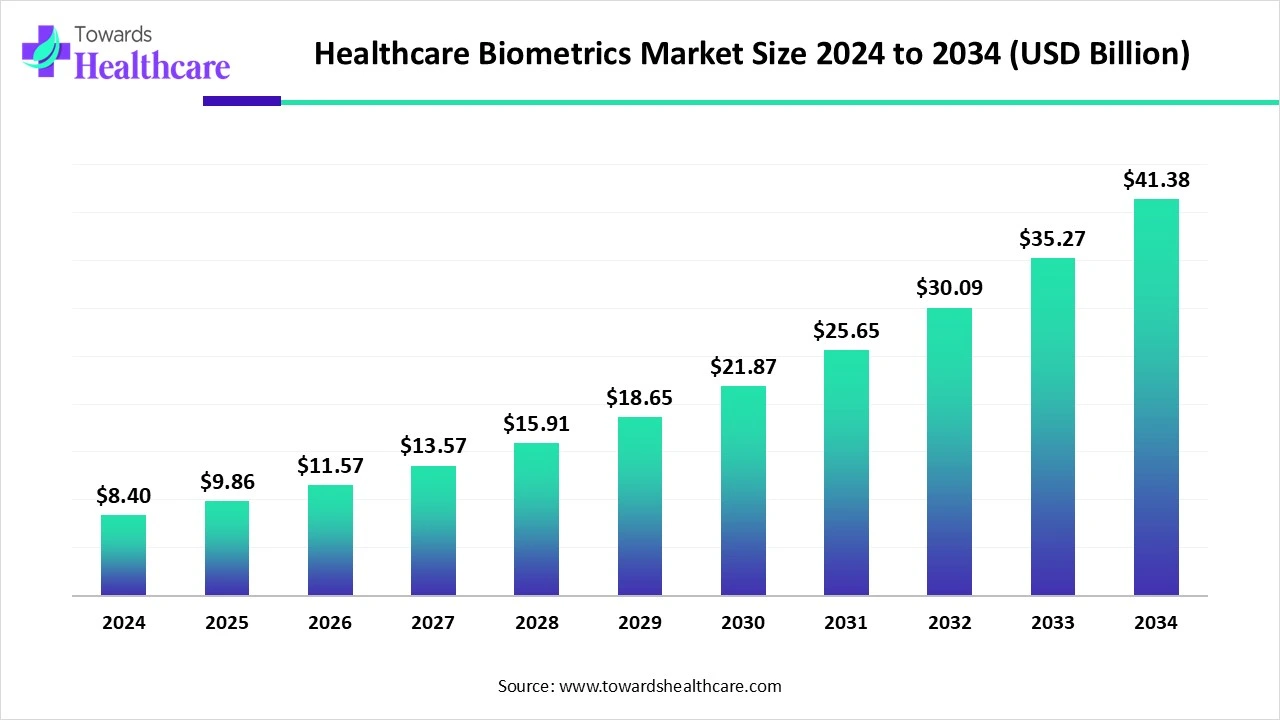
According to Towards Healthcare, the healthcare biometrics market is projected to experience significant growth, with estimates suggesting the market size will increase from USD 11.57 billion in 2026 to approximately USD 48.77 billion by 2035.Estimated to grow at a CAGR of 17.34% starting from 2026 to 2035. Biometric technology offers safe and auditable access control services, which support medical care providers in complying with regulations such as HIPAA. These technologies endorse compliance with privacy and data protection regulations by providing dependable and precise identification, supporting in ensuring that only authorized persons have access to sensitive patient information. Biometric knowledges output in long-term expense reductions even with a significantly high initial cost. Initial expenses may be alleviated by the increased safety, reduced administrative work, and reduced challenges. Biometric systems are an economically beneficial investment for medical care organizations since they lower overall expenses over time via increased operational effectiveness and reduced fraud. By improving precision and lowering identity-related challenges, biometrics enhances consumer safety and trust.
About Acrosian
Acrosian LLC is a biometrics contract research organization offering clinical information management, biostatistics, statistical programming, and healthcare writing solutions to the pharmaceutical, biotechnology, and healthcare tools organizations. Founded in 2026 by the management team behind one of the industry’s largest independent biometrics CROs, Acrosian integrates decades of working experience with AI-based workflows built and authenticated to GxP requirements before deployment. The organization is headquartered in Princeton, New Jersey.
A recent report by Towards Healthcare highlights that the healthcare biometrics market is growing; biometric identification solutions significantly enhance consumer safety by ensuring precise identification. This accuracy lowers the possibility of healthcare errors, involving giving the wrong drug or management. High-precision technologies, like biometric iris scanners, ensure that patients' healthcare records are properly related with them. These technologies enhance overall care quality and patient outcomes by reducing identification mistakes. Shortening medical care procedures is one of the main advantages of biometric technology. These services prevent the requirement for manual identification verification checks, freeing up staff time to focus more on patient care. Earlier patient check-ins and reduced wait times are achieved by using tools such as iris readers.