



Applied Biologics Launches National Health System Partnership Initiative
Published: 20 Aug 2026
Author: Towards Healthcare



Company expands strategic engagement with health systems, integrated delivery networks, and group purchasing organizations to support physicians and patients nationwide
Applied Biologics, a biopharmaceutical company advancing novel technologies for long-term wounds and investigational biologic therapies, announced the launch of its National Health System Collaboration Initiative, a strategic effort intended to strengthen partnerships with hospitals, integrated delivery networks (IDNs), group purchasing organizations (GPOs), ambulatory surgery centers (ASCs), wound care centers, and other medical care providers in the United States.
The initiative reflects Applied Biologics’ chronic commitment to supporting medical care systems via dependable product availability, scientific leadership, operational excellence, government compliance, and responsive consumer support.
As the producer of XWRAP, an innovative wound care application used as a wound cover for the treatment of chronic wounds and as a tissue-plane barrier during surgical procedures, Applied Biologics has served medical care providers since 2010 and continues to invest in building long-term collaboration with health technology nationwide.
The National Health System Partnership Initiative involves increased engagement with health technology, improved educational resources, intended collaboration materials, and continued spending in clinical research and evidence generation supporting well-developed wound care.
“Healthcare systems are looking for more than products; they are looking for dependable long-term partners,” said Jacob Pollak, Chief Operating Officer of Applied Biologics. “Our objective is to provide health systems with confidence that they are partnering with an organization committed to quality manufacturing, dependable supply, scientific evidence, government compliance, and exceptional customer support. We believe those principles are essential to supporting physicians and improving patient care.”
Applied Biologics has supported healthcare providers in hospitals, health technology, wound care centers, ambulatory surgery centers, doctors' practices, and government medical care facilities via national, regional, and local contracting relationships. The organization believes that experience has helped shape an organization designed to meet the operational and clinical expectations of today’s medical care technology.
The organization continues to invest in expanding the scientific evidence helping XWRAP via prospective randomized controlled clinical trials, translational research, real-world healthcare evidence, health economic research, and peer-reviewed healthcare publications.
“We recognize that healthcare systems are selecting more than a wound care technology they are selecting a partner they can depend on,” said Edward Britt, Chief Executive Officer of Applied Biologics. “For more than fifteen years, we have focused on building an organization centered on quality, reliability, scientific rigor, and long-term partnership. Through our National Health System Partnership Initiative, we look forward to working even more closely with hospitals, IDNs, GPOs, and healthcare providers to help improve access to advanced wound care technologies for the patients they serve.”
As part of the initiative, Applied Biologics has launched advanced health technology resources intended specifically for medical care executives, supply chain leaders, and clinical decision-makers. These resources highlight the organization’s commitment to quality production, scientific research, government excellence, dependable product availability, and long-term innovation.
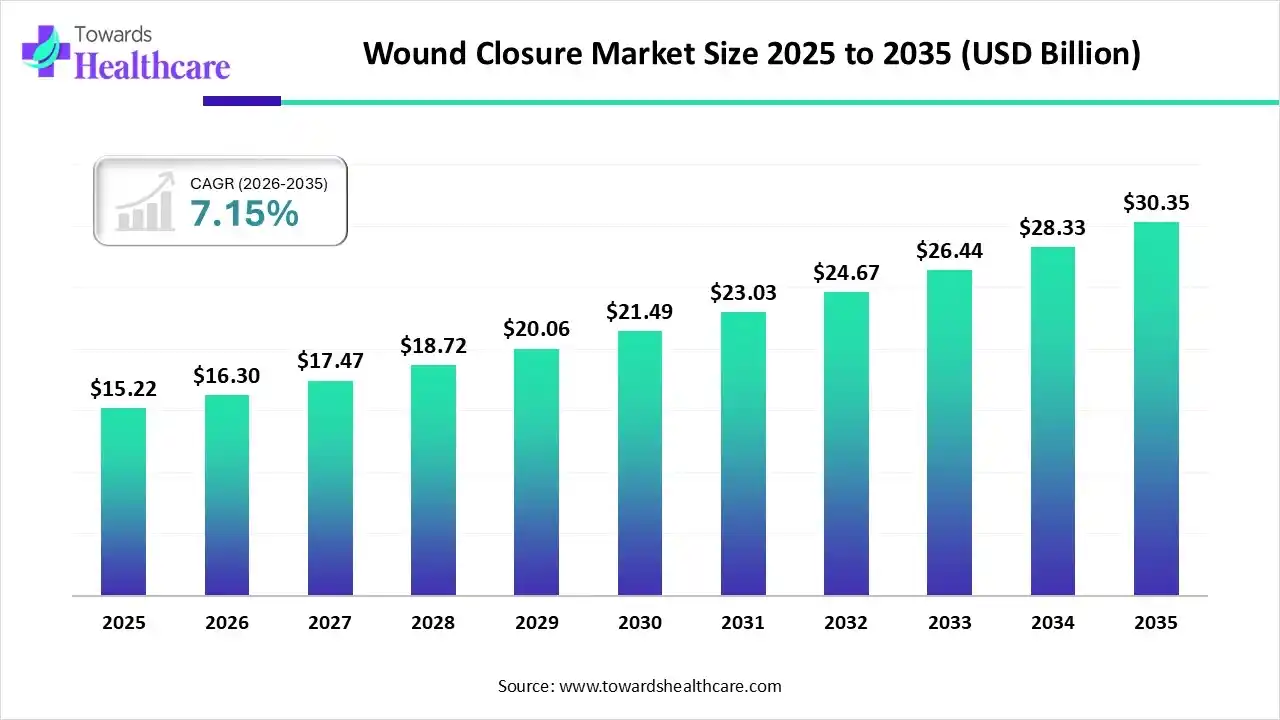
According to Towards Healthcare, the Wound Closure Market is projected to grow significantly, with estimates indicating the market size will increase from USD 16.30 billion in 2026 to approximately USD 30.35 billion by 2035, expanding at a CAGR of 7.15% from 2026 to 2035. Effective closure tools simplify postoperative care and lower the time and complexity of wound management, enhancing patient recovery. Wound closure tools play a significant role in improving clinical practice in various hospital departments. By offering rapid, efficient, and stable wound management, these devices enhance surgical and treatment success rates, improve patient postoperative recovery and quality of life, and offer strong support for modern health care. As technology continues to emerge, wound closure devices will play an increasingly significant role in the healthcare field, providing better treatment experiences for patients.
About XWRAP
XWRAP is cutting-edge wound care technology applied as a wound cover in the management of chronic wounds and as a tissue-plane barrier in surgical technology. Applied Biologics continues to increase the scientific evidence supporting XWRAP via prospective randomized controlled clinical trials, translational research, real-world evidence initiatives, health economic research, and peer-reviewed scientific publications.
About Applied Biologics
Applied Biologics is a biopharmaceutical organization developing innovative knowledge for chronic wounds and investigational biologic therapies via scientific advancement, clinical research, pharmaceutical-quality production, and government excellence. The Company’s pipeline involves programs focused on chronic wounds, regenerative medicine, immunology, and degenerative diseases.
A recent report by Towards Healthcare highlights that the wound closure market is growing, as wound closure technology supports in-office procedures with lower expenses, rapid procedures, and improved patient satisfaction. Efficient wound closure lowers the risk of infection, speeds up healing, and supports shorter hospital stays and recovery times. Non-invasive closure technology, like tissue adhesives and skin glues, lowers postoperative pain and discomfort, improving the patient’s quality of life. Various types of closure tools are suitable for superficial wounds, deep incisions, and organ exposures, meeting various surgical needs. Advanced closure techniques lower wound tension, reducing the challenges of postoperative wound dehiscence and infection, therefore improving recovery safety.