



ARUP Launches First Clinical Spectral Flow Cytometry Assay for MRD Assessment in Multiple Myeloma
Published: 29 Jul 2026
Author: Towards Healthcare



ARUP Laboratories announced the launch of ARUP CLARISPECT Multiple Myeloma MRD by Spectral Flow Cytometry. The novel assay characterizes small neoplastic populations with greater confidence and sensitivity than conventional flow cytometry, offering deep minimal residual disease (MRD) profiling for patients who have numerous myelomas. ARUP is the first large reference laboratory in the United States to provide spectral flow expertise for healthcare use.
“We are harnessing a technology that’s relatively new in the diagnostic space,” said Madhu Menon, MD, PhD, FCAP, FASCP, head of clinical operations for Hematopathology at ARUP. “By offering a superior technique with higher sensitivity, we will directly impact a subset of patients who otherwise would not have been identified as MRD positive.”
Multiple myeloma, a cancer of plasma (white blood) cells that produce antibodies, affects 202,000 patients in the United States, based on 2023 data. The American Cancer Society estimates that 36,000 new cases will be diagnosed in 2026.
MRD assessment is significant for the evaluation of treatment effectiveness, as well as prognostication and challenge stratification. MRD status is closely related to healthcare outcomes, as higher levels of residual disease indicate an amplified likelihood of relapse.
In addition, “We will be able to detect the reemergence of disease at an earlier timepoint, which will then facilitate more informed decisions at an earlier timepoint,” Menon said.
Spectral flow cytometry expertise captures emission information in the full spectrum of light, creating it possible to interrogate more than 40 markers instantaneously. The assay for multiple myeloma assesses 18 markers. By consolidating all relevant indicators into a single tube, the assay also needs less specimen volume, which is significant for difficult-to-obtain specimens like bone marrow.
“The number of antigens we can bring to bear will facilitate easier interpretation and, by extension, greatly increase our sensitivity,” said David Ng, MD, FCAP, ARUP medical director of Hematopathology, Hematologic Flow Cytometry, and Applied Artificial Intelligence and Bioinformatics.
CLARISPECT Multiple Myeloma MRD detects tremendously low levels of residual disease, identifying as few as 14 neoplastic cells in a population of 5 million analyzed cells with 95% confidence, Ng said.
“We see large volumes with high complexity cases, including rare diseases,” said Tracy George, MD, ARUP chief scientific officer and president of the Innovation Business Unit. “This ensures not only the breadth and depth of our validation, but also the quality of our interpretations.”
As an academic reference laboratory with more than 40 years of experience at the front of diagnostic medicine, ARUP has been a longtime leader in test advancement for hematologic disorders.
“We are always pushing the envelope to develop better techniques that improve our ability to diagnose disease,” George said. “The launch of CLARISPECT demonstrates our commitment to innovation and to patient care.”
ARUP last to increasing its MRD by spectral flow cytometry testing suite.
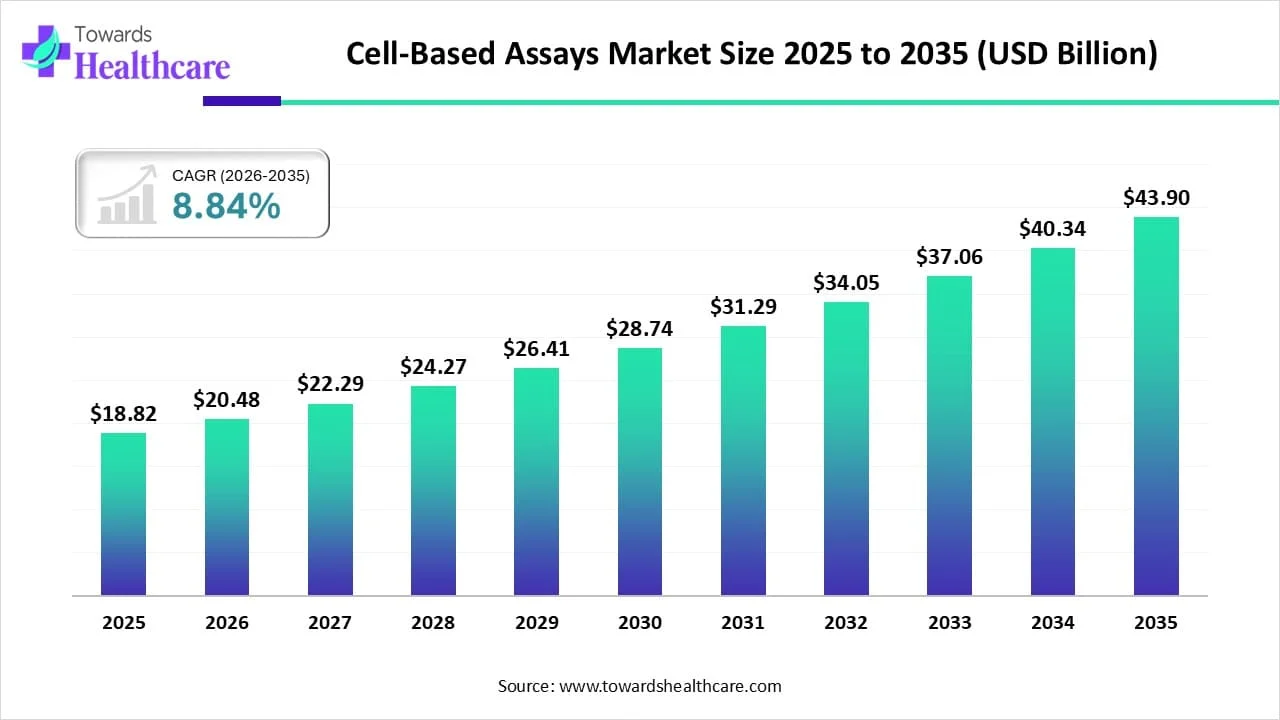
According to Towards Healthcare, the cell-based assays market is projected to experience significant growth, with estimates suggesting the market size will increase from USD 20.4 billion in 2026 to approximately USD 43.9 billion by 2035, representing a compound annual growth rate (CAGR) of 8.84% from 2026 to 2035, driven by, cell-based assays provides various benefits involving the capability to assess complex biological procedures in the a cellular context, higher relevance to in vivo conditions, and the capacity to assess multiple parameters instantaneously, which improves the understanding of cellular mechanisms. They are broadly applications in pharmacology for drug screening, toxicology studies for safety assessment, cancer research for tumor biology analysis, immunology for immune response evaluation, and regenerative medicine for tissue engineering studies. Cell-based assays involve the facilitation and generation of complex and biologically relevant information. Unlike outdated biochemical assays, cell-based assays are more physiologically relevant and assess compound features instantaneously.
About ARUP Laboratories
Established in 1984, ARUP Laboratories is a leading national reference laboratory and a nonprofit enterprise of the Spencer Fox Eccles School of Medicine at the University of Utah and its Department of Pathology. ARUP provides more than 3,000 tests and test integration, fluctuating from routine screening tests to esoteric molecular and genetic assays. Furthermore, ARUP is a global leader in innovative laboratory research and advancement, led by the efforts of the ARUP Institute for Research and Innovation in Diagnostic and Precision Medicine. ARUP is ISO 15189 and CAP accredited.
A recent report by Towards Healthcare highlights that the cell-based assays market is growing, as cell-based assays are very popular in the sector of life sciences. They allow a wide variety of processes and technologies and offer insightful data. In principle, any cell culture laboratory can easily produce biologically and physiologically related data. Furthermore, there are benefits of the available technologies, and the researcher should be aware of some limitations. Therefore, while focusing on the performance of the assay and seeking a response to the research question, the suitable model technology should be selected and integrated with upstream and downstream technology to make an appropriate information generation process to confirm highly reliable and reproducible information.