



CellCarta Launches Digital Pathology and AI Consortium to Accelerate Platform-Agnostic Biomarker Innovation in the Drug Development
Published: 24 Jul 2026
Author: Towards Healthcare



CellCarta, a well-developed worldwide CRO laboratory to the pharmaceutical organization, announced the launch of its Global Digital Pathology and AI Consortium, a curated bionetwork of leading digital pathology, artificial intelligence and accurate diagnostics innovators intended to supports biopharma sponsors speed-up biomarker research, patient stratification, clinical trial execution and companion diagnostic approches in the oncology, autoimmune, Alzheimer's disease and various indications as required.
The Consortium initially brings together Lunit, Mindpeak, Imagene AI, Dipath AI, Nucleai, Tivenix and Indica Labs with CellCarta's worldwide histopathology, genomics, immunology, proteomics, sample logistics, data analysis and government abilities. The model is intended to give sponsors access to a flexible AI-based ecosystem rather than a single algorithm, platform or AI-based vendor ways.
The Consortium is intended to address an increasing requirement in precision medicine to supports sponsors shift from promising AI concepts to practical, healthcare relevant, trial-ready evidence. By integrating CellCarta's pathologist-directed digital pathology workflows, whole-slide scanning, image analysis, assay advancement, clinical laboratory operations and government experience with perticular AI innovators, the Consortium goal to lessen fragmentation and give sponsors a significant coherent path to applying AI based technology across drug discovery.
CellCarta works in the major IVD and technology platforms to support early discovery, translational, clinical trials and companion diagnostic advancement, the Digital Pathology and AI Consortium is intended to remain non-exclusive, modular and AI-agnostic.
The Consortium expand CellCarta's platform-agnostic effective model in the digital pathology and AI, supporting sponsors prevent fragmented point solutions while preserving flexibility in the technologies, indications, advanncement stages and regulatory approaches. The aim is to supports sponsors detects, evaluate and deploy the right AI-based services for every program. The Consortium gives CellCarta a distinguished position in the CRO market by linking validated laboratory operations with well-developed digital pathology, image analysis, spatial biology, multimodal biomarker discovery and precision diagnostics abilities.
The Initial Participating Companies Bring Complementary Abilities Across the Digital Pathology and AI Continuum:
- Lunit clinically validated AI-driven solutions empower earlier identification and management decisions in the cancer care continuum via a suite of AI-based products involving immune phenotyping, TME biomarker formation from H&E, cell- and subcellular-level IHC quantification, and H&E-driven molecular state forecast.
- Mindpeak is the frontier tissue-AI partner for precision oncology, revolving IHC, H&E, and mIF images in the reproducible, quantitative insights from biomarker research to companion diagnostic rollout.
- Imagene AI-based technology delivers accurate Oncology Intelligence via advance multimodal foundation models and proprietary real-world information, increasing biomarker discovery, patient stratification, reply prediction, and companion diagnostic advancement.
- Dipath AI is a Chinese healthcare technology organization specializing in AI-driven digital pathology services with a strong presence in China.
- Nucleai is a tissue intelligence organization applying AI-driven image and clinical analysis to biopharma drug advancement, with a track record in the ADC healthcare programs and CTA advancement and deployment under QMS.
- Tivenix increasing the Consortium's precision diagnostics reach via AI-enabled bioinformatics and liquid biopsy. By leveraging methylation biomarker information, the platform assesses organ-driven cell-death signals for the early identification and stratification of neurodegenerative circumstances, with a core architecture built to extend beyond neurology.
- Indica Labs specializes in AI-driven digital pathology by redefining medicine with pathology platforms and services helping life science discovery, translational research, healthcare workflows, and companion diagnostic advancement.
"AI in pathology is moving quickly, but sponsors do not need another black box or another fragmented vendor pathway," said Christopher Ung, Chief Scientific Business Officer of CellCarta. "They need a scientifically credible, operationally controlled way to evaluate, validate and deploy the right AI approach for the right program. CellCarta's Digital Pathology and AI Consortium give sponsors a single CRO laboratory partner that understands histopathology, genomics, immunology, proteomics, digital pathology and companion diagnostics while remaining open and independent across AI platforms."
"Digital pathology and AI are becoming central to the next generation of biomarker development and patient selection," said Ehab A. El-Gabry, MD, Chief Medical Officer and Head of Companion Diagnostics at CellCarta. "The opportunity is not to replace pathology. It is to make tissue, images and multi-omic data more quantitative, reproducible and actionable. By combining CellCarta's global laboratory infrastructure, pathologist oversight and regulatory experience with leading AI innovators, we can help sponsors move from exploratory AI signals to clinical-trial-ready evidence."
For sponsors, the value is not simply access to multiple AI-based organization; it is the capability to evaluate, validate and operationalize those technologies via a worldwide CRO laboratory collabrate with experience in the biomarker advancement, clinical trials and companion diagnostics. The Consortium helps sponsor requirement in the exploratory biomarker discovery, image analysis, cancer microenvironment characterization, spatial biology, patient stratification, assay advancement, digital and AI-based companion diagnostic approches, and retrospective or prospective clinical trial applications. CellCarta expects the Consortium to emerging and increases over time as novel technologies mature, additional disease region evolves and sponsors needs more integrated stratergies to digital pathology, AI and multi-omic biomarker advancement.
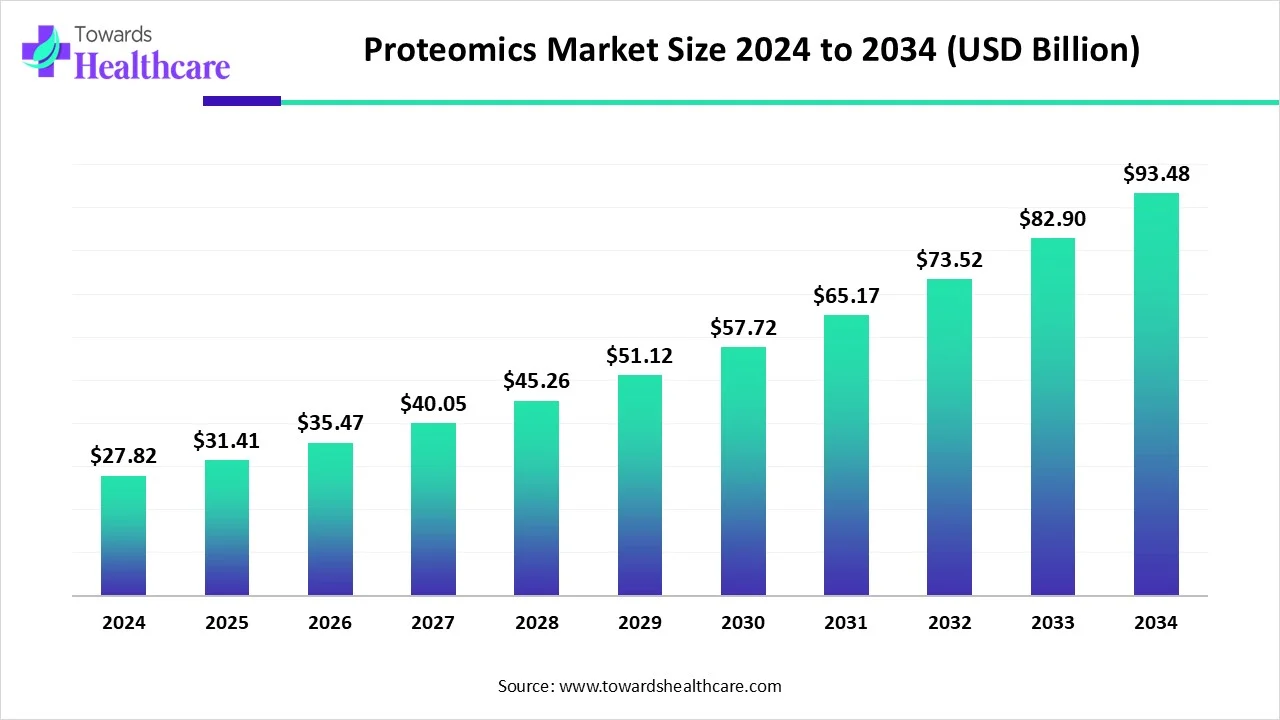
According to Towards Healthcare, the proteomics market is projected to experience significant growth, with estimates suggesting the market size will increase from USD 35.49 billion in 2026 to approximately USD 106.09 billion by 2035, representing a compound annual growth rate (CAGR) of 12.94% from 2026 to 2035, driven by, proteomics allows the detection of ever-growing numbers of proteins. This differs with time and distinct needs, or stresses, which a cell or organism undergoes. Proteomics offers significant data on cellular activities, which is essential for detecting and monitoring clinically relevant biomarkers, developing understanding of medicine and health. Proteomics is applied to identify protein expression patterns at a given time in response to a pertcular stimulus, but also to identify functional protein systems that exist at the level of the tissue, cell, or whole organism.
About CellCarta
CellCarta is a leading worldwide CRO laboratory to the pharmaceutical organization. With CAP accreditations and CLIA certifications for particular testing processes and services in Canada, USA, Belgium, Australia, and China, CellCarta offers a broad range of biomarker testing solution and customized services to world-renowned healthcare organization. By incorporating analytical platforms in immunology, histopathology, proteomics, and genomics, also with sample management and logistics solution, CellCarta helps the entire drug advancement cycle from discovery to late-stage clinical trials.
About the Digital Pathology and AI Consortium
The Digital Pathology and AI Consortium is CellCarta's AI-agnostic bionetwork of processes collaborators designed to helps biopharma sponsors assess and apply well-developed digital pathology, image analysis, multimodal AI, spatial biology, and precision diagnostics capabilities in the medical advancement programs.
A recent report by Towards Healthcare highlights that the proteomics market is growing as proteomics is considered a significant tool that offers significant insights in the complex biological phenomena, from understanding disease mechanisms to discovering new therapeutic targets. Furthermore, like any systematic processes, it has advantages and disadvantages that researchers should consider when implementing it in research. Proteomics has created significant opportunities to detects, investigate and target proteins that are differentially expressed in disease and health. Proteomics is applied to identify protein expression patterns at a given time in response to a particular stimulus, but also to detect functional protein systems.