



CMC Vellore and IIIT Hyderabad develop multilingual AI companion for cancer patients
Published: 17 Jul 2026
Author: Gautam mahajan



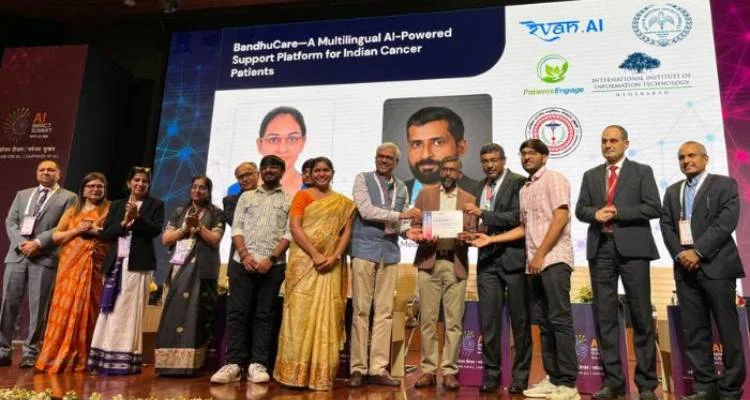
In July 2026, a multi-partner consortium led by Christian Medical College (CMC) Vellore, in collaboration with IIIT Hyderabad’s Language Technologies Research Centre (LTRC), developed BandhuCare, which is a multilingual AI companion that answers patients’ queries in their own language, captures their symptoms through natural conversations, and helps clinicians understand what happens between hospital visits.
There are questions that patients sometimes forget to ask, or are too overwhelmed to ask, or have questions that they cannot fit into a 10-minute consultation. While this is the reality of an overburdened healthcare system that leaves little room for prolonged conversations, the result is an invisible information gap, and this gap proves to affect not just treatment, but the quality of life that also follows.
BandhuCare seeks to bridge this gap through a multi-lingual AI-powered patient engagement platform designed specifically for cancer care. Bandhu means companion. And that’s precisely what the team hopes the technology will become. It is the latest outcome of a long-standing partnership between Christian Medical College (CMC), Vellore, and IIIT Hyderabad’s Language Technologies Research Centre (LTRC), a collaboration that began not with AI chatbots, but with a much simpler problem of translating patient information and consent forms into Indian languages.
The partnership began when CMC approached IIIT-H for help in translating patient information sheets and consent documents into Indian languages. For hospitals serving patients from across the country, communicating complex medical information in a patient’s own language had long been a challenge. At the same time, for researchers at LTRC, it is an opportunity to develop language technologies in real-world settings.
Impact on the Healthcare Market
The integration of AI language robots in healthcare is expected to have a significant impact on the quality and efficiency of care. AI language robots can help facilitate multimodal communication through human-robot interactions, thus improving the overall communication experience for both healthcare providers and patients. By leveraging large language models, AI language robots can now assist in clinical decision-making, helping healthcare professionals make informed decisions based on data and patient needs.
AI language robots can also automate routine tasks, such as data management and decision-making processes, which leads to increased efficiency in healthcare operations. They are now able to provide personalized care by analyzing patient data and also provide tailored recommendations based on individual health profiles. The future of healthcare is likely to see AI language robots gaining traction and playing a crucial role in improving patient outcomes and streamlining healthcare processes.
Impact on the AI-Enabled Translation Services Market
The global AI-enabled translation services market size accounted for USD 5.18 billion in 2025 and is predicted to increase from USD 6.51 billion in 2026 to approximately USD 50.69 billion by 2035, expanding at a CAGR of 25.62% from 2026 to 2035.
According to Precedence Research, the market is significantly growing due to the advancements in LLMs and GenAI that offer precise and context-aware translation services to sectors like e-commerce, healthcare, and media with cost efficiency. The market is majorly driven by the rising global digital communication, demand for real-time multilingual content, expansion of e-commerce and cross-border business, and advances in AI and natural language processing technologies.
There is also an increasing demand for translating audio, video, and multimedia content rather than just text, which is a major trend driving the market, as businesses often seek faster, scalable, and highly engaging content. Translation services are increasingly being integrated into business platforms like Slack, Canva, and Google Docs, making multilingual communication seamless and instantly accessible. The rapid adoption of generative AI and large language models (LLMs) is also helping in enhancing translation accuracy, context understanding, and error detection, reducing reliance on manual intervention.
Impact on the Artificial Intelligence in Healthcare Market
The global artificial intelligence (AI) in healthcare market size is valued at USD 36.96 billion in 2025 and is predicted to increase from USD 51.20 billion in 2026 to approximately USD 744.34 billion by 2035, expanding at a CAGR of 35.02% from 2026 to 2035.
According to Precedence Research, the market is driven by the increasing need for efficient diagnostics, personalized medicine, and improved patient care delivery. This expansion is fueled by rising healthcare costs, the digitization of patient data (EHRs), and the prevalence of chronic diseases. The startup ecosystem is thriving, with intense innovation in machine learning algorithms for medical imaging analysis, natural language processing (NLP) for clinical documentation, and AI-driven personalized treatment plans, offering scalable, clinically validated solutions.
The growing demand for personalized medicines and the necessity of maintaining digital health records are significantly driving the artificial intelligence in healthcare market. The novel technologies like artificial intelligence and machine learning are now being integrated to the healthcare systems that will allow the health professionals to identify diseases early and offer enhanced care services to the patients. Moreover, the data analytics, deep learning technology, natural language processing (NPL), predictive analytics, and content analytics are supporting the healthcare professionals in early diagnosis and care services.