



GE HealthCare Launches Browser-Based MIM Anyware
Published: 23 Jul 2026
Author: Gautam mahajan



In July 2026, GE HealthCare launched its new browser-based remote access platform MIM Anyware, which is primarily designed to give radiologists and other clinicians secure access to advanced imaging data and analysis tools from anywhere.
Real-Time Imaging Access through Your Web Browser
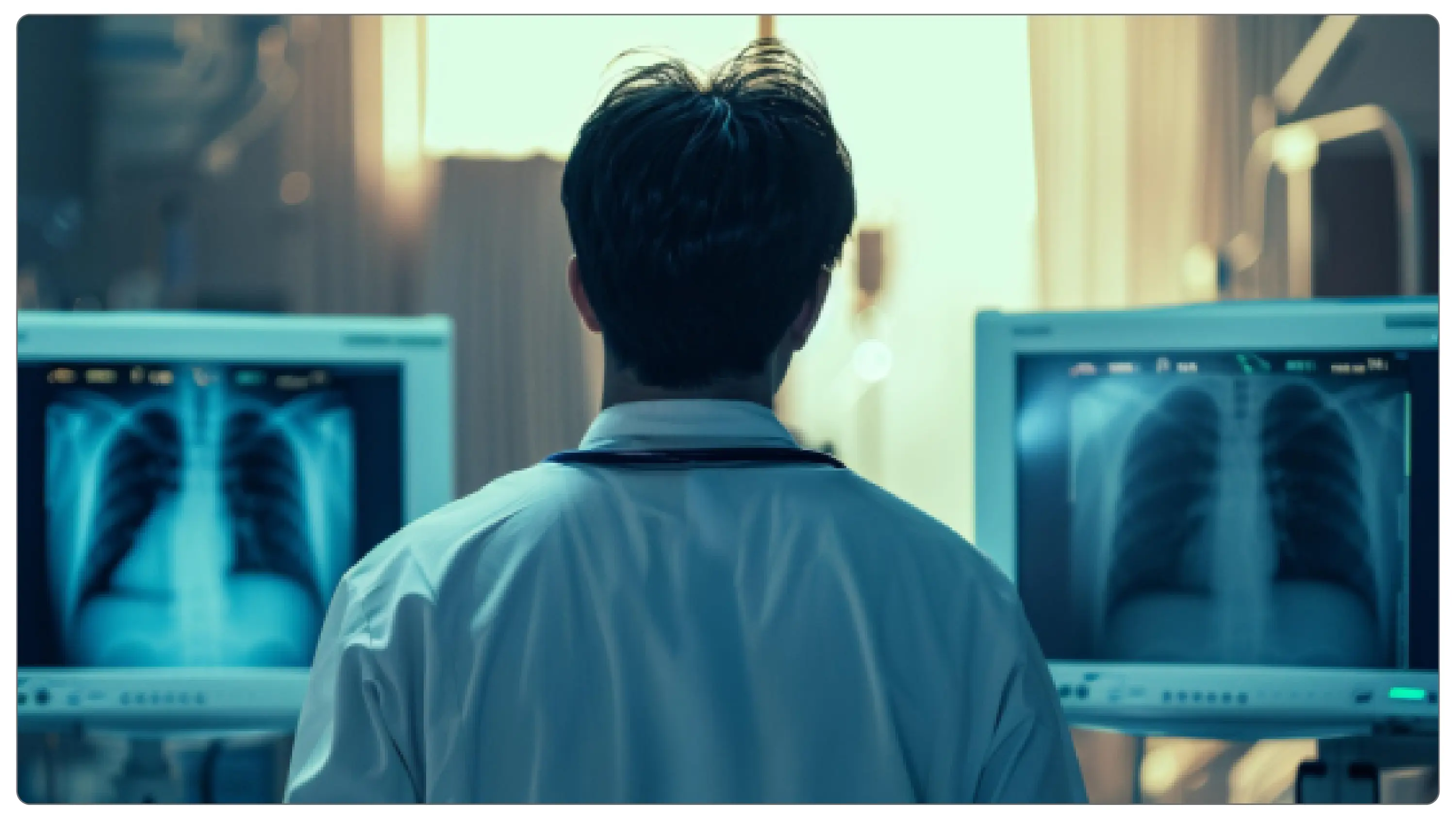
MIM Anyware enhances collaboration in imaging and oncology by allowing authorized users to access applications through a standard web browser, eliminating the need for additional software installation. This not only allows physicians, medical physicists, dosimetrists, and other care team members to review images, perform clinical processing, and collaborate on the same case in real time from virtually any location.
GE’s technology actively addresses increasing imaging volumes and the demand for remote access without necessitating extensive IT infrastructure. It aims to accelerate multidisciplinary collaboration, accelerate clinical decision-making, and streamline workflows, especially in cancer care where teams often work from different locations.
The platform supports tumor boards, referrals, and consultations that allow organizations to manage imaging data access. Jérémy Godart, a medical physicist at Erasmus Medical Center, also highlighted its potential for secure data sharing and educational opportunities for medical students. J. Anders, general manager, MIM of GE HealthCare, emphasized that MIM Anyware actively helps clinicians focus on patient care by providing seamless access to imaging data and analysis tools.
Significance and Future Perspective
Historically, accessing advanced diagnostic intelligence demanded sitting at dedicated, siloed workstations in physical reading rooms, eliminating hardware bottlenecks by offering secure, healthcare system-controlled access, reducing IT overhead, and freeing clinicians from spatial constraints. Real-time multidisciplinary collaboration allows teams to review image registrations, deploy workflows, and assess radiation doses together in real time, no matter where they are located. Enhanced cancer care and oncology workflows seamlessly support virtual tumor boards and multi-specialty reviews.
Medical imaging informatics is shifting from workstation-bound software to secure, cloud-enabled platforms, uniting care teams and remote learners in a single digital space. This decentralized approach integrates intelligent AI workflows like auto-contouring and adaptive treatment modeling, while enabling secure clinical data sharing for enhanced real-world medical education. This creates enhanced educational opportunities for medical students and residents to explore and learn from real clinical cases.
Impact on the Healthcare Industry
This platform transforms the healthcare industry by providing secure, browser-based remote access to advanced medical imaging and treatment planning tools. It overcomes traditional hardware constraints and IT bottlenecks, allowing multiple specialists to simultaneously collaborate on complex cases from any location in real time.
The platform functions much like a shared digital workspace to review cases, which is highly beneficial for complex cancer care and tumor board consultations. Enhanced clinical education removes the barriers of the physical reading room by securely logging in to explore real clinical cases, significantly improving training and cross-organizational consultation. Streamlined Oncology Workflows supports the entire cancer care pathway with review of prior treatment plans and assessment of radiation doses on current anatomy directly through their browsers.
MIM Anyware addresses industry challenges by mitigating the necessity for siloed, hardware-dependent workstations, adopting a zero-footprint web model that reduces IT infrastructure costs and maintenance. This browser-based, centralized approach allows for secure, remote diagnostic access, enabling scalable, real-time collaboration without requiring specialized terminals.
Impact of the Medical Imaging Market
The global medical imaging market size is calculated at USD 52.09 billion in 2025 and is predicted to increase from USD 54.70 billion in 2026 to approximately USD 84.07 billion by 2035, expanding at a CAGR of 4.90% from 2026 to 2035.
According to Precedence Research, this platform transforms the medical imaging industry by offering secure, browser-based remote access to advanced clinical processing and analysis tools with accelerated multidisciplinary collaboration by reducing the necessity for bulky local software installations.
The platform overcomes long-standing industry challenges by reducing dedicated workstation dependency by leveraging a zero-footprint web model without the need for specialized hardware and reducing IT overhead. Bypasses software installation and IT overhead by removing the need to manually install, update, and maintain complex local software across multiple hospital departments. Solves multidisciplinary silos with multiple users, with access and the ability to process the same case in real-time, regardless of location.
Access platforms like GE HealthCare streamline medical workflows by enabling faster consultations, secure expert collaboration, and AI-driven precision. These innovations support collaboration across departments and clinical decision-making. Ultimately, this real-time ecosystem expands educational opportunities and unifies oncology, radiology, and nuclear medicine.
About GE HealthCare
GE HealthCare is a leading global medical technology, diagnostics, and digital solutions innovator. Serving over a billion patients annually, its offerings combine intelligent devices, data analytics, and artificial intelligence to assist clinicians in making faster, more informed decisions. GE HealthCare aims to champion precision health by seamlessly integrating digital intelligence, data, and devices to fulfill its mission of breaking healthcare limits.
GE HealthCare offers an integrated portfolio covering medical imaging, ultrasound, patient care solutions, and pharmaceutical diagnostics, all supported by AI-driven digital workflows and lifecycle services. These core products are designed to enhance diagnostic precision and clinical efficiency across the healthcare spectrum.