



Imunon's IMNN-001 Overcomes Historical IL-12 Safety Barriers in Phase 2 MRD Ovarian Cancer Data
Published: 30 Jul 2026
Author: Towards Healthcare



Imunon announced novel preliminary information from its ongoing phase 2 minimal residual disease (MRD) translational trial of IMNN-001, its DNA-driven interleukin-12 (IL-12) gene immunotherapy, in integration with standard-of-care chemotherapy plus bevacizumab in women with recently diagnosed advanced ovarian cancer. In the first 18 patients to reach second-look laparoscopy, nine per arm out of a target enrollment of 30, patients managed with IMNN-001 showed a lower MRD-positive rate compared to control, a higher rate of circulating tumor DNA (ctDNA) clearance, and a numerically higher rate of patients attaining no evidence of disease following frontline therapy.
Stacy Lindborg, PhD, president and chief executive officer of Imunon, said in a press release, "We are encouraged by these new data points from our MRD study, which continue to build the case for IMNN-001's potential to make a meaningful difference for women with newly diagnosed advanced ovarian cancer. These findings, together with the consistent safety profile we've now observed across multiple studies, reinforce that we have overcome the historical safety and efficacy barriers associated with the development of a novel IL-12 immunotherapy and further bolster our confidence in IMNN-001 as we continue to advance our pivotal Phase 3 OVATION 3 trial."
Why does ctDNA clearance matter as a trial endpoint?
ctDNA has evolved as a prognostic biomarker for minimal residual disease across multiple cancer types, involving ovarian cancer, with ctDNA positivity after management consistently related to increased recurrence challenges and inferior survival results in the pooled clinical data. This growing body of evidence is part of why Imunon is tracking ctDNA clearance as a translational endpoint in MRD research, alongside the trial's significant surgical MRD assessment, since a biomarker that flags residual disease earlier and non-invasively could ultimately complement or extend beyond what second-look laparoscopy alone captures.
That transformation toward biomarker-based precision oncology extends well beyond IL-12 immunotherapy. As Oren Gilad, PhD, president and CEO of Aprea Therapeutics, put it in a separate interview with BioPharm International, “The concept of personalized medicine has been proven in the clinic and on the market,” a dynamic reflected in the drug classes as varied as ADCs, PARP inhibitors, and gene-based immunotherapies such as IMNN-001.
How is the MRD Trial Designed?
The phase 2 MRD research is conducted via the Break Through Cancer Targeting Minimal Residual Disease in Ovarian Cancer TeamLab, a multi-institutional partnership in the Break Through Cancer's founding partner institutions, with the University of Texas MD Anderson Cancer Center serving as lead clinical site. Consumers in the experimental arm receive IMNN-001 intraperitoneally along with neoadjuvant and adjuvant chemotherapy plus bevacizumab, followed by interval cytoreductive operation and additional adjuvant cycles, then second-look laparoscopy to assess for minimal residual disease, followed by maintenance therapy assigned according to homologous recombination lack status. The significant endpoint is MRD-positive rate at second-look laparoscopy, with progression-free survival as a secondary endpoint, also serial translational analysis of cancer tissue, microbiome, ctDNA, and intraperitoneal fluid.
Amir Jazaeri, MD, professor of gynecologic oncology and reproductive medicine at UT MD Anderson and the study's principal investigator, said, "These new findings from the MRD study add an important layer of evidence to what we've observed with IMNN-001 to date. The reduction in residual disease and the encouraging ctDNA clearance we're seeing, together with a consistent safety and tolerability profile, strongly support the continued investigation of IMNN-001's role in the frontline treatment of ovarian cancer."
IMNN-001 itself is built on Imunon's TheraPlas platform, an IL-12 DNA plasmid vector encased in a nanoparticle delivery system administered intraperitoneally, directly into the peritoneal cavity, the primary cancer environment in a well-developed ovarian tumor. Reliable with these local, non-viral delivery strategies, the MRD research has continued to show no cytokine release syndrome, systemic toxicities, or serious immune-associated adverse events to date.
How does this fit into IMNN-001's Broader Development Program?
The MRD findings build on Imunon's completed Phase 2 OVATION 2 research, in which IMNN-001 was associated with a 14.7-month increase in median overall survival as compared to chemotherapy alone, spreading to a 24.2-month increase in the patients who also received PARP inhibitor maintenance therapy. IMNN-001 is recently being evaluated in Imunon's significant Phase 3 OVATION 3 trial. Epithelial ovarian tumor is the sixth deadliest malignancy among US women, with roughly 20,000 new cases yearly and about 70% diagnosed at advanced stage III/IV, where five-year survival rates remain poor, and recurrence after surgery and chemotherapy runs as high as 75%.
According to Towards Healthcare, the U.S. residual DNA testing market is projected to experience significant growth, with estimates suggesting the market size will increase from USD 163.93 million in 2026 to approximately USD 281.22 million by 2035, representing a compound annual growth rate (CAGR) of 6.18% from 2026 to 2035, driven by residual DNA arises during the manufacturing of biopharmaceuticals when animal, bacterial, or human host cells are applied to produce recombinant proteins, monoclonal antibodies, or vaccines. In manufacturing technology, host cells are generally lysed to extract the intended therapeutic proteins.
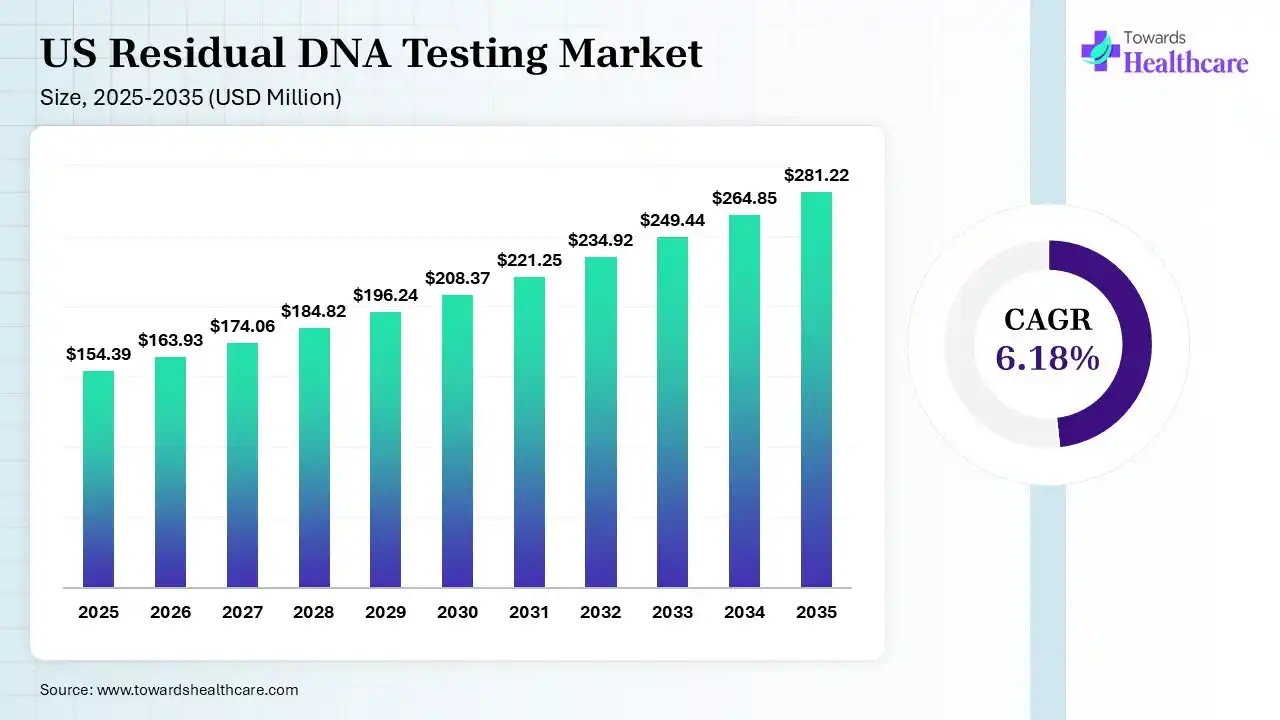
Despite extensive purification steps, small amounts of host cell DNA remain in the end product. This residual DNA is considered a contamination which compromise both patient safety and product quality. Residual host cell DNA testing is a significant part of quality control in the production of biologics. It supports producers to monitor process-associated impurities, support batch release, and demonstrate that residual DNA from the manufacturing cell system is controlled at a satisfactory level.
What happens next?
Lindborg said, "We remain focused on generating a comprehensive body of evidence for IMNN-001 across our clinical program. The MRD study, together with our Phase 2 OVATION 2 results and the ongoing pivotal Phase 3 OVATION 3 trial, continues to build a consistent picture of IMNN-001's benefit-risk profile in frontline ovarian cancer treatment."
A recent report by Towards Healthcare highlights that the U.S. residual DNA testing market is growing as these tests ensure the safety and purity of pharmaceutical products with residual DNA testing.
This significant step not only helps meet government standards but also builds patients belives. Ensuring the efficiency of pharmaceuticals extends beyond meticulous production processes. Residual DNA testing is the practice of quantifying the amount of host cell DNA in a biological sample or product where it does not belong. This residual DNA ends up in a biological product in circumstances where host cells are required for the manufacturing of biological material. Residual DNA testing is needed to signify clearance of DNA from the cell substrate applied to manufacture biologics for therapeutic resolutions.