



Indian Bank Unveils AI-TARA Voice Banking, Smart Wealth, and IND Cash Optima
Published: 15 Sep 2026
Author: Gautam Mahajan



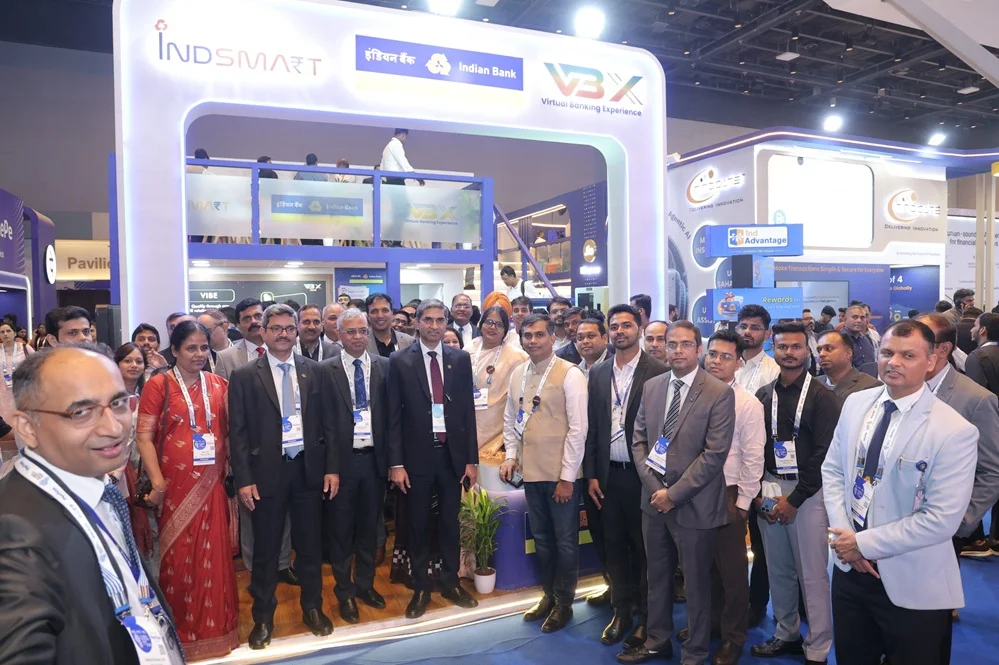
In September 2026, Indian Bank introduced various digital banking solutions at the Global Fintech Fest 2026, such as AI-TARA Voice Banking, Smart Wealth, and IND Cash Optima. AI-TARA is a reliable AI relationship assistant, as it enables conversational banking, allowing consumers to avail services through voice instructions in 10 languages, such as money transfer, IMPS, and fixed deposit creation. It will help to simplify digital banking and enhance its accessibility, especially for senior citizens and people with limited digital knowledge.
Smart Wealth is a personal finance management solution on its IndSMART application to offer customers a centralized view of their financial portfolio, which includes bank accounts, mutual funds, deposits, equities, ETFs, and the National Pension System (NPS). It also provides spending insights and customized financial analytics.
IND Cash Optima is a digital cash management platform intended to be used by corporate and institutional clients. It combines digital collections, paperless corporate onboarding, and mobile-based cash management and invoice-to-payment solutions. It will help to enhance convenience, monitoring, and reconciliation.
Impact on the AI Industry
This launch represents a significant milestone in the adoption of AI technologies to perform core operations in a heavily regulated sector. Such facilities are typically accompanied by long-term contracts wherein a technology corporation handles the secure digital workflows, as many banks do not have the required AI expertise. Indian Bank would have to ensure ample privacy and safety in voice-based banking services to prevent any data breaches. Encryption might help them to gain trust and achieve widespread adoption.
This development might encourage AI companies to focus more on the development of AI models with sovereign operations to make it easy for organizations of all sizes that operate in stringent policy sectors to adopt their technologies. This is not as easy as developing general-use models, as AI companies need to collect relevant data to train the AI models. Such banking data is not typically available through public sources. They need to collaborate with public and private organizations in this sector to securely procure the data. Many governments across the globe have recently undertaken initiatives to provide data while adhering to regulations to enable the transformation of the banking sector.
Impact on the Digital Transformation Market
The global digital transformation market size accounted for USD 1.49 trillion in 2025 and is predicted to reach around USD 12.53 trillion by 2035, growing at a CAGR of 23.73% from 2026 to 2035.
According to Precedence Research, this launch will boost the adoption of digital workflows to access important banking services, as these applications decrease the skill barrier to use. Older generations and people who do not have much exposure to digital technologies would find it easier to navigate through the interface. This might also help the banks to advance towards their sustainability goals as the usage of paper would decrease significantly. The adoption of digital workflows might create risks for cyberattacks, and it might propel partnerships between banks and cybersecurity firms as they look to secure their operations and data.
Impact on the Cloud Computing Market
The global cloud computing market size was estimated at USD 912.77 billion in 2025 and is predicted to increase from USD 1,106.28 billion in 2026 to approximately USD 5,946.84 billion by 2035, expanding at a CAGR of 20.61% from 2026 to 2035.
According to Precedence Research, this launch would boost the demand for specialized cloud computing services because banks need to be careful about where they store and process their data. In heavily regulated sectors, organizations typically use hybrid or private cloud setups. Private cloud setups are used by large organizations that have the resources to build their own in-house cloud infrastructure. Small and mid-sized organizations go for hybrid setups, wherein regulated data is stored on-premises and generic data is stored on public cloud servers. This allows them to compete with large corporations, despite having fewer resources, as they can avail advanced technologies without significant upfront capital investment and quickly scale their operations according to the needs of the circumstances.
Expert Opinion
According to Binod Kumar, MD & CEO, Indian Bank, the bank is making use of advanced technologies to decrease intricacies in banking workflows and enhance accessibility and adaptability according to the requirements of the customers. The solutions demonstrated at GFF 2026 show the company’s commitment to bringing together innovation, convenience, inclusion, and a seamless customer experience. He said that AI-TARA is intended to make it easy for people with limited digital exposure to conveniently access those banking services and navigate the interfaces without any difficulties.