



Intervacc makes first export of Strangvac to New Zealand under Special Circumstances Permit
Published: 03 Aug 2026
Author: Towards Healthcare



Intervacc AB (publ) announced that Strangvac, the organization’s innovative vaccine against strangles in horses, has been approved for import in New Zealand under a Special Circumstances Permit. The approval follows a request from the New Zealand Equine Health Association (NZEHA) to make Strangvac available in the country.
NZEHA contacted Intervacc following several outbreaks of strangles in New Zealand’s Waikato area, requesting access to Strangvac to support efforts to control the disease. Although Strangvac is not currently authorised for sale in New Zealand, its importation has been approved in a week under a Special Circumstances Permit in response to the emergency.
Initial Supply and Preparations for Market Launch
Intervacc initially supplies 1,200 vials and intends to pursue formal regulatory approval and registration for a future launch in New Zealand. The organization has also initiated discussions with strength distribution associates regarding the sale of Strangvac in the country.
Strangles - A Worldwide Equine Health Challenge
Strangles is a significantly contagious and potentially fatal equine disease caused by Streptococcus equi. It is also the most often diagnosed infectious disease in horses worldwide. Strangvac has previously been used successfully in conjunction with outbreaks in several European countries.
The New Zealand permit marks the second time Strangvac has been made available in a special regulatory preparation. A similar approval was beforehand granted for the vaccination of Icelandic horses. Although Iceland is free from strangles, horses exported from the country are exposed to the disease abroad.
“The request and swift approval of the import permit demonstrate the urgent need for additional tools to control strangles outbreaks. We are proud to make Strangvac available and support the efforts to protect horses in the affected region,” says Carl-Johan Dalsgaard, CEO of Intervacc.
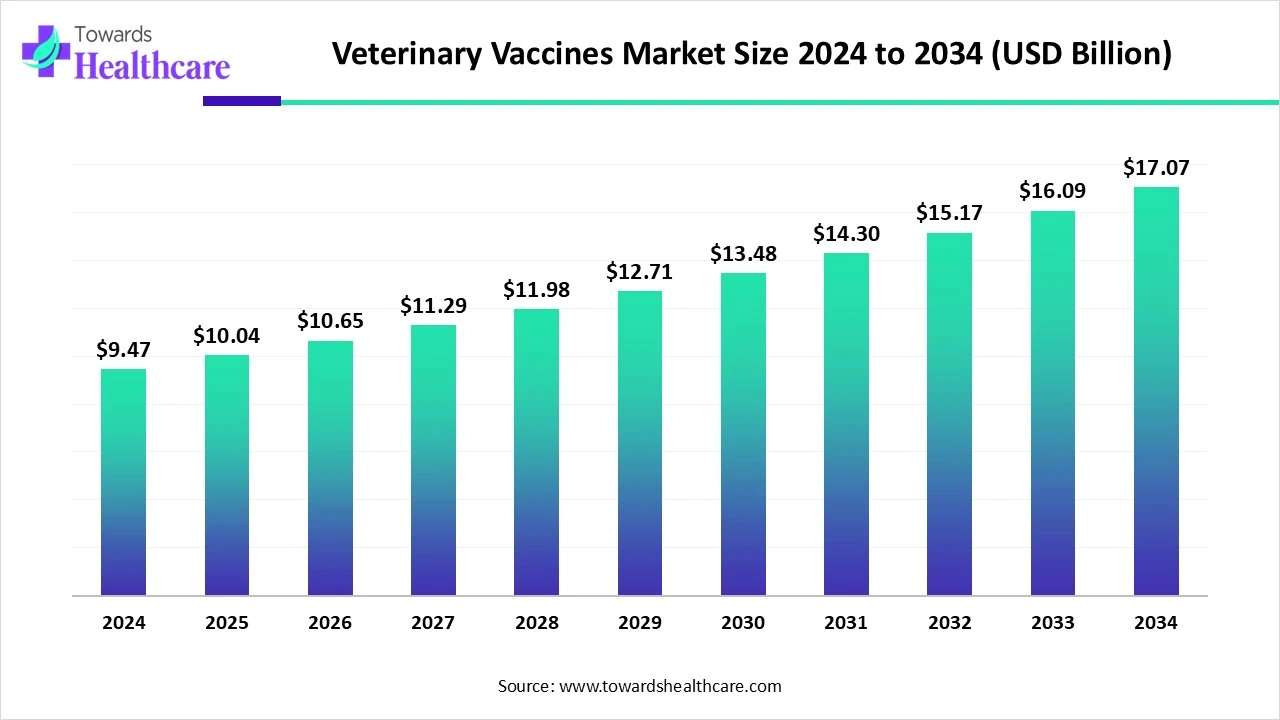
According to Towards Healthcare, the veterinary vaccines market is projected to experience significant growth, with estimates suggesting the market size will increase from USD 10.65 billion in 2026 to approximately USD 18.11 billion by 2035, representing a compound annual growth rate (CAGR) of 6.07% from 2026 to 2035, driven by significant vaccines supports confirms the welfare of both farm animals and pets, the effectiveness and sustainability of farming solutions, the safety and accessibility of food, and the health of animal holders. They play a significant role in the fight against illness and have attained great success in controlling many diseases of vital significance in farm and companion animals or those which threaten human health. Vaccines are a safe and simple way to stimulate an animal’s natural defense system to avoid disease, safeguard their health and protect their wellbeing. Vaccines protect livestock against infectious diseases which could potentially be passed to patients through food, supporting the safe provision of nutritious food like meat, milk, fish and egg products.
About Strangvac
Strangvac is a vaccine against the severe disease equine strangles. The vaccine is approved for sale and marketing in the EU, as well as the UK, Iceland, Norway and Liechtenstein, and has been launched in Sweden, Denmark, Finland, the UK, France, Germany, Belgium, the Netherlands, Austria, Spain, Portugal, Ireland, Poland, Slovenia and Italy.
About Intervacc
Intervacc AB is an animal health group that develops vaccines for animals. The organization’s vaccines and vaccine candidates are based on several years of research at the Karolinska Institute and the Swedish University of Agricultural Sciences. The Intervacc share is listed on the Nasdaq First North Growth Market.
A recent report by Towards Healthcare highlights that the veterinary vaccines market is growing, as vaccines not only protect animals from diseases but also help reduce the risk of transmission to other animals and even humans. By using vaccines, the veterinarian can improve natural immunity before disease strikes or, with antisera, in the very early stages of infection. In addition, with vaccines, whole flock or herd protection can be achieved, as well as protection of animals. Animal vaccination plays a significant role in wider public health. Effective animal vaccination programmes and the EU pet passport system mean that the significant majority of EU member states are recorded as rabies-free. Vaccinating animals defends them from getting diseases and also blocks the major route of transmission between wildlife and humans: research has shown that by vaccinating 70% of a local dog population against rabies, it lowers the number of human cases to almost zero.