



ISRO Advances Heavy Lift capabilities with successful CE20 Engine upgrade Test
Published: 24 Mar 2026
Author: Precedence Research



India’s space agency, Indian Space Research Organization, has achieved a notable milestone with the successful sea-level hot test of its CE20 cryogenic engine at an upgraded thrust level of 22 tonnes. Conducted in March at the ISRO propulsion complex, this test marks a significant enhancement in the nation’s propulsion technology and launch vehicle performance.
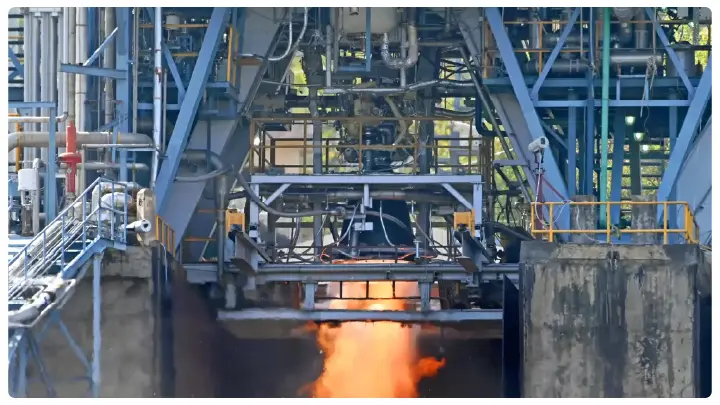
The CE20 engine is an essential part of the heavy-lift launcher vehicle of India's LVM3, which is widely utilized in the delivery of big satellites and supports critical missions. This enhancement in the thrust capacity will be able to significantly increase the payload of the rocket, which can now deliver into orbit with a high level of efficiency.
According to Precedence research, the forensic equipment supplies market was estimated at USD 10.04 billion in 2025 and is predicted to increase from USD 10.84 billion in 2026 to approximately USD 21.52 billion by 2035, expanding at a CAGR of 7.92% from 2026 to 2035. The market of forensic equipment and supplies is the main factor that promotes effective criminal inquiry nowadays, as it allows collecting, analyzing, and interpreting the evidence correctly.
The test also proved many of the advanced features of engineering, such as advancements in ignition systems and protective mechanisms that are aimed at increasing the stability of engines and reliability in their operations. Conducting tests in the constant conditions of the sea is an important measure in the verification of the engine under the real conditions of the actual launch.
The advancement in thrust capacity is crucial for India's upcoming space initiatives, including satellite deployment, deep space missions, and human spaceflight programs. This enhanced thrust capability not only allows for greater flexibility in mission architecture but also optimizes launch efficiency across various payload and trajectory scenarios.
The successful test of the CE20 engine marks a significant milestone in ISRO's expertise in cryogenic propulsion systems. This achievement not only underscores India's advancing capabilities in the space sector but also lays the groundwork for more sophisticated and technologically challenging missions in the future.
In conclusion, the successful sea-level hot test of the CE20 cryogenic engine represents a significant leap forward for ISRO and India's space ambitions. With its enhanced thrust capacity of 22 tonnes, this advancement not only improves the payload capabilities of the LVM3 launcher but also positions India to undertake more complex space missions, including satellite deployments and deep space explorations. The ingenuity demonstrated in this engine's design, particularly in terms of ignition systems and stability mechanisms, highlights ISRO's growing expertise in cryogenic propulsion technology. As the nation continues to push the boundaries of its capabilities, this achievement lays a solid foundation for future endeavors in space exploration and technology, reinforcing India's stature on the global space stage.