



Libya Government Signs Agreement to Establish Samsung Innovation Campus in the Country
Published: 23 Jul 2026
Author: Gautam mahajan



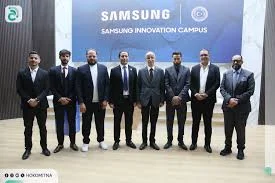
In July 2026, Libya’s Government of National Unity (GNU) signed an agreement with Samsung to establish a Samsung Innovation Campus in Libya. This campus is intended to train 150 young Libyan citizens in digital skills and AI applications. The Minister of State for Digital Economy and Artificial Intelligence, Ziad-Al-Hajjaji, and the program’s regional director.
Some of the prominent personalities that attended the event include Mustafa Al-Manea, who is the Head of the Prime Minister’s Executive Team for Strategic Initiatives and Projects, and Khaled Oun, the president of Tripoli University. The government announced that the program will run from 11 August to 6 October, 2026. The lessons would be delivered virtually, with interactive sessions that would facilitate self-paced learning.
This is one of the important initiatives of Samsung, and such programs have been delivered by them in 42 countries since 2019. According to the government, this program is a part of a broader national strategy of collaborating with prominent global organizations to enhance the national workforce in terms of digital systems and AI. The Libyan government plans to prepare the young workforce for next-generation skills and digital workflows.
Samsung Innovation Program is a global initiative that aims to provide young people, especially those between the ages of 16 and 24, with next-generation skills in AI, Internet of Things (IoT), and big data with the help of hands-on training and professional teaching. This initiative also promotes inclusivity and diversity by encouraging the participation of underrepresented groups, women, and disabled people.
This program also includes lessons in soft skills such as communication, teamwork, leadership, and problem-solving. This assists the students in securing jobs, participating in innovation projects, launching technology startups, and taking part in social activities.
Impact on the Information Communication Technology Industry
According to Precedence Research, the Samsung Innovation Program initiative in Libya is expected to benefit the information communication technology industry, as it trains the upcoming workforce in relevant skills required in the technology market. Such initiatives help students in countries that do not have world-class education to learn globally relevant modern skills, both in terms of technology and communication. It helps the country to develop a skilled workforce, which leads to the technological advancement of the country.
Impact on the Artificial Intelligence (AI) Market
The global artificial intelligence (AI) market size was USD 757.58 billion in 2025, calculated at USD 900.00 billion in 2026, and is expected to reach around USD 4,216.29 billion by 2035, expanding at a CAGR of 18.73% from 2026 to 2035.
According to Precedence Research, the artificial intelligence (AI) market is expected to be positively impacted by the Samsung Innovation Program initiative in Libya because AI is rapidly advancing and data centers are being built across the world. Large global corporations need a skilled workforce to operate data centers smoothly at that location. This program helps to impart digital education and AI skills in various countries, which makes it easier for companies to build data centers across all continents. Such programs also help to source world-class talent from various underdeveloped or developing nations where talented youth do not have ample opportunities for education.
Impact on the Cybersecurity Market
The global cybersecurity market size was valued at USD 301.91 billion in 2025, calculated at USD 339.96 billion in 2026, and is expected to reach around USD 969.45 billion by 2035. The market is expanding at a solid CAGR of 12.37% over the forecast period 2026 to 2035.
According to Precedence Research, the Samsung Innovation Program initiative in Libya is expected to positively impact the cybersecurity market, as such programs boost the adoption of digital and automation workflows in the nation. These digital systems have vulnerable endpoints that are at risk of cyberattacks and can lead to vital data loss.
This will lead to a significant increase in demand for cybersecurity solutions from various sectors such as IT, BFSI, healthcare, manufacturing, retail, and government. This will lead to increased economic activity in the market in terms of sales, maintenance, and upgradation services.
About Samsung
Samsung is a prominent global technology company that provides advanced digital solutions throughout the world while adhering to regional regulations. The company focuses on providing solutions for a rapidly changing enterprise ecosystem and is committed to providing good services to its clients, which include customers, investors, employees, partners, and local communities. The company strives to be the most ethical company across the globe by providing proper training to its employees and regulating its monitoring infrastructure.
The company also believes in a fair and transparent corporate environment. These factors lead to holistic development of Samsung in terms of economic growth, sustainability, and environmental impact responsibility. The company also places significant emphasis on properly following regional regulations to develop a global supply chain and infrastructure. Such policies lead to the attraction of global talent to the company.