



L&T Renewables Business secures order for Battery Energy Storage System in the Middle East
Published: 27 Aug 2026
Author: Laxmi Narayan



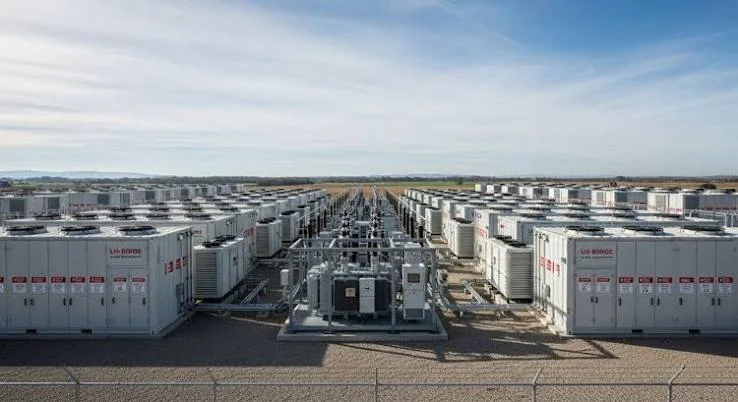
In August 2026, the Renewables business of Larsen & Toubro (L&T) recently bagged a major order to develop three Battery Energy Storage System (BESS) projects for a prominent client in the Middle East. The projects will collectively provide 6 GWh of energy storage capacity, supporting grid modernization and accelerating the integration of renewable energy across the region.
The three projects will contribute to 6 gigawatt-hours of storage capacity, marking one of the most impactful advancements in grid modernization and renewable energy integration across the Middle East region. This positions L&T as a key EPC player in the fast‑growing energy storage sector. The projects also featured a 4-hour Battery Energy Storage System (BESS) each, capable of storing and dispatching energy to support grid stability and renewable energy integration. This further enables effective energy shifting, allowing surplus clean energy generated during off-peak periods to be stored and delivered during peak demand hours.
The 6 GWh project portfolio highlights a significant step in the Middle East’s transition towards modern, flexible and renewable-ready power infrastructure. For the company, the order further strengthens its position as an EPC player in the rapidly expanding battery energy storage market. As countries all across the region increase renewable power generation, large-scale energy storage is becoming increasingly important for maintaining grid reliability and managing supply-demand fluctuations.
Impact on the Chemical Market
The BESS projects will help allow surplus clean electricity generated during periods of lower demand to be stored and dispatched when electricity consumption rises. This energy-shifting capability can further help balance fluctuations in renewable power generation and reduce pressure on the grid during peak-demand periods. L&T also stated that it will deploy advanced liquid-cooling technology across the battery storage systems. The technology is designed to support higher power density, improve safety, and extend the operational life of the systems.
The advanced BESS solution will also incorporate liquid cooling technology, ensuring higher power density, enhanced safety, and extended operational life. Such projects entail stringent requirements with respect to plant performance, workforce mobilization, safety, quality, and timeline.
Impact on the Battery Energy Storage System Market
The global battery energy storage system market size is calculated at USD 10.16 billion in 2025 and is predicted to increase from USD 12.90 billion in 2026 to approximately USD 102.69 billion by 2035, expanding at a solid CAGR of 26.03% over the forecast period 2026 to 2035.
According to Precedence Research, the market is witnessing substantial growth owing to various factors and is anticipated to continue its growth rate over the forecasted years. Major attributions to this growth are the inclination towards sustainable and renewable energy products, the necessity for grid stability, and technological advancement for energy preservation, which has fueled the growth of the market globally. Policy support, subsidies, and carbon neutrality goals are helping to enable significant battery storage installations around the world, as batteries are being used for grid stability projects and solutions to integrate renewables into the utility market.
The demand for electricity grid peak-shaving and reliability enhancement, especially in urban and industrial electricity grids globally, is also seen to be growing rapidly as huge efforts are being made to modernize electricity grids to accommodate increased amounts of renewable energy and storage to smooth out their intermittency. More widespread deployment of battery-solar wind or battery-diesel hybrid energy storage solutions is boosting energy resilience in microgrid development and off-grid electrification of remote and industrial applications, essential to the distributed energy transition globally, quickly.
Impact on the Commercial and Industrial Battery Storage Market
The global commercial and industrial battery storage market is growing rapidly due to rising energy demand, grid stability needs, and renewable integration worldwide. The market is driven by rising energy costs, increasing grid reliability requirements, and the need for integrating renewable energy sources.
According to Precedence Research, the growing adoption of advanced battery technologies, such as improved lithium-ion and new battery chemistries, coupled with intelligent energy management systems, is significantly enhancing the performance, scale, and payback of energy storage solutions. These innovations are particularly important as electricity prices continue to rise and grid instability becomes more prevalent, driving commercial and industrial users to seek decentralized and reliable energy solutions. The shift toward rooftop solar and other distributed energy resources has created a heightened demand for effective energy storage to manage intermittency and maximize self-consumption.
As electricity prices increase and grid reliability becomes more unpredictable, commercial and industrial sectors all over the world are increasingly adopting battery storage systems to ensure energy independence. These systems allow businesses to store energy from renewable sources like solar or wind, ensuring a stable power supply even during grid outages or high-demand periods. Innovations in battery technologies, particularly improvements in lithium-ion batteries and the development of solid-state batteries and flow batteries, are enhancing energy density, efficiency, and lifespan.
Expert Opinion
“The three projects will collectively contribute to 6 gigawatt-hour of storage capacity, marking one of the most impactful advancements in grid modernization and renewable energy integration across the Middle East region,” L&T said in its regulatory filing.