



NeuroSigma Announced U.S. Commercial Launch of Second-Generation Monarch® eTNS System for Pediatric ADHD
Published: 24 Jul 2026
Author: Towards Healthcare



NeuroSigma, Inc., a Los Angeles-driven bioelectronic medical tools organization, announced the launch of U.S. sales of its second-generation Monarch eTNS System, the only non-drug management for pediatric attention-deficit/hyperactivity disorder (ADHD) cleared by the U.S. Food and Drug Administration (FDA).
The Gen 2 Monarch tools is an important upgrade over the first-generation healthcare device. It delivers the similar therapeutic external trigeminal nerve stimulation (eTNS) shown to lessen ADHD symptoms in offspring, but in a smaller, more modern form factor intended for routine family use. Advance features involves a color screen, a simplified consumer interface, and an integrated rechargeable battery which supports up to three therapy sessions on a single charge. The Gen 2 technology offers more precise control over stimulation, enhancing comfort and simple-to-use while nightly therapy.
“Commercial launch of the Gen 2 Monarch eTNS system achieves a profound milestone for NeuroSigma,” said Dr. Colin Kealey, CEO of NeuroSigma. “Following our pilot launch of the first-generation device, we have seen substantial pent-up demand from families and clinicians looking for an effective non-drug option for pediatric ADHD. With an existing waitlist of more than 1,500 patients, caregivers, and providers, we believe the Gen 2 Monarch device is well positioned for rapid adoption across the United States.”
Dr. Kealey added, “We are delighted to make our newly designed device available to patients and their families seeking an effective non-drug ADHD therapy. Without adequate treatment, too many children are struggling with the mental health, academic, and social consequences that come with ADHD, including executive dysfunction, classroom inattentiveness, inability to follow instruction, emotional dysregulation, sudden mood swings, social isolation, and low self-esteem, in addition to other physical and mental impairments. Recent studies using PET imaging have demonstrated that eTNS therapy stimulates regions of the brain associated with ADHD, indicating a potential mechanism of action for this therapy.”
“This launch is a major commercial inflection point for NeuroSigma and a meaningful step forward for the families the company serves,” said Tom Paschall, CEO of Checkmate Capital and a member of NeuroSigma’s Board of Directors. “Pediatric ADHD remains an area of significant unmet need, and many families are actively seeking alternatives to prescription stimulants. The Gen 2 Monarch device puts a modern, non-drug therapy backed by NeuroSigma’s proprietary trigeminal nerve stimulation technology that earned its FDA clearance directly into the hands of parents and clinicians. We are proud to support a team that treats this critical indication while reducing children’s dependence on amphetamines.”
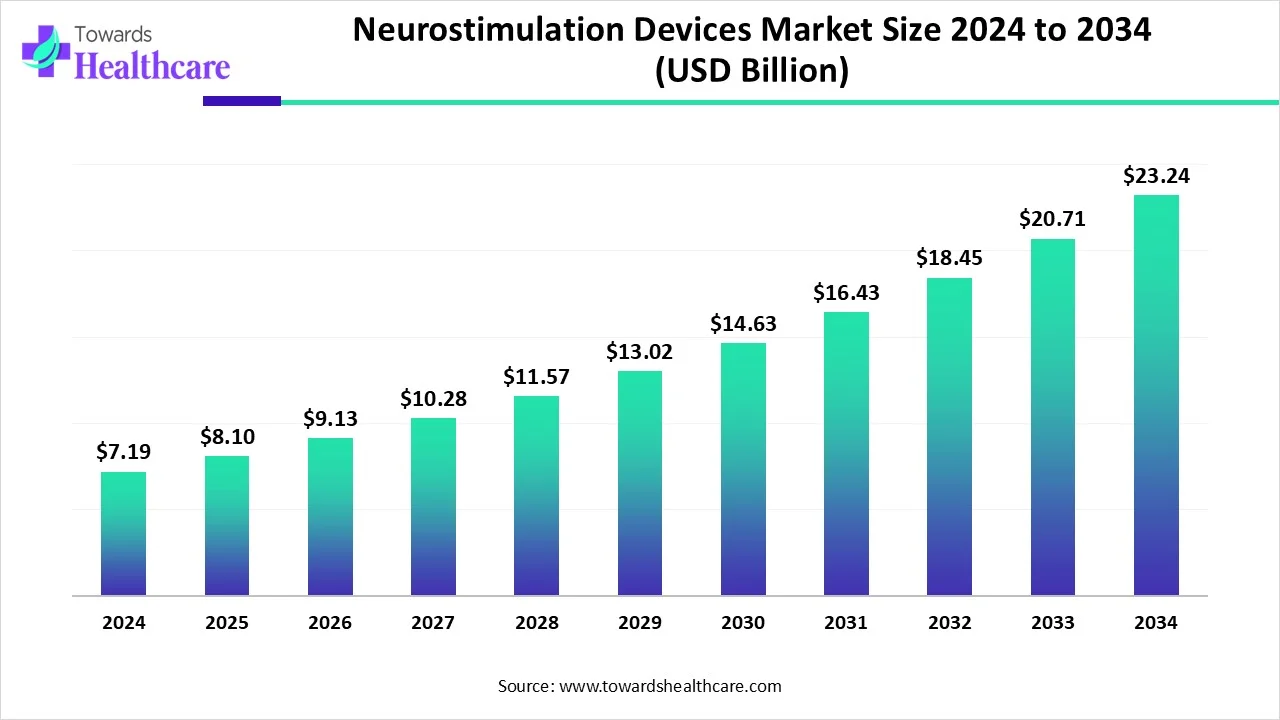
According to Towards Healthcare, the neurostimulation devices market is projected to experience significant growth, with estimates suggesting the market size will increase from USD 9.15 billion in 2026 to approximately USD 27.15 billion by 2035, representing a compound annual growth rate (CAGR) of 12.84% from 2026 to 2035, driven by, neurostimulator is inserted to offers continuous stimulation. Spinal cord stimulation, in specifically, has proven efficient in advance pain management. The electrically generated stimuli alter pain signals and lessen symptoms. Neurostimulation is considered a significant component of neuromodulation and is applied to manage different chronic conditions. Neurostimulation tools offered much required therapeutic relief to an unprecedented number of patients affected by debilitating neurologic and psychiatric diseases.
About the Monarch eTNS System
The Monarch eTNS Technology is the first non-drug management for pediatric ADHD cleared by the U.S. Food and Drug Administration. It delivers low-level electrical stimulation to branches of the trigeminal nerve via a small adhesive patch worn on the forehead, and is administered at home during sleep in the supervision of a caregiver.
Indication for Use
The Monarch eTNS System is designed for use as a monotherapy for the management of ADHD in pediatric patients ages 7 via 12 years old who are not recently taking prescription ADHD drugs. The Monarch eTNS System is designed to be used in the home under the supervision of a caregiver while periods of sleep.
Important Safety Information
The Monarch eTNS System should not be applied in children with an active implantable healthcare device, like a pacemaker or neurostimulator, or with a body-worn active healthcare tool, like an insulin pump. The tool should not be used in the presence of magnetic resonance imaging (MRI) equipment. The most general adverse effects related with application of the Monarch eTNS System involves drowsiness, increase in appetite, trouble sleeping, teeth clenching, fatigue, and headache. Patients and caregivers should consult a capable healthcare provider to regulate whether the Monarch eTNS System is appropriate for their child.
A recent report by Towards Healthcare highlights that the neurostimulation devices market is growing as growing development in neurostimulation technologies are offering relief to an unprecedented number of patients affected by debilitating neurologic and psychiatric diseases. Neurostimulation therapies involves invasive and noninvasive strategies which involve the application of electrical stimulation to drive neural function in a circuit. Neurostimulation is an established processes for managing chronic pain and various neurological conditions. It includes delivering electrical impulses through an electrode to pertcularly target some region of the nervous system. Neurostimulation used for chronic pain when other forms of therapy have not been adequately efficient