



Operation TrialBlazer Aims to Make the U.S. a Global Leader in Clinical Research Again
Published: 22 Jul 2026
Author: Towards Healthcare



HHS Launches a Major Initiative to Strengthen Clinical Trials
The U.S. Department of Health and Human Services (HHS) has introduced a new nationwide initiative called Operation TrialBlazer to strengthen the country's leadership in clinical research. The program brings together several federal agencies to improve the way clinical trials are planned, reviewed, and conducted. The goal is to reduce delays in drug development and encourage more pharmaceutical companies to carry out research within the United States. Over the past few years, many early-stage clinical trials have shifted to other countries because of lower costs and faster regulatory processes. Through Operation TrialBlazer, HHS wants to reverse this trend and make the U.S. a preferred destination for developing new medicines. The initiative combines efforts from the Food and Drug Administration (FDA), the National Institutes of Health (NIH), and other government organizations to simplify regulations, improve efficiency, and help innovative treatments reach patients more quickly.
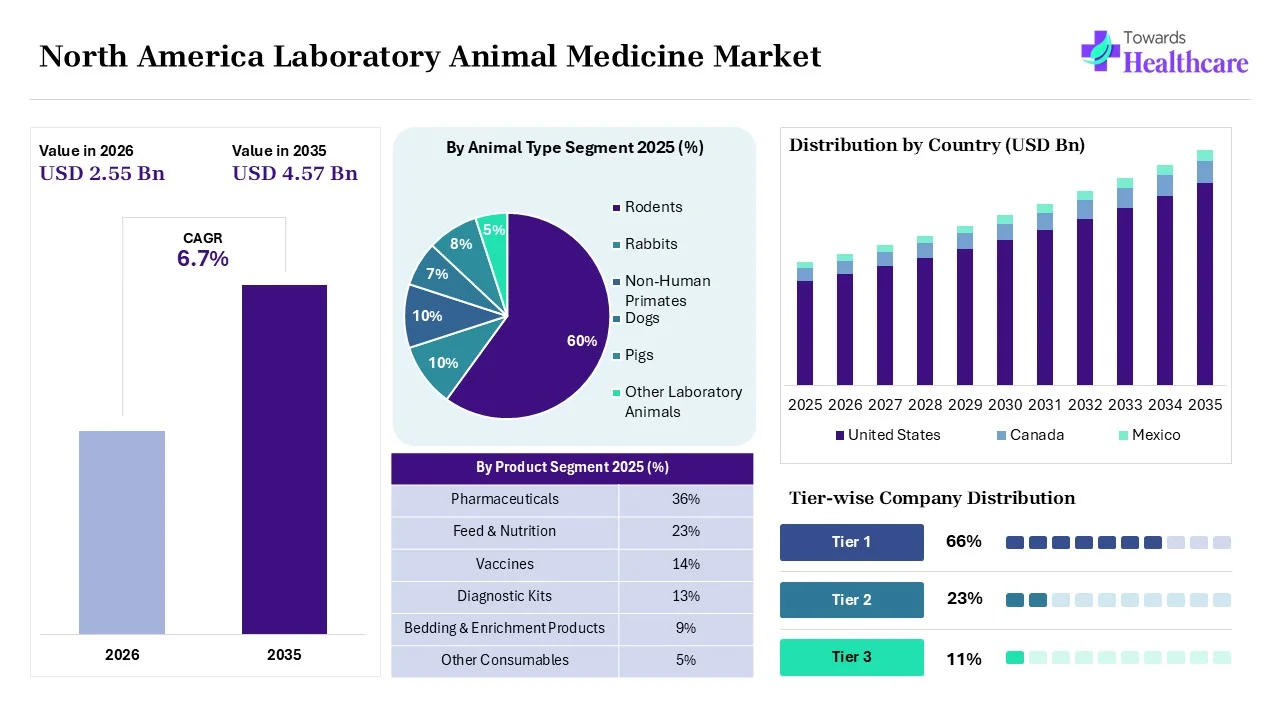
According to Towards Healthcare, the North America laboratory animal medicine market is projected to experience significant growth, with estimates suggesting the market size will increase from USD 2.55 billion in 2026 to approximately USD 4.57 billion by 2035, representing a compound annual growth rate (CAGR) of 6.7% from 2026 to 2035. Rising investments in biomedical research, increasing preclinical studies, and expanding pharmaceutical and biotechnology activities are creating strong market opportunities. Continuous advancements in veterinary care, growing focus on animal welfare, and supportive research funding further contribute to sustained market growth.
FDA Introduces Reforms to Speed Up Drug Development
A major part of Operation TrialBlazer focuses on improving the early stages of clinical research. The FDA has proposed an Expedited Investigational New Drug (IND) pilot program that would allow drug developers to work closely with qualified research institutions while preparing Phase I clinical trial applications. This collaborative approach is expected to improve application quality, reduce regulatory issues, and shorten review times. The FDA also plans to clarify manufacturing and quality requirements for early-stage drug development so companies avoid unnecessary paperwork that often delays projects. In addition, updated regulatory guidance will make it easier for researchers to use innovative trial designs, including master protocols, adaptive studies, and modern statistical approaches. These changes are expected to reduce the time needed to begin human clinical trials by as much as six to twelve months while lowering development costs for both large pharmaceutical companies and smaller biotechnology firms.
"America should be the best place in the world to develop new medicines, yet we have built a system that drives too much clinical research overseas," said HHS Secretary Robert F. Kennedy Jr. in a press release. "HHS is launching a coordinated department-wide effort to restore America's leadership in clinical research, remove unnecessary barriers, and bring more clinical research and investment back to the United States."
Simpler Approval Pathways and Greater Support for Innovation
Operation TrialBlazer also introduces changes that could make the later stages of drug development more efficient. The FDA has updated its guidance on the evidence required for drug approval. In many cases, one well-designed clinical trial supported by additional confirmatory evidence may be enough to demonstrate a treatment's effectiveness. This change could reduce duplication of research while maintaining high scientific standards. At the same time, the NIH will increase investments in advanced research methods, including artificial intelligence, human cell-based models, real-world evidence, and personalized medicine. These technologies are expected to improve trial design, identify promising therapies more quickly, and support research for rare diseases. The initiative also encourages closer collaboration between government agencies, research institutions, and pharmaceutical companies to promote innovation while maintaining patient safety throughout the clinical development process.
Building a Stronger Future for U.S. Clinical Research
The launch of Operation TrialBlazer reflects the U.S. government's broader strategy to strengthen domestic biomedical research and remain competitive in the global pharmaceutical industry. Officials believe that bringing more clinical trials back to the United States will provide faster access to innovative treatments for American patients while supporting scientific discovery, economic growth, and high-skilled jobs. The initiative is also designed to make the country more attractive for pharmaceutical investment by reducing unnecessary regulatory barriers and improving collaboration between government and industry. As global competition in drug development continues to increase, Operation TrialBlazer represents an important effort to modernize the clinical research system. By accelerating development timelines, encouraging advanced research technologies, and improving regulatory efficiency, the program has the potential to strengthen the U.S. healthcare ecosystem and support the development of safer and more effective medicines for patients in the years ahead.
A recent report by Towards Healthcare highlights that the North America laboratory animal medicine market is witnessing robust growth due to increasing demand for high-quality animal healthcare, expanding drug development activities, and rising research involving laboratory animals. Growing adoption of advanced diagnostic tools, enhanced veterinary services, and stricter animal welfare regulations are strengthening the market. Increased collaborations between research institutions and pharmaceutical companies, along with investments in modern research facilities, are expected to create long-term growth opportunities across the region.