



Proscia Wins FDA Clearance to Expand Concentriq AP-Dx Interoperability
Published: 13 Aug 2026
Author: Towards Healthcare



A new 510(k) clearance adds scanner compatibility, cloud deployment, and a built-in path for future updates without additional FDA filings
Proscia has established a novel 510 clearance from the U.S. Food and Drug Administration for its Concentriq AP-Dx digital pathology stand. The clearance enhances compatibility with the Leica Aperio GT 450 DX slide scanner, allows cloud deployment, and involves a Predetermined Change Control Plan that lets Proscia expand the platform's interoperability without a novel 510 submission for every future addition. Concentriq AP-Dx is applied for significant diagnosis in laboratories ranging from small reference labs to massive hospital systems.
What's New in This FDA Clearance
The updated clearance covers numerous distinct additions rather than a single characteristic:
Compatibility with the Leica Aperio GT 450 DX entire slide scanner, an increasing-throughput, 450-slide-capacity technology with continuous rack loading
- Helps with cloud deployment of the Concentriq AP-Dx platform
- A prearranged change control plan covering future scanners, image formats, and displays
- Continued compatibility with the Hamamatsu NanoZoomer S360MD scanner from the platform's original 2024 clearance
Ian Cadieux, Proscia's head of quality and regulatory, framed the update around long-term platform commitments. "Laboratories choose a digital pathology platform with the expectation that it will sit at the center of their practice for years to come," Cadieux said. "The PCCP helps us to protect that investment, giving customers confidence that Concentriq AP-Dx will continue to be an interoperable foundation as their needs evolve."
Why a Transformation Control Plan Matters for Laboratory Buyers
A Predetermined Change Control Plan, or PCCP, is a comparatively novel regulatory mechanism. Congress authorized it via the 2022 Food and Drug Omnibus Reform Act, and the FDA finalized its guidance for AI-driven software tools in December 2024. Under a PCCP, a producer specifies planned modifications in advance, and the FDA reviews and authorizes the plan alongside the device's original submission.
The Pathologist Shortage Behind the Push for Interoperability
Proscia's statement points to staff pressure as a driver. More than 2.1 million Americans are projected to be identified with cancer this year, a figure that lines up with the American Cancer Society's Cancer Facts and Figures 2026 report, which puts the estimate at roughly 2,114,850 new cases countrywide. At the same time, the American Society for Clinical Pathology points to federal projections showing a 7 % decline in the supply of diagnosticians against a 16 % rise in demand by 2037.
How Concentriq AP-Dx Compares in a Crowded Market
Concentriq AP-Dx is not the only FDA-cleared choice for main diagnosis. Philips brought the first cleared technology to market in 2017, and Leica Biosystems, Hamamatsu, and Roche Diagnostics have each added cleared scanner and software combinations since then.
Proscia announced that its platform aids laboratories in managing roughly 12 million patient cases yearly and works with 16 of the top 20 pharmaceutical organizations. Those figures come from the organization rather than a self-governing audit, so they are worth reading as vendor claims rather than confirmed statistics.
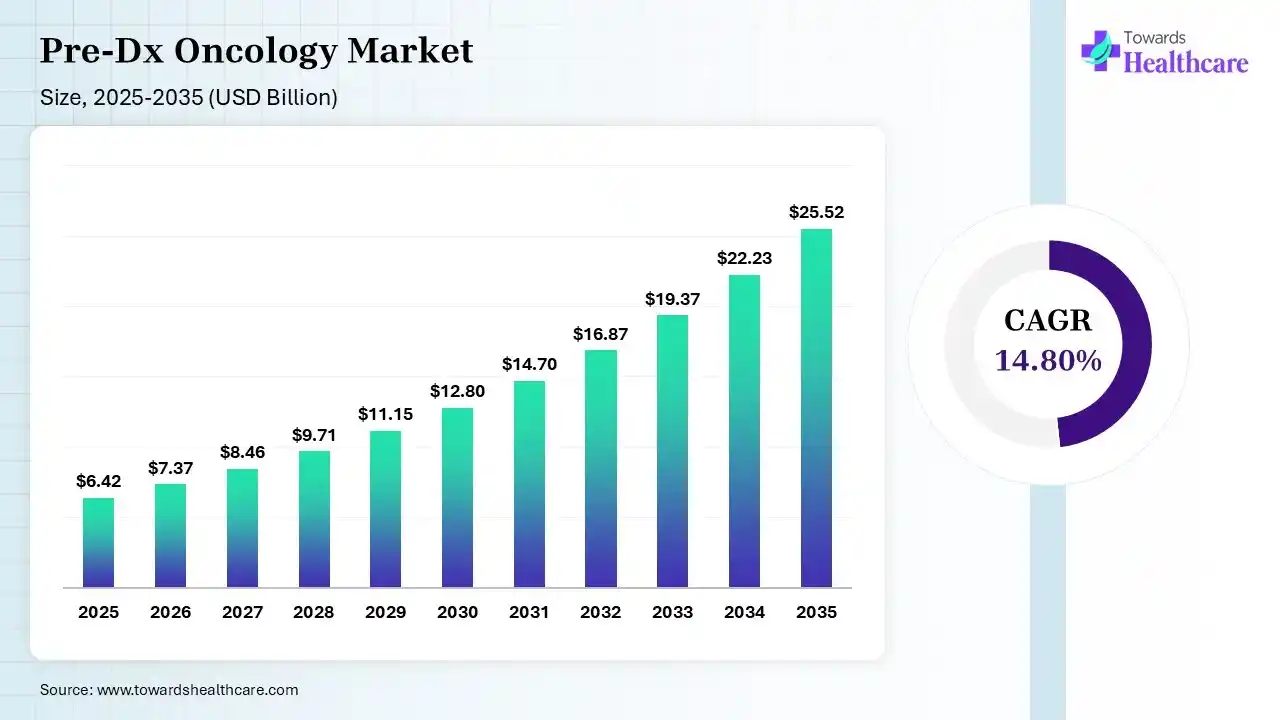
According to Towards Healthcare, the pre-dx oncology market is projected to grow significantly, with estimates indicating the market size will increase from USD 7.37 billion in 2026 to approximately USD 25.52 billion by 2035, expanding at a CAGR of 14.80% from 2026 to 2035. The pre-operative sector lowers medical care utilisation, enhances patient experience, and lowers the time to the provision of adjuvant oncology therapy. Preoperative testing would reduce the lowers in time from diagnosis to adjuvant therapy. Reducing the time to start adjuvant oncology therapy, dropping the demand on health care resources, and enhancing patient experience.
What this FDA Clearance Means for Lab
For a lab manager assessing digital pathology, this clearance is less related to one new scanner and more associated with the supervisory mechanism behind it. A PCCP is designed to create future hardware and format additions quickly to implement, which could cut the wait between a vendor's roadmap and what a lab really puts into manufacturing.
That flexibility does not eliminate the tougher questions that come with any digital pathology rollout. Labs seeing Concentriq AP-Dx, or a competing platform, will still want to weigh scanner compatibility, cloud against on-premises deployment, and how a vendor's transform control plan actually gets exercised once it is official. Recent work on AI-driven image analysis in oncology research is a reminder that the underlying technology keeps shifting rapidly, irrespective of which supervisory pathway a vendor uses to keep pace.
A recent report by Towards Healthcare highlights that the pre-dx oncology market is growing, as Oncotype DX tests are genomic tests. Genomic tests examine some genes in a sample of a tumor to see how dynamic they are. The activity level of these genes affects how likely the tumor is to increase and spread. The pre-dx tests are used to support decisions related to whether chemotherapy or radiation after surgery would help lower the challenges of breast cancer or DCIS coming back.