



Punjab Health Minister Says Govt Is Providing Professional & Free Mental Health Treatment Under Mukh Mantri Sehat Yojana
Published: 20 Aug 2026
Author: Towards Healthcare



75% of Mukh Mantri Sehat Yojana Mental-Health Beneficiaries Are Aged 18–45, Highlighting Need For Timely Care Among Working-Age Population
A serious health condition does not only affect a patient's well-being; it places an enormous emotional and financial load on an entire family. When the illness is associated with mental health, stigma, lack of awareness, and concerns over management expenses create additional challenges, often delaying the decision to seek professional support.
Punjab's Mukh Mantri Sehat Yojana (MMSY) is set to address one part of that challenge by making mental-health treatment economically accessible. Information from the State Health Agency (SHA), Punjab, indicates that in the available seven-month period, 709 beneficiaries received mental-health treatment under the scheme, including treatment worth ₹83.36 lakh.
The age profile offers a significant insight. 284 beneficiaries treated cashless under Mukh Mantri Sehat Yojana were aged 31–45, while 249 were aged 18–30. Composed, these two groups account for 533 beneficiaries, or 75.2 per cent of the total.
On this, Health and Family Welfare Minister Dr Balbir Singh said, “Mental healthcare should not become a luxury that a family seeks only when it can afford it. If someone needs professional help, the focus should be on getting that person the right care at the right time.”
The SHA information presented that Mukh Mantri Sehat Yojana is tackling a wide range of mental-health conditions, involving neurotic and stress-associated disorders, mood and affective disorders, behavioural syndromes associated with physiological and physical factors, and mental and behavioral disorders connected to psychoactive substance applications. The treatment pattern highlights the significance of addressing both common mental-health conditions and those related to substance application.
Dr Gagandeep Sekhon, MD Psychiatry, Consultant Psychiatrist, Civil Hospital Barnala, said, “The 18-45 age group is particularly important from a mental-health perspective because this is the phase when people are building careers, managing relationships, raising families and handling significant financial responsibilities.”
Dr Gagandeep Sekhon added, “Mental health concerns are often ignored until they begin to interfere with daily functioning, by which time they are harder to manage.” The SHA data also highlights the close relationship between mental health and substance use, making Punjab's Yudh Nashean Virudh campaign particularly relevant to the state's broader mental-health response.
Substance dependence has psychological, behavioural, and social consequences and needs sustained professional management, de-addiction, and rehabilitation. The Mukh Mantri Sehat Yojana data included psychoactive substance-use disorders and mood disorders, which points to the importance of early awareness, timely intervention, and accessible treatment pathways for young people.
At the same time, prevention and healthy living complement healthcare treatment. Minister Dr Balbir Singh shared, “The Bhagwant Mann-led government has been working towards making healthcare more accessible and affordable for every family in Punjab, with special attention to the health and wellbeing of our youth.
With a ₹10 lakh cashless cover per family per year, and mental healthcare covered under Mukh Mantri Sehat Yojana, the scheme supports eliminating the economic hesitation major patients face when seeking management for mental health conditions. Alongside this, 'Yudh Nashean Virudh' strengthens prevention, de-addiction and rehabilitation, while CM Di Yogshala promotes accessible wellness practices.”
Together, the Mukh Mantri Sehat Yojana, Yudh Nashean Virudh and CM Di Yogshala show complementary parts of Punjab's mental-health response; from prevention and healthy living to de-addiction, rehabilitation and access to professional management. With more than three out of every four services in the available Mukh Mantri Sehat Yojana data belonging to the 18–45 age group, creating timely, accessible mental healthcare could be specifically important for protecting the health, productivity, and wellbeing of Punjab's working-age populace.
According to Towards Healthcare, the mental health tester market is projected to grow significantly, with estimates indicating the market size will increase from USD 1.78 billion in 2026 to approximately USD 3.43 billion by 2035, expanding at a CAGR of 7.54% from 2026 to 2035. Psychological testing provides various advantages for adults, from understanding specific strengths to diagnosing mental health situations and improving workplace effectiveness. These tests offer important insights that lead to enhanced mental health, better career standards, and a more fulfilling individual life. As awareness of the advantages of mental testing continues to grow, more adults are likely to take advantage of this important tool for self-enhancement and well-being. As awareness of the benefits of psychological testing continues to grow, more adults are likely to take advantage of this powerful tool for self-improvement and well-being.
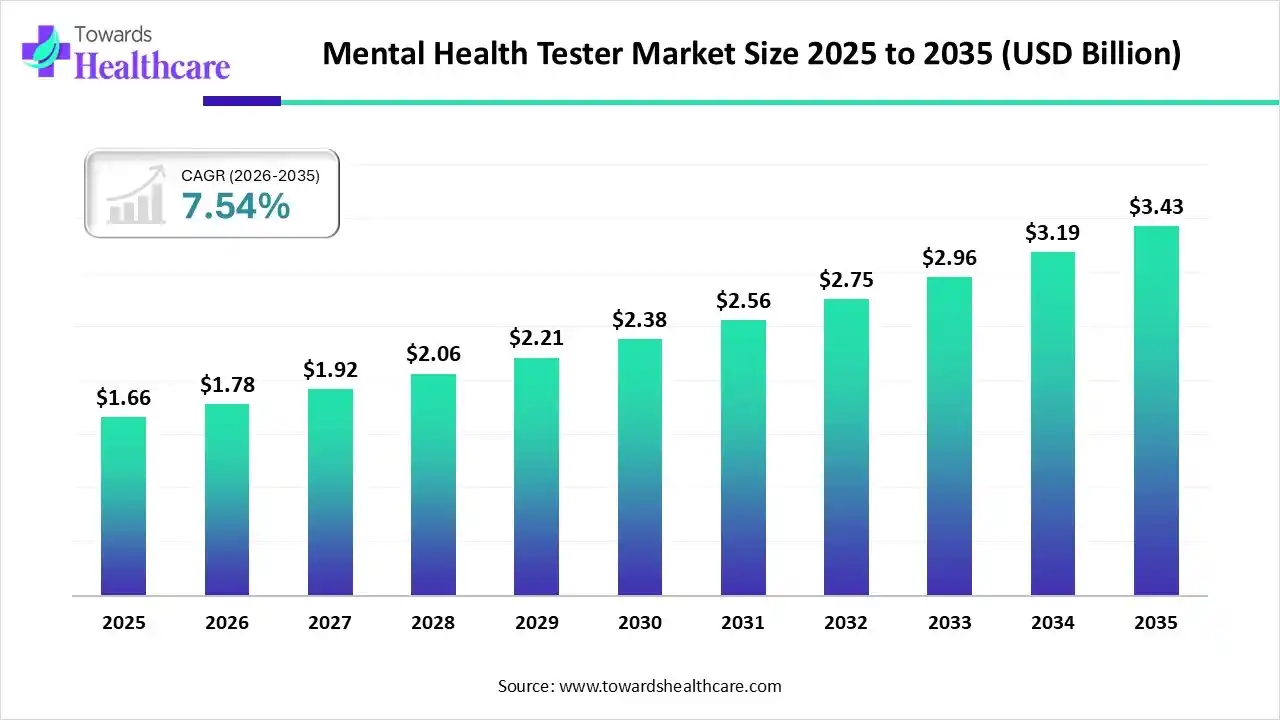
A recent report by Towards Healthcare highlights that the mental health tester market is growing, as the significant benefits of mental testing include its role in diagnosing and managing mental health situations. The majority of adults suffer from mental health complexities like depression, anxiety, or ADHD without realizing it. Psychological tests supports to detects these conditions precisely, creating the way for efficient management plans. Early diagnosis and intervention significantly enhance a patient's mental health, leading to a advance quality of life.