



The Robot Revolution Is Here: Tesla, Hyundai, and More Stocks to Watch
Published: 06 Feb 2026
Author: Precedence Research



Once science fiction, autonomous robots are rapidly becoming a reality. At 2025’s CES, humanoids barely drew attention, but this January, robots like Boston Dynamics’ 6'2" Atlas, 200 pounds with a digital smiley face, stole the show. Chipmakers including Nvidia, Qualcomm, Intel, and AMD showcased their technologies as essential enablers for the robotics boom.
Wall Street is buzzing over the next phase of AI: robots. Unlike industrial machines that follow fixed instructions or simple consumer devices like the Roomba, these new robots use AI to learn tasks such as packing boxes, sorting parts, and even performing household chores. Morgan Stanley’s Adam Jonas has even shifted his focus from the auto industry to “embodied AI”, robots themselves.
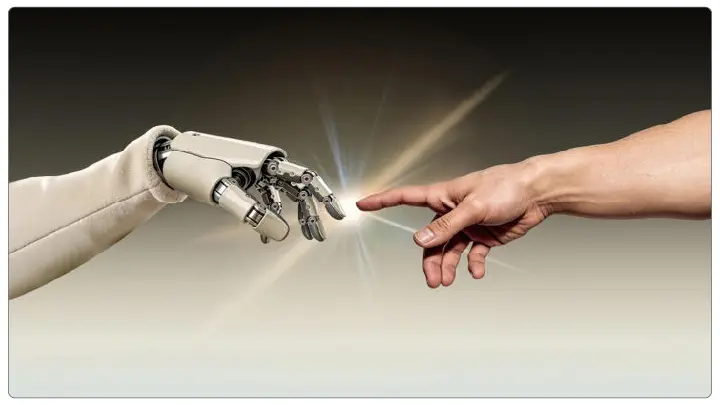
While robots are already active in factories and warehouses, home adoption remains years away. Mass production hasn’t arrived, and costs are still uncertain. For example, 1X’s home-focused NEO robot can be reserved for $20,000, while Tesla CEO Elon Musk estimates his Optimus robot could cost $20,000 to produce once scaled to a million units per year. Even when available, these robots won’t be fully autonomous at first, the NEO will initially be teleoperated by humans as it learns to operate independently.
Investors may not have to wait decades to see returns. Even though the era of fully autonomous robots is still on the horizon, embodied AI is set to become an increasingly important part of investment portfolios. These robots will reinforce existing trends, including growing demand for AI chips, expanded data connectivity, increased power production, and the U.S. manufacturing resurgence. While the industry will take years to mature, it represents a multitrillion-dollar opportunity that could rival cars or smartphones. Morgan Stanley’s Adam Jonas predicts that robotics will help “usher in the third Industrial Revolution,” driving $25 trillion in combined robot revenues by 2050.
Today’s market is dominated by industrial robot giants such as Germany’s Kuka (owned by China’s Midea Group), Switzerland’s ABB (currently selling its robotics business to SoftBank), and Japan’s Fanuc and Yaskawa Electric. These machines, which handle welding, metal cutting, and part assembly, are mostly fixed in place. While they generate strong business, about 500,000 units sold annually, their growth is tied to industrial production and largely limited by the slow-growing automotive sector. In short, these are not the flexible, AI-powered robots set to transform homes, offices, and new industries.
The robots generating excitement today aren’t limited to repetitive tasks; they’re being designed to perform human-like jobs with AI “brains” learning in virtual environments. Boston Dynamics’ Atlas, owned by Hyundai, can see 360 degrees, lift 110 pounds, operate in extreme temperatures, and save customers enough over two years to justify its cost, according to Zachary Jackowski, Atlas GM.
Tesla’s Optimus stands 5'8" and weighs 125 pounds. Evolving from dancing to serving drinks, the upcoming Optimus 3 will autonomously perform simple tasks and learn by observing humans. Tesla is converting Model S and X production lines to robot manufacturing.
Other notable robots include Figure AI’s F.03 (5'8", 135 lbs, 44-lb capacity) aimed at household chores, with home testing planned this year, and Agility’s Digit (5'9", 35-lb capacity), already operating in warehouses for GXO Logistics and Amazon, with an annual production of 10,000 units.