



SES Space and Defense Lab Secures Space Station Communication Deal With Starlab
Published: 29 Jul 2026
Author: Gautam Mahajan



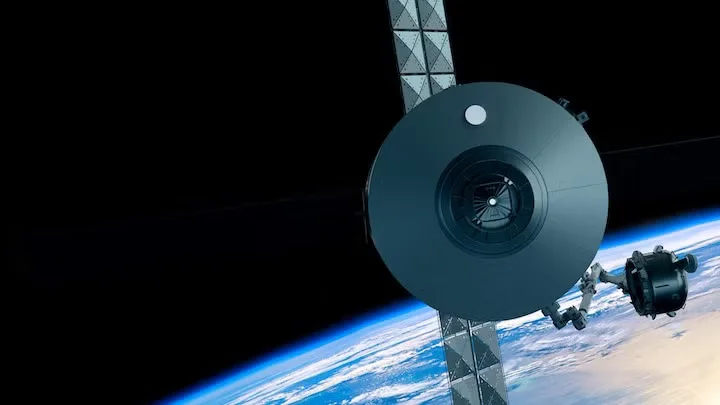
In July 2026, SES Space and Defense announced that it will collaborate with Starlab to develop a communication framework that will have the capability to deliver a consistent, reliable, and low-latency connectivity solution. This system is intended to support the entire lifecycle of Starlab’s commercial space station using its Leo Relay Services (LRS). Starlab is currently working with NASA to develop a commercial space station within NASA’s Commercial Low Earth Orbit Development (CLD) Program.
Starlab chose SES Space and Defense due to the fact that it has a well-integrated multi-orbit space and ground framework. The integrated architecture will enable Starlab’s customers to scale easily due to its additional relay features and advanced terminals. The communication services of SES Space and defense will be available will be accessible at the launch of Starlab. The company plans to scale its services throughout the station’s operation lifecycle.
SES is currently working with Starlab to work on various engineering workflows. Both companies have been working since last year to simulate in-orbit performance and test terminal solutions that work with the relay framework and align with the design strategies that Starlab has.
According to Brad Henderson, the chief commercial officer of Starlab, the chances of mission success in LEO are dependent on the resilience and availability of its communication infrastructure. He said the collaboration with SES Space and Defense has brought many benefits in terms of developing a strong, safe, and extremely reliable communication framework. Such a framework provides excellent connectivity and real-time mission data across all stages of station operations.
Impact on the Information Communication Technology Industry
According to Precedence Research, the collaboration between SES Space and Defense and Starlab is expected to positively impact the information communication technology industry. This is because they are working on pioneering technologies and engineering components to ensure seamless connectivity with the space station throughout its operational lifecycle.
Such communications require advanced transmitters and receivers that can perform precise signal relay operations. This is important because long-distance communications where there are large deviations in environmental conditions need best-quality hardware as well as software components.
Impact on the Telecommunication Market
The global telecommunication market size is estimated at USD 2.46 trillion in 2025 and is predicted to increase from USD 2.61 trillion in 2026 to approximately USD 4.42 trillion by 2035, expanding at a CAGR of 6.03% from 2026 to 2035.
According to Precedence Research, the collaboration between SES Space and Defense and Starlab is expected to benefit the telecommunication market owing to the fact that it is expected to result in the advancement of technology in various components of the satellite communication ecosystem. Both companies are developing advanced hardware that can reliably provide consistent performance over extended periods of time. They are also working on electronics and digital platforms that can properly send and receive data and facilitate real-time monitoring of the space station operations.
Impact on the Space Technology Market
The global space technology market size is estimated at USD 512.08 billion in 2025 and is predicted to increase from USD 551.20 billion in 2026 to approximately USD 1,081.74 billion by 2035, expanding at a CAGR of 7.77% from 2026 to 2035.
According to Precedence Research, the space technology market is expected to be positively impacted by the collaboration between SES Space and Defense and Starlab as it involves the development of next-generation technologies for space communication and monitoring. These technologies are expected to prove helpful for future space missions. Starlab has experience working with NASA, which will result in the implementation of various current advanced space technologies that will contribute to excellent connectivity systems for the space station.
About SES Space and Defense
SES Space and Defense is a prominent satellite network company that provides connectivity to 99 percent of the global human population. The company provides end-to-end satellite network services to government organizations across the world, which includes regions such as the U.S., Europe, and Asia Pacific. SES Space and Defense makes this possible by utilizing a multi-operator network, vendor-based integration and management capability, and a widespread global terrestrial network. This company is a fully-owned subsidiary of SES, which provides content and connectivity solutions across the world and also has access to 120 satellites across GEO and MEO that operate in various orbits.
About Starlab
Starlab is a U.S.-driven global joint venture and a network of partners that are working to ensure continued presence of humans in LEO. The company is also working on a smooth transition of microgravity research from the International Space Station (ISS) into the next-generation commercial space station era. The company has collaborated with various companies such as Airbus, Mitsubishi Corporation, Palantir, Space Applications Services, Northrop Grumman, and Hilton. The company has also significantly invested in microgravity technology that helps to enhance the accuracy of disease research and drug testing, increasing the pace of drug development and improving the production of implants.