



Taiwan Makes a Quantum Breakthrough with Its First Homegrown 20-Qubit Computer
Published: 02 Feb 2026
Author: Precedence Research



Revealing a fully domestic 20-qubit quantum computer, Taiwan has made a significant step toward the future of advanced computing, demonstrating its increasing prowess in cutting-edge scientific research. Developed by researchers at Academia Sinica, this system represents a major upgrade from the country’s earlier 5-qubit prototype and reflects years of focused investment in quantum technologies. With this accomplishment, Taiwan is now one of only a few countries with the ability to develop, produce, and run medium-scale quantum hardware using domestic resources. More significantly, it emphasizes Taiwan's aspiration to become a major participant in next-generation computing and transcend its position as a leader in semiconductor manufacturing.
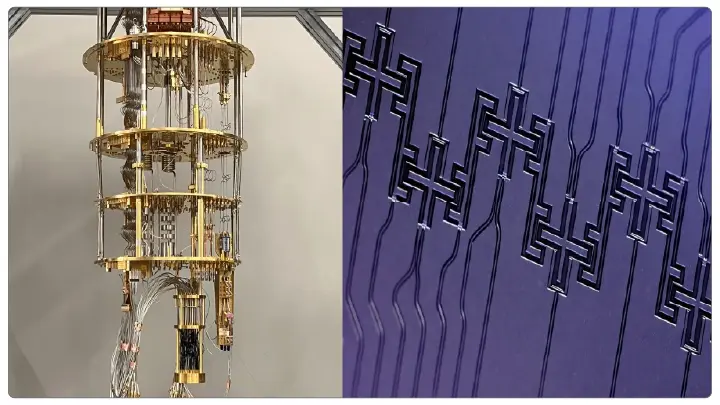
The use of qubits, which can exist in multiple states simultaneously rather than just 0 or 1, distinguishes quantum computers from classical machines in fundamental ways. This allows them to process certain types of problems, such as optimization, simulation, and cryptography, far more efficiently. Taiwanese researchers used their extensive knowledge of semiconductor fabrication to precisely control qubit design and interconnections in the construction of the 20-qubit system. Taiwan's capacity to handle the intricate engineering difficulties involved in scaling quantum systems is demonstrated by the fact that every stage from chip fabrication to system integration was completed locally.
The significant increase in performance and stability of the new quantum computer is among its most striking features. In the 20-qubit machine, the qubit coherence time, the amount of time a qubit can maintain its quantum state, has grown from a few dozen microseconds in previous systems to over 500 microseconds. Longer coherence times enable more intricate calculations to be completed before errors occur, making this improvement essential. The research team achieved this by refining fabrication processes, reducing electromagnetic interference, and precisely tuning qubit frequencies. These developments imply that Taiwan is not only boosting the number of qubits but also tackling the fundamental technical obstacles to real-world quantum computing.
This development has wider strategic ramifications than just the technical milestone. The new quantum computer will be made available to universities and research institutions, enabling scientists to experiment with quantum algorithms, materials modeling, and hybrid quantum-classical applications. Additionally, Academia Sinica intends to use the platform as a center for international cooperation, bringing in specialists from around the world to test and create new concepts for the system. As quantum computing moves closer to real-world use, Taiwan’s 20-qubit breakthrough positions the country to contribute meaningfully to future innovations, strengthening both its research ecosystem and its role in the global technology landscape.