



Wistar Scientists Develop Single-Dose DNA Method for Delivering Long-acting Weight Loss and Diabetes Drugs
Published: 14 Jul 2026
Author: Towards Healthcare



Scientists at The Wistar Institute present that a single injection of a small, circular piece of genetic instructions produces weight loss and controls blood glucose in murine models, which lasts up to 10 times, providing incretin-mimicking therapeutics such as Ozempic and Wegovy. If proven to be successful in medical trials, this novel process of delivery might eradicate the need for repeated dosing, which presently limits patient access and adherence to these therapies.
Incretin Mimics Offer Strong Results but Demand Lifelong Compliance
Incretin hormones such as GLP-1 and GIP, which are naturally produced in the body, control blood sugar and appetite. Medications that reduce them have been confirmed to be tremendously effective for managing type 2 diabetes and obesity. Though their original forms break down rapidly in the body, recent therapies need weekly injections or daily pill schedules that demand continued patient compliance and result in a rebound in weight gain and blood glucose dysregulation when treatment is discontinued by the patient.
“What we’re trying to do here is simple: We want to deliver a drug once and have it work for a really long time,” said Ebony Gary, Ph.D., a research assistant professor in the laboratory of David B. Weiner at The Wistar Institute’s Vaccine and Immunotherapy Center and first author of the research.
The DNA solution has established that it can do that. Without providing an appropriate drug that will get cleared by the body, the treatment gives cells the orders to make that drug on their own, and they keep making it.
The company’s team’s strategy to build on Weiner Lab research, already authorized in human patients, showed that the human body functions as an “industry” to produce long-lasting antibodies. The laboratory developed an intramuscular DNA electroporation platform, whereby patients receive a shot of plasmid DNA followed by an electrical pulse to support getting the orders into the nucleus of the body’s cells, where they are read. Weiner and his colleagues used this process to deliver “commands” for COVID-19-neutralizing antibodies to patients. In a phase 1 clinical trial, two of the antibodies were administered to human subjects for more than 72 weeks.
DNA Approach Delivers Long-Lasting Weight Loss Without Weekly Injections
Adoption of this platform for metabolic disease, Gary and her team engineered DNA order for long-acting incretin hormones GLP-1 and GIP, which they call pLincretins. Significantly, they involve an antibody fragment in the instructions, which would support preventing the protein from breaking down rapidly in the body, the way present incretin-mimicking drugs do. When tested in preclinical murine representations of diabetes application of the electroporation processes, a single dose of pLincretins produced identifiable levels of incretins for up to 70 days and drove continued reductions in body weight and glucose in the blood. In a head-to-head comparison with semaglutide, murine models managed with a single dose of the researchers' DNA construct maintained these metabolic enhancements even after the observation time ended, while those managed with semaglutide began to lose weight as soon as treatment stopped.
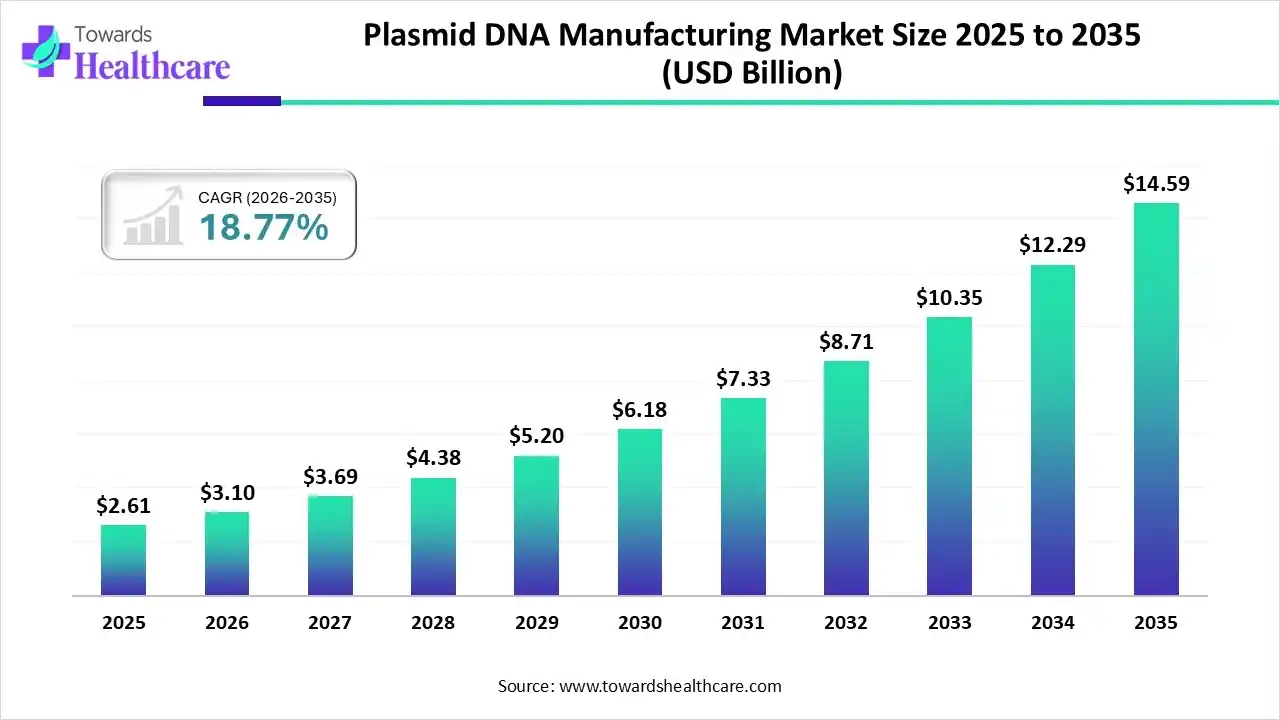
According to Towards Healthcare, the Plasmid DNA Manufacturing Market is projected to experience significant growth, with estimates suggesting the market size will increase from USD 3.10 billion in 2026 to approximately USD 14.59 billion by 2035, representing a compound annual growth rate (CAGR) of 18.77% from 2026 to 2035. Plasmids provide significant benefits, making them appropriate for extensive application in biotechnology and genetic engineering. This plasmid is used as a vector for recombinant protein production and gene therapy. It supports the production of therapeutic proteins applied to manage diseases like tumors and autoimmune disorders. Plasmid DNA is required for genetic engineering because of its role in molecular cloning and the manufacturing of bioengineered products, like therapeutic proteins. Plasmid engineering includes designing, constructing, and modifying plasmid DNA to transmit and express a particular gene of interest in a native organism.
The researchers used AI-based structural modeling and a strategy called synthetic consensus intended to create a novel molecule known as pSynCretin. The team intended it by identifying the structural elements common across GLP-1, GIP, and existing incretin drugs and then combining those elements into a single protein that could engage the GLP-1 and GIP receptors concurrently. A single dose of pSynCretin induced sustained weight loss in murine models.
Gary and team in the Weiner Lab are recently pursuing research on the immunological properties of incretin therapy, involving its potential role in adapting tumour results. Healthcare data shown which patients on incretin therapy experience an enhancement in chronic inflammatory diseases such as psoriasis and arthritis. This creates new questions related to the relationship between metabolism and immune function, which Gary believes the DNA platform can tackle to answer.
About Wistar Institute
The Wistar Institute is the nation’s primary independent nonprofit organization devoted wholly to foundational biopharmaceutical and research. Since 1972, the Institute has held a National Cancer Institute (NCI)-designated Cancer Center position. Through a culture and commitment to pharmaceutical partnership and novelty, Wistar science leads to breakthrough early-stage discoveries and life science area start-ups. Wistar researchers are committed to resolving some of the world's most stimulating problems in the sectors of cancer and immunology, progressing human health via early-stage discovery and training the next generation of pharmaceutical scientists. wistar.org
A recent report by Towards Healthcare highlights that the plasmid DNA manufacturing market is witnessing growth because, as compared to the use of viruses, plasmids are a significant substitute as they have less risk of oncogenesis and immunogenicity. They are also extra stable and simple to produce in massive quantities. The capability of plasmid DNA to trigger the immune system is perfect for vaccine advancement. When sensing the entry of foreign genetic material, the body activates cellular immunity, and in some cases, humoral response (antibodies) can also be stimulated.