


Nitrile Gloves Market Size, Size, Key Companies, Company Market Share, Production Capacity, Healthcare Infrastructure Growth, Product Utilization, Regulatory Compliance, Sales Analysis, and Investment Trends
Deepa Pandey, a healthcare industry expert, highlights that the nitrile gloves market has reached USD 26.61 billion in 2026 and is on track to reach USD 50.21 billion by 2035, advancing at a CAGR of 7.32%. Key nitrile gloves market companies shaping the market include Kossan Rubber Industries Berhad, Supermax Corporation Berhad, Sri Trang Gloves, while major growth segments span by product type, by powder status, by sterility, by thickness, by application, by end user, by distribution channel and region.
Source: https://www.precedenceresearch.com/nitrile-gloves-market
 Get a Sample
 Table Of Content


What is the Nitrile Gloves Market Size?
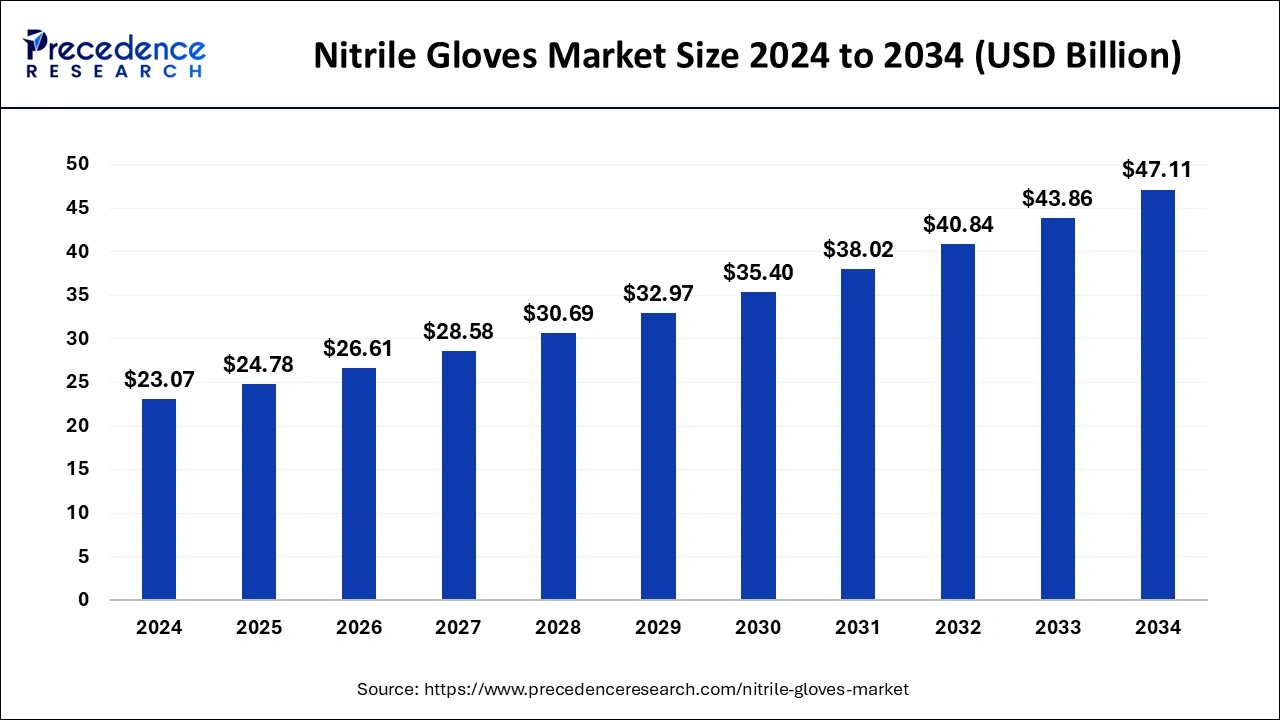
The global nitrile gloves market size is calculated at USD 24.78 billion in 2025 and is predicted to increase from USD 26.61 billion in 2026 to approximately USD 50.21 billion by 2035, expanding at a CAGR of 7.32% from 2026 to 2035. The nitrile gloves market is driven by rising demand for protective gloves and infection control gloves.
Market Highlights
- By Region, North America dominated the global nitrile gloves market share in 2025.
- By Region, Asia-Pacific is anticipated to grow at the fastest rate in the market during the forecast period.
- By type, the powder-free segment held a dominant presence in the market in 2025 and is expected to be the fastest-growing segment during the forecast period.
- By type, the powdered segment is predicted to witness significant growth in the market over the forecast period.
- By product, the disposable segment held the largest share of the nitrile gloves market in 2025 and is anticipated to grow at the fastest CAGR during the forecast period.
- By product, the durable segment is anticipated to grow at a notable rate in the market over the coming years.
- By end-use, the medical & healthcare segment led the global market in 2025.
- By end-use, the pharmaceutical segment is expected to show lucrative growth in the market during the studied years.
Overview - Nitrile Gloves Are Transitioning From Pandemic-Driven Scarcity Toward Scale, Cost Optimization and Product Specialization
The global nitrile gloves market has entered a structurally different phase following the exceptional demand and capacity expansion witnessed during the COVID-19 period. The market is estimated at approximately USD 24.78 billion in 2025, with growth expected to continue at around 7.32% CAGR through 2035. Disposable gloves remain the dominant product category, while medical and healthcare applications continue to represent the largest demand pool. Powder-free products have also become the prevailing standard across healthcare and many industrial applications.
The key market transition is from supply scarcity toward capacity utilization, manufacturing efficiency, pricing discipline and application specialization. Pandemic-era investments created significant production capacity, particularly across Asia, while subsequent normalization resulted in inventory corrections, lower selling prices and pressure on producer margins. The competitive environment is therefore increasingly determined by production economics, automation, product quality, yield, customer relationships and the ability to operate efficiently across market cycles.
Our analysis examines the market not only through revenue growth but also through production capacity, utilization, pieces sold, ASP trends, raw-material economics, trade flows, application mix and manufacturer profitability. The report also evaluates the shift from commodity examination gloves toward specialty nitrile products designed for pharmaceutical, cleanroom, chemical, electronics, food-processing and other higher-value applications.
Market Size & Forecast - What Will Determine Nitrile Glove Market Growth Through 2035?
The global nitrile gloves market is estimated at approximately USD 24.78 billion in 2025 and is expected to expand at around 7.32% CAGR, implying a market opportunity of approximately USD 35.40 billion by 2030 if the growth trajectory is sustained. Longer-term expansion through 2035 will depend on healthcare utilization, industrial penetration, replacement cycles, emerging-market adoption, product specialization and the normalization of excess manufacturing capacity.
Market growth will not be uniform across product categories. Traditional examination gloves will remain the largest volume pool, but higher-value segments such as chemical-resistant, cleanroom, pharmaceutical, chemotherapy, accelerator-free and heavy-duty nitrile gloves are expected to gain strategic importance. The report therefore evaluates market growth using both revenue and volume perspectives, identifying where price, mix and consumption are driving expansion.
Market Segmentation
Which Product and Application Segments Are Creating the Largest Revenue Pools?
Disposable nitrile gloves account for the majority of market demand, with healthcare remaining the principal application category. Powder-free gloves have gained broad acceptance because of their compatibility with medical procedures, reduced contamination concerns and increasing regulatory preference.
The market is segmented by product type, powder status, sterility, thickness, application, end user, distribution channel and geography. Healthcare, pharmaceutical and laboratory applications represent established demand pools, while food processing, chemicals, electronics, semiconductor manufacturing, automotive and industrial applications provide additional growth opportunities.
The report evaluates segment attractiveness based on market size, growth rate, ASP, volume demand, regulatory requirements, customer concentration, switching barriers and profitability potential rather than relying solely on historical revenue share.
How is the Shift From Pandemic-Era Oversupply Toward Demand Normalization Reshaping Nitrile Glove Industry Economics?
Pandemic-era capacity expansion materially increased global nitrile glove supply, while the subsequent normalization of healthcare demand created excess capacity, inventory pressure and significant ASP compression. As the market moves toward a more balanced demand environment, the key economic variable is increasingly utilization of economically viable capacity rather than installed capacity alone. Producers with automated lines, higher yields, competitive production costs and diversified customer exposure are better positioned to absorb pricing volatility than manufacturers operating older or higher-cost facilities.
The normalization phase is likely to create a clearer separation between cost-efficient scale manufacturers and structurally disadvantaged capacity. Healthcare demand provides a relatively resilient consumption base, while pharmaceutical, laboratory, food processing and industrial applications broaden the demand pool and reduce reliance on medical procurement cycles. Capacity rationalization, production efficiency and application diversification are therefore increasingly important determinants of margins, particularly while commodity examination gloves remain exposed to intense price competition.
The most significant implication is that future competitive advantage will depend less on nominal production capacity and more on capacity utilization, yield, automation, product mix and customer diversification. Manufacturers able to align production with normalized demand and shift toward higher-value applications may be better positioned to protect economics, while excess or high-cost capacity could face suspension, consolidation or repurposing.
Demand growth, production capacity, utilization, inventory conditions, ASP movements, manufacturing economics and customer and application mix together explain how quickly the market can rebalance. Where inventories are cleared and utilization recovers, pricing stabilizes; where excess capacity persists, ASP pressure is likely to continue, which is why these indicators should be read together rather than in isolation.
Which Pricing and Cost Factors Will Determine Nitrile Glove Profitability?
Nitrile glove pricing varies materially by thickness, sterility, application, certification, packaging and performance specifications, with ASPs typically assessed on a USD-per-1,000-piece basis. Commodity examination gloves remain highly price-sensitive, making raw-material consumption, production yield, energy, labor and capacity utilization critical to unit economics. Specialty products can support higher ASPs where buyers require chemical resistance, cleanroom compatibility, pharmaceutical-grade specifications, extended cuffs, enhanced tactile performance or low-particulate characteristics.
Price alone is becoming a less complete measure of competitive performance. In commodity segments, even modest differences in latex consumption, defect rates, energy intensity or line utilization can materially affect producer margins, because products are relatively standardized and buyers are highly price-sensitive. Specialty products, by contrast, offer greater scope for value-based pricing, so product mix can become an important lever for offsetting ASP pressure in mainstream examination gloves.
The strategic implication is a widening economic distinction between high-volume, cost-efficient manufacturing and technically differentiated products. Producers that combine strong yields and utilization with specialty-product capabilities have greater flexibility to defend margins across pricing cycles.
Raw-material and conversion costs deserve particular attention. Nitrile latex is the dominant input, so price swings in latex flow quickly into margins, while energy for curing and drying, labor for inspection and packaging, and logistics to distant consumption markets add further layers. Gross-margin potential therefore differs sharply across product categories: standard examination gloves sit at the thin end of the range, whereas chemotherapy-rated, cleanroom and pharmaceutical products can carry meaningful premiums.
Is Supply Moving From Pandemic-Era Surplus Toward a More Disciplined Production Base?
The global supply base remains concentrated in Malaysia, Thailand and China, with leading manufacturers capable of producing tens of billions of gloves annually. Installed capacity remains substantial: INTCO Medical reported approximately 103 billion annualized disposable non-latex glove capacity at year-end 2025, including around 70 billion nitrile capacity, while Top Glove maintained approximately 95 billion pieces of total glove capacity. Sri Trang Gloves reported approximately 37.1 billion pieces of glove sales in 2025, highlighting the scale of actual throughput relative to nominal industry capacity.
The critical supply-side variable is shifting from installed capacity to economically active capacity. The gap between nominal capacity and actual production can materially influence ASPs, inventory levels and profitability, particularly after the significant capacity additions made during the pandemic. With large installed bases coexisting with normalized demand, utilization, production-line economics and the pace at which dormant or high-cost facilities return to operation will matter more than headline capacity additions.
Manufacturing scale and customer access jointly determine how well producers navigate price cycles. High-volume facilities spread fixed costs across larger output, strengthen raw-material procurement leverage and improve the economics of automation. However, installed capacity alone can overstate competitive strength, because active, utilized and economically viable capacity is more relevant to market supply and profitability. Producers with efficient plants, high utilization, scalable automation and geographically diversified footprints are better positioned to manage ASP pressure, while dormant or structurally higher-cost capacity may remain uncompetitive unless conditions improve. Conversely, reactivation of substantial dormant capacity could prolong supply pressure if demand does not expand at a comparable pace.
Customer and distribution access adds a second layer of differentiation. Gloves reach customers through direct contracts, healthcare distributors, industrial distributors, wholesalers, private-label relationships, retail and e-commerce. Large healthcare buyers typically emphasize supply continuity, certification and standardized specifications, whereas smaller industrial customers may weigh availability, convenience, performance and application fit more heavily. Scale advantages are therefore reinforced or weakened by distribution reach and customer requirements.
Plant age and automation level are practical indicators of which capacity can be operated competitively. Older, labor-intensive lines tend to carry higher defect rates and energy intensity, making them the first candidates for suspension or repurposing, whereas modern high-speed automated lines can be restarted selectively when demand and pricing justify it.
Where Are the Most Important Cost, Technology and Margin Pools Across the Value Chain?
The value chain extends from nitrile latex and chemical inputs through compounding, former preparation, dipping, leaching, curing, surface treatment, inspection, packaging and distribution. The largest manufacturing economics are concentrated within the production process itself, where latex formulation, dipping-line speed, glove thickness, defect rates, yield, energy consumption and automation directly influence cost per glove. Downstream activities such as certification, specialized product design, private labeling and distribution add further differentiation beyond basic manufacturing.
Competitive advantage increasingly depends on how efficiently manufacturers convert raw materials into consistent, specification-compliant gloves, rather than simply securing inputs. Improvements in yield, chemical utilization, automation and line productivity reduce unit costs, while specialized formulations and certification support higher-value applications. This creates distinct margin pools across commodity manufacturing, specialized production and downstream customer relationships.
Vertical integration, supply security and process control can become important sources of resilience and margin protection. Manufacturers exposed to concentrated suppliers or volatile input costs face greater earnings sensitivity, while those with stronger control over production, sourcing and distribution can capture more value across the chain.
Supplier concentration and equipment dependence are potential bottlenecks. Reliance on a narrow set of latex or chemical suppliers, and on specialized dipping-line equipment, can limit flexibility, so integration opportunities, from latex sourcing to packaging and distribution, are an important lever for both cost control and supply reliability.
How Are Trade Policies and Sourcing Diversification Reshaping Global Trade Flows?
International trade remains fundamental because manufacturing capacity is concentrated in Asia, while major consumption centers include North America and Europe. This imbalance makes cross-border trade, freight costs and market-access policies important components of delivered glove economics. Sourcing decisions are increasingly influenced by more than unit price, with tariffs, country-of-origin requirements, healthcare procurement policies, geopolitical considerations and supply-continuity objectives affecting the relative competitiveness of producing countries.
The shift in U.S. sourcing away from China illustrates how trade-policy changes can alter supplier positioning and purchasing patterns even when manufacturing cost remains a major consideration. Procurement organizations are increasingly balancing landed cost against supply security and geographic diversification, creating opportunities for alternative Asian production centers and potentially supporting greater regional sourcing over time. The extent of this shift will depend on tariff differentials, production economics, logistics costs and the ability of alternative suppliers to provide sufficient quality and scale.
Trade flows are becoming an extension of competitive strategy rather than simply a distribution outcome. Manufacturers with geographically diversified production and established export networks can reduce exposure to individual-country restrictions, while buyers may increasingly maintain multiple sourcing locations to manage supply risk.
Country-level manufacturing footprints, freight costs and tariff exposure should be assessed together. A producer with plants in several countries can shift volume between origins as tariff differentials change, while a single-country exporter has less room to adapt, which is why changing trade corridors can quickly alter the competitive positioning of whole manufacturing regions.
Which Manufacturing and Product Technologies Will Most Improve Performance and Economics?
Technology development is centered on automation, higher line productivity, thin-film engineering, material formulation, defect reduction and application-specific performance. Manufacturers are developing thinner gloves that retain strength and barrier protection, while specialized formulations target chemical resistance, pharmaceutical handling, cleanroom environments and improved tactile sensitivity. At the manufacturing level, automation and process controls improve consistency, reduce labor dependence and increase yield.
The most commercially relevant technologies are those that simultaneously improve product performance and unit economics. Thin-film engineering can reduce material consumption when strength and barrier requirements are maintained, while higher automation and process control improve yield and reduce variability. Innovations that lower material or labor intensity while supporting higher-value specifications have greater economic impact than technologies that improve performance without a corresponding pricing or cost advantage.
The strategic implication is a gradual shift from commodity manufacturing toward technology-enabled differentiation. Manufacturers that combine high-throughput production with specialized formulations, accelerator-free materials, specialized surface treatments and consistent quality are better positioned to defend margins as competition remains intense in standard examination gloves. Technologies can be benchmarked on thickness, tensile strength, elongation, defect rates, yield, line speed, energy consumption and certification across healthcare, pharmaceutical, cleanroom, chemical and industrial uses.
Thinner gloves illustrate the trade-off. Lower material consumption cuts cost per glove, but only if tensile strength, elongation and defect rates remain within specification, so the real test of any technology is its effect on yield and line speed rather than on a single performance metric.
How Are Regulatory and Sustainability Standards Raising Requirements for Market Access?
Healthcare nitrile gloves are subject to medical-device requirements, performance standards and manufacturing quality controls covering barrier protection, sterility, labeling, biocompatibility, chemical resistance and quality consistency. These requirements do more than establish compliance thresholds: they influence product design, manufacturing processes, qualification timelines and customer acceptance, creating higher entry barriers in regulated healthcare and specialized applications.
Regulatory compliance is becoming increasingly intertwined with product differentiation and procurement decisions. At the same time, sustainability considerations are expanding beyond corporate reporting as manufacturers face greater scrutiny of water consumption, energy use, wastewater, emissions and polymer and packaging waste. Improvements in resource efficiency can affect both environmental performance and production economics.
Manufacturers will increasingly need to optimize compliance, product performance and environmental efficiency simultaneously. Producers that meet stringent quality requirements while reducing resource intensity may gain greater access to institutional, healthcare, pharmaceutical and other specification-sensitive customers.
Requirements differ across major markets, so a product qualified for one region may need reformulation, additional testing, revised packaging or new certification elsewhere. This raises the cost and lead time of entering new geographies and favors manufacturers with established compliance systems and quality records.
Which Customer Segments and Applications Are Creating the Next Layer of Demand Beyond Healthcare?
Healthcare remains the core demand base across smart hospitals, clinics, laboratories, diagnostic centers and pharmaceutical operations, but the addressable customer pool is diversifying. Pharmaceutical manufacturing, biotechnology, food processing, chemical handling, semiconductor manufacturing, electronics assembly, automotive production, janitorial services and general manufacturing are expanding the environments in which nitrile gloves are preferred for their chemical resistance, puncture resistance and latex-free characteristics.
This diversification matters because industrial customers reduce manufacturers' dependence on healthcare procurement cycles and create demand for application-specific products. Purchasing priorities differ materially: healthcare buyers emphasize compliance, consistency, availability and cost, while chemical, semiconductor and pharmaceutical customers place greater emphasis on material performance, contamination control, certification and durability. Medical examination gloves are driven mainly by price, availability, quality and procurement scale; pharmaceutical and cleanroom customers prioritize contamination control and manufacturing consistency; chemical and industrial users prioritize chemical resistance, puncture resistance and ergonomics; and food processors emphasize food-contact compliance and comfort.
Customer segmentation is therefore becoming central to product and pricing strategy. Manufacturers that understand application-specific requirements can tailor thickness, formulation, cuff design, surface treatment, packaging and certification to capture specialized demand rather than competing solely on commodity pricing.
Distribution channel and price sensitivity also vary by customer type. Large hospital systems and pharmaceutical firms often buy under contract with strict specifications, while smaller industrial users buy through distributors, wholesalers or e-commerce and respond more to availability and convenience.
How is Competition Splitting Between Commodity Scale and Specialized Capability?
Competition is highly fragmented across large-scale Asian manufacturers, global safety-equipment companies, regional producers and specialized distributors. Large manufacturers compete primarily on capacity, cost, yield, automation, procurement scale and global distribution. Specialty producers compete through technical performance, application knowledge, certification, customization and customer relationships. The landscape is increasingly divided between high-volume commodity manufacturing and higher-margin, application-specific products.
Leading company universe: Top Glove Corporation Bhd; Hartalega Holdings Berhad; Kossan Rubber Industries Berhad; Supermax Corporation Berhad; Sri Trang Gloves (Thailand) PCL; INTCO Medical Technology Co., Ltd.; Ansell Limited; Riverstone Holdings Limited; YTY Industry Holdings Berhad; UG Healthcare Corporation Limited; Careplus Group Berhad; Comfort Gloves Berhad; Rubberex Corporation (M) Berhad; Medicom; Cardinal Health; Medline Industries; AMMEX Corporation; MCR Safety; Unigloves; Globus (Shetland) Ltd.; Superior Glove; SHOWA Group; Sempermed / Semperit; Blue Sail Medical; Zhonghong Pulin Medical Products.

Market-share analysis requires separating nitrile-specific revenue and volume from total corporate revenue, particularly for diversified healthcare and safety-equipment companies. Competitive position is best assessed through nitrile-specific sales, capacity, estimated volume, utilization, geographic exposure and product mix, alongside Top 5 and Top 10 concentration across global and regional markets.
Scale remains a significant advantage in mainstream medical gloves, but it does not automatically translate into superior profitability. INTCO Medical, for example, reported approximately RMB 9.93 billion in revenue in 2025, RMB 1.01 billion in net profit and a 24.12% gross margin, with production yield exceeding 99%. These figures illustrate how yield and operating efficiency influence the value generated from large-scale capacity.
Competitive positioning is multidimensional. Large manufacturers benefit from procurement leverage and cost efficiency; technology-oriented companies differentiate through advanced formulations, automation and performance; application-focused manufacturers build stronger positions in pharmaceutical, cleanroom, chemical and other specification-intensive markets. Regional strength matters too: companies with established distribution networks benefit from customer proximity and local knowledge, while emerging challengers pursue growth through competitive pricing, specialized products, new segments or geographic expansion. These models coexist, so strength cannot be captured by a single revenue ranking. The most relevant distinction is how effectively each company converts its capabilities into sustainable customer and economic advantages.
Product portfolios span examination, surgical, industrial, chemical-resistant, chemotherapy, cleanroom, pharmaceutical, food-grade, heavy-duty, thin-film, accelerator-free, extended-cuff, textured, low-particulate and specialty laboratory gloves. Differentiation rises with the technical performance, certification and application-specific manufacturing required. Technology capability is the bridge between differentiation and manufacturing economics: lower-cost production in high-volume categories and technical differentiation in higher-value applications are complementary advantages, but their value depends on whether they improve customer-relevant performance enough to support stronger pricing, retention or access to specification-sensitive markets.
Leading producers can be grouped into scale-led, cost-led, specialty-led and distribution-led positions. Scale-led players such as the large Malaysian, Thai and Chinese manufacturers rely on volume and procurement strength; specialty and safety-focused companies rely on application knowledge and certification; and global healthcare distributors rely on channel reach and private-label relationships. Benchmarking each on nitrile revenue, volume, capacity, utilization, ASP, gross margin, yield, geographic footprint, product mix and customer diversification gives a more reliable picture than any single ranking.
Which Production Regions Will Remain Strategically Important as Manufacturing Diversifies?
Malaysia, Thailand and China remain the core production hubs, supported by established rubber processing ecosystems, skilled labor, developed infrastructure and strong export capabilities. Their accumulated scale and supplier networks provide advantages in raw-material sourcing, process expertise, efficiency and access to global customers, while Vietnam and other Southeast Asian locations are gaining relevance as manufacturers and buyers pursue diversification and supply-chain resilience.
Regional competitiveness will increasingly depend on total manufacturing economics rather than labor cost alone. Capacity, raw-material access, labor availability, energy and operating costs, logistics, trade policy, domestic demand and regulatory requirements will determine which locations sustain competitive production. North America and Europe remain important consumption markets, but their higher manufacturing costs make them more relevant as demand centers, specialized production locations or strategic supply-chain nodes than as primary bases for large-scale commodity production.
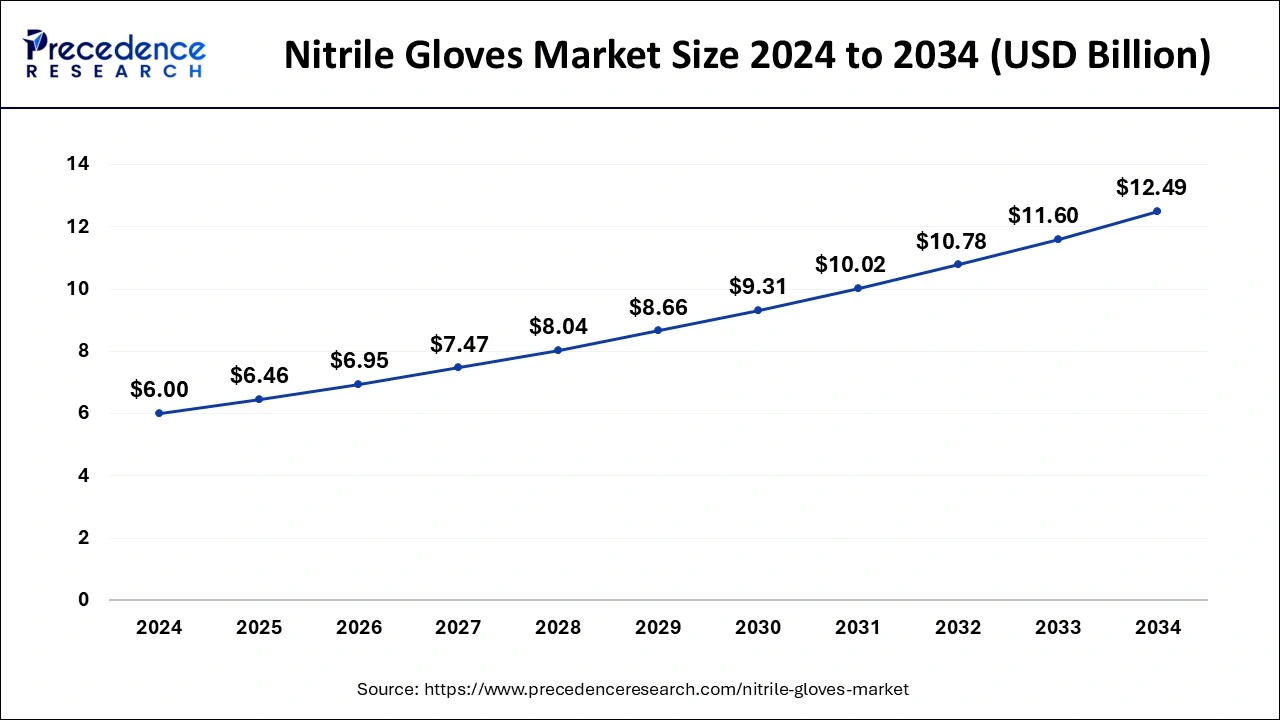
What is the U.S. Nitrile Gloves Market Size?
The U.S. nitrile gloves market size is exhibited at USD 6.88 billion in 2025 and is projected to be worth around USD 14.22 billion by 2035, growing at a CAGR of 7.53% from 2026 to 2035.
Vietnam and other emerging locations are not yet at the scale of the core hubs, but they can offer lower-cost capacity, proximity to alternative export routes and relief from concentrated country risk. Over time, capacity allocation is likely to reflect a balance between the proven efficiency of the established hubs and buyers' wish for diversified supply.
Some opportunities offer mainly volume expansion, such as growth in emerging healthcare markets, while others, such as accelerator-free or semiconductor-grade gloves, mainly support pricing power and longer-term customer relationships. Distinguishing between the two is essential when prioritizing investment.
Which Strategic Investments and M&A Capabilities Will Shape the Next Phase of Growth?
Manufacturers are shifting from indiscriminate capacity expansion toward capacity optimization, automation, product specialization and cost reduction. Strategic investment is becoming more selective, prioritizing efficient assets, higher utilization and stronger economics rather than nominal capacity. Portfolio upgrading is an important route to growth as commodity healthcare gloves face price pressure: manufacturers are investing in automation, selectively reactivating efficient lines and developing specialty products for pharmaceutical, cleanroom, chemical and industrial applications.
Geographic diversification is also gaining importance. New manufacturing locations, partnerships and expansion can provide access to lower-cost production bases, regional customers and alternative export routes, while restructuring increasingly aligns footprints and portfolios with actual demand rather than maintaining underutilized capacity.
M&A is likely to center on capabilities that extend manufacturers beyond scale: specialty products, geographic access, distribution reach, manufacturing efficiency and vertical integration. Potential targets include specialty glove manufacturers, industrial safety distributors, medical-product companies, advanced-material suppliers and regional manufacturers with established customer relationships. The strategic value of a transaction will depend on the capability acquired, such as application expertise, distribution access, manufacturing technology or supply-chain control, rather than capacity addition alone.
Recent developments across the sector include capacity additions, plant reactivations, automation and technology investments, product launches, partnerships and restructuring. Each should be judged by its strategic rationale, target application, manufacturing implications and likely effect on competitive position, since capability-led moves generally create more durable advantage than volume-led ones.
Which Product and Market White Spaces Could Create the Next Growth Pools?
The next layer of opportunity lies beyond standardized commodity examination gloves, where intense price competition limits differentiation. Specialty industrial gloves, semiconductor and cleanroom applications, pharmaceutical manufacturing, accelerator-free products, high-performance thin gloves, extended-cuff designs and environmentally optimized manufacturing offer routes to higher-value demand.
The strongest white spaces are those where technical requirements create meaningful barriers to entry while customers emphasize performance, consistency, certification and supply reliability. Pharmaceutical, cleanroom and semiconductor applications require tighter contamination control and specification compliance, while chemical and industrial applications emphasize durability, protection and specialized material performance.
Geographic expansion provides a parallel opportunity. Emerging markets with expanding healthcare infrastructure, pharmaceutical manufacturing, food processing and industrial activity can support incremental consumption, although addressable demand will vary with healthcare expenditure, industrialization, procurement structures, local production and regulation. Each opportunity should be weighed on growth, pricing potential, technical barriers, competitive intensity, customer requirements and investment intensity, distinguishing volume expansion from differentiation and higher-value applications.
Some opportunities offer mainly volume expansion, such as growth in emerging healthcare markets, while others, such as accelerator-free or semiconductor-grade gloves, mainly support pricing power and longer-term customer relationships. Distinguishing between the two is essential when prioritizing investment.
Is the Market Moving Toward More Efficient, Specialized and Diversified Growth Through 2035?
Through 2030–2035, the market is expected to transition from pandemic-era capacity expansion toward a more disciplined growth model centered on utilization, manufacturing efficiency, product specialization and customer diversification. The key shift is from maximizing installed capacity to improving the economics of active production through higher utilization, better yields, automation, cost control and alignment of capacity with sustainable demand.
Medical examination gloves are expected to remain the largest volume opportunity, but value creation will diversify across pharmaceutical manufacturing, cleanroom and semiconductor applications, chemical handling, food processing and other specialty segments, where customers value performance, contamination control, certification and durability over price alone.
Three scenarios frame the outlook. The base scenario assumes normalized healthcare demand, gradual industrial growth and continued capacity rationalization. The upside scenario reflects stronger healthcare expenditure, faster industrial adoption, greater specialty penetration and improved utilization. The downside scenario assumes prolonged oversupply, sustained ASP pressure, slower healthcare consumption and delayed rationalization.
Long-term competitive positioning will depend less on installed capacity and more on cost per glove, utilization, yield, automation, product mix, customer relationships and geographic diversification. Manufacturers that combine scale and efficiency with differentiated products and diversified customer exposure can participate across both high-volume commodity demand and higher-value specialty applications. Sustained discipline on capacity, cost and product mix will be the clearest marker of which manufacturers thrive through 2035.
Recent Developments
- In March 2026, the proof-of-concept research by the chemist at Aarhus University, published in Chem, highlighted that converting nitrile rubber into solid amine-related carbon supports the use of carbon dioxide in flue-gas scenarios. This research by the academic is useful for medical and laboratory applications, confirming advancement in the market. (Source: https://www.labmanager.com)
- In April 2026, the former health minister Dr Harsh Vardhan, during his visit to Wadi Surgicals' nitrile glove facility in AMTZ, mentioned the commendable medical technology and the infrastructure's active involvement in contributing to the market. As per his review, this advanced ecosystem is suitable for the regional healthcare needs. (Source: https://www.indianpharmapost.com)
- In January 2025, Kim Gloves Co., Ltd. revealed the new rubber glove innovations to satisfy the different levels of requirements from its international customers from various industries, ranging from healthcare to industrial & consumer goods. The innovations will include gloves for protection and comfort in a medical environment, and PPE gloves.
- In May 2025, Enliva declares the start of accelerator-free nitrile gloves for the few safety of healthcare workers. (Source: biospectrumindia.com)
Nitrile Gloves Market Segments Covered in the Report
By Product Type
- Disposable Nitrile Gloves
- Durable/Reusable Nitrile Gloves
- Examination Gloves
- Surgical Gloves
- Specialty Nitrile Gloves
By Powder Status
- Powder-Free
- Powdered
By Sterility
- Sterile
- Non-Sterile
By Thickness
- Thin
- Standard
- Heavy-Duty
By Application
- Medical & Healthcare
- Pharmaceutical
- Laboratory & Research
- Food Processing
- Chemical Handling
- Cleanroom & Semiconductor
- Automotive & Manufacturing
- Janitorial & Cleaning
- Other Industrial Applications
By End User
- Hospitals & Clinics
- Diagnostic & Research Laboratories
- Pharmaceutical Manufacturers
- Food & Beverage Companies
- Industrial Manufacturers
- Chemical Companies
- Electronics & Semiconductor Manufacturers
- Government & Institutional Buyers
- Commercial & Household Users
By Distribution Channel
- Direct Sales
- Medical & Industrial Distributors
- Wholesale
- Retail
- E-commerce
By Geography
- North America
- Europe
- Asia Pacific
- Latin America
- Middle East & Africa
By Country
- U.S.
- Canada
- Germany
- UK
- France
- Italy
- Spain
- China
- Japan
- India
- South Korea
- Malaysia
- Thailand
- Vietnam
- Australia
- Brazil
- Mexico
- GCC Countries
- South Africa
- Rest of World
For inquiries regarding discounts, bulk purchases, or customization requests, please contact us at sales@precedenceresearch.com
Frequently Asked Questions
Tags





Ask For Sample
No cookie-cutter, only authentic analysis – take the 1st step to become a Precedence Research client
 Get a Sample
.webp)



 sales@precedenceresearch.com
 Schedule a Meeting