



Nocturia Market Size, Key Companies, Company Market Share, Patient Volume, Treatment Adoption Rates, Pricing Analysis, Regulatory Landscape, Competitive Positioning, and Demand Forecast
Nocturia Market (By Drug Type: Desmopressin, Antispasmodic, Anticholinergic Drugs, Antibiotics, Others; By Indication Type: Low Nocturnal Bladder Capacity, Mixed Nocturia, Nocturnal Polyuria; By Distribution Channel: Hospital Pharmacies, Online Pharmacies, Retail Pharmacies) - Global Industry Analysis, Size, Trends, Leading Companies, Regional Outlook, and Forecast 2026 to 2035
Source: https://www.precedenceresearch.com/nocturia-market
 Get a Sample
 Table Of Content


What is the Nocturia Market Size?
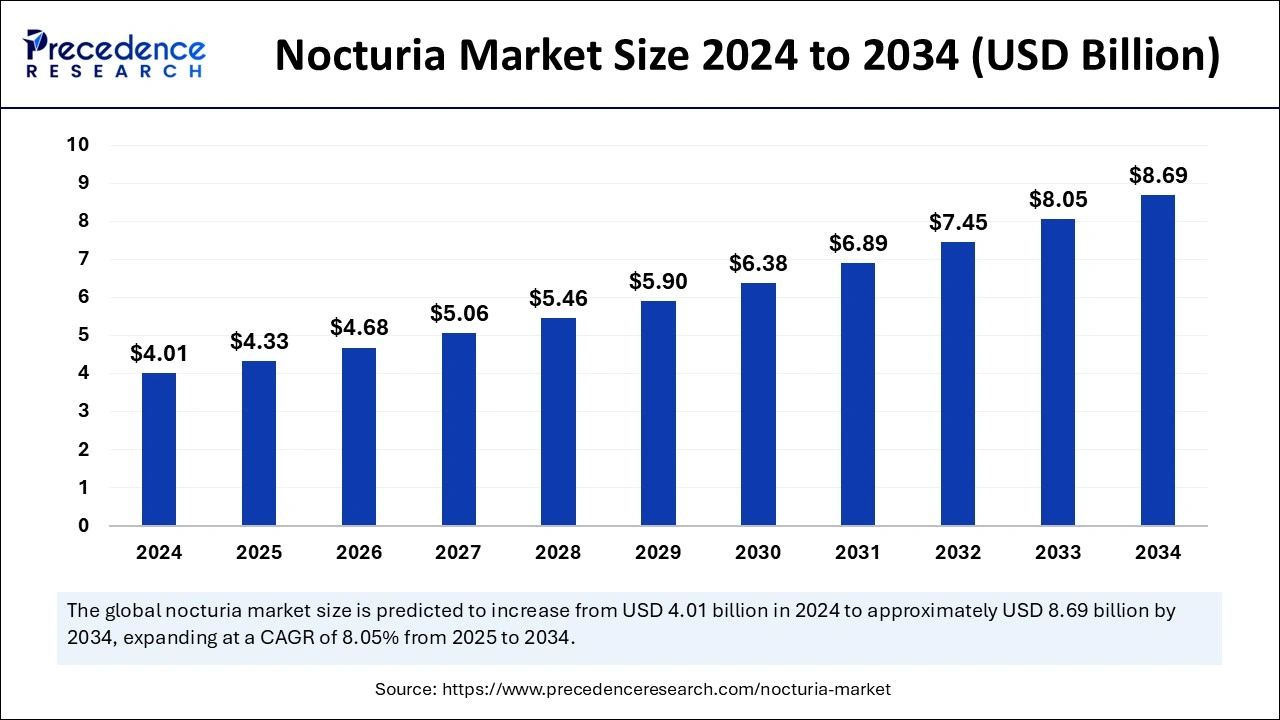
The global nocturia market size is calculated at USD 4.33 billion in 2025 and is predicted to increase from USD 4.68 billion in 2026 to approximately USD 9.30 billion by 2035, growing at a CAGR of 7.94% from 2026 to 2035. The market growth is attributed to increasing awareness, technological advancements, and a rising demand for effective treatment options for nocturia.
Nocturia Market Key Takeaways
- North America dominated the global nocturia market in 2025.
- Asia Pacific is projected to host the fastest-growing market in the coming years.
- By drug type, the desmopressin segment held a dominant presence in the market in 2025.
- By drug type, the anticholinergic drugs segment is expected to grow at the fastest rate during the forecast period.
- By indication type, the mixed nocturia segment accounted for a considerable share of the market in 2025.
- By size type, the nocturnal polyuria segment is anticipated to grow with the highest CAGR during the studied years.
- By distribution channel, the hospital pharmacies segment led the global market in 2025.
- By distribution channel, the online pharmacies segment is projected to expand rapidly in the coming years.
What is Nocturia?
The nocturia market is growing as more people learn how nocturia affects their sleep and health. The Sleep Foundation, leveraging decades of expertise in sleep health education and thorough product testing, reported that nocturia remained widespread in 2024, affecting approximately 40% of adults aged 18 to 79. Higher awareness about how nocturia affects people has led many patients to find improved treatment and diagnosis methods. New wearable technology and smartphone apps help people better handle nocturia. These technologies help track symptoms and create custom treatment plans, which patients strongly prefer. Furthermore, the growing number of patients suffering from these conditions creates the demand for faster treatment solutions.
What is the Impact of Artificial Intelligence (AI) on the Nocturia Market?
Artificial Intelligence technology helps us better understand and treat nocturia, which affects how well patients live their daily lives. AI analytics help doctors find the root causes of nocturia better through a deeper look at patient data and medical records, plus sleep habits and existing health problems. Tech tools that predict future trends help healthcare teams spot signs of risk before problems happen, which further facilitates custom-built care programs for each patient. Furthermore, powered by AI, digital health technology lets wearable devices and mobile applications monitor nocturia symptoms instantly while sharing useful data with health providers and patients.
What are the Growth Factors in the Nocturia Market?
- The increasing prevalence of nocturia in the aging population is expected to drive the nocturia market.
- Advancements in pharmaceutical treatments are likely to improve patient outcomes and treatment adoption.
- Rising awareness about nocturia as a comorbidity with other chronic conditions like diabetes and heart disease is anticipated to boost diagnosis rates.
- Improved healthcare access in emerging markets is expected to expand the market footprint globally.
- Technological advancements in diagnostic tools, such as AI-driven platforms, are expected to improve early detection.
- Growing preference for minimally invasive treatments is likely to increase patient compliance and market demand.
- Government initiatives and funding for urological research are expected to accelerate innovation in nocturia treatments.
Nocturia Market Outlook
- Industry Growth Overview: Between 2025 and 2030, an increase in overactive bladder cases, an aging patient population, and higher rates of diagnosis will support growth in the market for Nocturia. Growth will continue to be driven by increased acceptance of therapy due to better awareness of treatments, promotion of treatments, and new formulations. North America and the Asia Pacific continued to be the primary areas of demand due to high levels of access to healthcare and increasing patient demand.
- Sustainability trends: Sustainability trends affected the Nocturia market as companies studied safer drug formulations, which have fewer side effects and reduced environmental impact. Pharmaceutical players explored biodegradable drug compounds while also seeking greater efficiency in drug development and manufacturing. Increased regulatory pressure in Europe catalyzed drug manufacturers to develop greener and more sustainable manufacturing and therapies for patients, ultimately supporting long-term sustainable market growth.
- Global Expansion: Top companies in the Nocturia space continued to expand into Asia-Pacific, Eastern Europe, and LATAM, where they gain access to the larger untreated patient population and related supportive governmental healthcare reforms. Companies also established greater partnerships and distribution channels in these regions while carrying out region-specific studies.
- Major Investors: Investors from private equity and other strategic investors entered the Nocturia space, given the demand to treat chronic conditions and positive long-term revenue potential. Active investment in companies advancing desmopressin medications, minimally invasive neuromodulation devices, and digital diagnostic devices was a priority for investors.
- Startup Ecosystem: The Nocturia startup ecosystem became noteworthy due to innovations in wearable bladder monitors, AI-verification of nighttime urine patterns, and non-drug treatment options. Startups pursuing neuromodulation patches, hormone-balanced methods, and home diagnostics attracted attention from VCs.
Market Scope
| Report Coverage | Details |
| Market Size by 2026 | USD 4.68 Billion |
| Market Size in 2025 | USD 4.33 Billion |
| Market Size in 2035 | USD 9.30 Billion |
| Market Growth Rate from 2026 to 2035 | CAGR of 7.94% |
| Dominating Region | North America |
| Fastest Growing Region | Asia Pacific |
| Base Year | 2025 |
| Forecast Period | 2026 to 2035 |
| Segments Covered | Drug Type, Indication Type, Size Type, Distribution Channel, and Regions |
| Regions Covered | North America, Europe, Asia-Pacific, Latin America, and Middle East & Africa |
Market Dynamics
Drivers
Rising awareness about quality of life
Rising awareness about the impact of nocturia on sleep quality and overall well-being is estimated to fuel the nocturia market in the coming years. People increasingly seek better treatments and diagnostics as they understand how nocturia affects their sleep and well-being. Nocturia interrupts sleep, which leads people to feel tired and unproductive while facing mental health problems, so they visit their doctor.
The NHI 2023 report highlights that the incidence of sleep problems increases with age, with approximately 50% of older adults experiencing sleep-related issues.
Healthcare providers and non-profit groups now work harder to teach people how to spot early signs and find helpful ways to solve these problems. In 2023, the WHO began a worldwide program to teach people about urinary health and explain why treating nocturia helps them sleep better. The rise in awareness gives healthcare providers the freedom to offer faster care while creating space for new medical research in nocturia treatment.
| Category | Data/Trend | Year |
| Prevalence of Nocturia | 50% of adults experience nocturia, with significant sleep disturbances reported. | 2023 |
| Awareness Campaign Impact | 30% increase in medical consultations for nocturia symptoms. | 2023 |
| Mental Health Correlation | 40% of nocturia patients report anxiety or depressive symptoms due to poor sleep. | 2024 |
| Productivity Loss | 25% reduction in workplace productivity linked to sleep disturbances caused by nocturia. | 2023 |
| Education Campaign Reach | Over 15 million individuals were reached through global nocturia awareness initiatives. | 2023 |
Restraint
Access to healthcare in low-income regions
Hampered access to healthcare in low-income regions is anticipated to restrain the growth of the nocturia market. Medical services in underdeveloped regions are insufficient which makes important medical equipment and treatment options hard to find. Inadequate medical services stop people from getting early treatment for their night-time urine and limit the need for new treatment options. The development of the market suffers additional setbacks, as healthcare systems are not consistently working to balance service delivery across regions.
Opportunity
Rising investment in research and development
Rising investment in research and development activities is expected to create favorable opportunities for the players competing in the nocturia market. Universities and pharmaceutical groups seek to discover new medicines as they enhance diagnostic equipment and work on non-invasive treatment options. Major pharmaceutical companies Pfizer, Ferring Pharmaceuticals, and Allergan dedicate substantial research funds to create new treatment options. This medical progress enables better treatments for fundamental health problems.
- The Urology Care Foundation named new research scholars for 2024 to receive USD 40,000 each year as they train under mentors in urological research.
Segment Insights
Drug Type Insights
The desmopressin segment held a dominant presence in the nocturia market in 2025, as it effectively treats nocturia in patients who lack antidiuretic hormone (ADH). The synthetic vasopressin drug desmopressin works in the kidneys to keep water from leaving your body and reduces urine production while you sleep. Medical studies and tests confirm that desmopressin helps prevent patients from needing to use the bathroom during nighttime hours, which establishes its market leadership. Moreover, desmopressin has gained a high market share for treating nocturia since the worldwide elderly population is increasing.
The anticholinergic drugs segment is expected to grow at the fastest rate during the forecast period of 2025 to 2034 due to the that they work effectively to reduce the bladder activity that often causes frequent nighttime urination. These drugs prevent acetylcholine from acting in the bladder, which controls bladder muscle contractions. The Journal of Urology reported in 2023 that doctors have chosen to prescribe oxybutynin and tolterodine more often, as these anticholinergics help treat bladder problems and boost patients' overall well-being. The market for these drugs expects to grow further since these medications lead to treatment for overactive bladder, which leads to nocturia.
Indication Type Insights
The mixed nocturia segment accounted for a considerable share of the nocturia market in 2025. Patients experience this health condition frequently, as it has multiple causes. Of all adult age groups, seniors show higher rates of mixed nocturia that brings together limited bladder storage during sleep and night-time urine overproduction. Doctors now recognize nocturia's multiple root causes, as they treat mixed nocturia cases more effectively, which is expanding treatment options in this area. Furthermore, healthcare experts increase their efforts to create better therapeutic approaches for treating patients who experience mixed nocturia symptoms.
- In 2023, the NIH found that 30% to 40% of people who suffer from nocturia display both conditions at the same time.
The nocturnal polyuria segment is anticipated to grow with the highest CAGR during the studied years. Doctors now provide better treatment for nighttime overproduction of urine by using modern diuretics and hormone medications. A high number of patients develop severe nighttime urine production due to their increased fluid intake, alcohol drinking, and greater risk of hypertension conditions. The latest WHO data from 2024 indicates that cardiovascular diseases continue to increase, and this directly affects people with nocturnal polyuria. Healthcare providers are working to create better treatment plans for this condition as they use desmopressin more often. Furthermore, treating nocturnal polyuria demonstrates progress that enhances patient care.
Distribution Channel Insights
- In 2024, the hospital pharmacies segment led the global nocturia market due to the fact that their service includes rare medications along with direct access to medical specialists who create individualized treatments. Hospital pharmacies stock all prescription medications, including new nocturia treatments, which retailers and online stores cannot offer. Strong demand for hospital treatment, especially from seriously ill patients with multiple health conditions.
The online pharmacies segment is projected to expand rapidly in the coming years, owing to the high number of consumers shifting to at-home delivery medicine. Through online pharmacy services, patients access nocturia medications from home without visiting physical healthcare places. According to NHS research, in 2024, patients with ongoing health problems make up one-third of those who choose to buy their drugs through web platforms. Furthermore, the increase is due to better digital payment security and more nocturia treatment choices.
Regional Insights
North America dominated the global nocturia market in 2025 due to strong medical infrastructure and public knowledge while investing generously in pharmaceutical science. Both the United States and Canada run robust medical systems that give patients access to modern tests and therapies for nocturia. Patient requirements for customized health care options among elderly individuals power industry growth. Furthermore, North American pharmaceutical leaders and research facilities invest heavily in research and developing new effective treatments for nocturia.
- A 2023 NIH report shows the disorder affects 50 million people in the U.S., with 10 million formally diagnosed with nocturia. However, only 1.5 million receive specific therapy. This gap in diagnosis and treatment contributes to the region's leadership in the market, driven by the need for advanced solutions and increased awareness.
U.S. Nocturia Market Trends
The U.S. grows with an increase in the burden of chronic diseases. There is an increase in demand for specific treatments for nocturia. Diseases such as obesity and hypertension are the causes of nocturnal polyuria. Individualized treatment is preferred to the generalized ones. Adoption of tele-urology enhances the monitoring of patients. Wearables and mobile applications support home-based care. Complex pharmacotherapies enhance patient compliance and treatment outcomes.
Asia Pacific is projected to host the fastest-growing nocturia market in the coming years, owing to the growing number of aging populations, and understanding about this condition is rising. Japan, China, and India report rising nocturia rates as their people grow older and adapt to new life patterns. The Asian Development Bank's 2024 report highlights that the population aged 60 and older in developing Asia and the Pacific is projected to nearly double by 2050, reaching 1.2 billion. A growing number of residents in the region seek healthcare support and learn about treatments for nocturia.
Japan Nocturia Market Trends
Japan develops because of the aging population and nocturnal polyuria. Demand is still clinically oriented. The close interconnection between hypertension and nocturia influences the treatment plans. Physicians treat it as a cardiovascular-related symptom. There is an increased adoption of advanced pharmacotherapy in the long term for long-term safety. Formulations of desmopressin are more popular.
Why did Europe Experience Consistent Growth in the Nocturia Market?
The European nocturia market expanded at a consistent rate because of established healthcare systems and strict standards of treatment. The area placed increasing emphasis on early diagnosis and educating patients, which led to improved patient care. Companies poured money into the development of newer, safer, and more effective therapies. Ageing populations across various countries have increased demand for treatment.
Moreover, emerging opportunities are presented alike in digital health, remote patient monitoring devices, and personalizing medicines in ways that provide greater ease for patients in managing their symptoms.
Germany Nocturia Market Trends
Germany led the European market with its established medical systems and programs for research. The public hospitals now supply the latest advances in diagnostic tools that allow for early diagnosis of Nocturia. Pharmaceutical companies introduced alternative formulation therapies that claimed to have fewer side effects, bringing in more patients. Moreover, Germany supported digital health products and remote monitoring, as well. All these factors made the country one of the hot spots for therapy development and expansion.
Why did Latin America Experience Substantial Growth in the Nocturia Market?
Latin America witnessed substantial growth due to improved access to healthcare, along with increased knowledge and awareness of bladder conditions. The expanding elderly populations in Brazil and Mexico have increased the demand for treatment of bladder conditions. Governments encouraged healthcare education to help people identify bladder conditions and seek treatment earlier. Pharmaceutical companies expanded the distribution of their medicines to reach a larger number of afflicted patients.
Brazil Nocturia Market Trends
Brazil was the leading market in Latin America because it had the largest population size and was involved in an increasing number of diagnosed cases. The Brazilian government expanded some of its healthcare programs to offer more open access to treatment. Drug manufacturers introduced some therapies that would be affordable for all growing patient populations. Hospitals and clinics began to use more modern diagnostic tools to identify nocturia types, and it became faster to diagnose.
Why did the Middle East and Africa Experience Gradual Growth in the Nocturia Market?
The Middle East and Africa exhibited gradual growth in the nocturia market due to increases in funding for healthcare, better rates of diagnosis, and improved public knowledge and awareness campaigns encouraging people to seek medical attention for their urinary issues. Countries started to build new hospitals and new, modern clinics to help make treatment for urinary issues more easily available. Pharmaceutical companies continued to put forth their efforts and create new supply chains persistently due to the increased need for prescription medications in the Region.
Saudi Arabia Nocturia Market Trends
Saudi Arabia dominated the regional market based on large spending in health care, coupled with access to modern and up-to-date medical infrastructure. Patients with bladder ailments began to indicate to their doctors more frequently, which increased diagnosis rates. Hospitals provided more sophisticated evidence-based treatment, as well as imported and made available high-quality medicines. The government was also dedicated to continuing to champion electronic digital health tools and solutions that expedited follow-up care of patients.
Nocturia Market Companies
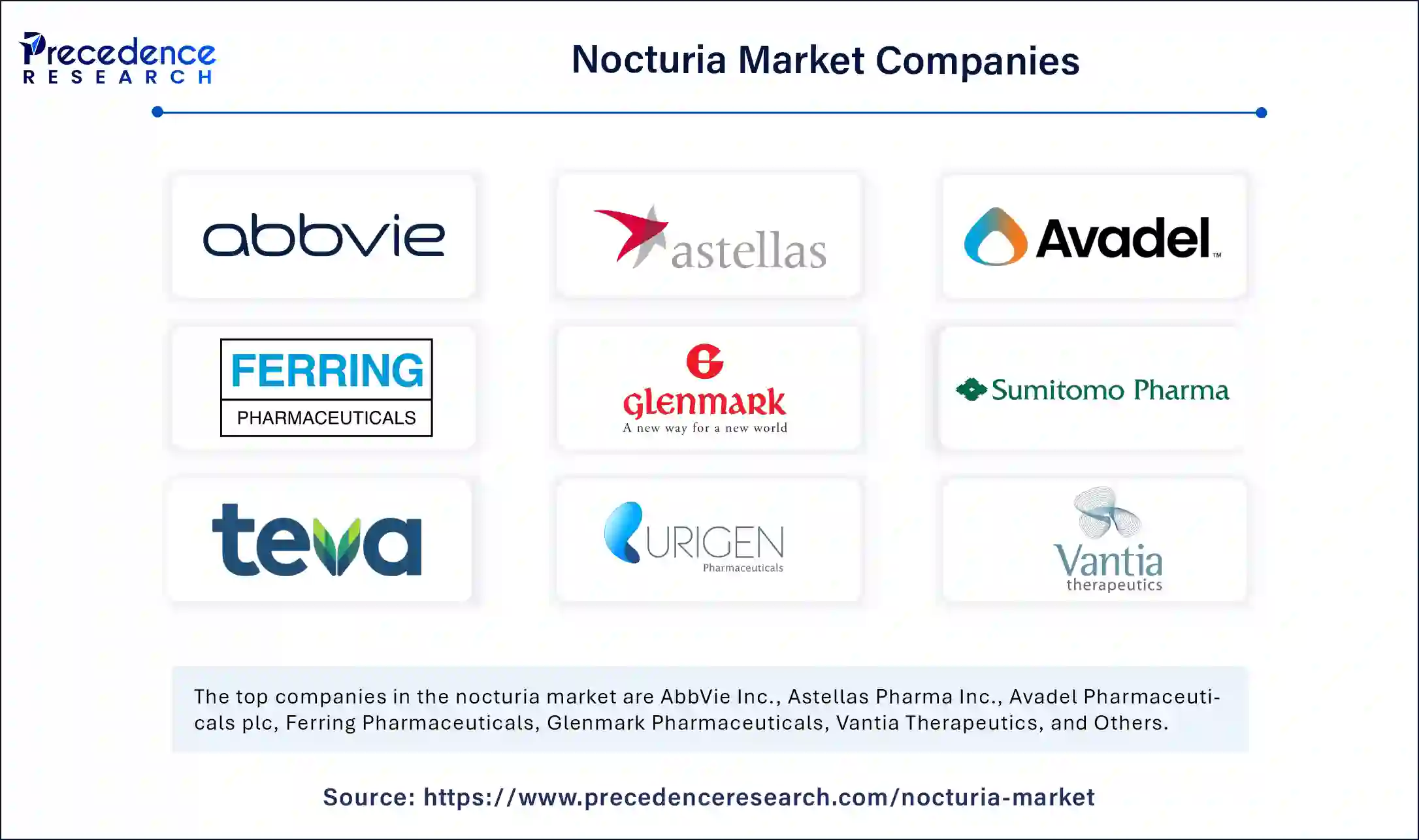
- AbbVie Inc.: Invents immunology, oncology, neuroscience, and aesthetics treatments with growing specialty drug sales around the world.
- Astellas Pharma Inc.: Specializes in focused oncology, urology, and immunology with targeted therapies and digital treatments.
- Avadel Pharmaceuticals plc: Incorporates controlled-release sleep disorder drugs based on proprietary polymer-based drug delivery technologies.
- Ferring Pharmaceuticals: Specializes in desmopressin drugs, addressing nocturnal polyuria and decreasing urine output at night with the help of desmopressin drugs.
- Glenmark Pharmaceuticals – Engaged in the nocturia market primarily through generic and specialty formulations targeting urinary disorders, improving treatment accessibility rather than leading novel drug development.
- Sumitomo Pharma Co., Ltd. – Participates in nocturia through urology-focused R&D pipelines, including investigational therapies aimed at improving bladder function and regulating nighttime urine production.
- Teva Pharmaceutical Industries Ltd. – Provides generic and branded urology medications, including desmopressin-based therapies that help reduce nighttime urine production in nocturia patients.
- Urigen Pharmaceuticals Inc. – Focuses on developing targeted therapies for urological disorders, including pipeline candidates addressing bladder dysfunction and nocturia.
- Vantia Therapeutics – Develops novel vasopressin receptor agonists (such as fedovapagon) designed to reduce nocturnal urine production for treating nocturia.
Latest Announcements by Industry Leaders
April 2024 – Adalvo
CEO – Adalvo
Announcement - Adalvo proudly announced the successful launch of Desmopressin across multiple European countries in collaboration with key strategic partners. Anil Okay, CEO of Adalvo, expressed enthusiasm about this achievement, stating, "Our collaborative effort with strategic partners reflects Adalvo's dedication to excellence in the pharmaceutical industry. We are excited about the successful introduction of Desmopressin in multiple countries and remain committed to expanding our presence to impact patient care worldwide positively."
Recent Developments
- In January 2026, Hanmi Pharmaceutical and Ferring Pharmaceuticals Korea signed a co-marketing agreement for nocturia-enuresis treatments, Minirin Tablets, Minirin Melt, and Nocdurna Sublingual Tablets. Hanmi is expected to manage supply and distribution, while Ferring can oversee sales and marketing for general hospitals. (https://www.koreabiomed.com )
- In April 2024, Zydus Lifesciences announced the launch of a generic medication for overactive bladder treatment in the U.S. market. The company introduced Mirabegron extended-release tablets in a 25 mg dosage after receiving final approval from the U.S. Food and Drug Administration (FDA), according to a regulatory filing.
- In July 2024, the Medicines and Healthcare Products Regulatory Agency (MHRA) approved Vibegron (Obgemsa) for managing overactive bladder (OAB) syndrome in adults. This medication addresses symptoms such as urgency, frequent urination, and urinary incontinence.
- In May 2024, Sumitomo Pharma America, Inc. (SMPA) announced the U.S. FDA's acceptance of its supplemental New Drug Application (sNDA) for vibegron (GEMTESA), a beta-3 adrenergic receptor agonist dosed once daily at 75 mg. This application focuses on treating men with OAB symptoms undergoing pharmacological therapy for benign prostatic hyperplasia (BPH).
Segments Covered in the Report
By Drug Type
- Desmopressin
- Antispasmodic
- Anticholinergic Drugs
- Antibiotics
- Others
By Indication Type
- Low Nocturnal Bladder Capacity
- Mixed Nocturia
- Nocturnal Polyuria
By Distribution Channel
- Hospital Pharmacies
- Online Pharmacies
- Retail Pharmacies
By Geography
- North America
- Europe
- Asia Pacific
- Latin America
- Middle East and Africa
For inquiries regarding discounts, bulk purchases, or customization requests, please contact us at sales@precedenceresearch.com
Frequently Asked Questions
Tags





Ask For Sample
No cookie-cutter, only authentic analysis – take the 1st step to become a Precedence Research client
 Get a Sample
.webp)



 sales@precedenceresearch.com
 Schedule a Meeting
