



Off-highway Electric Vehicle Market Trends, Leading Companies, Company Revenue / Sales Performance, OEM Production, Aftermarket Demand, Export Dependency, Cost Structure, Adoption Rates, and Competitive Landscape
Off-highway Electric Vehicle Market (By Application: Construction, Agriculture, Mining; By Electric Vehicle: Battery Electric Vehicle (BEV), Hybrid Electric Vehicle (HEV)) - Global Industry Analysis, Size, Trends, Leading Companies, Regional Outlook, and Forecast 2026 to 2035
Source: https://www.precedenceresearch.com/off-highway-electric-vehicle-market
 Get a Sample
 Table Of Content


What is the Off-highway Electric Vehicle Market Size?
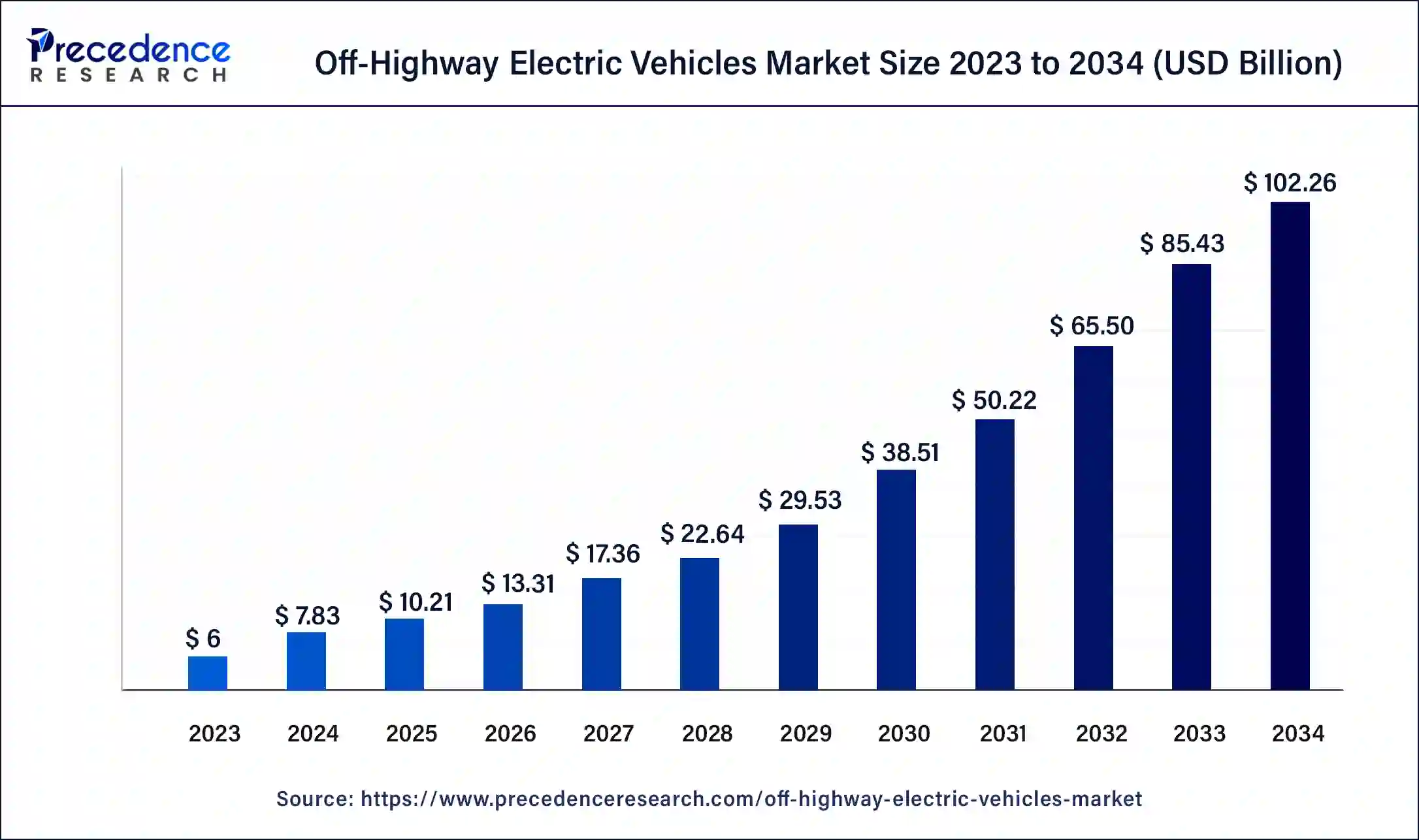
The global Off-highway electric vehicle market size is calculated at USD 10.21 billion in 2025 and is predicted to increase from USD 13.31 billion in 2026 to approximately USD 121.16 billion by 2035, expanding at a CAGR of 28.07% from 2026 to 2035. The off-highway electric vehicle market is driven by strict emission regulations, improved battery technology, and increasing investments in industrial electrification.
Off-highway Electric Vehicle Market Key Takeaways
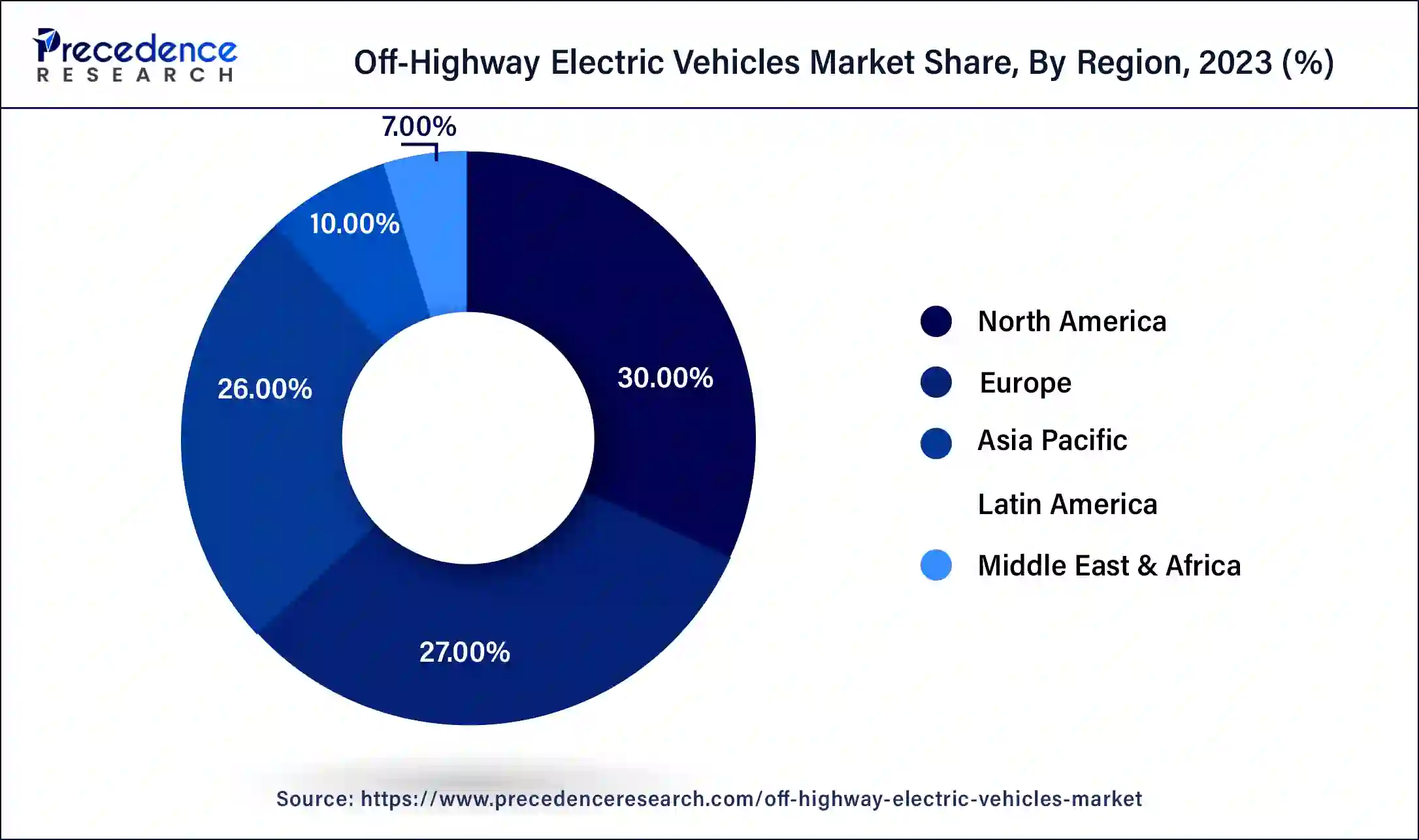
- North America dominated the market with the largest market share of 30% in 2025.
- By application, the construction segment contributed more than 38.2% of market share in 2025.
- By application, the agriculture segment is anticipated to grow significantly in the market during the forecast period.
- By electric vehicle, the HEV segment generated the highest market share of 66.2 % in 2025.
What is the Off-Highway Electric Vehicle Market?
The growing growth of infrastructure in developing markets and the introduction of redevelopment projects in developed countries are boosting sales of electric highway vehicles. Strict emission standards by government agencies, such as emission standards for greenhouse gas ( GHG ) emissions by the U.S. The Environmental Protection Agency ( EPA) and the European Commission are both main factors influencing the global market for off-road electric vehicles ( EVs). In addition, the market for off-highway electric vehicles is also leveraged by factors such as improved electrical machinery performance, lower noise and vibration levels, lower overhaul costs, and others.
Government authorities have introduced increasing stringency in emission standards for off-highway vehicles, such as emission standards for greenhouse gas (GHG) emissions by the U.S. India, and China VI Environmental Protection Agency (EPA), BS-VI. The increasing strictness of emission standards has shifted the attention of OEMs toward alternative powertrain sources such as hybrid electric and full electric off-highway vehicles that exploit global demand. Electrification of heavy-duty off-highway vehicles is on the rise, and businesses are highly interested in exploring how this emerging development will complement their current business models. There are many advantages to the electrical system of heavy-duty vehicles. However, in conducting research and implementing the electrical solution, factors such as battery technology, infrastructure, and overall cost of production play a vital role.
How is AI contributing to the Off-highway Electric Vehicle Market?
Artificial Intelligence offers the potential of off-highway electric vehicles by battery performance optimization, autonomous navigation enhancement, and smart energy management facilitation. It increases design productivity through scooping and predictive maintenance support, reducing breakdown and real-time sensor analytics, and improving component reliability. AI-powered automation improves the precision of manufacturing, and smart routing increases operational productivity. In summary, AI facilitates the adoption in tough industrial environments by enhancing safety, efficiency, and lifecycle management.
Off-Highway Electric Vehicle Market Growth Factors
- The off-highway electric vehicle market is growing due to increasing investment in mining, agriculture and construction modernization demands electric off-highway equipment that delivers lower fuel costs and improved operational efficiency.
- The stringent regulations regarding diesel emissions and the adoption of cleaner equipment are further supporting the market growth. The growing awareness of renewable energy resources also encourages EV adoption.
- The expanding charging infrastructure and increasing research into advanced electric vehicles encourage wider adoption and create new opportunities for market growth.
- Continuous improvements in battery technology, such as longer operating hours and fast charging capabilities, are making off-highway electric vehicles more practical for heavy duty applications.
Market Outlook
- Industry Growth Overview: Electrification needs and technological advancements leading to better heavy equipment performances are the two major drivers of industry growth.
- Sustainability Trends: Sustainability gets faster as operations more and more depend on clean power solutions that reduce the environmental footprint and improve the working conditions.
- Global Expansion: Global expansion continues as the use of electric machinery in various regions to modernize industrial operations, and the ability to produce goods in an environmentally friendly way are the main reasons for this.
- Major investors: Investors like Caterpillar Inc., Volvo Construction Equipment AB, Komatsu Ltd., and Deere & Company are the driving force of the market because they keep coming up with powerful electric platforms that push the performance, efficiency, and reliability of industrial equipment markets.
- Startup Ecosystem: Startups are behind the new technologies in batteries, charging systems, and design that make it easier for industries to adapt to changing needs.
Market Scope
| Report Highlights | Details |
| Market Size in 2025 | USD 10.21 Billion |
| Market Size in 2026 | USD 13.31 Billion |
| Market Size by 2035 | USD 121.16 Billion |
| Growth Rate from 2026 to 2035 | CAGR of 28.07% |
| Largest Market | North America |
| Base Year | 2025 |
| Forecast Period | 2026 to 2035 |
| Segments Covered | Electric Vehicle, Application, Region |
| Regions Covered | North America, Europe, Asia-Pacific, Latin America, and Middle East & Africa |
Market Dynamics
Driver
Rising Demand For Sustainable Construction and Mining Equipment
The major factor driving the off-highway electric vehicle market is the growing demand for cleaner equipment in construction, mining, and agriculture. The regulatory bodies, such as U.S environmental protection Agency (EPA), the European Union (EU) and China's National Development and Reform Commission (NDRC), have imposed stringent regulations for diesel emissions. This encourages companies to replace diesel-powered machinery with electric alternatives to reduce fuel expenses and meet regulatory policies. Companies are also investing in improving battery performance, which supports the market growth.
Restraint
High Initial Purchase Cost
The high upfront cost of off-highway electric vehicles remains a significant challenge for market growth. The off-highway electric vehicles require robust charging infrastructure, advanced power electronics and battery systems, which makes them significantly expensive compared to traditional diesel powered off-highway vehicles. Additionally, the battery replacement charges and maintenance expenses further add to the cost. These financial barriers limit the adoption of off-highway electric vehicles and slow the market growth.
Opportunity
Expansion of Mining Electrification Projects
The growing electrification of mining operations presents a strong opportunity for the off-highway electric vehicles market. The companies are focusing on developing fully electric and hybrid mining and construction equipment to reduce carbon emissions and meet regulatory requirements. Mining companies are investing in battery powered loaders and underground equipment to improve air quality, reduce ventilation costs, and achieve carbon reduction targets. The technological advances in high capacity batteries and fast charging systems further contribute to the higher adoption of off-highway electric vehicles.
Segment Insights
Application Insights
The construction segment accounted for the highest share of around 38.2% in 2023, The segment includes electric construction equipment, such as electric loaders, electric excavators, and more. One of the key factors driving the market demand for this equipment has been growing investments by governments worldwide to build public infrastructure. In order to comply with the tougher emission requirements, OEMs are introducing electric off-highway equipment. In the future, legislation could mandate zero emissions on heavy-duty construction equipment to pave the way for OEMs to drop diesel-powered engine output and go all-electric.
The agriculture off-highway electric vehicle segment is expected to grow at a CAGR of 22.1% from 2026-2035. The segment covers electric agricultural equipment such as electric tractors, electric harvesters, etc. Consumers have begun embracing new farm machinery and advanced agricultural processes to achieve higher yields in regions such as North America and Europe. Thus, the demand for electric and hybrid tractors and other farm equipment is expected to rise in the forecasted timeline.
Electric Vehicle Insights
The HEV segment accounted for the biggest revenue share of 66.2% and is predicted to retain its dominance over the forecast period. These vehicle types are intended to increase the use of the internal combustion engine in combination with the electric powertrain. The stringent emission regulations by different government agencies such as the European Commission and the United States The demand for hybrid off-highway propulsion equipment from the EPA is rising and pushing manufacturers to build more environmentally friendly off-highway vehicles. A hybrid engine, a variation of the diesel-electric propulsion system, has been adopted by off-highway vehicle manufacturers since 2017.
The BEV Off-highway electric vehicle segment is likely to expand at the maximum CAGR of 29.5% over the forecast period. Growth can be likely to downturn in the adoption of internal combustion engine vehicles and CO2 aim restrictions. The power needed for the majority of off-highway vehicles to operate is, however, too high; the use of fully electric BEVs is therefore still limited. The reduction in lithium-ion battery prices and advancements in battery technology would leverage the demand for BEVs in the forecast period.
Key Companies & Market Share Insights
The global Off-highway Electric Vehicle market seeks intense competition among the market players owing to rapidly changing consumer preferences. Further, the industry participants are prominently adopting inorganic as well as organic growth strategies that include partnership, collaboration, merger & acquisition, and many others to maintain their competitive edge in the global market. Apart from this, they invest prominently in R&D activity for new product development & advancements.
Regional Insights
What Factors Made the North America Region the Dominant Region in the Market?
North America dominated the off-highway electric vehicle market in 2025, driven by the growing importance of environmental factors, more money being put into electrification, and the use of electric machines in industries. The region's top-notch manufacturing capabilities and continuous technological advancements are the ones that will eventually lead to the adoption of off-highway electric vehicles.
What is the U.S. Off-highway Electric Vehicle Market Size?
The United States represents the largest share of the off-highway electric vehicle market in North America. The growth is driven by the increasing demand for efficient equipment for construction, agriculture, and industry. The implementation of advanced technology, the focus on the environment, and the state-of-the-art infrastructure all play a role in the adoption of high-quality electric off-highway equipment that is used in greater volumes.
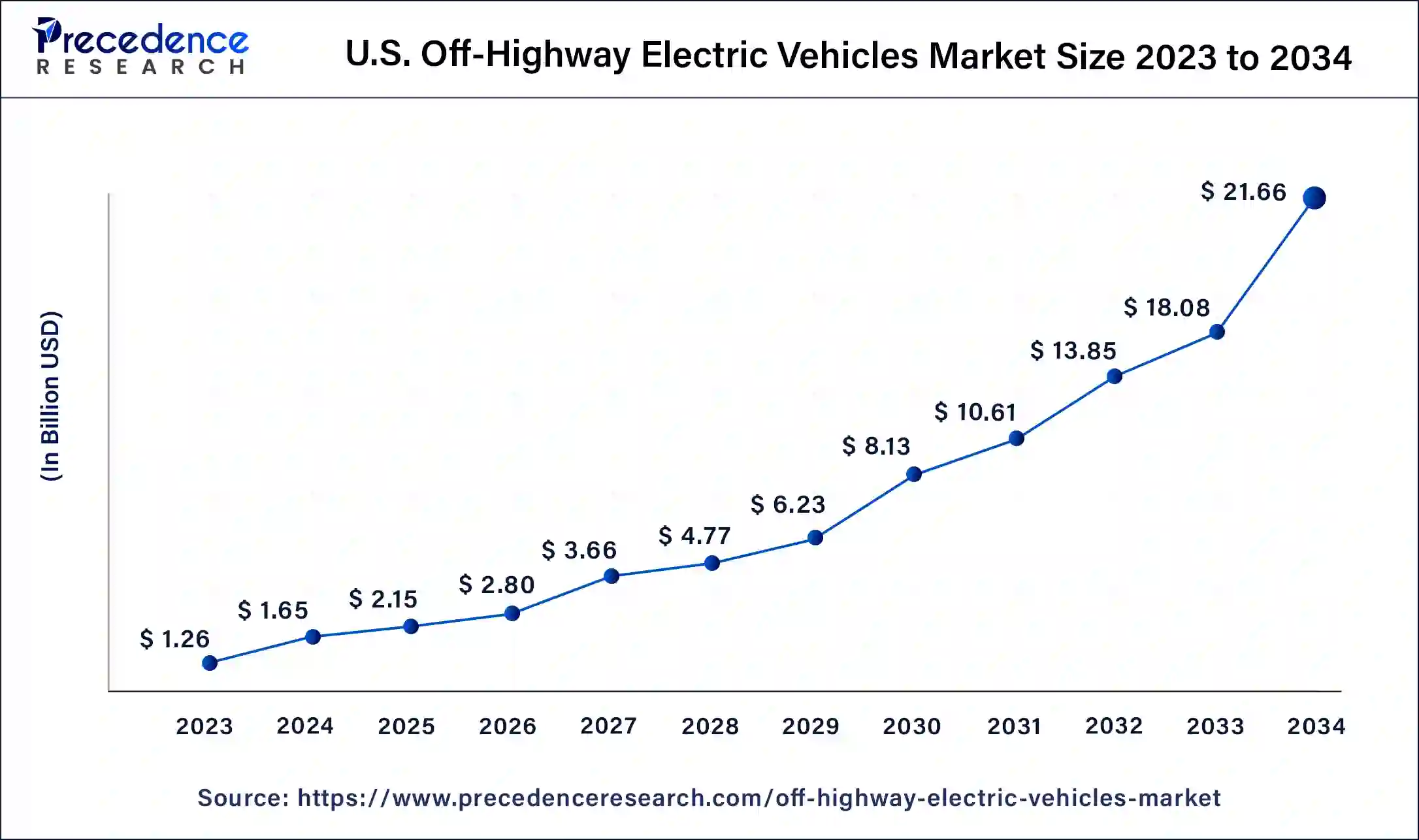
The global Off-highway electric vehicle market size is valued at USD 2.15 billion in 2025 and is expected to be worth around USD 25.67 billion by 2035, at a CAGR of 28.14% from 2026 to 2035.
Which Factors Influence the Fastest Growth of the Asia Pacific Market?
Asia Pacific is expected to grow at the fastest CAGR in the off-highway electric vehicle market during the forecast period. The growth is driven by the growing demand from industry, strong manufacturing ecosystems, and policies that support electric mobility. The region is able to take advantage of its established production capability, technology adoption, and sustainability equipment demand for construction, mining, and agriculture growth.
China Market Trends
China accounts for the largest share of the off-highway electric vehicle market in Asia-Pacific in 2025. China has been the first to embrace electric vehicles as a main player, thanks to the country's strong production capacity, well-developed electric mobility policies, and large charging stations. An increase in industrial demand, investments in sustainability by the government, and the quick conversion of the construction and agriculture sectors to electric power are the factors that continue to create new opportunities for the development of off-road electric vehicles.
Which Factors Made Europe a Significantly Growing Region in the Market?
Europe is expected to grow at a considerable CAGR in the off-highway electric vehicle market in the coming period. The growth is supported by high sustainability boundaries, slowly but steadily accepting electric machinery, and pushing clean technologies through strong regulations. The support given to researchers, the governments, and technology innovators indeed makes electric dealings in construction, agriculture, and industrial applications throughout the region.
Germany Market Trends
Germany leads the European off-highway electric vehicle market in 2025 due to its strong engineering skills, commitment to the environment, and deliberate production of electric tools for tough applications. Initiatives of encouragement and high manufacturing standards are the ones that make sales of electrified building, mining, and industrial machinery go up.
How is North America leading in the Off-highway Electric Vehicle Market?
North America is expanding due to the growing importance of environmental factors, more money being put into electrification, and the use of electric machines in industries. The region's top-notch manufacturing capabilities and continuous technological advancements are the ones that will eventually lead to the adoption of off-highway electric vehicles.
United States Off-Highway Electric Vehicle Market Trends:
The United States is one of the countries that provides support to the market growth with the help of the increasing demand for efficient equipment for construction, agriculture, and industry. The implementation of advanced technology, the focus on the environment, and the state-of-the-art infrastructure all play a role in the adoption of high-quality electric off-highway equipment that is used in greater volumes.
What are the Advancements in the Market in Latin America?
Latin America held a considerable share of the off-highway electric vehicle market in 2025, supported by expanding mining, agriculture, and infrastructure projects. Countries including Brazil, Mexico, and Chile are investing in cleaner industrial equipment to reduce fuel costs and carbon emissions. However, the limited charging infrastructure in some areas limits the adoption of electric vehicles. The increasing international partnerships and sustainability commitments of the region support the market growth.
Brazil Market Trends
Brazil accounts for the largest share of the Latin American off-highway electric vehicle market in 2025, driven by its extensive mining, construction, and agricultural sectors. The growing environmental regulations and increasing investment in industrial electrification are influencing the adoption of electric vehicles across the country. While the high upfront cost remains a challenge, sustainability commitments in the region continue to support the market expansion.
What are the Key Trends in the Market in the Middle East and Africa Region?
The Middle East & Africa held a notable share of the off-highway electric vehicle market in 2025, as governments and industrial operators seek efficient and environmentally friendly vehicles for mining, construction, and large infrastructure projects. The countries such as Saudi Arabia, the UAE, and South Africa are heavily investing in sustainable industrial technologies under economic diversification strategies. The rapid growth in the mining sector of the region further drives the growth of the market.
Saudi Arabia Market Trends
Saudi Arabia represents the leading market within the Middle East and Africa off-highway electric vehicle market in 2025, supported by large scale construction, mining, and industrial projects linked to Vision 2030. Companies in the country are increasingly adopting electric equipment to improve efficiency and reduce carbon emissions at project sites. Government in the region is supporting clean technologies and investing in modern infrastructure, which further supports the market growth.
Value Chain Analysis
- Raw Material Sourcing (Steel, Plastics, Electronics): Selecting the necessary materials for manufacturing with maximum quality, cost savings, and uninterrupted supply.
Key Players: Henkel AG & Co., TSMC - Component Manufacturing (Engines, Transmissions, etc.): Supplying or manufacturing the main intricate parts needed for the construction of the vehicle.
Key Players: Bosch, Continental AG, Denso, ZF Friedrichshafen AG, Dana TM4 - Vehicle Assembly and Integration: The process of combining systems and parts to manufacture fully functional off-highway electric vehicles.
Key Players: Caterpillar Inc., Komatsu Ltd., Volvo Construction Equipment, John Deere - Testing and Quality Control: Checking that the vehicles comply with required performance, dependability, and safety standards before they are dispatched.
Key Players: SGS, TÜV SÜD, DEKRA - Distribution to Dealers and OEMs of Off-highway Electric Vehicle: Sending the completed cars to the respective partners for the final market placement and customer access.
Key Players: Caterpillar and Volvo
Competitive Landscape
The off-highway electric vehicle market is becoming competitive as established equipment manufacturers and emerging technology companies expand their electrification strategies. The intense competition among the market players is owing to rapidly changing consumer preferences. The leading companies in the market include Caterpillar Inc., Hitachi Construction Machinery Co., Ltd., Volvo Construction Equipment AB, Doosan Corporation and J C Bamford Excavators Ltd. The industry participants are prominently adopting inorganic as well as organic growth strategies that include partnership, collaboration, merger & acquisition, and many others to maintain their competitive edge in the global market. Apart from this, they invest prominently in R&D activity for new product development & advancements.
To strengthen the future growth in the off-highway electric vehicle market, companies should focus on developing longer lasting batteries, faster charging solutions, and cost effective electric platforms. The expansion of service infrastructure will support sustainable growth in the market.
Off-Highway Electric Vehicle Market Companies
- Caterpillar: Creates highly productive electric mining trucks and heavy equipment that's easy and cheap to operate, and the performance is strong enough even for the toughest industrial applications.
- Komatsu Ltd: Manufactures electric and hybrid excavators, responsible for increasing efficiency, cutting down on polluting emissions, and aiding the growing demand of mining and construction with their operations.
- Volvo Construction Equipment AB: Distributes electric excavators, wheel loaders, and material handlers, which are all part of the company's eco-friendly vision, featuring no emissions at all, quieter working areas, and better performance of equipment in factories.
Other Major Key Players
- Deere & Company
- Sandvik AB
- Hitachi Construction Machinery Co., Ltd
- Epiroc AB
- Doosan Corporation
- CNH Industrial N.V
- J C Bamford Excavators Ltd.
Recent Developments
- In March 2026, Chinese new energy vehicle manufacturer BYD launched an EV charger that can charge an electric vehicle from 10% to 97% in nine minutes. The new Flash charger can deliver up to 1.5MW through a single connector.
- In December 2025, BC Hydro will open its first high-powered EV charging hub in Hope, featuring eight ports to support light and medium-duty EVs along Highways 1, 3, and 5.
- In May 2025, Germany's Schaeffler Group produces diverse motion technology products, including EV components, recently unveiling new products for electric construction machinery, responding to bans on legacy ICE vehicles in urban areas.
https://chargedevs.com
Segments Covered in the Report
By Application
- Construction
- Agriculture
- Mining
By Electric Vehicle
- Battery Electric Vehicle (BEV)
- Hybrid Electric Vehicle (HEV)
By Regional
- North America
- U.S.
- Canada
- Europe
- U.K.
- Germany
- France
- Asia Pacific
- China
- India
- Japan
- South Korea
- Rest of the World
For inquiries regarding discounts, bulk purchases, or customization requests, please contact us at sales@precedenceresearch.com
Frequently Asked Questions





Ask For Sample
No cookie-cutter, only authentic analysis – take the 1st step to become a Precedence Research client
 Get a Sample




 sales@precedenceresearch.com
 Schedule a Meeting
