



Printed and Flexible Sensors Market Size, Key Companies, Company Market Share, Chip Production Volume, Wafer Capacity, Technology Adoption, Pricing Trends, Competitive Positioning, and Demand Analysis
The global printed and flexible sensors market is projected to grow from USD 12.38 billion in 2026 to USD 23.68 billion by 2035, registering a CAGR of 7.52%. Growth is driven by the rising demand for consumer electronics, increasing adoption of wearable devices, advancements in flexible electronics, expanding applications in medical diagnostics and diabetes monitoring, growing integration of IoT and AI-enabled devices, and increasing demand for advanced automotive safety and driver assistance systems.
Source: https://www.precedenceresearch.com/printed-and-flexible-sensors-market
 Get a Sample
 Table Of Content


What is the Printed and Flexible Sensors Market Size?
The global printed and flexible sensors market size was USD 12.38 billion in 2026, estimated at USD 12.38 billion in 2026, and is anticipated to reach around USD 23.68 billion by 2035, expanding at a CAGR of 7.52% from 2026 to 2035.
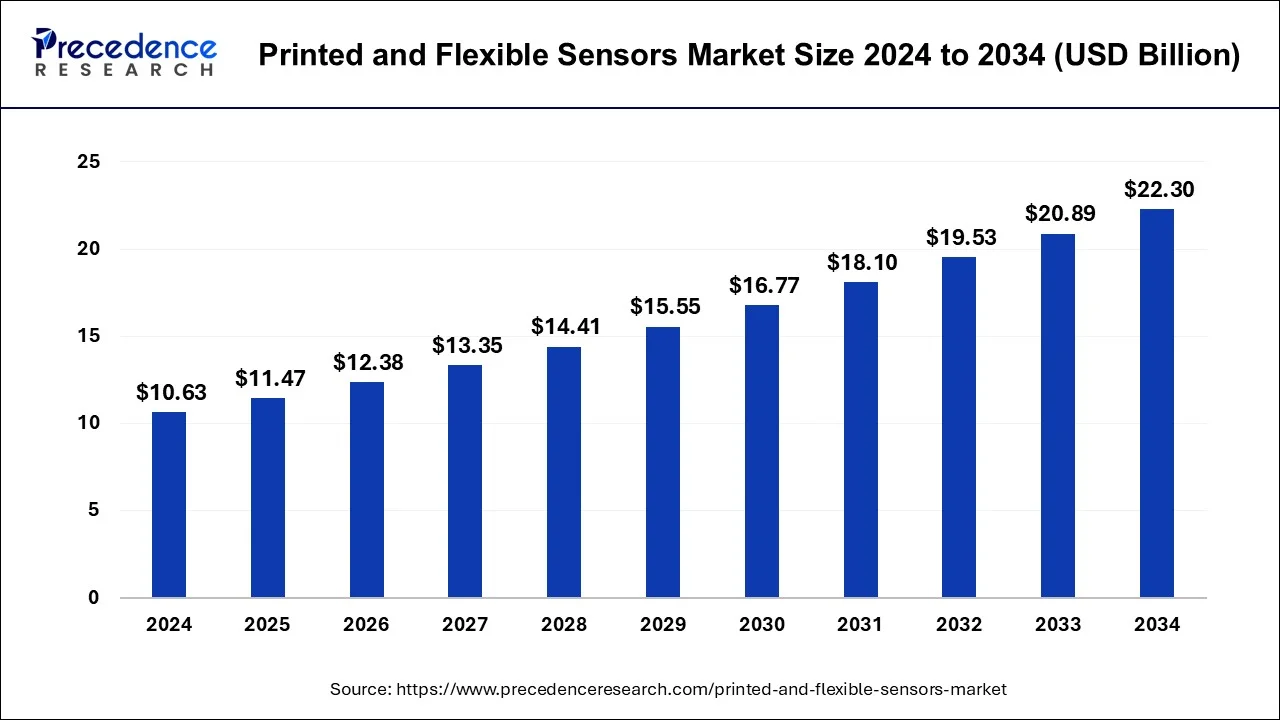
Printed and Flexible Sensors Market Key Takeaways
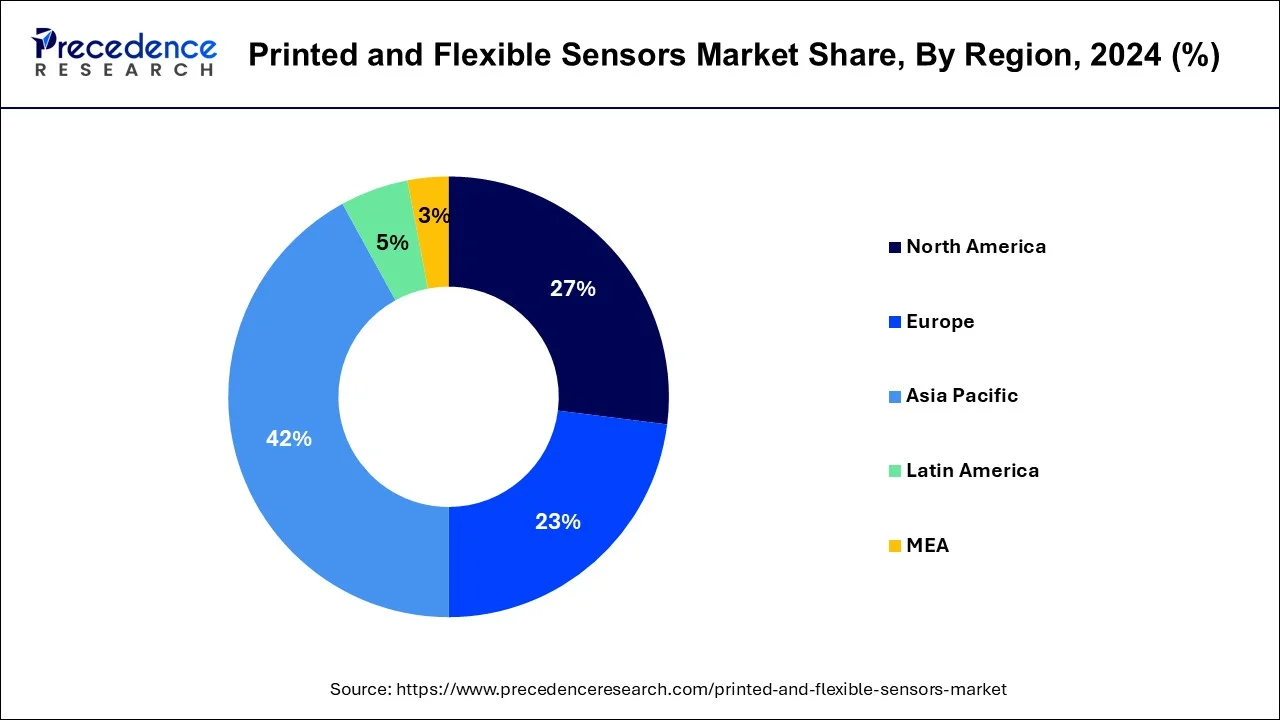
- Asia Pacific led the global market with the highest market share of 42% in 2025.
- By Type, the biosensor segment is estimated to hold the highest market share in 2025.
- By Application, the medical segment has held the largest market share in 2025.
Printed and Flexible Sensors Market Growth Factors
Increasing demand for consumer electronics across the globe is estimated to be the key factor that drives the demand for flexible and printed sensors. Technological advancements and developments in electronic devices seem to upend consumer preference and demand over the upcoming period.
Flexible electronics is one of such technologies that widely influence the gaming and entertainment industry owing to their multi-dimensional properties that include lightweight, portability, and ruggedness. Further, flexible electronics provide the ability to roll, curve, conform, flex, and enable a new intuitive user interface. In addition to its advanced features, an amalgamation of flexible electronics with wearable technology is likely to open new interfaces in the industry of flexible electronics. Hence, various technology disruptions in the field of consumer electronics are expected to significantly impact the market growth of printed and flexible sensors in the coming years.
Apart from consumer electronics, remarkable advancements in automotive electronic products are likely to impel the market growth for flexible and printed sensors. Increasing demand for advanced safety features along with driver assistance systems is estimated to surge the demand for sensors in an automobile that further propel the growth of flexible and printed electronics in the industry.
However, high cost compared to rigid sensors coupled with a high risk of damage while handling is the major factor of concern that hamper the growth of flexible and printed sensors over the upcoming years. Nonetheless, the rising penetration of the Internet of Things (IoT) and artificial intelligence in electronic products are likely to open alluring opportunities for the market players, thereby augmenting the market growth.
Market Scope
| Report Highlights | Details |
| Market Size in 2026 | USD 12.38 Billion |
| Market Size in 2025 | USD 11.47 Billion |
| Market Size by 2035 | USD 23.68 Billion |
| Growth Rate from 2026 to 2035 | CAGR of 7.52% |
| Largest Market | Asia Pacific |
| Base Year | 2025 |
| Forecast Period | 2026 to 2035 |
| Segments Covered | Product, Application, Region |
| Regions Covered | North America, Europe, Asia-Pacific, Latin America, and Middle East & Africa |
Segment Insights
Type Insights
Biosensor occupied the major value share in the year 2025 mainly because of escalating demand for glucose test strips that is largely used in diabetes monitoring. Diabetes has become one of the most common diseases across the globe. Its alarming rate of rise has forced the government to adopt several measures to control the disease. According to the International Diabetes Federation (IDF), around 424.9 Million people across the globe were suffering from diabetes in 2017 and the number is expected to surge to 628.6 Million by 2045, a 48% rise in the total patients of with diabetes. Hence, home therapeutic devices for continuously monitoring diabetes are a common trend in developed as well as developing countries, thereby triggering the demand for biosensors.
Apart from this, image sensors accounted to contribute significant value to the printed and flexible sensor market. The growth of the segment is major because of significant technological advancements in image sensing technology to cater to the rising need across various industries such as consumer electronics and automotive. For example, image sensors are widely used in the automotive industry for rear imaging cameras, dashcams, driver assistance systems, and many more. Whereas, in consumer electronics, it is largely used in smartphones and various electronic products that implement AI and IoT for their feature enhancement.
Application Insights
Medical accounted for the largest market share in the printed and flexible sensor application segment in 2025. This is attributed to the significant demand for biosensors across various medical devices, particularly in diabetes monitoring devices. Further, it is also used significantly for the diagnosis of infectious diseases. Apart from all this, the rising prevalence of chronic disease has surged the need for effective monitoring devices to diagnose the problem at its easy stage and cure them.
Regional Insights
What is the Asia Pacific Printed And Flexible Sensors Market Size?
The Asia Pacific printed and flexible sensors market size was valued at USD 4.82 billion in 2025 and is expected to reach USD 9.95 billion by 2035, growing at a CAGR of 7.52% from 2026 to 2035.
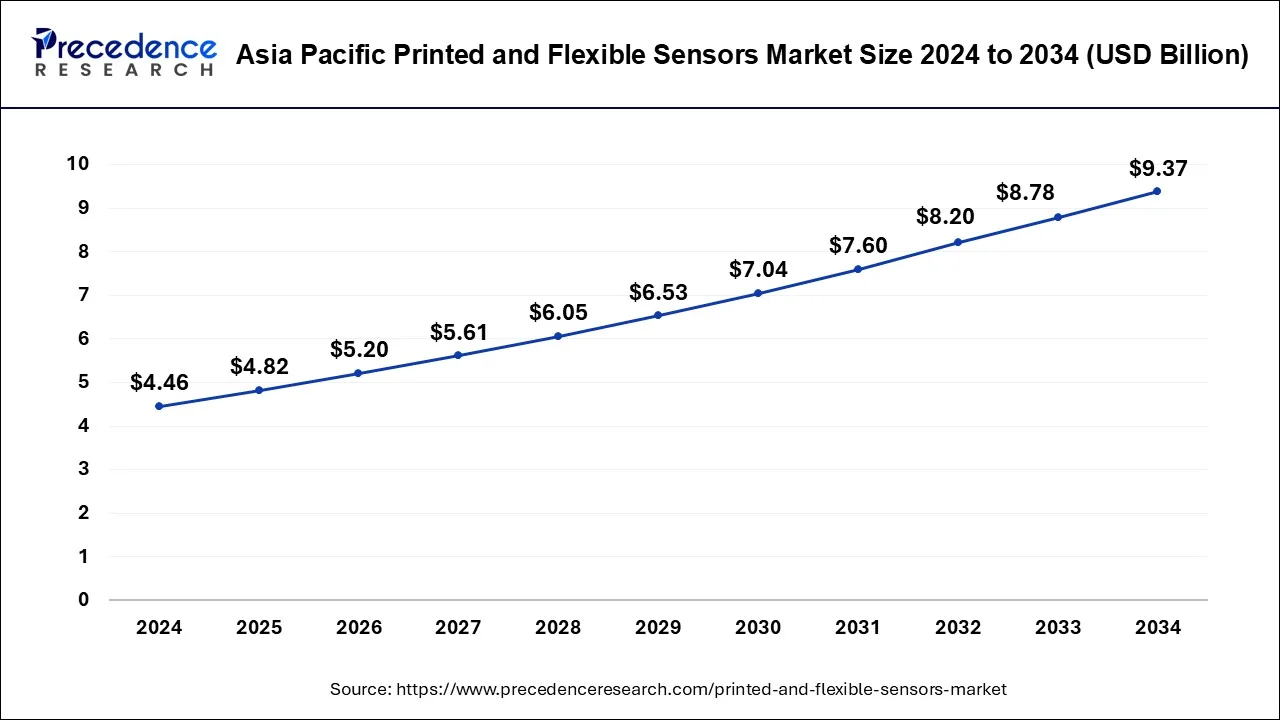
In 2025, Asia Pacific dominated the global and flexible sensors market holding 42% of the market share. This dominance is due to the presence of key market players. Moreover, the ongoing technological advancements and countries such as China, Japan, and South Korea provide opportunities for the manufacturers on a long-term basis in the region. Additionally, the rising adoption of printed electronics technology in consumer electronics, automotive, and medical, and growing small and medium-sized electronic businesses in the region is driving the growth of the market.
China Market Trends
China printed and flexible sensors market trends stand strongly on the demand phase for wearable healthcare devices. The growing homecare trends are expanding the businesses for the market in the medical sector. The diversified involvement of sensors integration in the automotive and consumer electronics is allowing manufacturers to uplift their innovative game to confidently rely on the excellence of the sensors. The domestic manufacturers are bolstering the foundation of flexible electronics.
North America's Speed in the Market
North America market is expected to grow at the fastest CAGR in the market during the forecast period. The regional market is adaptive to modern healthcare systems that elevate the deployment of sensors. Combat-ready designs suitable for robust medical settings are supporting end-to-end patient care. The monitoring surge in the regional healthcare is expanding the potential of the printed biosensors and adjustable patches. The rising development in the aerospace and automotive sector promotes component shifts aligning with the promising sensor integration. The heavy spending on domestic roll-to-roll printing facilities is spurring valuable business to the market.
U.S. Market Trends
Sharpened modern printing technologies and packaging are gaining traction in the regional market trends. The modernization is emerging in every concerned sector for safety expansion. Responsible industries like medical are backed by the updated trends, experiencing the valuable weightage of sensors to satisfy the monitoring necessities. The automotive integrative trends are driving substantial demand for flexible sensors in vehicle interiors. The commendable performance of flexographic processing and aerosol-jet printing is promoting tech built into the packaging manufacturing.
Europe's Core Innovations in the Printed and Flexible Sensors Market
Europe's market is considered to be a significantly growing area, due to the craze of eco-friendly smart packaging. The modernized manufacturing space is acquiring major sensor integration, accelerating the tech process. The eco-design compulsion is highlighting the companies' efforts to meet smart regulatory standards to continue with responsible logistics and packaging businesses. The eco-friendly content is contributing to the leader's natural protocol for sensor use in the popular medical and industrial sectors.
Latin America's Investments in the Market
Latin America market is expected to grow at a notable CAGR in the foreseeable future. The countryside development is flaunting sensor-enabled solutions in various sectors such as electronics, automotive and healthcare. The popular transitions in modern agriculture are rendering needed awareness to the farmers regarding the monitoring perks to their respective farming lands. The packaging industries are witnessing a surge in sensor-aided innovations that build strong supply chain engagement, promoting advanced logistics as well. The heavy spending to deploy agricultural IoT sensors is forming ketch networks in the regional agricultural sectors.
MEA's Deployment Strategies in the Market
MEA market is considered to be a significantly growing area, due to its smart printed and flexible sensors deployment strategies into the vast commercial businesses. Smart city projects are the huge hype for massive installations. The importing businesses are expanding the use of sensor solutions featuring tech transfer partnerships and other distributional deals.
Key Companies & Market Share Insights
The global printed and flexible sensors market is highly competitive and opportunistic for the new startup players as well as we-established manufacturers. The rapid change in consumer preference along with the fast-moving technological development across various industries has created a remarkable opportunity for the market players to grab a maximum foothold in the market. In addition, product diversity and reliability is the major parameter that is required to improve the company's market position. In the wake of the same, the industry participants invest prominently in new product development and advancement.
Printed and Flexible Sensors Market Companies
- Fujifilm Holding Corporation
- Canatu Oy
- Interlink Electronics, Inc.
- Tekscan, Inc.
- ISORG
- Peratech Holdco Limited
- KWJ Engineering
- T+Ink, Inc.
- Renesas Electronics Corporation
- Thin Film Electronics ASA
Segments Covered in the Report
This research study comprises a complete assessment of the market by means of far-reaching qualitative and quantitative perceptions, and predictions regarding the market. This report delivers a classification of the marketplace into impending and niche sectors. Further, this research study calculates the market size and its development drift at global, regional, and country from 2026 to 2035. This report contains a market breakdown and its revenue estimation by classifying it on the basis of printing technology, type, application, and region:
By Printing Technology
- Flexographic Printing
- Screen Printing
- Inkjet Printing
- Others
By Type
- Touch Sensor
- Biosensor
- Temperature Sensor
- Image Sensor
- Others
By Application
- Consumer Electronics
- Automotive
- Medical
- Industrial
- Others
By Regional Outlook
- North America
- U.S.
- Canada
- Europe
- U.K.
- Germany
- France
- Asia Pacific
- China
- India
- Japan
- South Korea
- Rest of the World
For inquiries regarding discounts, bulk purchases, or customization requests, please contact us at sales@precedenceresearch.com
Frequently Asked Questions





Ask For Sample
No cookie-cutter, only authentic analysis – take the 1st step to become a Precedence Research client
 Get a Sample




 sales@precedenceresearch.com
 Schedule a Meeting
