



Recyclable Packaging Market Size, Key Companies, Company Market Share, Production Volume, Sales Performance, Export & Import Dynamics, Adoption Rates, Recycling Rate, Material Efficiency, and Demand Trends
Recyclable Packaging Market (By Packaging Material Type: Glass, Paper, Plastic, Tinplate, Wood, Aluminum, Biodegradable plastics, Recycled papers; By Type of Packaging: Paper & cardboard, Bubble wrap, Void fill packing, Pouches & envelopes; By End-User Industry: Food, Beverage, Pharmaceutical, Personal Care, Logistics, Others) - Global Industry Analysis, Size, Trends, Leading Companies, Regional Outlook, and Forecast 2026 to 2035
Source: https://www.precedenceresearch.com/recyclable-packaging-market
 Get a Sample
 Table Of Content


What is the Recyclable Packaging Market Size?
The global recyclable packaging market size is calculated at USD 31.96 billion in 2025 and is predicted to increase from USD 33.91 billion in 2026 to approximately USD 57.46 billion by 2035, expanding at a CAGR of 6.04% from 2026 to 2035.
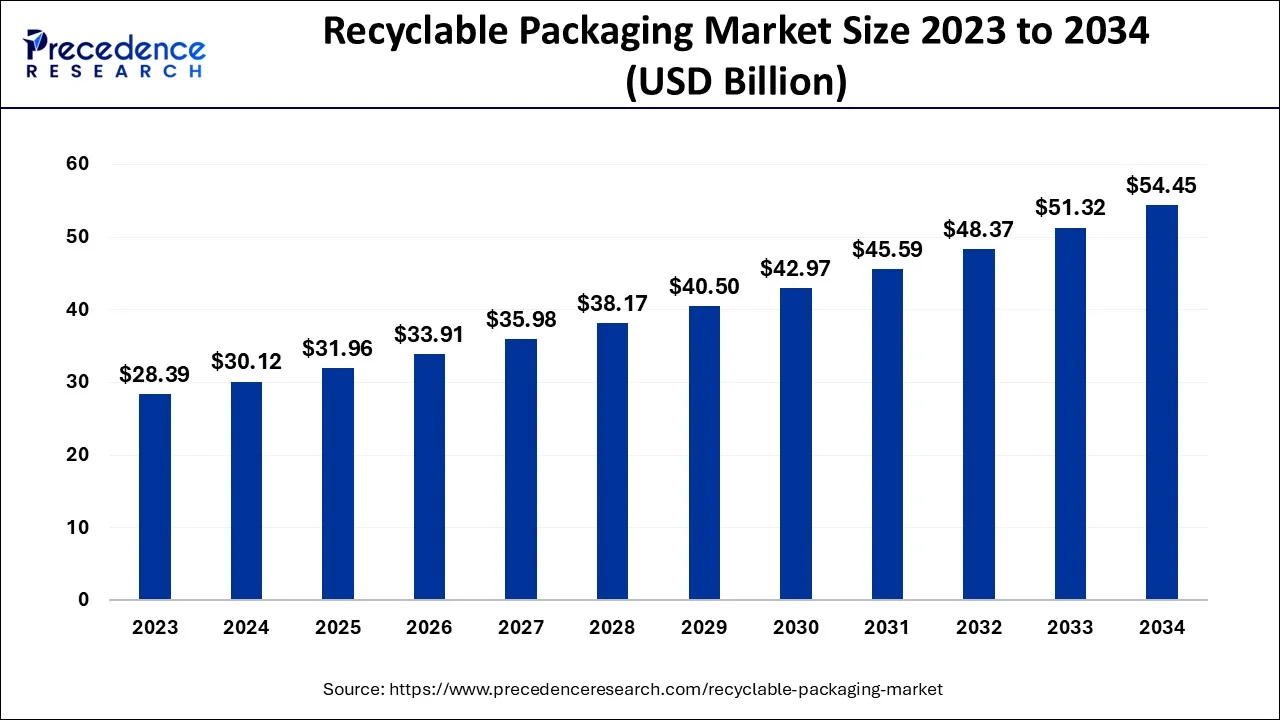
Market Highlights
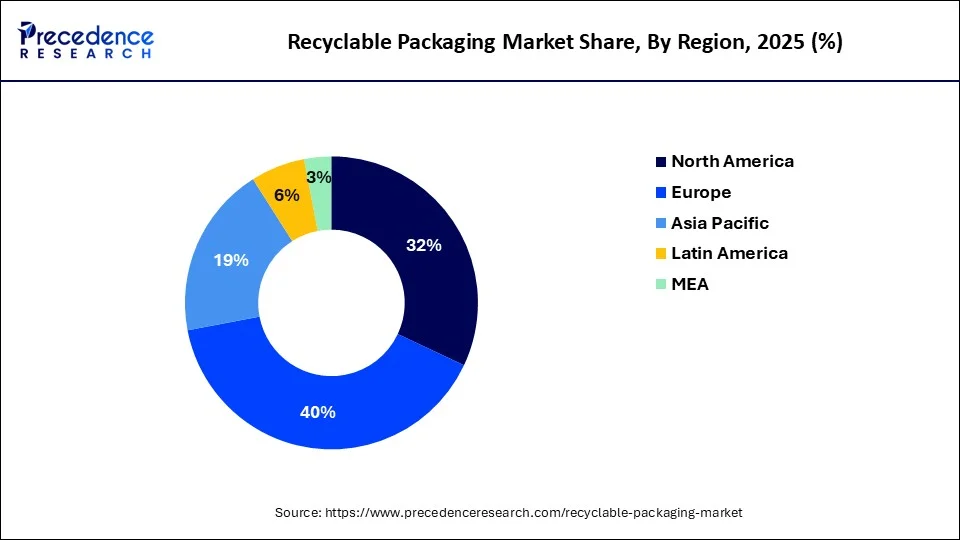
- Europe dominated recyclable packaging market in 2025.
- By packaging material type, the paper sector led the market in 2025.
- By end user, the beverages segment led the market in 2025.
What is the Recyclable Packaging?
Recyclable packaging is used to enclose or protect products for storage, distribution, and sale, and is utilized with recyclable resources like glass, corrugated cardboard, corrugated cardboard, card, metal, paper, and others. Recyclable packaging materials offer several benefits, including the preservation of natural resources, the reduction of manufacturing energy, and the decrease in greenhouse gas emissions, all of which contribute to lowering the carbon footprint. Recyclable packaging makes trash management simpler because it may be recycled, reused, or biodegraded.
The phrase "recyclable packaging" refers to items sold in recyclable packaging by businesses, individuals, and partnerships. These items are used to enclose or protect goods made of recyclable materials such as glass, card, metal, corrugated cardboard, paper, and others for distribution, storage, sale, and usage. The preservation of natural resources, the reduction of manufacturing energy, and the decrease of greenhouse gas emissions are just a few advantages of recyclable packaging materials, all of which help reduce the carbon footprint. Because recyclable packaging may be recycled, reused, or biodegraded, waste management is made easier. Therefore, it is anticipated that throughout the projection period, demand for recyclable packaging would increase as recycling regulations become more stringent.
The market for recyclable packaging has seen the emergence of eco-friendly packaging as a major trend. Biodegradable, reusable, recyclable, non-toxic, and made from recycled materials are all characteristics of eco-friendly packaging. Utilizing eco-friendly packaging reduces carbon footprint, encourages green living, aids in energy conservation, and also guards against noise, water, and air pollution. For instance, the American multinational consumer products business P&G (Procter & Gamble) began choosing eco-friendly packaging in April 2020. For their deodorant products, companies like Old Spice and Secret Sporting have introduced new environmentally friendly packaging.
Although recyclable packaging is utilized in almost every industry, it is most frequently observed in the food and beverage, wholesale, FMCG, healthcare, retail, and other sectors, to name a few. This brand-new packaging idea has also created new opportunities for creativity, enabling business owners to venture into unexplored terrain.
Recyclable Packaging Market Growth Factors
Eco-friendly packaging has emerged as a key trend in the recyclable packaging market. Eco-friendly packaging is biodegradable, recyclable, reusable, non-toxic, and constructed from recycled items. The use of eco-friendly packaging decreases carbon footprint and promotes green living which helps to conserve energy and also prevents air, water, and noise pollution. For instance, in April 2020, P&G (Procter & Gamble), an American multinational consumer goods corporation, started opting for eco-friendly packaging. Brands such as Old Spice and Secret Sporting started new eco-friendly packaging for their deodorant products.
Market Outlook
- Industry Growth Overview: The recyclable packaging shall be a huge market globally because of regulations, consumer awareness, and the green initiatives of businesses.
- Sustainability Trends: Some trends are leaning towards mono materials, increased recycled material, reusable and refillable packaging mechanisms.
- Global Expansion: Europe tops the list in terms of adoption, whereas the Asia Pacific is the region that is slowly catching the Western world in terms of progress in most of the industries.
- Major Investors: Goldman Sachs, HSBC, and the European Investment Bank are key parties of investors that support the development of recyclable packaging.
- Startup Ecosystem: Startups revolve around the technologies involved in terms of recyclable materials, and it is supported by the financing options and sustainability network.
Market Scope
| Report Coverage | Details |
| Market Size in 2025 | USD 31.96 Billion |
| Market Size in 2026 | USD 33.91 Billion |
| Market Size by 2035 | USD 57.46 Billion |
| Growth Rate from 2026 to 2035 | CAGR of 6.04% |
| Largest Market | Europe |
| Fastest Growing Market | Asia Pacific |
| Base Year | 2025 |
| Forecast Period | 2026 to 2035 |
| Segments Covered |
By Packaging Material Type, By Type of Packaging, By End-User Industry and region |
| Regions Covered |
North America, Europe, Asia-Pacific, Latin America, Middle East & Africa, and region |
Market Dynamics
Drivers
Growth in FMCG sector and rise in household recycling
- The significant expansion of recycled consumer goods for recyclables including paperboard, glass, and metal continues to hold great potential for the market for recycled packaging. While it is estimated that plastic packaging only results in roughly 28% of packaging materials being recovered in the US in industries like food and beverage, that percentage is only significantly higher in Europe, at 40%. However, recycling rates for the typical recycling materials—metal, glass, and paperboard—remain over 80%.
- The demand for food and beverages is still at an all-time high in the Asia Pacific, where this trend is predicted to spur significant expansion in new markets. Demand in the Asia Pacific continues to outpace demand in Europe and North America, giving the industry in the area more energy to expand. Over 40% of plastic items globally still wind up in landfills, and 25% are destined for incineration. The market for recycled packaging is expected to rise as a result of growing environmental consciousness, e-impact commerce on the packaging, and the availability of substitutes.
Growing environmental concern and demand for eco-friendly packaging
- An important aspect of the environmental issue of reducing, reusing, and recycling is recyclable packaging. It is a significant step in the direction of packaging that is more ecologically friendly. The packaging market has an indirect and direct impact on every industry, including personal care, pharmaceuticals, food and beverage, medicine, and healthcare. This will probably have a long-term positive impact on the worldwide market for recyclable packaging. Another factor influencing the market for recyclable packaging is the rising demand for ecologically friendly products. The worldwide market for recyclable packaging is projected to advance as a result of changes in consumer lifestyle and the purchasing of goods in smaller, proportionate amounts.
Challenges
- The large cost of recycling - Recycling is a process that includes infrastructure, which in turn necessitates high expenditures as well as manpower and technological know-how. With the aid of a well-designed program and the appropriate technology, recycling packaging items may be more effective in terms of energy and other resources.
Opportunities
Rising efficiency in e-commerce
- The demand for strong, secure, and efficient packages continues to benefit throughout the transit of diverse commodities, and the e-commerce industry remains a significant driver for packaging efficiency. Prior to now, the availability of raw materials and the quality of the supply remained important obstacles, and the effectiveness of recycled packaging was a big global problem.
- The landscape of the recycled packaging industry is expected to alter soon as a result of expanding regulations in the sector and technological advances in materials like molded fiber. Along with material developments like molded fiber, the technology used to create the material has undergone a sea shift that has enhanced both the quality and rate of production of the final product. With the removal of obstacles to aesthetically pleasing designs and the promise of smooth product finishes, emerging technologies like UFP promise to remain at the forefront of development. Additionally, as e-commerce develops, so does the need for more product information because customers frequently do not view things in their whole form before making a purchase.
- Additionally, the UFP technology paves the path for simple labeling, distinctive color coding, and considerable benefits for recyclable materials like molded fibers. The rise of e-commerce, the expansion of technology to support recycling regulations, significant cost-saving benefits, and increased e-commerce growth will all contribute to the market for recycled packaging throughout the projection period.
Increasing knowledge about the importance of recyclable packaging
- Consumer awareness of the advantages of recyclable packaging is likely to increase quickly over the course of the anticipated time period, accelerating the expansion of the recyclable packaging market share. Recyclable packaging is a sustainable type of packaging that helps to safeguard the environment by lowering greenhouse gas emissions and packaging trash generation.
- In addition, it is anticipated that the introduction of biodegradable packaging materials by businesses, such as bioplastics and biopolymers, for the packaging of a variety of products, including food and beverages, will lead to a significant increase in the size of the recyclable packaging market in the anticipated time period.
Segment Insights
Packaging Material Type Insights
Over the projected period, the paper sector is anticipated to account for the biggest revenue share by packaging material type. Due to well-established recycling streams and procedures, paper-based packaging has the greatest recycling rate of any form of packaging. Before the fibers are too weak to be reused, paper trash can be recycled seven times. Paper packaging provides customers with practical storage that is attractive, simple to use, and particularly ecologically friendly, which are significant reasons fostering this market's expansion.
End User Industry Insights
The beverages section is anticipated to outperform the other categories in terms of revenue share throughout the projection period, according to the end-user industry. Water to alcohol is only a few of the many beverages available, all of which need packaging to be served to customers. Beverages come in a variety of recyclable packaging forms, including glass, aluminum cans, recyclable plastic bottles, and new paper-based water boxes, all of which can help this sector's revenue development.
Regional Insights
Europe Recyclable Packaging Market Size and Growth 2026 to 2035
The Europe recyclable packaging market size is evaluated at USD 13.56 billion in 2026 and is predicted to be worth around USD 23.57 billion by 2035, rising at a CAGR of 6.31% from 2026 to 2035.
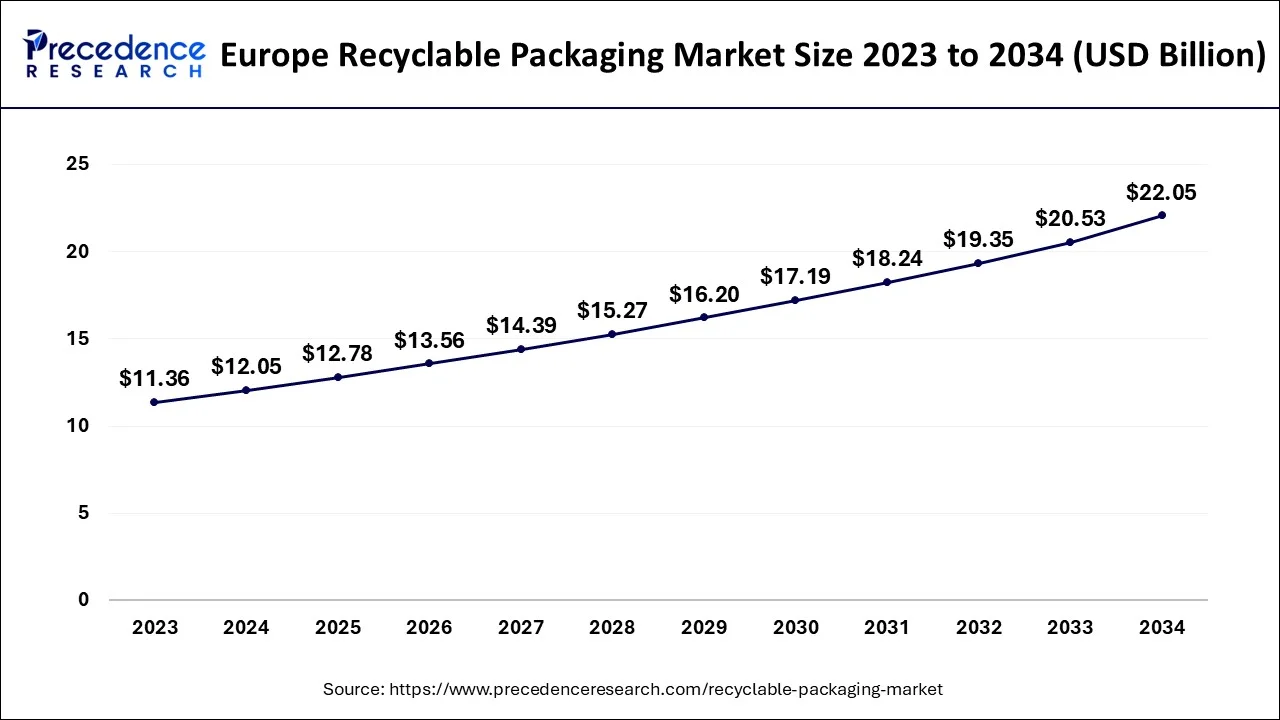
With the highest revenue share across regional markets, Europe became the biggest market for accounting and budgeting software in 2025. The region's adoption of stricter goals, such as the requirement for only recyclable packaging and fines for introducing non-recyclable packaging, is largely responsible for the region's revenue growth. Additionally, many businesses are going above and beyond the European Union's already strict recycling standards with Extended Producer Responsibilities, especially in nations like France, Germany, and the United Kingdom (EPRs). Due to the presence of key industry players in the area, such as Amcor, DS Smith, Mondi, and Tetra Laval, the recyclable packaging market in Europe is anticipated to experience strong revenue growth throughout the course of the projection period.
Why is the Market in Asia Pacific Growing at the Fastest Rate?
Over the projected period, the market for recyclable packaging in Asia-Pacific is anticipated to develop at the quickest CAGR. The main drivers fueling the growth of the APAC market are rising consumer awareness of recyclable packaging and the popularity of eCommerce. The region's countries, like China and Indonesia, have statewide bans on single-use plastics, which has helped the APAC industry expand.
UK Recyclable Packaging Market Analysis
The market in the UK is growing due to strict government regulations on plastic waste, extended producer responsibility policies, and rising consumer demand for sustainable packaging. Increased corporate sustainability commitments, innovation in recyclable materials, and strong recycling infrastructure further support market expansion. Moreover, the rapid expansion of the food & beverage, retail, and FMCG sectors contributes to the market.
India Recyclable Packaging Market Analysis
India's market is expanding due to bans on single-use plastics, rising environmental awareness, and rapid growth in e-commerce and FMCG sectors. Government initiatives promoting recycling, increasing urbanization, cost-effective recyclable materials, and corporate sustainability efforts are further accelerating demand for eco-friendly packaging across food, beverage, healthcare, and retail industries.
How is the Opportunistic Rise of North America in the Recyclable Packaging Market?
North America is expected to grow at a notable rate in the upcoming period due to stringent environmental regulations, rising consumer preference for sustainable products, and strong corporate sustainability initiatives. Increased adoption of eco-friendly materials, innovations in recyclable packaging, and robust recycling infrastructure across food, beverage, healthcare, and retail sectors further drive market growth during the forecast period.
U.S. Recyclable Packaging Market Analysis
The U.S. is a major contributor to the North American market. The market in the U.S. is driven by rising consumer awareness of environmental impact, government incentives for sustainable packaging, and the expansion of e-commerce. Companies are increasingly adopting lightweight, biodegradable, and recyclable materials to reduce carbon footprint, while technological advancements in packaging and waste management further support market growth.
What Are the Driving Factors of The Recyclable Packaging Market in North America?
North America is expected to grow at a notable rate during the forecast period. The sustainability movements in the U.S. and Canada are considered to be the main reason for the strong market presence of North America. The recycling system that is already established has simplified the task of retrieving aluminum, glass, and paper. The firms are slowly raising the amount of post-consumer recycled content, which subsequently results in the need to adopt lightweight packaging in the food, beverages, and online retail sectors.
U.S. Recyclable Packaging Market Trends:
The U.S. has had major means of ensuring that the recyclable packs are used through regulations that reduce the use of plastics and increase the content of the recycled materials. Designing solutions that are geared towards recycling is taking over the industry. Brands are forced to adapt due to the high consumer awareness. Recycled foam, paper, glass, and some types of plastics are the most preferred materials.
The UK Recyclable Packaging Market Trends:
Europe has strict rules concerning recyclable packaging in accordance with the laws of the circular economy. Very powerful schemes of producer responsibility influence the material selection in the UK reuse and deposit returning systems are increasing rapidly. Through the use of technology, digital traceability projects are creating ease with which markets are becoming compliant in regard to smart packaging and transparency.
China Recyclable Packaging Market Trends:
Implementation of recyclable packaging in China has been faster due to the change of policies and investment made in the infrastructure. The ban on plastics is leading to an explosion in the consumption of sustainable alternatives. Sorting and recycling technologies are getting more sophisticated and acceptable. The rising demand is putting pressure on the industry by increasing the demand for molded pulp and old-style recyclables.
Value Chain Analysis
- Raw Material Sourcing
This stage involves sourcing post-consumer recycled content, renewable materials, and recyclable resources like paper, cardboard, glass, aluminum, PET, and HDPE.
Key Players: Amcor, DS Smith, Mondi, Tetra Laval, Smurfit Kappa, WestRock, Ball Corporation. - Material Processing and Conversion
Recyclable packaging materials are collected, sorted, cleaned, and processed into pellets, flakes, or pulp, supporting a circular economy.
Key Players: Veolia, Suez, Tomra Systems, TerraCycle, Waste Management, DS Smith, and Amcor. - Logistics and Distribution
Recyclable packaging logistics optimize supply chains, reduce waste, ensure efficient collection, and use sustainable materials, promoting circular economy practices.
Key Players: DHL, UPS, DB Schenker, Kuehne+Nagel, FedEx, CEVA Logistics, Maersk. - Package Design and Prototyping: The packaging needs to be designed with consideration of the protection, value, regulatory standards, and customer needs simultaneously.
Key Players: Landor & Fitch, Elephant Design, DesignerPeople, Studio ABD - Recycling and Waste Management of Recyclable Packaging: The activities involve the allocation, classification, treatment, and disposal of materials to reclaim value.
Key Players: DS Smith, International Paper, Smurfit Kappa
Top Companies Operating in the Market & Their Offerings
- Ardagh Group SA – Provides sustainable metal and glass packaging that is infinitely recyclable, supporting circular economy goals for beverage and consumer products with high-quality, environmentally friendly containers.
- Ball Corporation – World's leading producer of recyclable aluminum packaging, especially beverage cans, promoting circular use of metal containers across food, drink, and personal care sectors.
- Elopak AS – Offers renewable, low-carbon, easily recyclable Pure Pak cartons made from fiber, reducing plastic use and supporting sustainable packaging solutions for liquids and beverages globally.
- Emerald Packaging – Develops flexible recyclable packaging with PCR content, replacing virgin plastics and advancing sustainable produce bags and film solutions for retail and food sectors.
- PlastiPak Holdings Inc. – Delivers innovative rigid plastic and PET packaging solutions with high recycled content, lightweight designs, and sustainable technologies to support brand partners' eco-friendly goals.
- Sealed Air Corporation – Provides sustainable protective and packaging systems using recycled content and efficient designs, helping reduce material waste and meet circular economy objectives across industries.
- Amcor: Amcor produces different types of environmentally-friendly wrappings, like the recyclable and compostable packaging in the form of flex and rigid wrappings in the form of films, bottles, pouches, and also bottles.
- Tetra Laval: In its packaging services, Tetra Laval proposes the use of paper packaging and processing, which promotes the recycling of plastics and metals as well and paper.
- Ardagh Group SA: Ardagh Group has recyclable aluminum cans and glass containers that meet the international beverage supply chain.
Recyclable Packaging Market Companies
- Amcor
- Tetra Laval
- Uflex Limited
- WestRock Company
- Be Green Packaging
- DS Smith
- DuPont
- Evergreen Packaging
- Mondi
- Bemis Company
- Graham
- International Paper
- TIPA Corp
- Nampak
Recent Developments
- Tetra Pak and Stora Enso joined together in July 2021 to boost Poland's beverage carton recycling capacity. The partnership will set up a sizable carton repulping factory at Stora Enso's Ostroka manufacturing site in Poland following a full feasibility assessment. The line will double Poland's ability to recycle beverage cartons annually from 25,000 to 75,000 tonnes.
- A new partnership with DuPontTM Tyvek and recycling partner Freepoint Eco-Systems was announced in Sep 2021, Technipaq Inc., which is a top producer of sterilizable flexible packaging solutions and a DuPontTM Tyvek Converter, is excited to support the company's current sustainability as well as recycling initiatives.
- In January 2025, Ball Corporation acquired a minority stake in Sweden's Meadow to back the production of fully recyclable aluminum cans for home and personal care products. The MEADOW KAPSUL solution is expected to reach stores. (Source: https://www.ball.com)
- In November 2024, Amcor revealed that Mondelēz International is set to transition Cadbury sharing bars in the UK and Ireland to packaging containing 80% recycled plastic, certified via ISCC PLUS, covering around 300 million bars projected for 2026.
(Source: https://www.amcor.com)
Segments Covered in the Report
By Packaging Material Type
- Glass
- Paper
- Plastic
- Tinplate
- Wood
- Aluminum
- Biodegradable plastics
- Recycled papers
By Type of Packaging
- Paper & cardboard
- Bubble wrap
- Void fill packing
- Pouches & envelopes
By End-User Industry
- Food
- Beverage
- Pharmaceutical
- Personal Care
- Logistics
- Others
By Geography
- North America
- Europe
- Asia-Pacific
- Latin America
- Middle East & Africa (MEA)
For inquiries regarding discounts, bulk purchases, or customization requests, please contact us at sales@precedenceresearch.com
Frequently Asked Questions
Tags





Ask For Sample
No cookie-cutter, only authentic analysis – take the 1st step to become a Precedence Research client
 Get a Sample




 sales@precedenceresearch.com
 Schedule a Meeting
