



Smart Inhalers Market Size, Key Companies, Company Market Share, Patient Volume, Treatment Adoption Rates, Pricing Analysis, Regulatory Landscape, Competitive Positioning, and Demand Forecast
Smart Inhalers Market (By Product: Inhalers, Nebulizers; By Device Type: Built In Smart Inhaler, Attach Type Smart Inhaler; By Application: Chronic Obstructive Pulmonary Disease, Asthma, Others; By End-User: Hospitals and Clinics, Respiratory Care Centers) - Global Industry Analysis, Size, Trends, Leading Companies, Regional Outlook, and Forecast 2026 to 2035
Source: https://www.precedenceresearch.com/smart-inhalers-market
 Get a Sample
 Table Of Content


What is the Smart Inhalers Market Size?
The global smart inhalers market size is accounted at USD 43.48 billion in 2025 and predicted to increase from USD 49.03 billion in 2026 to approximately USD 144.64 billion by 2035, representing a CAGR of 12.77% from 2026 to 2035. Smart inhalers are in high demand to assist people who are dealing with asthma and healthcare professionals with precise remote monitoring.
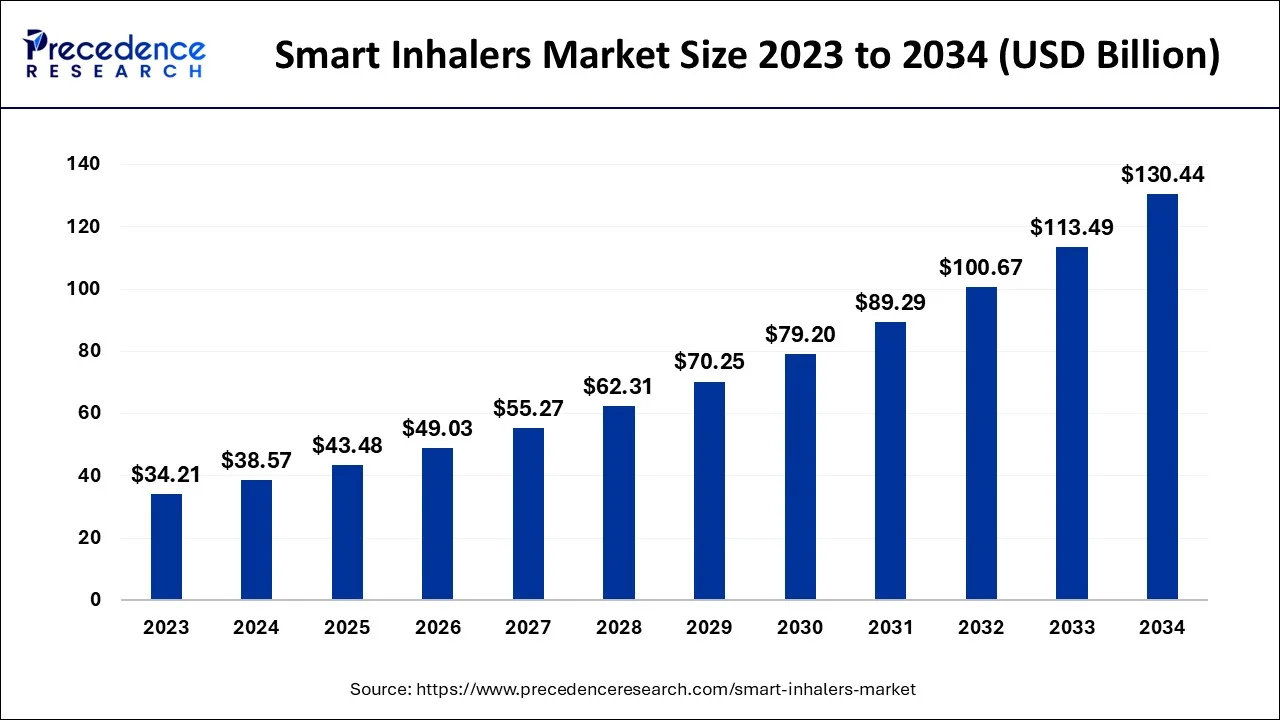
Market Highlights
- The North America market has held 39% of the revenue share in 2025.
- By product, the inhalers segment accounted for 83% of the market share in 2025.
- By application, the COPD segment has captured 59% of the total market share in the year 2025.
- The hospital pharmacies segment is growing at a 7.4% CAGR from 2026 to 2035.
Market Overview
As the number of cases of patients suffering from asthma and having increased in recent years the demand for smart inhalers is expected to grow significantly during the forecast period. As the cases of chronic obstructive pulmonary disease have increased in most nations across the globe the demand for smart inhalers will also increase. Pollution in the air has increased across developed as well as developing nations which is one of the major reasons that cause various diseases. There are two air pollutants that trigger asthma which is found in smog and particulate matter. It is also found in dust and smoke. As the ozone as well as the particulate matter in the air increases the cases of asthma. An increase in the amount of air pollution across the world is a leading factor that triggers the growth of the smart inhalers market to a great extent.
Smart inhalers are used as devices that help in the delivery of various drugs through the way of inhalation. Insulin, glucocorticoids, and beta-agonists are all the drugs that make use of inhalers in order to prevent and treat various kinds of respiratory diseases like chronic obstructive pulmonary disease and asthma. Sensors are attached in the form of a clip to the inhalers which these inhalers are called smart inhalers. These inhalers help in monitoring the exact amount of dosage taken by the patients. It's all the data that is acquired through the sensors are shed with health care professionals as well as the patients in order to track the usage of the inhaler.
How can AI improve the Smart Inhalers Market?
AI helps in the detection of inhaler types and provides instructions for use. AI also assists in correcting more than 80% of inhaler techniques, improving adherence, and supporting the reduction of medication waste. It helps to deliver the next generation of inhaler instructions for your device. AI enhances medication adherence, corrects inhaler technique, predicts flare-ups, optimizes clinical decisions, and accelerates pharmaceutical research. AI logs the exact date and time of every medication dose automatically.
Smart Inhalers Market Growth Factors
As the air pollutants indoors in developing countries, as well as underdeveloped countries, have increased the need for smart inhalers is expected to grow in the coming years. Poor housing is another factor that affects the health of the people, especially of the population living in such conditions. Poor conditions in the neighborhood will also lead to an increase in the number of respiratory disorders due to which the demand for smart inhalers is expected to grow during the forecast period.
Particulate matter is inhaled due to the use of portable stoves and kerosene lights in poor households. Particulate matter is extremely bad for the lungs. As the amount of tobacco consumed by women as well as men across the world be it developed countries or developed countries has grown extensively the cases of asthma have increased. The number of respiratory diseases has increased drastically in recent years as there is a high amount of pollution indoors.
Poor ventilation is another factor that will help in boosting the market growth. Biomass fuel is used for cooking and heating which leads to various diseases. Smoking is another reason that will lead to an increased number of respiratory disorders. Wireless connectivity is provided to the smart inhalers and these smart inhalers have a sensor that helps in keeping a record of a particular patient.
- Poor housing in various countries across the globe increases vulnerability to respiratory disorders.
- Consumption of tobacco by men and women in various forms also leads to an increased number of respiratory diseases.
- Countries that have low income also have poor ventilation facilities and this also leads to an increased number of cases of respiratory disorders.
- Growing air pollution is a major concern as it will trigger cases of respiratory disorders and asthma to a great extent, and the need for smart inhalers will increase during the forecast period.
Smart Inhalers Market outlook
- Industry Growth Overview: The smart inhalers market revolves around the key role of smart inhalers for asthma management that help patients improve adherence and track medication use. The remote therapeutic monitoring devices monitor usage in real time, and they are connected to sensors. Some models help in tracking inhalation technique to ensure proper use.
- Sustainability Trends: Research aims to achieve inhaler sustainability by focusing on the effect of prescription patterns, inhaler design typology, disposal and recycling on human health and environmental sustainability, and usage patterns. Scientists assess inhaler sustainability through a framework that focuses on people, products, and processes. The novel innovations ensure that patients safely transition to eco-friendly solutions without losing clinical control.
- Startup Ecosystem: The government prioritizes startups across the smart inhalers market and has taken initiatives that offer infrastructure support, tax exemptions, and market access to startups. Advancements in technology and innovations, government support, and growing interest in startup culture also drive the expansion of startups. A dynamic startup ecosystem provides employment opportunities, drives economic growth, fosters innovation, and contributes to a country's GDP.
- Global Expansion: Smart inhalers help people with chronic lung conditions use their inhalers more efficiently and help them remind them of their maintenance inhalers better. Pharmaceutical manufacturers and multiple technology companies have taken efforts to develop smart inhalers, which are also called smart inhalers. The digital inhalers apply modern technology to exis ting inhalers.
Market Scope
| Report Coverage | Details |
| Market Size in 2025 | USD 43.48 Billion |
| Market Size in 2026 | USD 49.03 Billion |
| Market Size by 2035 | USD 144.64 Billion |
| Growth Rate from 2026 to 2035 | CAGR of 12.77% |
| Largest Market | North America |
| Fastest Growing Market | Asia Pacific |
| Base Year | 2025 |
| Forecast Period | 2026 to 2035 |
|
Segments Covered |
By Product, By Device Type, By Application, By End-User, and region |
| Regions Covered |
North America, Europe, Asia-Pacific, Latin America, Middle East & Africa and region |
Market Dynamics
Drivers
- Respiratory disorders -There has been an increase in the prevalence of respiratory diseases like chronic obstructive pulmonary disease and asthma. These two reasons are estimated to be the most important factors that will lead to the growth of the market in the coming years. Smart inhalers are used for extensive purposes as they help in delivering drugs directly to the respiratory tract. this is another benefit that is offered by the use of smart inhalers and it will lead to an increase in the demand for smart inhalers in the due course.
- Increasing pollution - As the pollution in various countries across the globe has increased to a great extent the number of patients suffering from COPD and asthma I also increased by a great extent.
- Research and development activities - Constant research and development in the field of smart inhalers will lead to an increased number of innovations made in the existing products and many new features will be added to these inhalers for better analysis and monitoring of the patient.
- Increase in the number of investments made - As the number of funds received by the companies is expected to increase in the coming year technical advancements will be seen in the field of smart inhalers due to which the functioning of the smart inhalers will be enhanced to a great extent. It will also lead to increased adoption of smart inhalers in developing nations across the world.
Challenges
- Smart inhalers are expensive - As the cost of the smart inhalers is high the market growth will be hampered to a great extent as many patients in underdeveloped and developing nations may not be able to afford this equipment.
- Less awareness about the diseases - In many nations, the understanding of the symptoms of COPD and asthma is less due to which the need for such devices will also be less. Less awareness will also lead to or decrease in the revenue generated through the sales of these devices.
Opportunities
- The partnership between the software companies and the manufacturers has increased significantly - The manufacturers of the smart inhalers are well established, and they are constantly focusing on forming collaborations with the software companies and digital companies in order to meet the growing demands of patients across the world. such collaborations and partnerships will also help in increasing the demand for smart inhalers in the coming years. These companies will be able to expand their business to various locations through the way of partnership and it will provide major opportunities for the growth of the market during the forecast period.
- Growing digitalization - Increase in digitalization across underdeveloped and developing nations across the globe will lead to increased dreams of smart inhalers and it will also help in capturing new markets in the long run.
Segments Insights
Product Insights
How are smart inhalers contributing to the growth of the inhaler segment globally?
Depending on the product, the inhaler segment will have the largest market share in the coming years. The benefits offered by smart inhalers and their increased use in developing nations will lead to the growth of this segment.
These smart inhalers are portable and technologically advanced. As different types of respiratory elements have increased and patients are switching to smart inhalers which help in the management of disease by the patients the market is expected to grow well.
The nebulizers segment is expected to grow at the fastest CAGR in the market during the forecast period due to increased research and efforts on the development, production, and distribution of medical devices that are ideally used to deliver medication directly to the lungs. These medical appliances are essential to treat respiratory conditions such as chronic obstructive pulmonary disease, asthma, and other pulmonary disorders.
Device Type Insights
What made Built-in Smart Inhaler the Dominant Segment in the Smart Inhalers Market in 2025?
The built-in smart inhaler segment dominated the market in 2025, owing to its purpose to improve adherence to maintenance medication that would improve the quality of life. It is in high demand due to the occurrence of severe asthma and increased risk of death.
The attach type smart inhaler segment is estimated to grow at the fastest rate in the market during the predicted timeframe due to lower regulatory barriers, faster route to market, enhanced sustainability, and extended device lifespans. It is also driven by cost-effective scalability for health systems and insurers.
Application Insights
How is the rising adoption of smart inhalers driving growth in the asthma segment?
On the basis of application, the segment of asthma is expected to have the largest market share in the coming years due to the increased use of smart inhalers for this particular disease. The growing prevalence of asthma in various nations due to an increase in pollution has led to a greater share of the market.
The segment of chronic obstructive pulmonary disease will also have a good amount of market share in the coming years. With constant exposure to risk factors like particles, harmful gases, smoke, and occupational pollution the market is expected to grow significantly.
End-User Insights
What factors have contributed to the historical dominance of hospitals and clinics in the market?
The hospitals and clinics segment will have the largest market share in the coming years in terms of revenue. This segment has dominated in the past due to a large number of patients visiting the hospitals and clinics on a regular basis. The availability of various devices and trained professionals in hospitals and clinics will prove to be the two major factors that will lead to the growth of the market through this segment.
As the accessibility for the patients in the hospitals is extremely easy maximum revenue will be generated through the hospitals. Easy availability of the products required for a particular treatment is also accessible in hospitals. the infrastructure of the hospitals will also help in the proliferation of the segment.
Smart Inhalers Market Regional Insights
What is the Size of the U.S. Smart Inhalers Market?
The U.S. smart inhalers market size is evaluated at USD 453.18 million in 2026 and is predicted to be worth around USD 1,162.58 million by 2035, rising at a CAGR of 11.00% from 2026 to 2035.
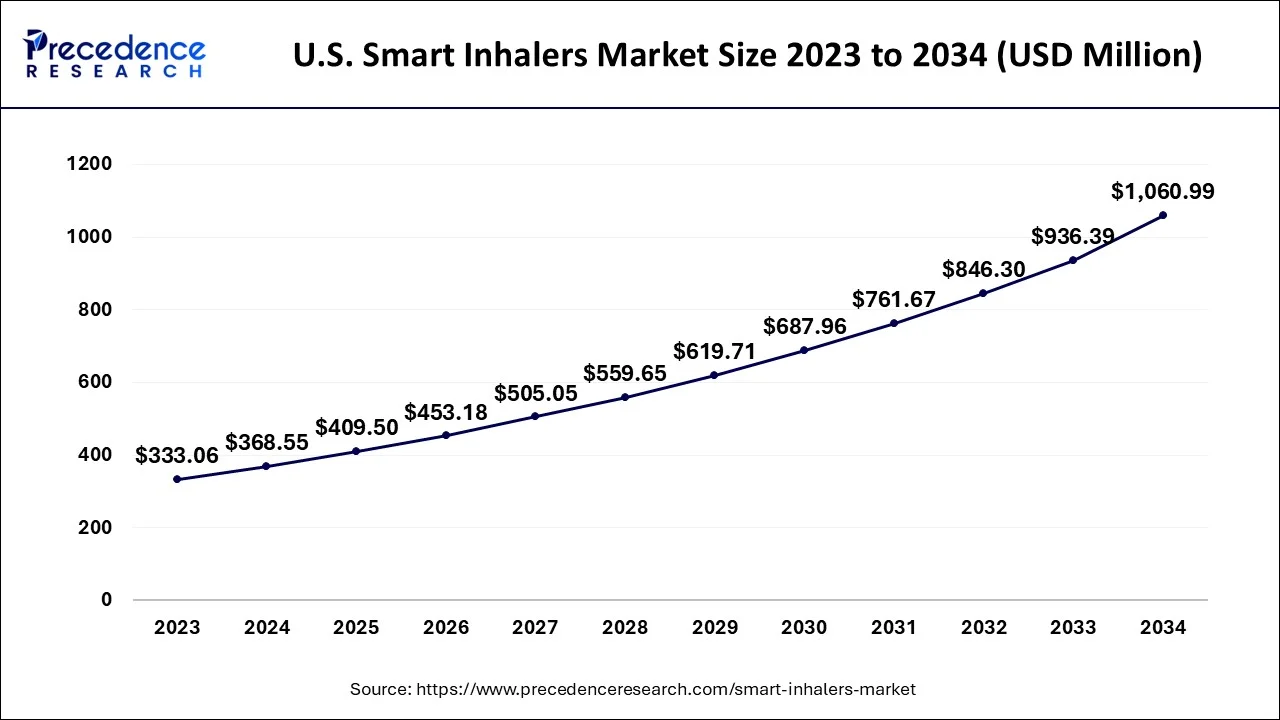
Smart inhalers have great demand in the North American region. In the coming years, this market is expected to grow significantly as it had a larger market share which was about 500 million U.S. dollars in the past. As technological advancements have increased in the North American region the market is expected to show significant growth. The management of respiratory diseases has become easier as the smart inhalers offered in the market are offered with various features. as Martin hailers are increasingly becoming affordable due to the advancements in technology the market is expected to grow well in the North American region. The contribution of the United States to the smart inhaler market will be significant.
U.S. Smart Inhalers Market Trends
The U.S. leads the market in North America due to robust healthcare IT infrastructure, widespread commercialization of Bluetooth-enabled inhalers, and active clinical deployment of adherence-tracking technologies. Strong support from payers, rising focus on home-based respiratory monitoring, and large-scale integration of inhaler sensors into electronic health record systems significantly accelerate the adoption of smart inhalers across the country.
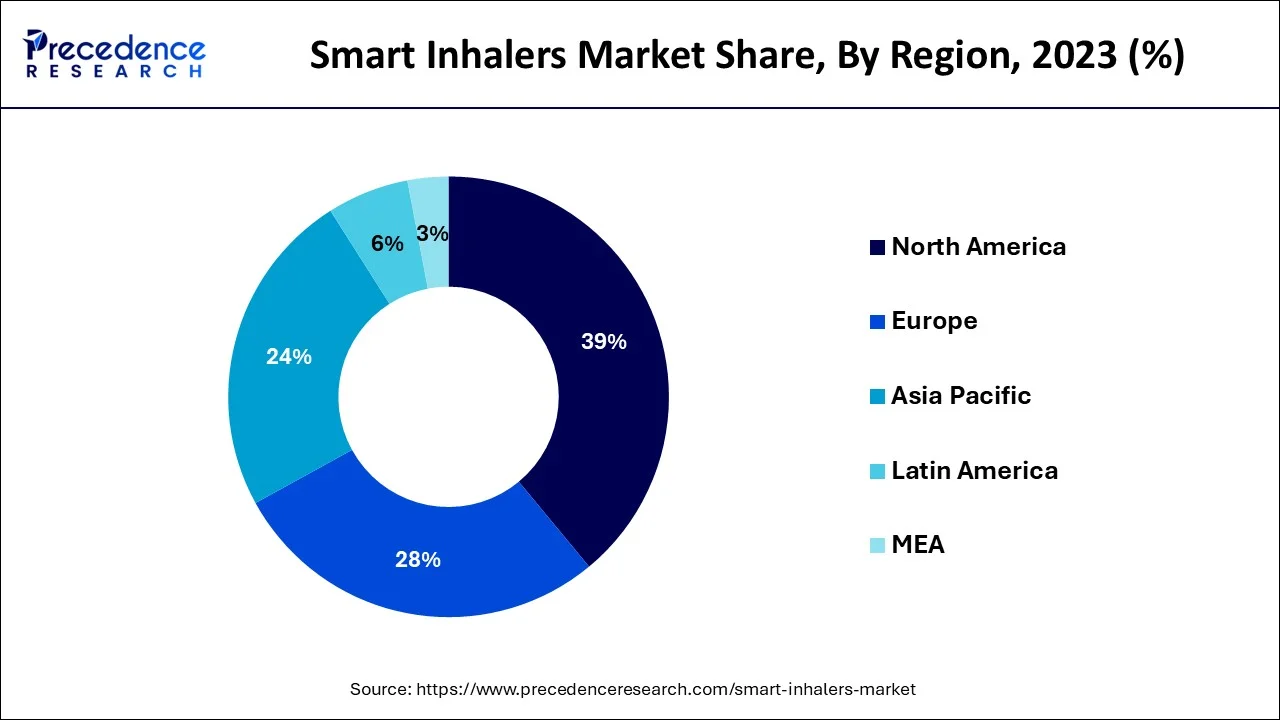
Healthcare infrastructure in the Asia Pacific region is developing rapidly and the technological developments taking place in this region will strengthen the market. Industrialization and economic expansion will be the two main factors that will drive market growth for smart inhalers in the coming years. China and India will have a significant contribution as the number of investments made in these regions are increasing.
India Smart Inhalers Market Trends
India is emerging as a key player in the Asia-Pacific market, where rising urban pollution, increasing asthma cases, and growing telemedicine adoption are driving demand for smart inhalers. Greater acceptance of digital health apps, affordable sensor technologies, and expanding access to respiratory care in tier-1 and tier-2 cities boost adoption. Local pharma–tech collaborations are further speeding up market penetration.
The second largest position in the market will be occupied by the European regions. The use of smart inhalers has increased in these regions due to a growing demand for smart inhalers by patients as well as hospitals. the fastest growth will be recorded by the Asia Pacific region in the forecast period.
UK Smart Inhalers Market Trends
The UK is a major contributor to the European smart inhalers market due to its well-established healthcare infrastructure and strong adoption of digital health technologies. The country has been actively integrating connected devices and digital monitoring solutions into respiratory care, enhancing patient adherence and treatment outcomes. Additionally, supportive government policies, widespread awareness of asthma and COPD management, and collaborations between healthcare providers and tech companies further drive market growth.
How is the Opportunistic Rise of Latin America in the Smart Inhalers Market?
Latin America is experiencing an opportunistic rise in the market due to the increasing prevalence of asthma and COPD, along with growing awareness of digital health solutions that improve medication adherence. Rapid smartphone adoption, expanding telemedicine services, and improving healthcare infrastructure, especially in countries like Brazil and Argentina, are supporting the integration of smart inhaler technologies. Additionally, unmet clinical needs, cost-effective device demand, and rising investments from global medtech companies create strong growth opportunities across the region.
How can the Smart Inhalers Market Expand in Brazil?
Brazil is transitioning toward a rising respiratory burden, digital health integration, and government and public health support. The government of Brazil made inhalers free and reduced household asthma costs from 29% of income to 2%. Moreover, the hospitalization rate reduced from 90 per 100,000 to 60 per 100,000 people.
What Opportunities Exist in the Middle East & Africa for the Market?
The Middle East & Africa (MEA) presents immense opportunities for the smart inhalers market. These opportunities arise from the rising burden of asthma and COPD, increasing urbanization, and growing exposure to air pollution in many countries. Expanding healthcare investments, government-led digital health initiatives, and improved access to connected medical devices, particularly in the GCC countries and South Africa, are supporting market adoption. Additionally, low market penetration, increasing smartphone usage, and partnerships between global medical device companies and local healthcare providers create significant growth potential across the region.
What is the Major Footprint of Saudi Arabia in the Smart Inhalers Market?
Saudi Arabia is transforming due to a focus on medication adherence, mobile health integration, expansion of telemedicine, e-commerce and pharmacy access, and strategic government mandates for digital healthcare. A digital shift is backed by the Saudi Vision 2030 healthcare transformation mandates, localized medical manufacturing, remote patient monitoring, and value-based digital care.
Smart Inhalers Market - Value Chain Analysis
- Technological Development and Processing
Smart inhalers are developed through processes such as sensor integration, Bluetooth connectivity development, dose-tracking system design, digital interface programming, and interoperability testing of device software.
Key players: Propeller Health, Adherium Limited, Teva Pharmaceutical Industries Ltd., Cohero Health - Quality Testing and Certification
Smart inhalers require certifications for medical device safety, digital health compliance, and electronic connectivity. These include ISO medical device standards, FDA/CE approvals, cybersecurity validation, and connectivity performance certification.
Key players: FDA (U.S. Food and Drug Administration), CE Marking, ISO - Distribution to Industrial Users
Smart inhalers are distributed to hospitals, respiratory clinics, home healthcare providers, pharmacies, and digital health platforms.
Key players: Philips Healthcare, AstraZeneca plc, GlaxoSmithKline plc.
Top players in the Smart Inhalers Market & Their Offerings:
- Teva Pharmaceutical Industries Ltd.
Teva is a leading player in the smart inhalers space with its ProAir Digihaler product line, which integrates digital sensors that track inhalation techniques and usage frequency and provide real-time patient feedback. The company focuses on improving adherence and respiratory disease management through digital health integration. - GlaxoSmithKline (GSK)
GSK collaborates with digital health companies to develop connected inhalers equipped with sensors that track adherence. Its smart inhaler ecosystem supports asthma and COPD patients with data-driven insights, remote monitoring features, and improved treatment outcomes. - AstraZeneca plc
AstraZeneca offers smart inhaler solutions through partnerships with digital health platforms, enabling medication use monitoring, symptom tracking, and predictive insights for asthma and COPD care. The company focuses strongly on integrating digital therapeutics with respiratory drug delivery. - Propeller Health (ResMed)
Propeller Health is a pioneer in digital inhaler sensors compatible with a wide range of inhalers from major pharmaceutical companies. Its system provides real-time adherence monitoring, environmental trigger tracking, and personalized insights to support better respiratory disease management. - Adherium Ltd.
Adherium develops smart inhaler devices and connected sensors that monitor inhaler technique and medication adherence. The company is known for its Hailie platform, which integrates clinical-grade data for asthma and COPD management across patient and clinical settings.
Other Companies
- Cohero health
- Propeller Health
- Inspiro medical
Recent Developments
- In October 2025, Cipla planned 4 major respiratory launches by 2026 with the highest ever quarterly revenue of Rs 7,500 + Cr. The company also reported that this revenue growth is accelerated by a growing chronic portfolio and strong demand for its respiratory drugs. (Source: https://economictimes.indiatimes.com)
- In August 2025, Terumo India launched advanced infusion systems named Terufusion to enhance critical care precision and safety. It has brought connected infusion technology to support more efficient and safer drug administration in intensive care units. (Source: https://ehealth.eletsonline.com)
Segments Covered in the Report
By Product
- Inhalers
- Dry powder inhaler
- Metered dose inhaler
- Nebulizers
By Device Type
- Built-In Smart Inhaler
- Attach Type Smart Inhaler
By Application
- Chronic Obstructive Pulmonary Disease
- Asthma
- Others
By End-User
- Hospitals and Clinics
- Respiratory Care Centers
By Geography
- North America
- Europe
- Asia-Pacific
- Latin America
- Middle East & Africa (MEA)
For inquiries regarding discounts, bulk purchases, or customization requests, please contact us at sales@precedenceresearch.com
Frequently Asked Questions
Tags





Ask For Sample
No cookie-cutter, only authentic analysis – take the 1st step to become a Precedence Research client
 Get a Sample
.webp)



 sales@precedenceresearch.com
 Schedule a Meeting
