



Solid Waste Management Market Size, Key Companies, Company Market Share, Production Capacity, Raw Material Pricing, Export & Import Analysis, Manufacturing Cost, Competitive Positioning, and Demand Forecast
Solid Waste Management Market (By Waste: Municipal, Industrial; By Treatment: Open Dumping, Disposal; By Material: Paper & Paperboard, Plastic, Metals, Food, Textiles, Others) - Global Industry Analysis, Size, Trends, Leading Companies, Regional Outlook, and Forecast 2026 to 2035
Source: https://www.precedenceresearch.com/solid-waste-management-market
 Get a Sample
 Table Of Content


What is the Solid Waste Management Market Size?
The global solid waste management market size was valued at USD 305.21 billion in 2025 and is predicted to increase from USD 318.03 billion in 2026 to approximately USD 459.32 billion by 2035, expanding at a CAGR of 4.17% from 2026 to 2035.
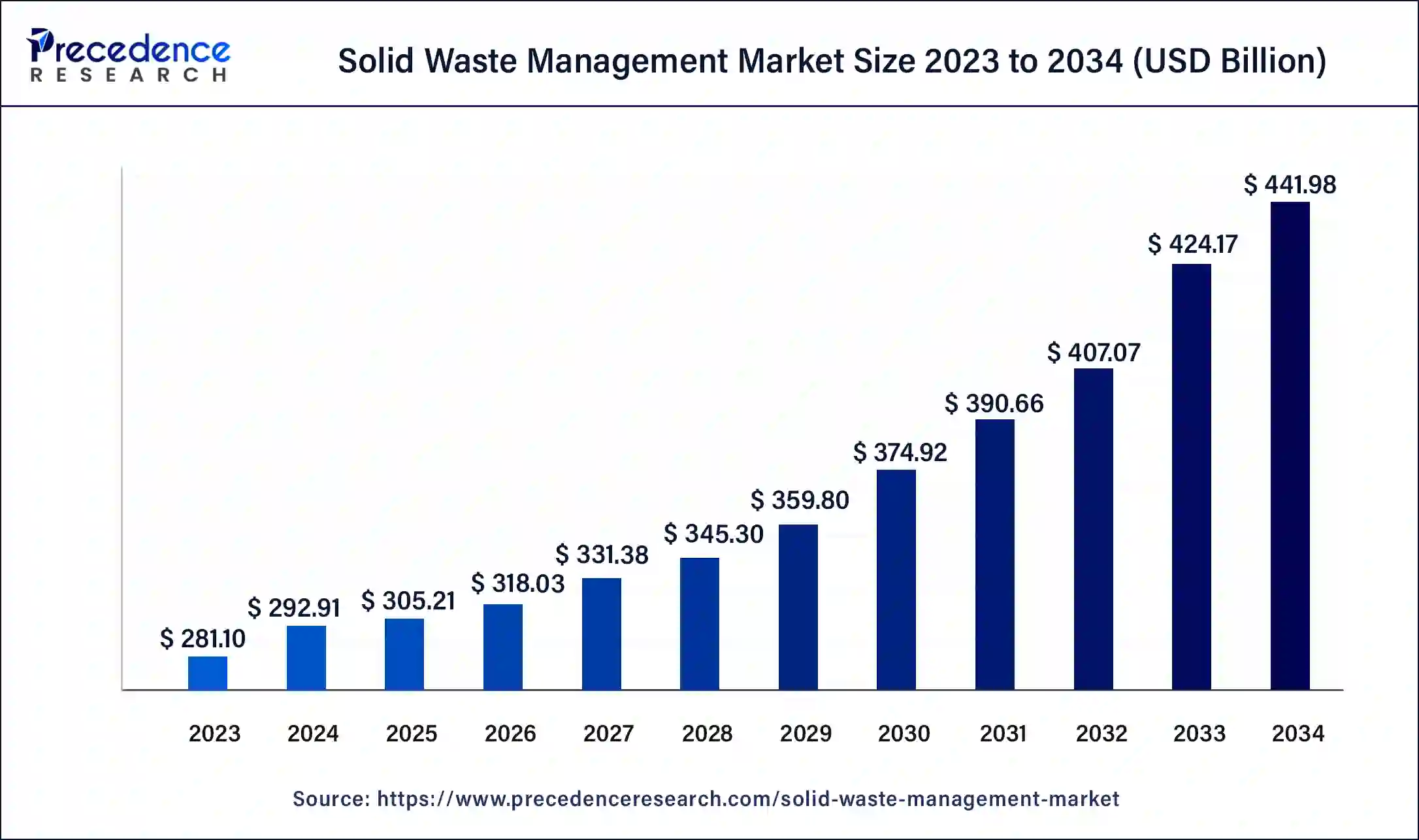
Solid Waste Management Market Key Takeaways
- The global solid waste management market was valued at USD 305.21 billion in 2025.
- It is projected to reach USD 459.32 billion by 2035.
- The solid waste management market is expected to grow at a CAGR of 4.17% from 2026 to 2035.
- North America contributed more than 36.50% of revenue share in 2025.
- Asia Pacific is estimated to witness the fastest CAGR between 2025 and 2035.
- By waste, the industrial segment has held the largest market share of 68% in 2025.
- By waste, the municipal segment is anticipated to grow at a remarkable CAGR of 6.2% between 2026 to 2035.
- By treatment, the disposal segment generated over 63% of revenue share in 2025.
- By treatment, the open dumping segment is expected to expand at the fastest CAGR over the projected period.
- By material, the paper & paperboard segment held the largest market share of 38% in 2025.
- By material, the plastic segment is expected to expand at the fastest CAGR over the projected period.
What is Solid Waste Management?
The solid waste management market involves the collection, transportation, disposal, and recycling of solid waste materials to minimize environmental impact. Fueled by urbanization, industrialization, and increasing waste generation, the market addresses sustainable waste solutions. Key components include waste collection systems, recycling facilities, and landfill management. Stringent environmental regulations and growing awareness drive innovations in waste-to-energy technologies and recycling processes. The market aims to optimize resource recovery, reduce landfill dependency, and promote circular economy principles, offering comprehensive waste management services to municipalities, industries, and communities worldwide.
Continuous advancements in waste-to-energy technologies, smart waste management systems, and sustainable practices contribute to the solid waste management market's evolution. The industry thrives on efficient waste sorting, recycling initiatives, and public engagement for sustainable waste reduction.
How is AI contributing to the Solid Waste Management Industry?
AI empowers waste management by making it smarter with automated sorting, routing, and real-time monitoring. Robotic systems detect plastic, metal, and glass accurately. At high-tech factories, the percentage of recycling is over 90. Up to 13% of the transport costs are reduced with route analytics. IoT sensors eliminate overflow and pick-up misses.
The predictive models are used to predict the quantity of waste and vehicle maintenance. Spectral analysis enhances the purity of materials in favor of effective chemical recycling and recycling of resources.
Solid Waste Management Market Growth Factors
- Urbanization Impact: Rapid urbanization contributes to increased solid waste generation, propelling demand for advanced waste management solutions.
- Environmental Regulations: Stringent environmental regulations worldwide drive the adoption of innovative waste management practices, emphasizing sustainability and eco-friendly solutions.
- Waste-to-Energy Technologies: Advancements in waste-to-energy technologies offer opportunities for converting waste into renewable energy, addressing both waste reduction and energy needs.
- Circular Economy Initiatives: Growing emphasis on circular economy principles encourages resource recovery, recycling, and waste minimization, fostering sustainable practices in waste management.
- Smart Waste Management Systems: The integration of smart technologies, such as IoT-enabled bins and real-time monitoring systems, optimizes waste collection routes and enhances operational efficiency.
- Increasing Waste Recycling: Rising awareness and governmental initiatives boost waste recycling trends, creating business opportunities for companies involved in recycling processes and facilities.
- Landfill Management Solutions: Innovations in landfill management, including advanced landfill technologies and rehabilitation practices, cater to the need for responsible waste disposal.
- Public Awareness and Engagement: Growing public awareness about environmental impact prompts increased citizen participation, leading to collaborative waste reduction efforts and community-based waste management initiatives.
- Waste Sorting Technologies: Technological advancements in waste sorting enhance the efficiency of recycling processes, reducing contamination and improving the overall quality of recycled materials.
- Global Expansion: The Solid Waste Management Market sees growth opportunities in expanding to emerging economies, where rapid industrialization and urbanization create a demand for efficient waste management solutions.
- Waste Reduction Strategies: Businesses focusing on waste reduction strategies, including source reduction and sustainable packaging, find opportunities in catering to environmentally conscious consumers and regulatory requirements.
- Innovative Waste Collection Methods: Exploration of innovative waste collection methods, such as autonomous vehicles and drone technologies, presents avenues for efficiency improvements and cost optimization.
- Bio-based Materials Utilization: Utilization of bio-based materials in waste management processes aligns with circular economy principles, promoting the use of renewable resources in waste treatment and disposal.
- Green Infrastructure Development: Opportunities arise in the development of green infrastructure, incorporating sustainable waste management practices into urban planning for enhanced environmental stewardship and resilience.
Market Outlook
- Industry Growth Overview: The solid waste management market is going to continue its expansion as organized waste services will be in demand more and more because of urban growth and awareness of their benefits.
- Sustainability Trends: All around the world, a major trend is moving towards the adoption of circular economy practices that focus on reduction, reuse, recycling, and resource recovery initiatives.
- Global Expansion: The developing regions are taking up the advanced solutions for waste management as a consequence of industrialization, policy support, infrastructure investment, and the like on a global scale.
- Major Investors: The primary investors are Waste Management Inc., Veolia, SUEZ Group, Clean Harbors, Biffa, and Covanta, each of them having its own particular strategy.
- Startup Ecosystem: New firms worldwide are working on smart waste technologies, based on the use of sensors, robotics, and analytics, which are operational management systems that support the modern waste movement.
Market Scope
| Report Coverage | Details |
| Market Size in 2025 | USD 305.21 Billion |
| Market Size in 2026 | USD 318.03 Billion |
| Market Size by 2035 | USD 459.32 Billion |
| Growth Rate from 2026 to 2035 | CAGR of 4.17% |
| Largest Market | North America |
| Base Year | 2025 |
| Forecast Period | 2026 to 2035 |
| Segments Covered | By Waste, By Treatment, and By Material |
| Regions Covered | North America, Europe, Asia-Pacific, Latin America, and Middle East & Africa |
Market Dynamics
Driver
Stringent environmental regulations and technological advancements in smart waste management
Stringent environmental regulations significantly drive the market demand for solid waste management by compelling industries and municipalities to adopt advanced waste disposal practices. Governments worldwide are imposing strict waste management policies to curb environmental pollution, necessitating the implementation of sustainable solutions. This regulatory environment creates a surge in demand for technologies that enable efficient waste sorting, recycling, and disposal, positioning the solid waste management market as a critical player in meeting compliance standards.
Technological advancements in smart waste management further boost market demand by providing innovative tools for optimizing waste collection routes and enhancing overall operational efficiency. IoT-enabled bins, real-time monitoring systems, and data analytics contribute to smarter and more sustainable waste management practices. The integration of these technologies not only aligns with environmental goals but also addresses the growing complexities of managing waste in urbanized and industrialized areas, driving increased adoption and investment in the solid waste management market.
Restraint
Land availability for landfills and infrastructure challenges
Land availability for landfills and infrastructure challenges pose significant restraints to the solid waste management market. The scarcity of suitable land for landfill sites, particularly in densely populated urban areas, limits the expansion of waste disposal capacity. This constraint forces waste management authorities to explore alternative solutions such as waste-to-energy technologies, recycling, and incineration, which may have higher upfront costs.
Moreover, infrastructure challenges, including outdated waste collection and treatment facilities, hinder the effective management of solid waste. Insufficient infrastructure can result in inefficiencies throughout the waste management process, affecting collection, sorting, and disposal activities. This, in turn, compromises the overall efficacy of waste management systems. To tackle these hurdles, significant investments are vital to update infrastructure, incorporate cutting-edge technologies, and adopt sustainable practices in waste management. These endeavors are indispensable, serving not just to protect the environment but also to uphold public health. A dedicated commitment to these investments is pivotal in building resilient, flexible waste management systems capable of addressing the needs of expanding urban communities and securing a cleaner, more sustainable trajectory for the future.
Opportunity
Advanced waste-to-energy technologies and green infrastructure development
The surge in market demand for the solid waste management market is notably propelled by the adoption of advanced waste-to-energy technologies. With an increasing focus on sustainable practices and renewable energy sources, these technologies facilitate the conversion of solid waste into valuable energy, addressing both waste reduction and energy needs. As governments and industries prioritize environmentally friendly solutions, the integration of advanced waste-to-energy processes becomes a key driver, positioning the market as an essential player in the broader sustainable energy landscape.
Additionally, the development of green infrastructure plays a pivotal role in surging market demand. Incorporating eco-friendly waste management practices into urban planning enhances environmental stewardship and resilience. Green infrastructure initiatives encompass waste reduction, sustainable packaging, and innovative waste collection methods, contributing to the overall growth of the solid waste management market as communities worldwide seek holistic and environmentally conscious solutions to address the challenges of waste management.
Segment Insights
Waste Insights
According to the waste, the industrial segment has held a 68% revenue share in 2025. Industrial solid waste originates from manufacturing processes, construction activities, and industrial facilities. In the solid waste management market, there's a trend towards sustainable industrial practices, emphasizing waste reduction, recycling, and responsible disposal. Circular economy principles drive industrial waste management, encouraging resource recovery and minimizing environmental impact. Increasingly, industries are adopting advanced technologies for waste treatment and recycling to align with stringent regulations and enhance their environmental credentials.
The municipal segment is anticipated to expand at a significant CAGR of 6.2% during the projected period. Municipal solid waste refers to the waste generated by households, institutions, and commercial establishments. This includes everyday items like packaging, food waste, and discarded goods. In the solid waste management market, there is a growing trend towards integrated waste management systems for MSW, incorporating recycling, composting, and waste-to-energy technologies. Smart waste management solutions, such as sensor-equipped bins and data analytics, optimize collection routes, reducing operational costs and enhancing sustainability.
Material Insights
Based on the material, the paper and paperboard segment held the largest market share of 38% in 2025. Paper and paperboard are key materials in the solid waste management market, encompassing products like newspapers, cardboard, and packaging materials. Trends in paper waste management involve increased recycling efforts driven by environmental awareness and regulatory measures. Technological advancements in paper recycling enhance efficiency, contributing to a circular economy. Sustainable sourcing practices and the development of bio-based alternatives further define trends, aligning with the market's commitment to responsible waste management.
On the other hand, the plastic segment is projected to grow at the fastest rate over the projected period. Plastic, a ubiquitous material, poses unique challenges in solid waste management. Trends in plastic waste involve a global shift towards reducing single-use plastics, promoting recycling infrastructure, and advancing plastic-to-fuel technologies. Circular economy initiatives aim to minimize plastic waste by encouraging reusability and eco-friendly alternatives. Regulatory measures addressing plastic pollution drive innovations in material design and waste recovery processes. The market sees an increasing emphasis on extended producer responsibility, pushing manufacturers to play a role in the end-of-life management of plastic products.
Treatment Insights
In 2025, the disposal segment had the highest market share of 63% on the basis of the end user. Disposal involves the final disposition of solid waste, typically in landfills or incineration facilities. Trends in disposal methods highlight a transition towards more environmentally friendly options, such as sanitary landfills with advanced leachate and gas collection systems. Additionally, waste-to-energy technologies are gaining prominence, transforming disposal into an energy generation opportunity. The solid waste management market increasingly emphasizes safe and sustainable disposal practices to minimize environmental impact, aligning with circular economy principles and fostering a responsible approach to waste management.
The open dumping segment is anticipated to expand at the fastest rate over the projected period. Open dumping refers to the indiscriminate disposal of solid waste in unauthorized areas, lacking proper containment or environmental controls. This outdated and environmentally harmful practice poses severe threats to ecosystems, public health, and air and water quality. Trends indicate a global shift away from open dumping, driven by stringent regulations, increased environmental awareness, and the adoption of sustainable waste management practices. Governments and industries are investing in alternatives to mitigate the environmental impact of open dumping and promote responsible waste disposal.
Regional Insights
What is the U.S. Solid Waste Management Market Size?
The U.S. solid waste management market size was estimated at USD 79.51 billion in 2025 and is predicted to be worth around USD 121.95 billion by 2035, at a CAGR of 4.37% from 2026 to 2035.
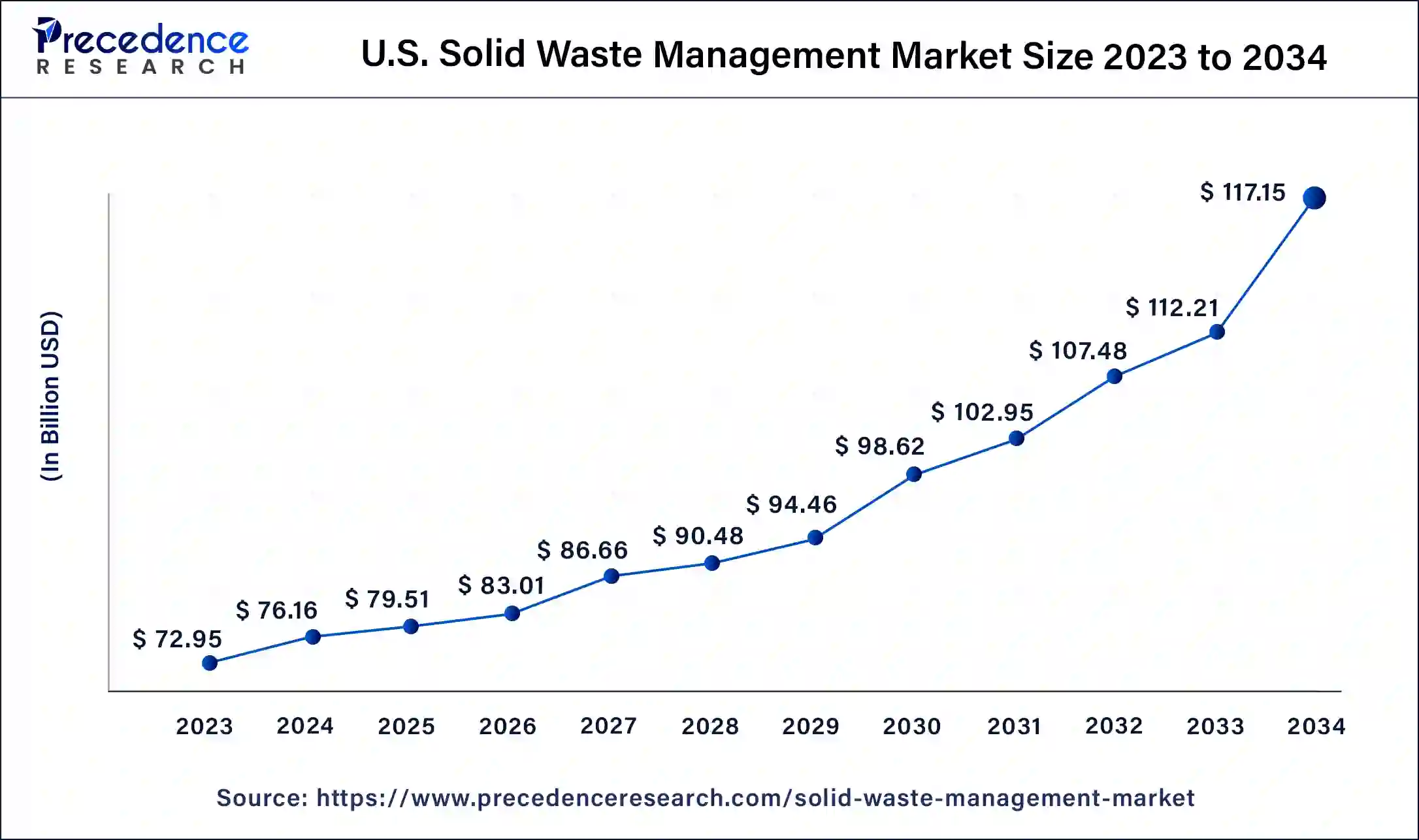
North America has held the largest revenue share of 37% in 2025. In the region, rapid urbanization and industrialization drive robust trends in the solid waste management market. Growing populations in emerging economies contribute to increased waste generation, emphasizing the need for efficient waste disposal solutions. Governments are investing in smart waste management technologies, recycling infrastructure, and public awareness campaigns to address environmental concerns. The market in Asia-Pacific experiences dynamic growth, focusing on sustainable practices and innovations to manage the escalating volume of solid waste.
U.S. Solid Waste Management Market Trends
The average waste in the U.S. is about 950 kg/year per capita, which is one of the greatest in the world. A high recycling awareness does not mean that landfills are not central. The big con solidated players prevail and are consolidating the small operators to increase the landfill capacity and hazardous waste service.
IoT sensors and AI routing are used in smart waste systems, which enhance efficiency in collection and minimize fuel. PFAS regulatory pressure raises compliance expenses and encourages the adoption of new and effective treatment technology.
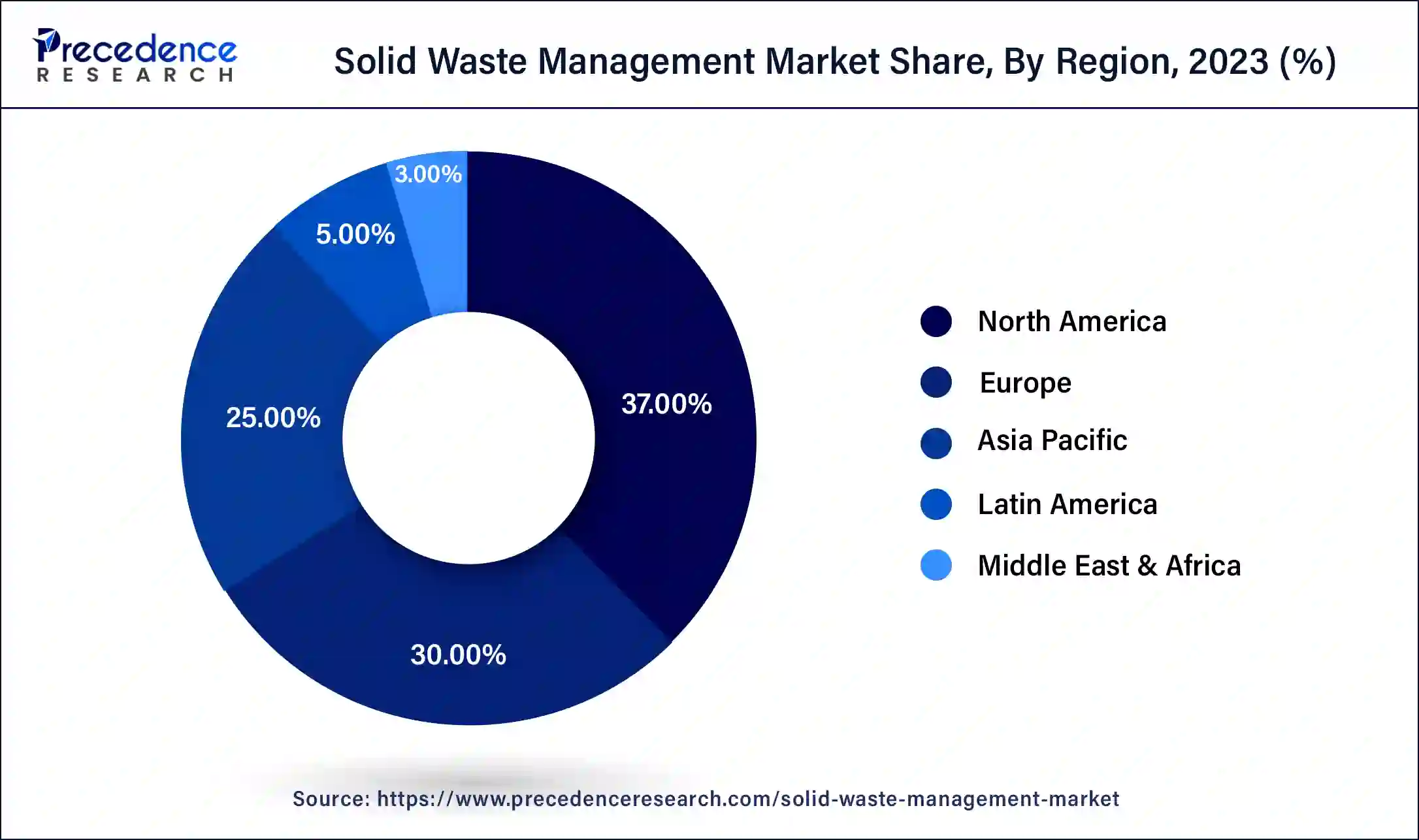
Asia Pacific is estimated to observe the fastest expansion. The region showcases advanced trends in the solid waste management market, marked by stringent environmental regulations and a strong emphasis on circular economy principles. The region leads in waste recycling and waste-to-energy initiatives, with a well-established infrastructure for efficient waste collection and disposal. Green infrastructure development and public-private partnerships characterize waste management strategies, emphasizing sustainability and resource recovery. Additionally, technological advancements in waste sorting and recycling technologies contribute to the region's leadership in responsible and eco-friendly solid waste management practices.
China Solid Waste Management Market Trends
China has the biggest waste-to-energy system in the world, and incineration is being developed at a high rate to decrease the use of landfills. City administrations are becoming more concerned with the recovery of energy from solid waste. The nationwide policy of mandatory segregation compels organic sorting of big cities through Zero Waste City programs.
Recycling facilities and plastic minimization technology increased faster since the foreign waste import ban. The integration of informal recyclers is formalized, which enhances efficiency in terms of collection and reinforces systems to recover the resources.
What Are the Driving Factors of the Solid Waste Management Market in Europe?
Europe is at the forefront of solid waste management due to its circular economy policies, landfill limitations, advanced recycling infrastructure, and innovation incentives. The sorting systems, material recovery facilities, and integrated management solutions that are supported by the regulatory frameworks that encourage efficiency, sustainability, and technological adoption are the major demand areas.
Germany Solid Waste Management Market Trends
Germany is an example of the latest waste management technology with a well-established recycling system, effective producer responsibility schemes, and separation practices that are efficient. The focus of the opportunities is on sorting technologies, the treatment of bio waste, and innovation in compliance with the national practices that are in line with the broader European environmental objectives and standards.
What are the Key Trends in the Solid Waste Management Market in Latin America?
Latin America is expected to have significant growth in the market. This growth and development are driven by various factors such as urbanization, population growth, and increasing waste generation. Government initiatives aimed at improving waste management infrastructure and promoting recycling are also gaining traction, acting as key growth drivers in this region. The landscape is evolving steadily, with local players gaining an advantage alongside well-established international firms. Countries like Brazil and Mexico are leading players.
Brazil Market Trends
Companies in the region are expanding their operations to cater to the growing demand. The focus on sustainable waste management practices and the adoption of advanced technologies are shaping the future of the solid waste management industry in the region.
How is the Middle East and Africa Region Growing in the Solid Waste Management Market?
The Middle East and Africa region is witnessing significant growth in the market. This growth is driven by increasing urbanization and the need for effective waste management solutions. Countries like South Africa and the UAE are leading players in the region as they are increasingly focusing on sustainability initiatives to enhance waste management practices. Regulatory frameworks are still evolving, but there is a growing awareness regarding the importance of waste management in urban planning.
Saudi Arabia Market Trends
The competitive landscape is characterized by a mix of local and international players, all competing for the highest market share. There is also a strong emphasis on public-private partnerships and investments in waste management infrastructure, and the market is expected to evolve significantly in the coming years.
Value Chain Analysis of the Solid Waste Management Market
- Feedstock Procurement: Involves acquiring, receiving, and managing initial raw materials and other inputs for the waste stream.
Key players: ExxonMobil, Shell, Sinopec - Chemical Synthesis and Processing: The output is treated by processing raw materials and intermediates.
Key players: BASF SE, Dow Inc., SABIC - Compound Formulation and Blending: The process of combining waste-related materials in specific ratios to obtain treatment properties as per requirement.
Key players: DuPont, Mitsubishi Chemical Corporation, Eastman - Quality Testing and Certification: When the handling processes of waste are certified to be compliant with the regulatory standards, they are also considered reliable.
Key players: ISO, ISCC, CPCB - Packaging and Labelling of Solid Waste Management: Activities of waste preparation, containment, identification, and safe transport for disposal or recycling.
Key players: Republic Services, Waste Management, Suez
Solid Waste Management Market Companies
- Waste Management, Inc.: Specializes in end-to-end waste disposal, recycling, waste collection, renewable energy recovery, as well as environmental compliance.
- Republic Services, Inc.: Provides integrated waste management services, which include collection, recycling, disposal, and energy recovery, and is focused on sustainability.
- Veolia Environnement S.A.: Recycling and energy recovery of entire waste collections, aiming at the development of the circular economy.
Other Major Key Players
- Clean Harbors, Inc.
- Suez SA
- Biffa Group Limited
- Covanta Holding Corporation
- Renova AB
- Waste Connections, Inc.
- Stericycle, Inc.
- Advanced Disposal Services, Inc.
- Hitachi Zosen Corporation
- EnviroServ Waste Management (Pty) Ltd
- Remondis SE & Co. KG
- Bharat Heavy Electricals Limited (BHEL)
Recent Developments
- In January 2026, the Solid Waste Management Project's expansion, featuring a Material Recovery Facility, was launched in Ward No. 1 of Dhenudhara, Gohpur Municipality, funded by Swachhata Bharat Mission (Urban) 2.0 and the 15th Finance Commission. (Source: https://assamtribune.com )
- In June 2025, the Jalpaiguri Zilla Parishad implemented a Smart Solid Waste Management System across all Gram Panchayats, enhancing rural sanitation under the Swachh Bharat Mission. This tech-driven approach enables digital waste tracking, GPS monitoring, and source-level segregation, aiming for efficient waste management and cleaner environments in the region. (Source: https://www.millenniumpost.in )
- In 2021, Biffa Group announced the acquisition of Company Shop Group ('CSG'), the UK's premier redistributor of surplus food and household products. This strategic move enhances Biffa's position in sustainable waste management by incorporating CSG's expertise in reducing and repurposing surplus goods.
- In 2020, Valicor acquired Affiliated Wastewater Environmental Services, a strategic move aimed at expanding its U.S. network and solidifying its position as a leading provider of wastewater treatment services in the country. This acquisition enhances Valicor's capabilities and presence in the growing environmental services sector.
Segments Covered in the Report
By Waste
- Municipal
- Industrial
By Treatment
- Open Dumping
- Disposal
By Material
- Paper & Paperboard
- Plastic
- Metals
- Food
- Textiles
- Others
By Geography
- North America
- Europe
- Asia-Pacific
- Latin America
- Middle East and Africa
For inquiries regarding discounts, bulk purchases, or customization requests, please contact us at sales@precedenceresearch.com
Frequently Asked Questions





Ask For Sample
No cookie-cutter, only authentic analysis – take the 1st step to become a Precedence Research client
 Get a Sample




 sales@precedenceresearch.com
 Schedule a Meeting
