



Tobacco Market Trends, Companies, Revenue / Sales Performance, Food Production, Processing Capacity, Sales Volume, Distribution Performance, Competitive Landscape, and Industry Outlook
Tobacco Market (By Product: Smokeless Tobacco, Cigarettes, Cigars & Cigarillos, Next Generation Products, Kretek, Others; By Distribution Channel: Supermarket/Hypermarket, Convenience Stores, Tobacco Shops, Online, Others) - Global Industry Analysis, Size, Trends, Leading Companies, Regional Outlook, and Forecast 2026 to 2035
Source: https://www.precedenceresearch.com/tobacco-market
 Get a Sample
 Table Of Content


What is the Tobacco Market Size?
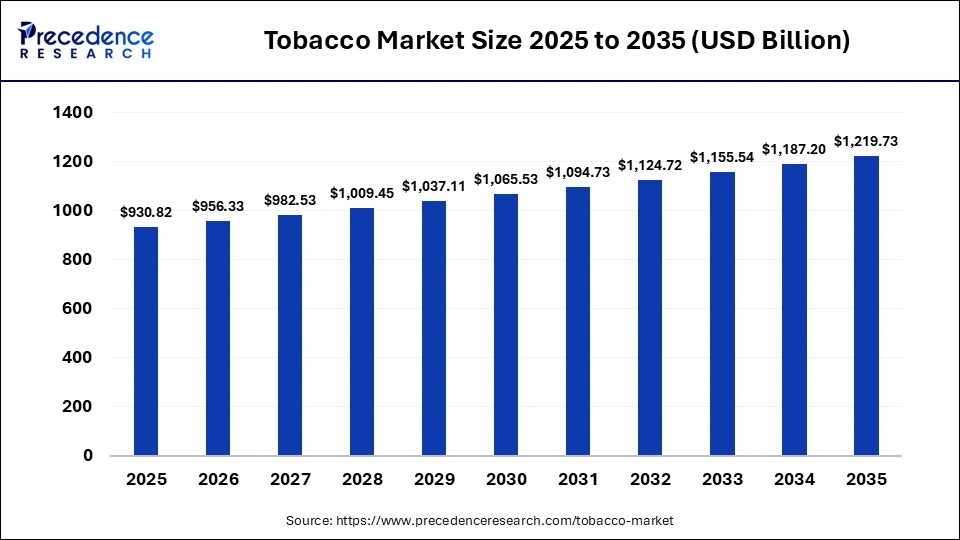
The global tobacco market size was calculated at USD 930.82 billion in 2025 and is predicted to increase from USD 956.33 billion in 2026 to approximately USD 1,219.73 billion by 2035, expanding at a CAGR of 2.74% from 2026 to 2035. This market is growing due to sustained consumer demand and product innovation, such as smokeless and heated tobacco products.
Market Highlights
- Asia Pacific dominated the market by holding the largest share in 2025.
- North America is expected to expand at the fastest CAGR from 2026 to 2035
- By product, the cigarettes segment dominated the market with a major revenue share in 2025.
- By product, the next-generation products segment is expected to grow at the fastest CAGR between 2026 and 2035.
- By distribution channel, the supermarkets/hypermarkets segment led the market with the largest share in 2025.
- By distribution channel, the convenience stores segment is poised to grow at the fastest rate between 2026 and 2035.
Why is the Tobacco Market Gaining Momentum?
The market is gaining momentum due to rising consumer demand for premium tobacco products, regulatory relaxation in some regions, and rising disposable income. The emergence of substitute products like e-cigarettes, heated tobacco, and smokeless tobacco further supports growth. Through increased retail availability, urbanization, and population growth, emerging economies make a major contribution. Additionally, manufacturers are able to maintain profits in spite of regulatory obstacles by using premiumization techniques and ongoing product innovation.
How is Artificial Intelligence Shaping the Future of the Tobacco Market?
Artificial intelligence is increasingly being used to optimize supply chains, forecast demand, and improve inventory planning across the tobacco industry. Businesses are using AI-driven analytics to speed up product innovation and gain a deeper understanding of adult consumer preferences. By cutting waste and improving consistency, AI also promotes manufacturing efficiency and quality control. In general, tobacco companies are benefiting from the integration of AI in terms of increased operational efficiency and data-driven sustainable growth.
For example, Philip Morris International has highlighted the use of advanced data analytics and digital technologies across its production and logistics operations to support smoke-free product growth. Similarly, British American Tobacco leverages AI-driven insights to improve consumer understanding, product development, and operational efficiency, helping the industry move toward smarter, technology-enabled growth.
Emerging Trends Powering the Global Tobacco Market
- There is a growing adoption of reduced-risk products such as heated tobacco and smokeless alternatives. These products are often positioned as less harmful options, driving acceptance among adult smokers seeking alternatives.
- Rising demand for premium and flavored tobacco products among adult consumers influences the market. Consumers are increasingly willing to pay more for differentiated tastes, quality packaging, and brand experience.
- Expansion of tobacco companies into emerging regions with improved distribution networks contributes to market growth. Higher population growth and increasing disposable incomes in these regions support long-term market growth.
- Increased focus on product innovation and technology-driven nicotine delivery systems also drives the market. Companies are investing in R&D to enhance user experience, control nicotine release, and ensure product consistency.
- Strategic investments in branding and packaging to attract and retain consumers despite regulations supporting market growth.
How the Tobacco Industry Adapts and Thrives in a Regulated Market?
The tobacco market remains resilient despite regulatory pressure and health concerns because of strong brand loyalty, regular consumption habits, and steady demand from adult users across the globe. Prominent producers maintain profitability by using premium pricing tactics to develop new products and expand into less hazardous and smoke-free options. Long-term market stability is also supported by growing consumption in emerging markets, strong distribution networks, and the industry's capacity to adjust to tax and compliance.
How Regulations Shape the Tobacco Market?
The market is heavily influenced by regulatory frameworks, which ensure consistent quality and responsible participation through clear standards for product safety, distribution, and taxation. Rather than limiting growth, structured regulations promote formalization, strengthen governance across the value chain, and build consumer confidence. By creating a stable and transparent market environment, regulations contribute to the long-term sustainability and resilience of the tobacco industry.
Market Scope
| Report Coverage | Details |
| Market Size in 2025 | USD 930.82 Billion |
| Market Size in 2026 | USD 956.33 Billion |
| Market Size by 2035 | USD 1,219.73 Billion |
| Market Growth Rate from 2026 to 2035 | CAGR of 2.74% |
| Dominating Region | North America |
| Fastest Growing Region | Asia Pacific |
| Base Year | 2025 |
| Forecast Period | 2026 to 2035 |
| Segments Covered | Product, Distribution Channel, and Region |
| Regions Covered | North America, Europe, Asia-Pacific, Latin America, and Middle East & Africa |
Segment Insights
Product Insights
Why Did the Cigarettes Segment Dominate the Tobacco Market in 2025?
The cigarettes segment dominated the market with the largest share in 2025. This is mainly due to their extensive availability, long-standing customer base, and strong brand loyalty in both developed and emerging economies. Since cigarettes are still the most widely consumed tobacco product, they continue to bring in a substantial amount of money despite growing regulatory pressure. This is due to their widespread distribution networks and adult consumers' habitual usage patterns.
The next-generation segment is expected to grow at a rapid pace over the forecast period. The growth of the segment is driven by consumers' growing inclination toward smoke-free substitutes like nicotine pouches, heated tobacco products, and e-cigarettes. Adoption of next-generation tobacco products is particularly strong among younger and urban populations, fueled by perceptions of reduced harm, technological advancements, and regulatory approvals in key markets.
Distribution Channel Insights
What Made Supermarkets/Hypermarkets the Dominant Segment in the Tobacco Market in 2025?
The supermarkets/hypermarkets segment dominated the market while holding the largest share in 2025, driven by their extensive product selection, high foot traffic, and robust supply chain capabilities. Customers in both urban and semi-urban areas favor these stores because they provide easy access, affordable prices, and brand awareness. Additionally, promotions, loyalty programs, and strategic in-store placements in these channels enhance visibility and drive sales, reinforcing their dominance in the market.
The convenience stores segment is expected to grow at the fastest CAGR during the projection period, supported by their advantageous locations, long hours, and speedy shopping experience. Impulsive purchasing and growing urbanization, particularly in heavily populated cities and transportation hubs, are also driving segmental growth. Additionally, convenience stores often offer targeted promotions and quick checkout options, further boosting tobacco sales.
Regional Insights
What is the Asia Pacific Tobacco Market Size?
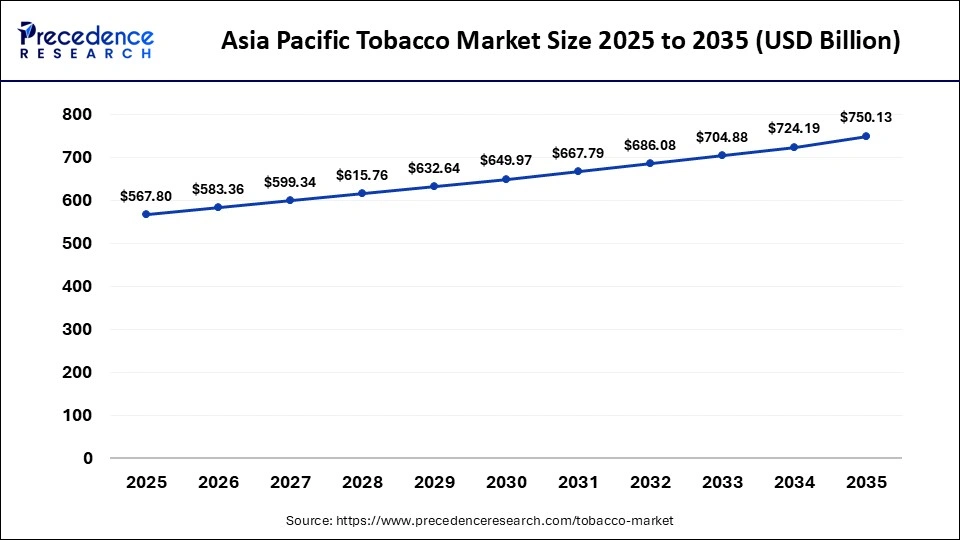
The Asia Pacific tobacco market size is expected to be worth USD 567.80 billion by 2035, increasing from USD 750.13 billion by 2025, growing at a CAGR of 2.82% from 2026 to 2035.
What Made Asia Pacific the Dominant Region in the Tobacco Market?
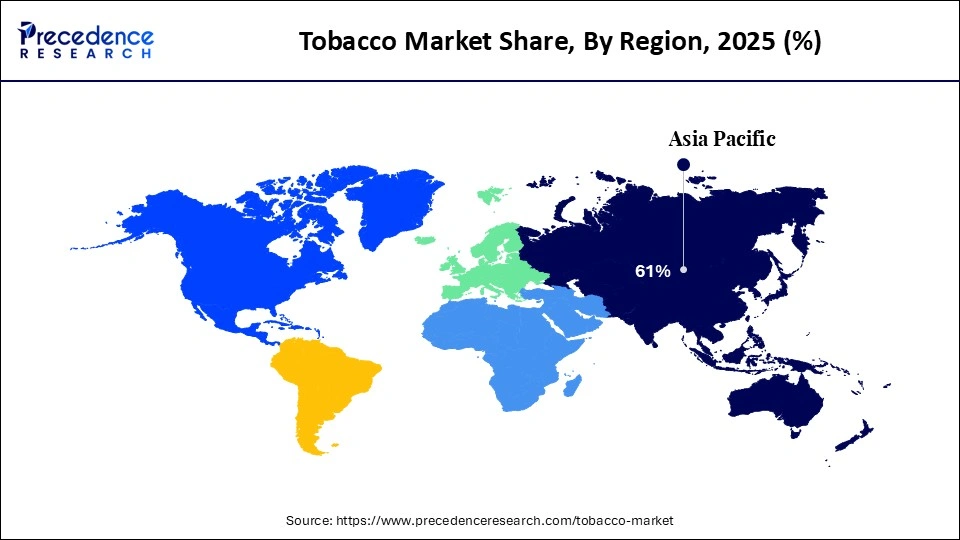
Asia Pacific dominated the market by capturing the largest share in 2025. The region's dominance in the market is attributed to the high number of smokers, significant product consumption, and a strong presence of domestic producers. Population growth, cultural acceptance of tobacco use, and growing retail infrastructure all contribute to the region's dominance in the market. Widespread adoption of both traditional and next-generation tobacco products, coupled with expanding retail penetration, has further fueled market growth.
India Tobacco Market Analysis
India is a major contributor to the market within Asia Pacific. The country has the largest tobacco industry worldwide because of its sizable consumer base, extensive use of smokeless and smoking tobacco products, and robust domestic manufacturing presence. High population densities, ingrained consumption patterns, and widespread availability through both urban and rural retail channels support the market and maintain consistent demand despite tightening regulations.
What Makes North America the Fastest-Growing Region in the Market?
North America is expected to grow at the fastest CAGR in the market throughout the forecast period. This is mainly due to the rising demand for next-generation tobacco products, particularly among youth. There is also a rising adoption of lower-risk substitutes, ongoing product innovation, and advantageous regulatory frameworks for smoke-free goods, all contributing to the region's faster market expansion.
U.S. Tobacco Market Analysis
The market in the U.S. is expanding, driven by the quick uptake of lower-risk, next-generation products like heated tobacco devices and e-cigarettes. Strong innovation activity, high-end product launches, a shift in consumer preferences toward smoke-free alternatives, and a well-established regulatory framework that permits product commercialization also contribute to market growth.
How is the Opportunistic Rise of Europe in the Tobacco Market?
Europe is expected to grow at a significant rate in the market, driven by rising production and adoption of heated tobacco and e-cigarettes, as well as established consumer bases in Western and Northern Europe. Innovative product launches, such as reduced-risk alternatives, help maintain brand loyalty despite stringent regulations and high taxes. Additionally, the increasing popularity of alternative tobacco products in Eastern European countries is opening new revenue streams for producers, further supporting market growth.
Germany Tobacco Market Analysis
Germany is one of the major contributors to the European market, with a strong presence of foreign brands. Alternatives such as vaping products, heated tobacco, and nicotine pouches are gaining popularity due to strict EU regulations and increasing health consciousness among consumers. Government anti-smoking campaigns, high taxes, and stringent advertising restrictions significantly influence the market, making product innovation and brand differentiation crucial for sustaining growth.
How is the Opportunistic Rise of South America in the Market?
South America is expected to experience an opportunistic growth in the tobacco market, supported by a sizable adult smoking population in nations like Argentina and Brazil. Sales of cigarettes are growing, particularly in nations where consumers are price-conscious. However, increasing excise taxes, health consciousness, and more stringent regulations are influencing the market in the region.
Brazil Tobacco Market Analysis
The market in Brazil is strongly influenced by high taxes, restrictions on advertising, and strict regulations. Due to domestic demand and a stable supply chain, the sales of cigarettes are rising. The nation's position in the industry is strengthened by the fact that it is a significant exporter of tobacco leaf worldwide. Companies in the country are being forced to investigate alternative nicotine products and export-led growth strategies due to increasing regulatory pressure.
What Potentiates the Market Within the Middle East & Africa?
The market in the Middle East & Africa (MEA) is growing steadily, driven by growing urbanization, a youthful and growing population, and rising disposable income. Cigarettes and other traditional smoking products are widely used, but alternative products like e-cigarettes and heated tobacco are becoming more popular, particularly among young people living in cities. The region's regulatory frameworks differ greatly, with some nations enforcing stringent taxes and restrictions on advertising while others uphold more lenient tax laws, resulting in a varied market environment.
UAE Tobacco Market Analysis
In the UAE, the market is characterized by high cigarette taxation and strong regulatory measures, which have boosted the growth of premium and alternative tobacco products. Vaping devices with nicotine pouches and heated tobacco are becoming more and more popular among younger and health-conscious consumers. The market also benefits from the nation's advantageous location as a trading hub, which makes it easier to import foreign brands while government initiatives to lower the prevalence of smoking continue.
How is the Tobacco Market Growing in Different Countries?
- UK: The country has the most notable and advanced regulatory regimes, most notably in the realm of vaping products as an aid for quitting smoking. A benign policy environment has gained traction, attracting investments and boosting innovation, which has fueled the growth of tobacco.
- France: Pressure from regulations and an increase in health awareness have contributed to the decrease in traditional cigarette use, but consumption of new-generation products still appears to be increasing steadily. The region's public health authorities have further heightened campaigns against smoking, yet demand for e-cigarettes and nicotine replacement therapy continues to rise.
- South Korea: Regulation and taxation have impacted sales considerably. Greater demand for alternative nicotine products is driving consumer trends, causing established brands to branch out. Additionally, online and convenience stores drive product availability and awareness, thus leading to sustained demand.
- China: Regulatory reform continues to influence the industry through the introduction of quality standards and e-cigarette licensing. Government-owned players still hold strong control, but innovation is flourishing with private-sector involvement and foreign investment.
- Mexico: The country has a well-established regulatory environment aimed at reducing tobacco consumption in the form of high excise duties, plain packaging requirements, and prohibitions on advertising. These policies have contributed significantly to the reduction of smoking consumption, especially among the younger population.
Who are the Major Players in the Global Tobacco Market?
The major players in the tobacco market include Scandinavian Tobacco Group A/S, Swedish Match AB, Altria Group, Inc., KT&G Corp., Imperial Brands, Philip Morris Products S.A., British American Tobacco, Japan Tobacco Inc., China Tobacco, and ITC Ltd.
Recent Developments
- In October 2025, British American Tobacco launched a new line of premium tobacco products packaged in recyclable materials. This initiative not only aligns with global sustainability trends but also caters to the growing demand for eco-friendly products. By adopting this approach, British American Tobacco aims to differentiate itself in a competitive market, appealing to consumers who prioritize sustainability in their purchasing decisions.
(Source: https://www.bat.com) - In January 2026, the Government of India notified a major reform in tobacco taxation by replacing the GST compensation cess with higher excise duties and a new health-focused cess. The revised excise duties range from ₹2,050 to ₹8,500 per 1,000 sticks and will come into effect from February 1, 2026. This policy shift aims to discourage tobacco consumption while increasing public health-related revenue generation.
- In December 2025, the FDA authorized six nicotine pouch products via the PMTA pathway, marking the first approvals from a pilot program aimed at streamlining reviews. By enabling real-time communication with applicants and revising review processes, the FDA completed scientific evaluations in record time while maintaining rigorous standards.(Source: https://www.fda.gov)
Segments Covered in the Report
By Product
- Smokeless Tobacco
- Cigarettes
- Cigars & Cigarillos
- Next Generation Products
- Kretek
- Others
By Distribution Channel
- Supermarket/Hypermarket
- Convenience Stores
- Tobacco Shops
- Online
- Others
By Region
- North America
- Europe
- Asia-Pacific
- Latin America
- Middle East & Africa
For inquiries regarding discounts, bulk purchases, or customization requests, please contact us at sales@precedenceresearch.com
Frequently Asked Questions
Tags





Ask For Sample
No cookie-cutter, only authentic analysis – take the 1st step to become a Precedence Research client
 Get a Sample




 sales@precedenceresearch.com
 Schedule a Meeting
