



Unmanned Aerial Vehicle (UAV) Drones Market Size, Key Companies, Company Market Share, Chip Production Volume, Wafer Capacity, Technology Adoption, Pricing Trends, Competitive Positioning, and Demand Analysis
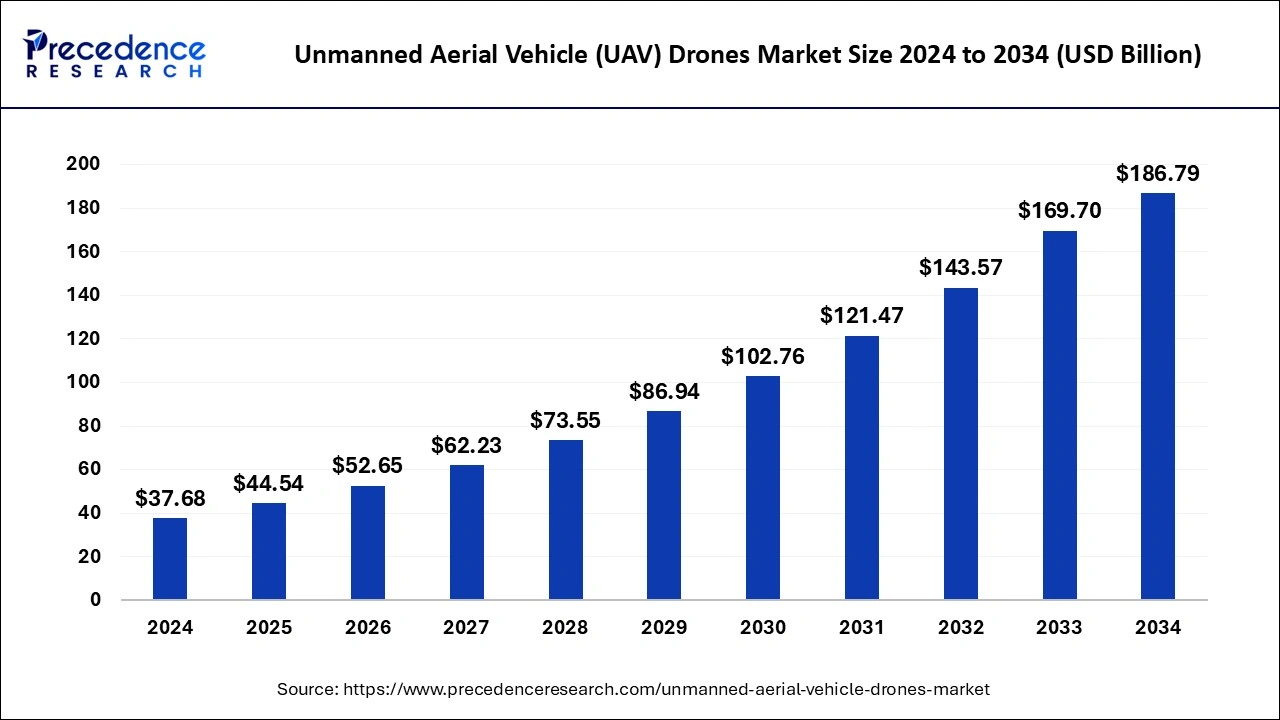
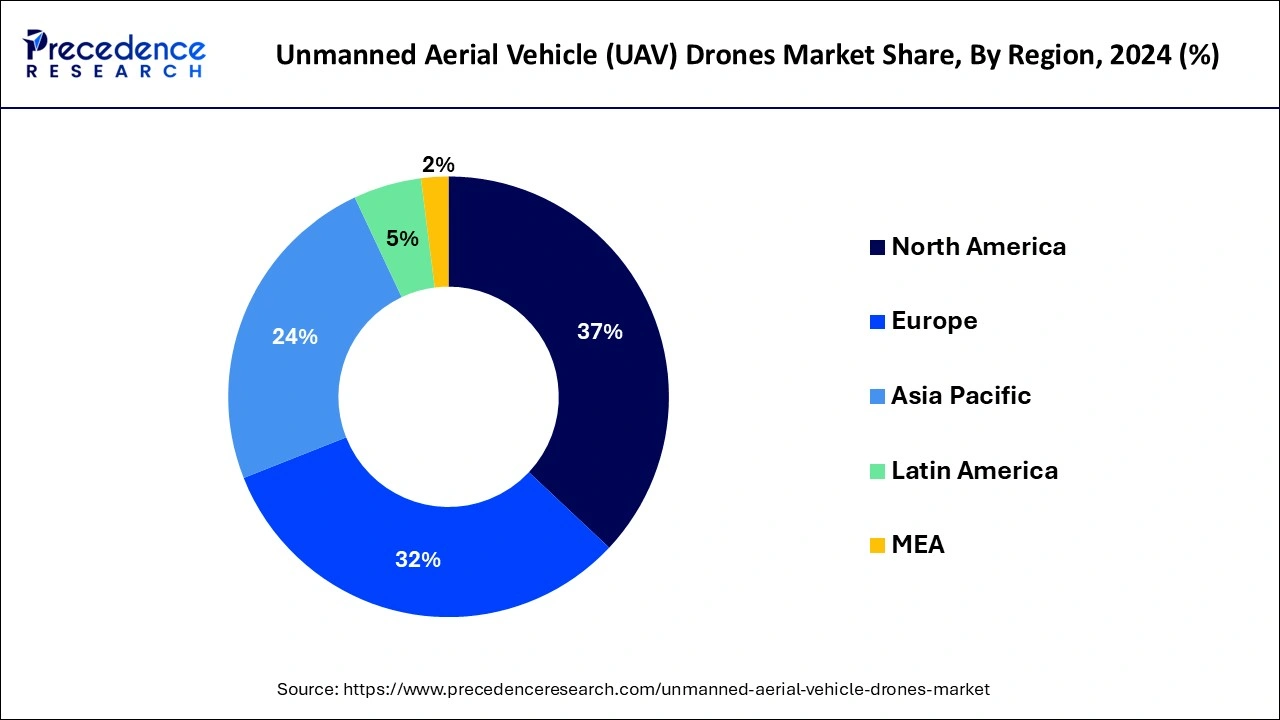
The global unmanned aerial vehicle (UAV) drones market was valued at USD 52.65 billion in 2026 and is projected to reach USD 209.91 billion by 2035, expanding at a 16.77% CAGR from 2026 to 2035. The market is driven by rapid advances in AI, autonomous flight, sensor technology, defense modernization, precision agriculture, infrastructure inspection, and commercial drone applications. North America dominated with a 37% market share in 2025, while Asia Pacific is expected to register the fastest growth. AI-powered autonomous operations, real-time data processing, and advanced navigation are further accelerating UAV adoption across commercial, industrial, and defense applications.
Source: https://www.precedenceresearch.com/unmanned-aerial-vehicle-drones-market
 Get a Sample
 Table Of Content


Unmanned Aerial Vehicle (UAV) Drones Market Size and Forecast 2026 to 2035
The global unmanned aerial vehicle (UAV) drones market size is accounted at USD 44.54 billion in 2025 and predicted to increase from USD 52.65 billion in 2026 to approximately USD 209.91 billion by 2035, representing a CAGR of 16.77% from 2026 to 2035.The widespread integration of AI for autonomous operations, the expansion of global defense modernization, and supportive regulatory changes have propelled demand for unmanned aerial vehicle drones.
Unmanned Aerial Vehicle (UAV) Drones Market Key Takeaways
- North America dominated the unmanned aerial vehicle (UAV) drones market share of 37% in 2025.
- Asia-Pacific is expected to develop at the fastest rate during the forecast period.
- By type, the vertical take-off and landing (VTOL) had the highest revenue share in 2025.
- By component, the camera segment dominated the unmanned aerial vehicle (UAV) drones market.
- By application, the media and entertainment segment dominated the unmanned aerial vehicle (UAV) drones market in 2025.
Market Overview
What are Unmanned Aerial Vehicle (UAV) Drones?
An Unmanned Aerial Vehicle (UAV) is renowned as a drone, which is an aircraft having wide applications across military, agriculture, photography, media, inspection, surveying, and emergency services. This aircraft operates without a crew, a human pilot, or passengers on board. The unmanned aerial vehicle (UAV) drones market is dominated by key partnerships and government alliances. These include military-commercial ‘managed service' partnerships, cross-border and regional initiatives, and commercial industry integration. Additionally, AI and autonomous mission systems, payload and avionics enhancements, next-gen propulsion and endurance, and high R&D intensity ratios.
What is the Role of AI in the Unmanned Aerial Vehicle (UAV) Drones Market?
AI has transformed the industry from manually operated remote tools into self-operating systems that are fully autonomous and intelligent, capable of decentralized execution and real-time decision-making. The market is also driven by enterprise demand for data-driven, scalable automation and heavy global defense modernization. The rise of real-time edge processing has led to heavy reliance of drones on advanced edge AI chips. With the help of this, drones process thermal, sensor, and LiDAR data directly onboard.
Which Key Growth Factors Contribute to Expanding the Market?
- The rapid technological advancements like AI and autonomous navigation, longer battery life and power sources, and high sensor density are accelerating the unmanned aerial vehicle (UAV) drones market.
- The geopolitical security concerns and shift toward swarm intelligence and electronic warfare are further raising the industrial standards.
- There is an increased use of drones by law enforcement and public safety agencies to obtain quick situational awareness.
- Precision agriculture also revolves around the heavy use of drones for chemical spraying, automated crop health monitoring, and soil data collection to enhance farming yields.
- The construction, mining, and energy industries have increased their drone infrastructure investments to conduct inventory checks, harmful asset tracking, and structural inspections safely.
Market Outlook
- Industry Growth Overview: The unmanned aerial vehicle (UAV) drones market is experiencing massive expansion across popular industries like logistics, defense and automation. The consistency of drone use in entertainment expands to the creative factor. The war stress is shaping protective systems due to safety concerns, which signals a specific development in the market spectrum. From the commercial perspective, the modern logistics and agriculture era is highlighting the drone system in their valuable operations. The close navigation of the yield promotes precision monitoring that secures the crop's effectiveness and future, which is serving the vast population.
- Sustainability Trends: The sustainability trends unlock an opportunity for the raw material innovators. The standardized green chemistry in battery management and hybrid models is the eye to sustainable development in the market space. The mission to reduce carbon emissions is closely associated with the market commercial strategy, which is in favor of green developers' long-term business in the market spectrum.
- Global Expansion: The expansion is closely associated with safety-concerned industrial needs and modern development strategies in commercial applications. The precision agriculture trends and solar popularity are a hype to the market's fine expansion. The diversified role of the technologies is a smart initiative by the tech leaders. Additionally, the participation of drones in the occasions and entertainment production space is a popular hype to the market expansion that leads to fancy profit for the market businesses.
Unmanned Aerial Vehicle (UAV) Drones Market Scope
| Report Coverage | Details |
| Market Size in 2025 | USD 44.54 Billion |
| Market Size in 2026 | USD 52.65 Billion |
| Market Size by 2035 | USD 209.91 Billion |
| Market Growth Rate from 2026 to 2035 | CAGR of 16.77% |
| Dominating Region | North America |
| Fastest Growing Region | Asia Pacific |
| Base Year | 2025 |
| Forecast Period | 2026 to 2035 |
| Segments Covered | Type, Application, Component, Payload, and Region |
| Regions Covered | North America, Europe, Asia-Pacific, Latin America, and Middle East & Africa |
Segments Insights
Type Insights
How does the Rotary Blade Drone Segment Dominate the Unmanned Aerial Vehicle (UAV) Drones Market in 2025?
The rotary blade drone segment dominated the market in 2025, owing to superior hover precision and unmatched vertical takeoff and landing (VTOL) capabilities. The rotary-wing UAVs remain crucial for high-precision and short-range enterprise workflows. The rotary blade drones have the capability to deploy from heavily congested or tight spaces.
The hybrid drone segment is expected to grow at the fastest CAGR in the market during the forecast period due to the rising demand for extended flight endurance and higher payload capacity. Technical superiority and performance drive the integration of hybrid drones across military and commercial sectors. The hybrid drones have a wide demand across dynamic sectors like precision agriculture, military ISR, border security, logistics, and infrastructure inspection.
Load Capacity Insights
What made < 2 kg the Dominant Segment in the Unmanned Aerial Vehicle (UAV) Drones Market in 2025?
The < 2 kg segment dominated the market in 2025, owing to the ease of regulatory compliance, affordability, and rapid technological miniaturisation. The favorable regulatory pathways, hardware innovation, and sensor miniaturisation are driving the robust expansion of < 2 kg load capacity. The commercial scalability has enabled businesses to rapidly deploy small-scale fleets.
The > 5 kg segment is estimated to grow at the fastest rate in the market during the predicted timeframe due to advancements in hybrid propulsion systems and the increasing demand for heavy-payload commercial and military applications. The scaling of industrial and logistics applications revolves around precision agriculture, aerial logistics, and cargo delivery. Industrial inspection and heavy sensors are required for advanced remote sensing and industrial site monitoring.
Duration Insights
Which Duration Dominated the Market in 2025?
The >30 minutes segment dominated the unmanned aerial vehicle (UAV) drones market in 2025 and is expected to grow at the fastest CAGR during the forecast period. Longer flight endurance improves operational efficiency, expands mission coverage, and reduces battery replacements. Rising demand for infrastructure inspections, precision agriculture, surveying, and beyond-visual-line-of-sight operations continues accelerating adoption across commercial and industrial sectors worldwide.
The <30 minutes segment held a significant market share in 2025 due to its affordability, lightweight design, and suitability for short-duration missions. These drones remain widely used for aerial photography, recreational activities, localized inspections, and training applications. Their ease of deployment, lower maintenance costs, and regulatory compliance sustain demand among individual and small-business users.
Range Insights
How did the Short (<25 Kilometers) Segment Dominate the Unmanned Aerial Vehicle (UAV) Drones Market in 2025?
The short (<25 kilometers) segment dominated the market in 2025, owing to commercial inspection, infrastructure monitoring, and scaling of precision agriculture. The core technological advancements, like AI-powered edge computing and battery and power systems, are also driving this range of drones. They have enabled drones to operate safely near public crowds.
The long (>25 kilometers) segment is anticipated to grow at the fastest rate in the market during the upcoming period due to advancements in hybrid propulsion and battery density. The surging defense and border security procurement also supports this range of drones. The automated long-range drones are largely deployed by the utilities, energy, and mining sectors.
Application Insights
Why did the Aerial Photography Segment Dominate the Unmanned Aerial Vehicle (UAV) Drones Market in 2025?
The aerial photography segment dominated the market in 2025, owing to hardware efficiency, innovations in AI, and the rising trend of automated data processing and smart tracking. Industrial adoption has shifted toward light-weight, ultra-sharp camera systems. Aerial imagery is used to monitor field conditions, evaluate crop health, and manage inputs efficiently to enhance farm output.
The inspection & monitoring segment is predicted to grow at a rapid rate in the market during the studied period due to demand for cost-effective, safer industrial oversight and technological advancements in AI and sensors. The inspection drone sector is transitioning from small-scale pilot programs into programmatic, persistent enterprise operations. The rise in automated docking stations has opened doors for continuous infrastructure monitoring.
Regional Insights
How does North America dominate the Unmanned Aerial Vehicle (UAV) Drones Market in 2025?
North America dominated the market in 2025, owing to the increased focus on fleet modernization, border security, and expanding commercial applications like precision agriculture and e-commerce logistics. Government initiatives across this region have transformed the industry through standardised commercial flight regulations and defense funding. They have enabled medical and e-commerce drone deliveries, large-scale agricultural imaging, and automated pipeline monitoring. There is an enhanced inclusion of flight coordinators and operations supervisors to look after highly automated algorithmic fleets.
U.S. Unmanned Aerial Vehicle (UAV) Drones Market Size and Growth 2026 to 2035
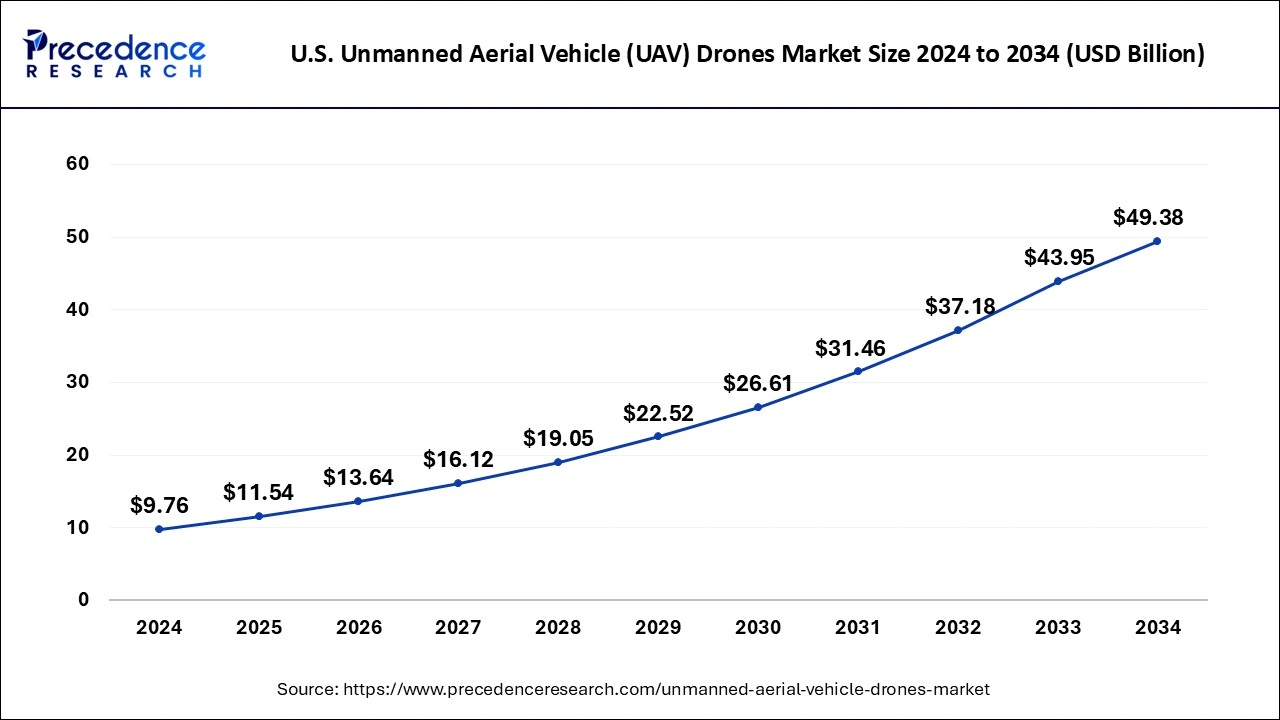
The U.S. unmanned aerial vehicle (UAV) drones market size was evaluated at USD 11.54 billion in 2025 and is projected to be worth around USD 55.70 billion by 2035, growing at a CAGR of 17.05% from 2026 to 2035.
What is the Role of the Unmanned Aerial Vehicle (UAV) Drones Market in the U.S.?
The U.S. witnesses wide commercial integration of AI-powered autonomous systems, surging defense modernization, and government initiatives for supply chain independence. The U.S. industry is transitioning to integrated deployment and mass domestic production. The U.S. Department of Defense (DoD) has moved toward establishing a self-sufficient domestic drone ecosystem.
How is the Fastest-Growth of the Unmanned Aerial Vehicle (UAV) Drones Market in the Asia Pacific?
Asia Pacific is expected to grow at the fastest CAGR in the market during the forecast period due to highly supportive regional government regulations, emergency defense procurement, and critical infrastructure inspections. The local manufacturing subsidies, defense funding, and relaxed commercial regulations are transforming the Asian Pacific industry for UAV drones. Asian Pacific countries like China continue to grow and expand through agricultural subsidies and autonomous public infrastructure.
What is the Potential of the Unmanned Aerial Vehicle (UAV) Drones Market in India?
India is experiencing robust government policies, financial incentives, and flagship commercial and rural programs. The legislative and tax reforms, financial incentives, R&D, and standard operating rules are further accelerating the Indian market for UAV drones. The Project PUSHPAK offers funding to integrate deep-tech UAV subsystems like autonomous navigation and tracking.
Why is Europe considered a significantly growing region in the Unmanned Aerial Vehicle (UAV) Drones Market?
Europe is expected to grow at a significant rate in the market during the studied period due to harmonized regulatory advancements and rapid industrial automation across energy and infrastructure sectors. The European industry has been shifted toward domestic technology scaling, military defense readiness, and security initiatives. The European Union and its member states rapidly deployed billions in capital to modernize military and civilian airspace. The European initiatives created an interoperable, unified system across Europe to manage precision-strike platforms and counter hostile drones.
What is the Impact of the Unmanned Aerial Vehicle (UAV) Drones Market in Germany?
Germany is advancing through rapid commercial automation under Industry 4.0, surging military defense procurement, and massive capital investments in local defense-tech startups. German industry for UAV drones is transforming due to legislative reforms, massive defense investments, and strategic integration into civil airspace.
Which Driving Forces Expand the Unmanned Aerial Vehicle (UAV) Drones Market in Latin America?
Latin America is expected to expand notably in the market in the coming years, driven by a shifting regulatory framework that enables advanced drone integration and expanded military and border security operations. This region experiences a rapid growth of drone services such as infrastructure inspection, agricultural crop monitoring, and last-mile delivery. Government initiatives have focused on integrating drones into national airspaces, expanding commercial operations, and boosting domestic defense procurement.
What is the Significance of the Unmanned Aerial Vehicle (UAV) Drones Market in Brazil?
Brazil is growing and expanding in the market through booming precision agriculture, massive spending on defense and public safety, and an expanding regional regulatory framework. The multi-drone network approval in Brazil aims to lower the operational costs of crop monitoring drones and agricultural spraying.
How does the MEA achieve Noticeable Progress in the Unmanned Aerial Vehicle (UAV) Drones Market?
MEA is expected to expand noticeably in the market during the predicted timeframe, propelled by a surge in mega-construction projects, technological innovations, favorable regulations, and local manufacturing. The governments across this region have introduced financial subsidies, legislative updates, and airspace frameworks. The ongoing state-backed investments are boosting the urban air mobility infrastructure. The national security needs and long-term economic diversification goals are also supporting the growth of the UAV drones industry in the MEA.
How can the Unmanned Aerial Vehicle (UAV) Drones Market improve Saudi Arabia?
Saudi Arabia progresses rapidly in the market through the integration of AI in commercial operations, Vision 2030 megaprojects, and heavy investments in defense localization. The major government initiatives and local manufacturing programs have shifted Saudi Arabia's capabilities toward scalable domestic production.
Value Chain Analysis
- Raw Material Sourcing: The raw material resourcefulness strategies are aligned to the green mandates that contribute to sustainable innovations. The regional market is moving with the green revolution, powerful energy and tech buildup that introduces a robust final drone portfolio.
Key Players: OEMs - Testing and Certification: Testing and certification is a validation stamp for the market to proceed with the final deployment in the suitable industries. The accurate propulsion, avionics, battery life, raw materials compatibility and airframes are the fundamental assets of the drone potential that meet the highest expansion rate.
Key Players: SGS, Intertek and DEKRA. - Distribution and Sales: The mass distribution channels are revised by automation and modern needs fuelling across the protective-centric industries. The customization systems are empowering the specialized sellers to take the lead in market expansion. The government transitions towards green development are shaping the logistics businesses for safe drone delivery.
Key Players: Skydio Inc., Autel Robotics and Parrot Drones SAS.
Competitive Landscape
The unmanned aerial vehicle (UAV) drones market is dominated by commercial and enterprise leaders such as SZ DJI Technology Co., Ltd., Skydio Inc., Parrot Drones SAS, and EHang Holdings Limited. Moreover, defense and aerospace players are AeroVironment, Inc., Northrop Grumman Corporation, General Atomics Aeronautical Systems, Lockheed Martin Corporation, and Kratos Defense & Security Solutions. The core product offerings include 4G/LTE cellular fail-safes, advanced edge AI chipsets, long-range Beyond Visual Line of Sight (BVLOS) capabilities, and autonomous logistics and delivery platforms. In addition, the core areas of R&D capital allocation are fully autonomous systems and AI, GPS-denied flight and swarming, hardware and alternative power, and commercial infrastructure.
Unmanned Aerial Vehicle (UAV) Drones Market Companies
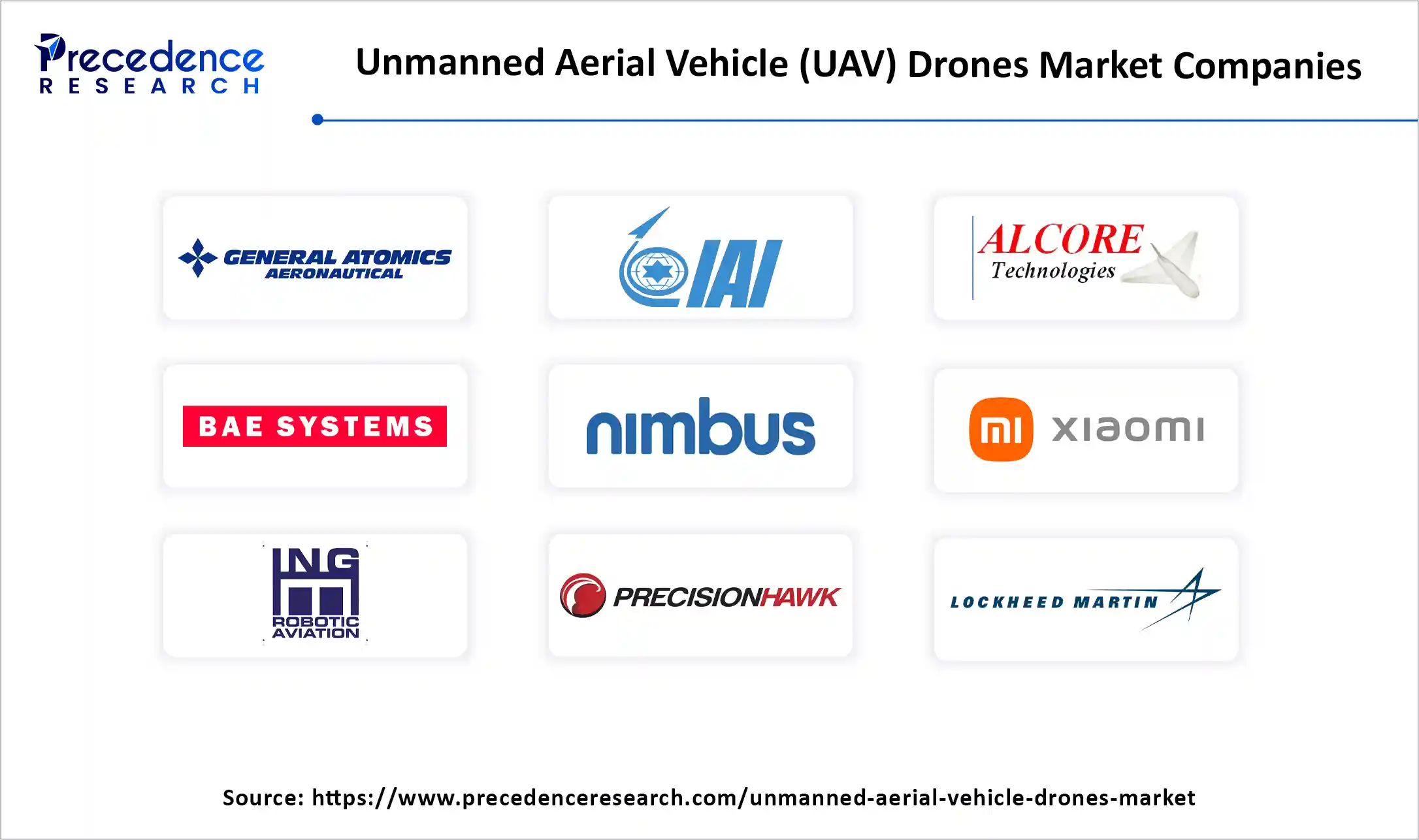
- General Atomics Aeronautical Systems
- Israel Aerospace Industries
- ALCORE Technologies
- BAE Systems
- Nimbus
- VTOL Technologies
- Xiaomi
- ING Robotic Aviation
- PrecisionHawk
- Lockheed Martin
Recent Developments
- In April 2026, Serbia announced the launch of a joint drone production facility with Elbit Systems in the coming years. These companies have planned to produce two types of drones, such as long-range UAVs and short-range strike drones capable of operating at altitudes of up to 6 km.
- In January 2026, China introduced a Chinese civilian ship, equipped with many armed and aircraft-launching configurations. Moreover, Shanghai's Hudong-Zhudong shipyard received vertical launching systems and radars, sports electromagnetic drones, and close-in weapon systems.
Segments Covered in the Report
By Type
- Fixed Wing Drone
- Rotary Blade Drone
- Hybrid Drone
By Load Capacity
- <2KG
- 2–5 KG
- >5 KG
By Duration
- <30 Minutes
- >30 Minutes
By Range
- Short (<25 Kilometers)
- Long (>25 Kilometers)
By Application
- Aerial Photography
- Agriculture
- Emergency and Disaster Management
- Inspection & Monitoring
- Remote Sensing & Mapping
- Wildlife Research & Preservation
By Geography
- North America
- U.S.
- Canada
- Europe
- U.K.
- Germany
- France
- Asia-Pacific
- China
- India
- Japan
- South Korea
- Malaysia
- Philippines
- Latin America
- Brazil
- Rest of Latin America
- Middle East & Africa (MEA)
- GCC
- North Africa
- South Africa
- Rest of the Middle East & Africa
For inquiries regarding discounts, bulk purchases, or customization requests, please contact us at sales@precedenceresearch.com
Frequently Asked Questions





Ask For Sample
No cookie-cutter, only authentic analysis – take the 1st step to become a Precedence Research client
 Get a Sample




 sales@precedenceresearch.com
 Schedule a Meeting
