



Asia Pacific & Europe Drug-Eluting Balloon Catheters Market Revenue, Leading Companies, Company Technology / Innovation, Diagnostic Testing Volume, Adoption Rates, Pricing Metrics, Supply Chain Performance, Competitive Positioning, and Industry Trends
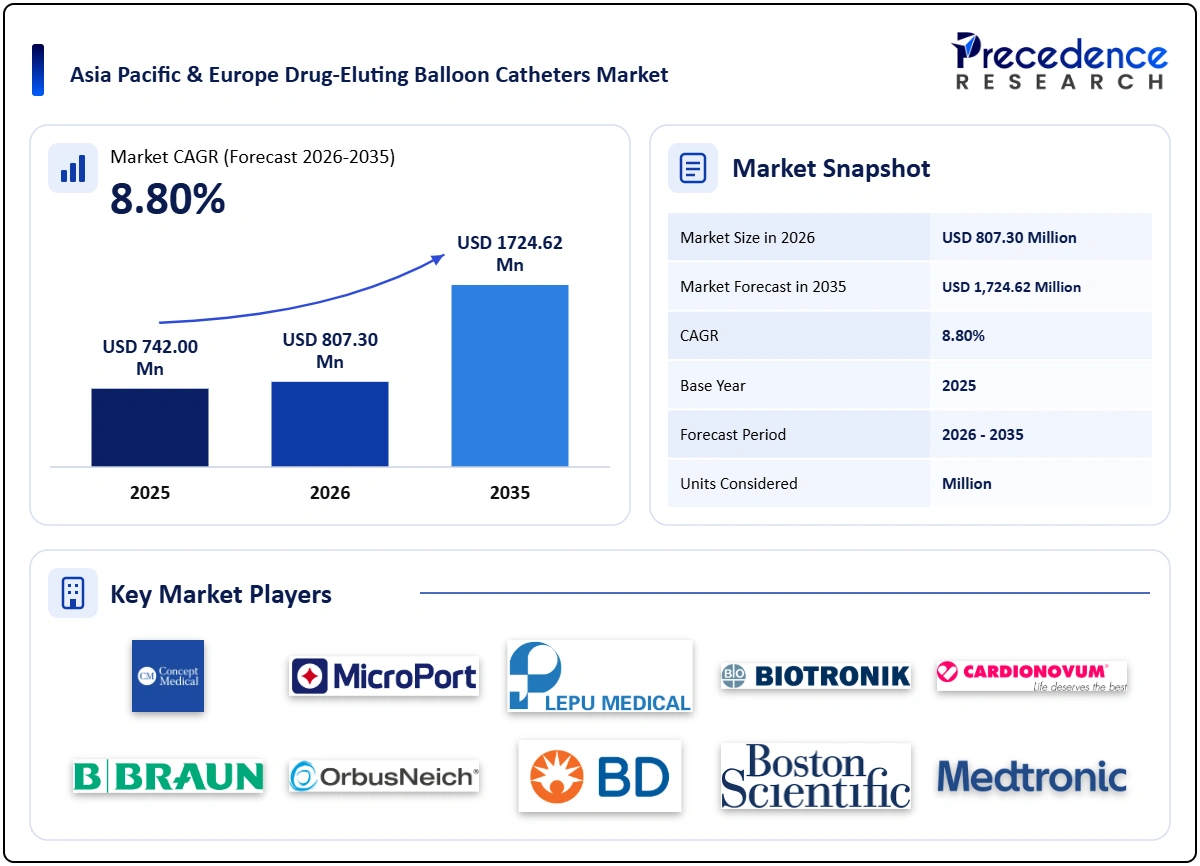
Payal Rabde, a Healthcare Industry Expert, highlights that the Asia Pacific and Europe drug-eluting balloon catheters market has reached USD 807.30 million in 2026 and is on track to reach USD 1,724.62 million by 2035, advancing at a CAGR of 8.80%. Key Asia Pacific and Europe drug-eluting balloon catheters market companies shaping the market include B. Braun, Medtronic, Boston Scientific, while major growth segments span drug, application, end user and region.
Source: https://www.precedenceresearch.com/asia-pacific-and-europe-drug-eluting-balloon-catheters-market
 Get a Sample
 Table Of Content
Key Takeaways
Market Size & Growth Outlook
- Market size in 2025: USD 742.00 million
- Estimated market size in 2026: USD 807.30 million
- Projected market size by 2035: USD 1,724.62 million
- CAGR (2026-2035): 8.80%
Regional Market Spotlight
- China dominated the market with a 23.00% share in 2025.
- In 2025, Japan accounted for 15.00% of the market share.
- Germany contributed 13.00% of the market share in 2025.
- India held 7.00% in 2025 and is projected to be the fastest-growing country, at a CAGR of 10.00% from 2026 to 2035.
Segmental Spotlight
- By drug, Paclitaxel accounted for the largest share of 68.00% in 2025.
- In 2025, coronary artery disease led the application segment, holding a 61.00% share of the market.
- Hospitals represented the largest end user category in 2025, with an 86.00% market share.
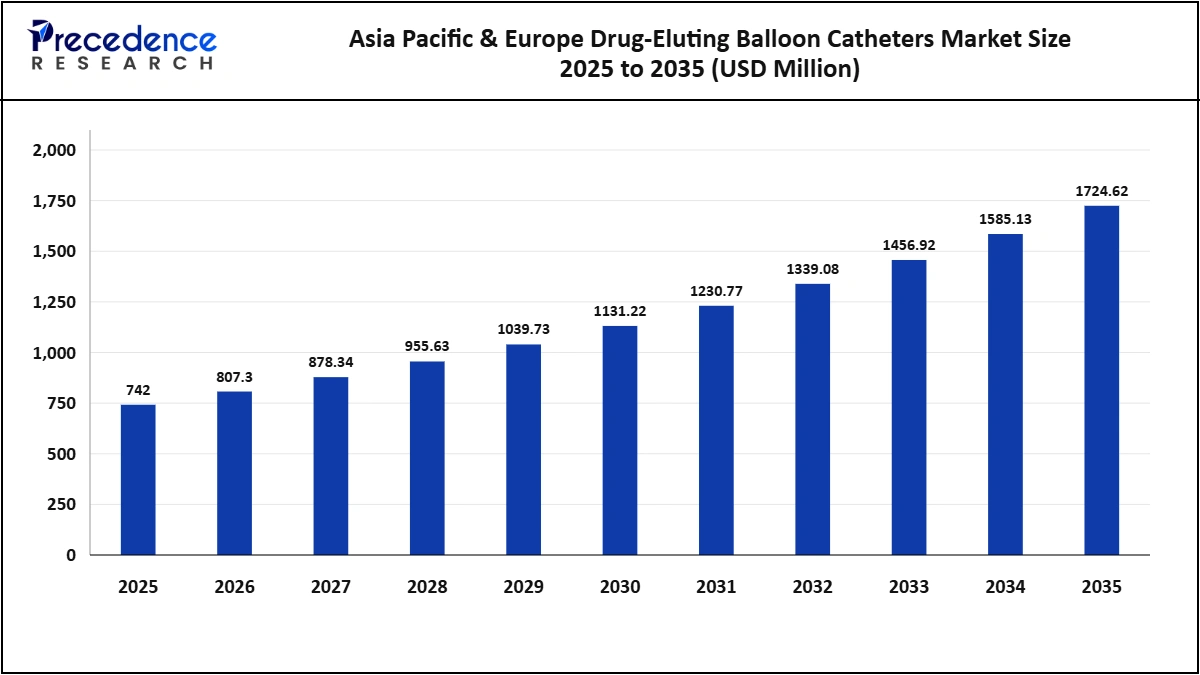
Asia Pacific & Europe Drug-Eluting Balloon Catheters Market Size, 2025-2035 (USD Million)
Note: 2025 is the base year; 2026-2035 values are forecasts.
Sources: Expert interviews, secondary sources, Precedence Research database, and Precedence Research analysts.
The market is expected to witness significant growth over the forecast period, increasing from USD 742.00 million in 2025 to USD 1,724.62 million by 2035.
This expansion is driven by the growing adoption of drug-coated balloons across a wider range of lesion types, including broader coronary applications and peripheral artery disease. Emerging clinical evidence supporting sirolimus-based devices beyond in-stent restenosis is also creating new growth opportunities. As a result, the market is projected to reach USD 1,131.22 million by 2030, registering a CAGR of 8.80% between 2026 and 2035. However, several sirolimus balloon programs in Europe and Asia Pacific remain in the clinical trial stage.
Analyst View: The drug-eluting balloon catheters market is poised for strong growth, driven by expanding clinical applications of drug-eluting balloons across coronary and peripheral interventions. Growing evidence supporting sirolimus-based technologies is expected to accelerate adoption, although ongoing clinical trials and regulatory developments may influence the pace of commercialization.
Market Trends
- Leave nothing behind: More operators avoid permanent implants when vessel preparation gives a good result.
- Sirolimus coatings: Sirolimus balloons with new carriers seek to match stent outcomes.
- Below-the-knee treatment: Trials target diabetic patients with critical limb ischemia.
- Volume-based procurement: China's national tenders cut prices and raise volumes.
- Intravascular imaging: IVUS and OCT help select lesions suited to balloon-only treatment.
Market Dynamics
The Asia Pacific and Europe drug-eluting balloon catheters market is relatively more mature than the U.S. market, where coronary drug-coated balloons received approval only in 2024. Cardiologists across Europe and Asia have longer experience with these devices, initially using them to treat in-stent restenosis and increasingly extending their application to small-vessel disease, bifurcation lesions, and selected de novo lesions. Meanwhile, the emergence of sirolimus-based technologies and evolving procurement reforms are reshaping clinical adoption patterns and pricing dynamics across both regions.
Drivers
Rising cardiovascular disease
Ageing populations and high diabetes rates in China, India, and Europe increase coronary and peripheral artery disease. More patients need angioplasty, and many have small or diffusely diseased vessels where balloons are useful.
Preference for implant-free treatment
Leaving no metal behind keeps future treatment options open, reduces late stent problems, and may allow shorter antiplatelet therapy. These benefits attract both doctors and patients.
Positive clinical evidence
Trials such as TRANSFORM II, REC-CAGEFREE, and long-term in-stent restenosis studies support wider use. Updated guidelines and consensus documents give hospitals confidence to adopt balloons beyond restenosis.
Procurement-driven access
National tenders in China and price caps on stents in India make balloons affordable for many more hospitals, which lifts procedure volumes even as prices fall.
Market Drivers - Impact & CAGR Contribution (2026-2035)
| Driver | Impact | ≈ CAGR Contribution | Time Horizon | Key Regions |
| Rising cardiovascular disease | High | +3.44 pp | Short to long term | Asia Pacific & Europe-wide, strongest in China |
| Preference for implant-free treatment | Medium | +2.90 pp | Medium to long term | Asia Pacific & Europe-wide, fastest uptake in India |
| Positive clinical evidence | Medium | +2.47 pp | Short to medium term | Asia Pacific & Europe-wide |
| Procurement-driven access | Low | +1.93 pp | Long term | China and India |
Note: Contributions are indicative estimates of each factor's effect on annual growth.
Sources: Expert interviews, secondary sources, Precedence Research database, and Precedence Research analysts.
Rising cardiovascular disease, the implant-free approach, and new clinical evidence drive most growth in the Asia Pacific & Europe drug-eluting balloon catheters market.
Restraints
Price erosion from tenders
China's volume-based procurement and European public tenders have cut prices sharply. Lower average selling prices squeeze margins and limit value growth.
Paclitaxel safety debate
A 2018 meta-analysis raised concerns about mortality after peripheral paclitaxel devices. Later studies did not confirm the risk, but the debate slowed adoption for several years and still influences some doctors.
MDR certification costs
The EU Medical Device Regulation requires more clinical data and higher certification costs. Smaller manufacturers may delay launches or withdraw products from Europe.
Market Restraints - Impact & Negative CAGR Contribution (2026-2035)
| Restraint | Impact | ≈ Negative CAGR Contribution | Time Horizon | Key Regions |
| Price erosion from tenders | High | -0.87 pp | Short to medium term | Asia Pacific & Europe-wide |
| Paclitaxel safety debate | High | -0.64 pp | Medium term | Smaller and price-sensitive markets |
| MDR certification costs | Medium | -0.43 pp | Short term | China and other mature markets |
Note: Contributions are indicative estimates of each factor's effect on annual growth.
Sources: Expert interviews, secondary sources, Precedence Research database, and Precedence Research analysts.
Price erosion from tenders is the largest restraint, followed by the lingering paclitaxel safety debate and Medical Device Regulation costs.
Opportunities
De novo coronary lesions
If balloons match stents for more de novo lesions, the addressable market expands well beyond in-stent restenosis. Companies with strong randomized data will benefit most.
Below-the-knee disease
There are few good options for small arteries below the knee in diabetic patients. A balloon with proven benefit could open a large, underserved segment.
India and Southeast Asia
Growing catheter lab capacity and locally made devices make India and Southeast Asia attractive for value-priced sirolimus balloons.
Market Segmentation: 2025 Share and Size
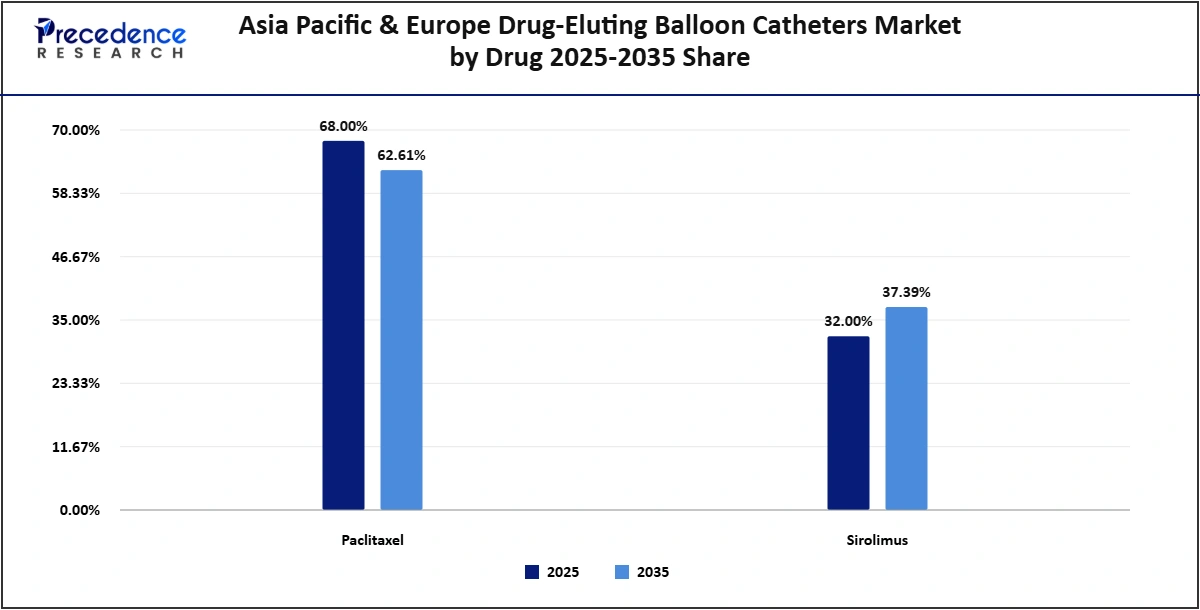
Asia Pacific & Europe Drug-Eluting Balloon Catheters Market by Drug, 2025 Share (%)
Note: 2025 is the base year; 2035 shares and CAGRs are forecasts.
Sources: Expert interviews, secondary sources, Precedence Research database, and Precedence Research analysts.
Paclitaxel balloons lead because they have the longest clinical record and are recommended in European guidelines for in-stent restenosis. Sirolimus balloons grow fastest as trials such as TRANSFORM II show results comparable to drug-eluting stents.
Paclitaxel: Holding a 68.00% market share in 2025, this segment is expected to expand at a CAGR of 7.91% during the forecast period. Paclitaxel leads due to its long-standing clinical record of accomplishment, established physician confidence, and widespread availability of proven products across coronary and peripheral interventions.
Sirolimus: Representing 32.00% of the market in 2025, Sirolimus is forecast to maintain the fastest growth at a CAGR of 10.51% over the forecast period. Sirolimus is growing fastest due to emerging clinical evidence, advanced drug-carrier technologies, and expanding applications across coronary interventions.
Asia Pacific & Europe Drug-Eluting Balloon Catheters Market by Application, 2025 Share (%)
| Segments | 2025 Share | 2035 Share | CAGR 2026-2035 |
| Coronary Artery Disease | 61.00% | 57.46% | 8.15% |
| Peripheral Artery Disease | 39.00% | 42.54% | 9.75% |
Note: 2025 is the base year; 2035 shares and CAGRs are forecasts.
Sources: Expert interviews, secondary sources, Precedence Research database, and Precedence Research analysts.
Coronary use leads because interventional cardiologists in Europe and Asia use drug-eluting balloons for in-stent restenosis and, increasingly, for small vessels and bifurcations. Peripheral use is growing as below-the-knee data improve.
Coronary Artery Disease: With a market contribution of 61.00% in 2025, coronary artery disease is expected to witness sustained expansion at a CAGR of 8.15% from 2026 to 2035. Japan, Germany, China, and Italy are heavy users, and many operators now treat de novo small-vessel disease with a balloon-only strategy to avoid leaving metal behind.
Peripheral Artery Disease: The segment held a substantial 39.00% share of the market in 2025, with growth projected at a 9.75% CAGR through 2035. Femoropopliteal disease is the main use, and below-the-knee treatment in diabetic patients with critical limb ischemia is an emerging opportunity.
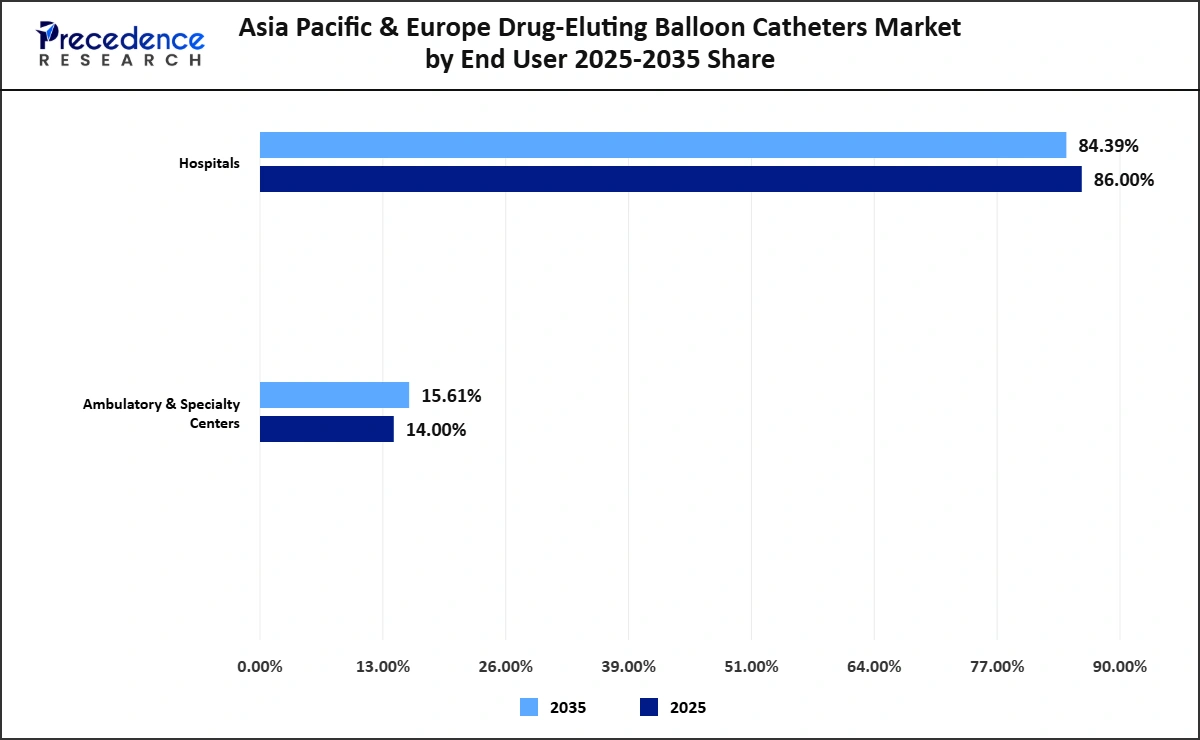
Asia Pacific & Europe Drug-Eluting Balloon Catheters Market by End User, 2025 Share (%)
Note: 2025 is the base year; 2035 shares and CAGRs are forecasts.
Sources: Expert interviews, secondary sources, Precedence Research database, and Precedence Research analysts.
Hospitals dominate because drug-eluting balloon procedures are done in catheterization labs that are mostly hospital-based in both regions. Ambulatory and office-based labs are small but growing in some European countries.
Hospitals: In 2025, the segment represented 86.00% of the overall market and is expected to achieve a CAGR of 8.59% over the 2026-2035 period. Hospitals lead due to their high procedural volumes, advanced catheterization facilities, and centralized procurement capabilities that support large-scale adoption of drug-eluting balloon catheters.
Ambulatory & Specialty Centers: The segment's market share stood at 14.00% in 2025, while its growth trajectory is expected to reflect a CAGR of 9.99% during 2026-2035. Ambulatory & Specialty Centers segment is growing fastest due to the rising shift toward outpatient, cost-effective vascular procedures and the expansion of specialized catheterization facilities.
Analyst View: The market remains dominated by paclitaxel-based balloons and coronary artery disease, supported by established clinical evidence and widespread physician adoption. However, sirolimus-based devices and peripheral artery disease are gaining momentum as clinical evidence expands, and treatment applications diversify. The majority of demand still comes from hospitals, but as outpatient vascular operations become more common, ambulatory & specialized centers are becoming faster-growing avenues.
Country Analysis
Asia Pacific & Europe Drug-Eluting Balloon Catheters Market by Country, 2025 Share (%)
| Country | 2025 Share | 2035 Share | CAGR 2026-2035 |
| China | 23.00% | 22.17% | 8.40% |
| Japan | 15.00% | 15.00% | 8.80% |
| Germany | 13.00% | 13.00% | 8.80% |
| India | 7.00% | 7.81% | 10.00% |
| Italy | 7.00% | 7.00% | 8.80% |
| Rest of Europe | 7.00% | 7.00% | 8.80% |
| France | 6.00% | 6.00% | 8.80% |
| U.K. | 5.00% | 5.00% | 8.80% |
| South Korea | 5.00% | 5.00% | 8.80% |
| Rest of Asia Pacific | 5.00% | 5.00% | 8.80% |
| Spain | 4.00% | 4.00% | 8.80% |
| Australia | 3.00% | 3.00% | 8.80% |
Note: 2025 is the base year; 2035 shares and CAGRs are forecasts.
Sources: Expert interviews, secondary sources, Precedence Research database, and Precedence Research analysts.
China and Japan lead because of large procedure volumes and a strong clinical habit of using drug-coated balloons, while Germany anchors Europe as the birthplace of the technology. India is the fastest-growing country as locally made sirolimus balloons and stent price caps encourage use.
Country Highlights
China: This country dominated with 23.00% of the market share in 2025, with growth projected at an 8.40% CAGR from 2026 to 2035. Volume-based procurement has cut prices sharply but greatly increased use, and local makers such as Lepu Medical and Shanghai MicroPort compete with imported brands.
Japan: Accounting for 15.00% market share in 2025, Japan's growth trajectory is expected to reflect a CAGR of 8.80% during 2026-2035. Japanese cardiologists are among the heaviest users of drug-coated balloons for in-stent restenosis and small vessels, and OrbusNeich started a pivotal Japanese DCB trial in 2026.
Germany: This country accounted for 13.00% of the market in 2025 and is projected to grow at a CAGR of 8.80% from 2026 to 2035. Strong clinical expertise, established physician familiarity, and extensive research activity continue to support market expansion.
India: Holding a 7.00% market share in 2025, India is expected to expand at a CAGR of 10.00% during the forecast period. Rising cardiovascular disease prevalence, local manufacturing capabilities, and demand for affordable treatment options are accelerating adoption.
Italy: The country captured 7.00% of the total market in 2025 and is anticipated to register a CAGR of 8.80% between 2026 and 2035. High procedural volumes and active involvement in clinical trials are strengthening the adoption of drug-coated balloon technologies.
Rest of Europe: Representing 7.00% of the market in 2025, the rest of Europe is forecast to maintain steady growth at a CAGR of 8.80% over the forecast period. Broader access to interventional cardiology services and growing use of advanced vascular treatments are supporting regional demand.
France: With a market contribution of 6.00% in 2025, the country is expected to witness sustained expansion at a CAGR of 8.80% from 2026 to 2035. Public hospital procurement and reimbursement listings for selected products play a significant role in driving market uptake.
U.K.: The country held a substantial 5.00% share of the market in 2025, with growth projected at an 8.80% CAGR through 2035. Established NHS cardiac networks and clinical guidance are encouraging the use of drug-coated balloons in selected coronary and peripheral procedures.
South Korea: In 2025, the country represented 5.00% of the overall market and is expected to achieve a CAGR of 8.80% over the 2026-2035 period. Advanced academic research and growing clinical interest in treating complex coronary lesions are driving segment expansion.
Rest of Asia Pacific: The region's market share stood at 5.00% in 2025, while its growth trajectory is expected to reflect a CAGR of 8.80% during 2026-2035. Improving healthcare infrastructure and increasing investment in private hospital facilities are creating opportunities for wider adoption.
Spain: With 4.00% of the market share in 2025, Spain is forecast to maintain steady growth at a CAGR of 8.80% over the forecast period. Greater utilization of drug-coated balloons in public hospital catheterization laboratories is contributing to steady market growth.
Australia: The country contributed 3.00% of the total market in 2025 and is anticipated to register a CAGR of 8.80% between 2026 and 2035. Favorable reimbursement mechanisms and increasing use of minimally invasive vascular interventions are supporting wider adoption.
Analyst View: The Asia Pacific & Europe market is driven by China's large-scale adoption and competitive domestic manufacturing, while Japan benefits from established clinical use and ongoing product development. India has substantial development potential due to local manufacturing, the growing prevalence of cardiovascular disease, and the need for reasonably priced treatment choices, while Germany continues to be a major market because of its solid clinical research base.
Competitive Landscape
Top 10 Players in the Asia Pacific & Europe Drug-Eluting Balloon Catheters Market, 2025
| Rank | Company Name | 2025 Share (%) | Key Products / Business | Headquarters |
| 1 | B. Braun | 16.00% | SeQuent, paclitaxel coronary balloons | Germany |
| 2 | Medtronic | 12.00% | IN.PACT Admiral and Prevail balloons | Ireland |
| 3 | Boston Scientific | 10.00% | Agent and Ranger drug-coated balloons | United States |
| 4 | Concept Medical | 8.00% | MagicTouch sirolimus-coated balloon | India |
| 5 | Lepu Medical | 7.00% | Vesselin and other drug-coated balloons | China |
| 6 | BD (Bard) | 6.00% | Lutonix peripheral balloons | United States |
| 7 | Biotronik | 5.00% | Pantera Lux coronary and Passeo-18 Lux peripheral balloons | Germany |
| 8 | Cardionovum | 4.00% | Restore and Legflow balloons | Germany |
| 9 | OrbusNeich | 4.00% | coronary balloons and a new paclitaxel DCB | Hong Kong |
| 10 | Shanghai MicroPort | 4.00% | Chinese coronary drug-coated balloons | China |
Note: Company shares are 2025 estimates.
Sources: Company press releases, expert interviews, secondary sources, Precedence Research database, and Precedence Research analysts.
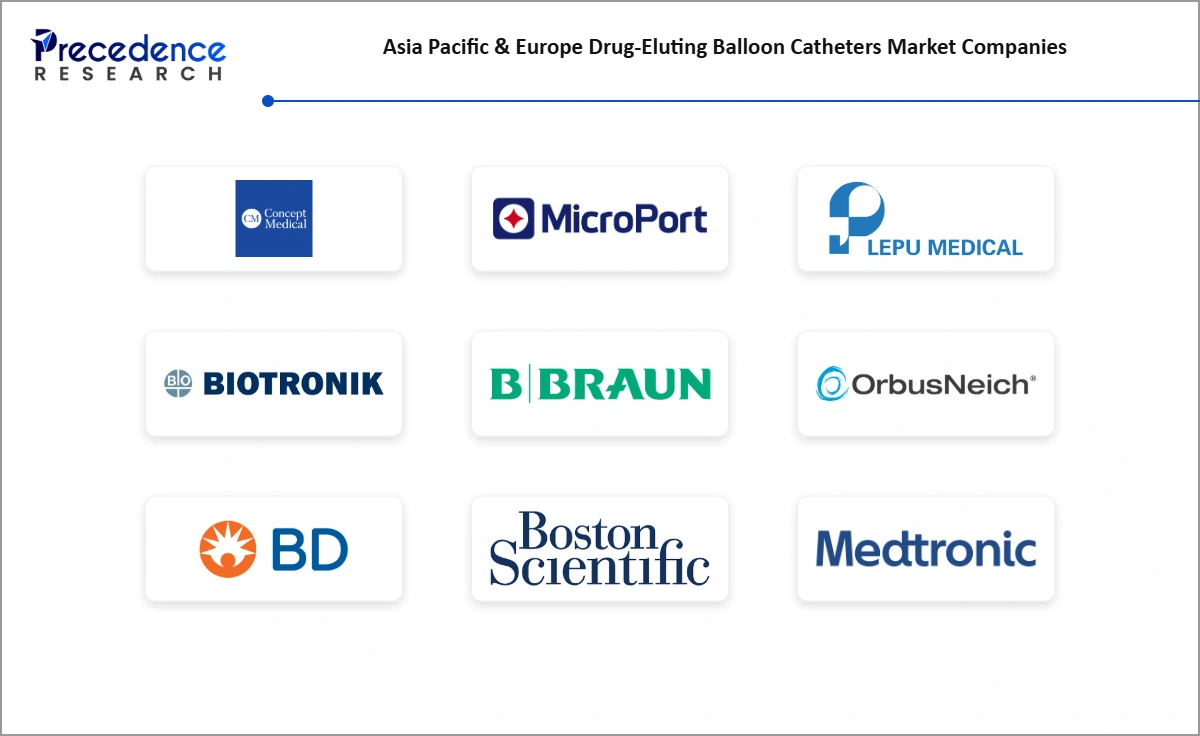
B. Braun led the Asia Pacific & Europe drug-eluting balloon catheters market with 16.00% share of 2025 revenue, followed by Medtronic at 12.00% share and Boston Scientific at 10.00% share. B. Braun leads with seQuent paclitaxel coronary balloons; Medtronic competes with IN.PACT Admiral and Prevail balloons, and Boston Scientific offers agent and Ranger drug-coated balloons. Concept Medical, Lepu Medical, BD (Bard), Biotronik, Cardionovum, OrbusNeich, and Shanghai MicroPort compete through magicTouch sirolimus-coated balloon, vesselin and other drug-coated balloons, lutonix peripheral balloons, Pantera Lux coronary and Passeo-18 Lux peripheral balloons, restore and Legflow balloons, coronary balloons, and a new paclitaxel DCB and Chinese coronary drug-coated balloons.
The top 10 companies accounted for 76.00% of 2025 revenue, while the remaining 24.00% was shared among several Chinese, South Korean, and European device manufacturers. The Asia Pacific & Europe drug-eluting balloon catheters market is moderately concentrated, and competition centers on clinical trial data, coating technology, procurement pricing, and relationships with high-volume interventional centers.
Company Snapshots
B. Braun: Headquartered in Germany, B. Braun contributed 16.00% of the Asia Pacific & Europe drug-eluting balloon catheters market in 2025, built largely on SeQuent and paclitaxel coronary balloons. The Precedence Research Companies Quadrant places it as a Leader.
Medtronic: Medtronic competes mainly through its IN.PACT Admiral and Prevail balloons. From its base in Ireland, it captured 12.00% of 2025 revenue and is rated a Leader in the Precedence Research Companies Quadrant.
Boston Scientific: With about 10.00% of the Asia Pacific & Europe drug-eluting balloon catheters market in 2025, Boston Scientific draws on Agent and Ranger drug-coated balloons. The company is based in the United States and appears as a Leader in the Precedence Research Companies Quadrant.
Concept Medical: This company is based in India and accounted for 8.00% share in 2025. Its MagicTouch sirolimus-coated balloon keeps it in the Leader group of the Precedence Research Companies Quadrant.
Lepu Medical: An estimated 7.00% share in 2025 makes Lepu Medical a notable participant in the Asia Pacific & Europe drug-eluting balloon catheters market. It is headquartered in China, focuses on Vesselin and other drug-coated balloons, and is classed as a Leader in the Precedence Research Companies Quadrant.
BD (Bard): Subsidiary of Becton, Dickinson and Company, built its estimated 6.00% position in the Asia Pacific & Europe drug-eluting balloon catheters market around Lutonix peripheral balloons. Headquartered in the U.S., it is shown as a Leader in the Precedence Research Companies Quadrant.
Biotronik: Most of Biotronik's presence in this market comes from Pantera Lux coronary and Passeo-18 Lux peripheral balloons. The company is headquartered in Germany, held roughly 5.00% of 2025 revenue, and is rated an Innovator in the Precedence Research Companies Quadrant.
Cardionovum: Represents a 4.00% share of the Asia Pacific & Europe drug-eluting balloon catheters market. Its range is built around Restore and Legflow balloons, and the company, based in Germany, is placed as an Innovator in the Precedence Research Companies Quadrant.
OrbusNeich: Operating from Hong Kong, OrbusNeich offers coronary balloons and a new paclitaxel DCB. That portfolio gave it about 4.00% of the Asia Pacific & Europe drug-eluting balloon catheters market in 2025 and a position as an Innovator in the Precedence Research Companies Quadrant.
Shanghai MicroPort: About 4.00% of 2025 revenue in the Asia Pacific & Europe drug-eluting balloon catheters market went to Shanghai MicroPort, whose business here centers on Chinese coronary drug-coated balloons. The company is headquartered in China, and the Precedence Research Companies Quadrant rates it as an Innovator.
Companies Ecosystem
The Asia Pacific and Europe drug-eluting balloon catheters ecosystem links drug & coating suppliers, device manufacturers, distributors, hospitals & catheter labs, and regulators & payers, with each stage adding value before products reach end users. Operators increasingly use intravascular imaging to check vessel preparation before a balloon-only result is accepted.
Asia Pacific & Europe Drug-Eluting Balloon Catheters Market Ecosystem
| Ecosystem Stage | Role in the Market | Key Companies |
| Drug & Coating Suppliers | Provide paclitaxel, sirolimus, and excipients | Specialty API suppliers, in-house coating teams |
| Device Manufacturers | Design and make balloon catheters | B. Braun, Medtronic, Concept Medical, Lepu |
| Distributors | Handle logistics and tenders | National distributors, hospital buying groups |
| Hospitals & Cath Labs | Perform procedures | University hospitals, cardiac centers |
| Regulators & Payers | Approve and reimburse devices | EU notified bodies, NMPA, PMDA, CDSCO |
Sources: Company press releases, expert interviews, secondary sources, Precedence Research database, and Precedence Research analysts.
Drug & Coating Suppliers: Carrier technology decides how much drug reaches and stays in the vessel wall.
Device Manufacturers: Makers compete on trial evidence and deliverability in tight lesions.
Distributors: Distributors manage tender bids and inventory across many hospitals.
Hospitals & Cath Labs: Key opinion leaders in these centers shape national practice.
Regulators & Payers: MDR certification and Chinese volume-based procurement strongly influence prices.
Value in the Asia Pacific & Europe drug-eluting balloon catheters market flows from upstream material and technology suppliers to manufacturers and service providers, then through distribution partners to end users. Companies that integrate several stages or build long-term relationships with end users capture a larger share of this value.
Precedence Research Companies Quadrant
The Precedence Research Companies Quadrant positions key participants in the Asia Pacific & Europe drug-eluting balloon catheters market by market strength, reflecting revenue scale, market share and geographic reach, and by innovation and growth strategy, reflecting product portfolio breadth, R&D intensity and partnerships. Positions reflect each company's estimated 2025 share of the Asia Pacific & Europe drug-eluting balloon catheters market and our assessment of its product innovation, portfolio breadth and partnerships.
Sources: Company press releases, expert interviews, secondary sources, Precedence Research database, and Precedence Research analysts.
Leaders: B. Braun, Medtronic, Boston Scientific, Concept Medical, Lepu Medical, and BD (Bard) combine high market share with broad portfolios and strong innovation.
Innovators: Biotronik, Cardionovum, OrbusNeich, and Shanghai MicroPort bring newer technologies and specialized products.
Recent Developments
- July 2026: OrbusNeich enrolled the first patient in a pivotal Japanese trial of its paclitaxel drug-coated balloon. The study will involve 25 cardiovascular centers across Japan, with patient enrolment targeted for completion by the end of 2027.
- November 2026: Concept Medical's TRANSFORM II trial results, presented at TCT 2026, demonstrated that its MagicTouch sirolimus-coated balloon was non-inferior to everolimus-eluting stents in terms of 12-month target lesion failure among patients with de novo coronary artery disease.
Asia Pacific and Europe Drug Eluting Balloon Catheters Market Segments
By Drug
- Paclitaxel
- Sirolimus
By Application
- Coronary Artery Disease
- Peripheral Artery Disease
By End User
- Hospitals
- Ambulatory & Specialty Centers
By Country
- China
- Japan
- India
- South Korea
- Australia
- Rest of Asia Pacific
- Germany
- U.K.
- France
- Italy
- Spain
- Rest of Europe
Research Methodology: The market was defined as drug-eluting (drug-coated) balloon catheters that deliver paclitaxel or sirolimus to the vessel wall during angioplasty, used for coronary in-stent restenosis, de novo small-vessel and bifurcation lesions, and peripheral artery disease in the femoropopliteal and below-the-knee arteries, sold to hospitals and catheter labs across Asia Pacific and Europe. The 2025 base year was built bottom-up from demand volumes and average prices by drug, application, end user, and country, and checked top-down against the market-specific revenues of leading companies and public industry data. Segment, country, and company values were allocated from drug, application, end user, and country demand. Key estimates were verified by cross-checking company disclosures, regulatory and industry data, and published third-party estimates, and inputs that could not be reconciled were excluded. All segment, regional, and company figures were reconciled to the same 2025 base year, and the 2026-2035 forecast, which applies a constant CAGR from the 2025 base, was recalculated and validated.
Analyst View: The Asia Pacific and Europe drug-eluting balloon catheters market is expected to expand steadily, supported by the growing adoption of drug-coated balloons across coronary and peripheral interventions. Increasing use in de novo small-vessel and bifurcation lesions, alongside emerging sirolimus-based technologies, will create additional growth opportunities. However, European regulatory compliance expenses and pricing pressure from China's volume-based buying may limit revenue development.
Sources and References
- "OrbusNeich begins Japanese trial for drug-coated balloon". July 2026. Press Releases. https://orbusneich.com/orbusneich-announces-enrollment-of-first-patient-in-japan-clinical-trial-for-its-proprietary-drug-coated-balloon
- Macau Business / PR Newswire. "Sirolimus-Coated Balloon Matches Drug-Eluting Stent at One Year in Large International TRANSFORM II Trial". November 2026. Press release. (Source: macaubusiness.com)
For inquiries regarding discounts, bulk purchases, or customization requests, please contact us at sales@precedenceresearch.com
Frequently Asked Questions





Ask For Sample
No cookie-cutter, only authentic analysis – take the 1st step to become a Precedence Research client
 Get a Sample




 sales@precedenceresearch.com
 Schedule a Meeting
