



Asia Pacific Viral Vectors & Plasmid DNA Manufacturing Market Revenue, Leading Companies, Company Technology / Innovation, Diagnostic Testing Volume, Adoption Rates, Pricing Metrics, Supply Chain Performance, Competitive Positioning, and Industry Trends
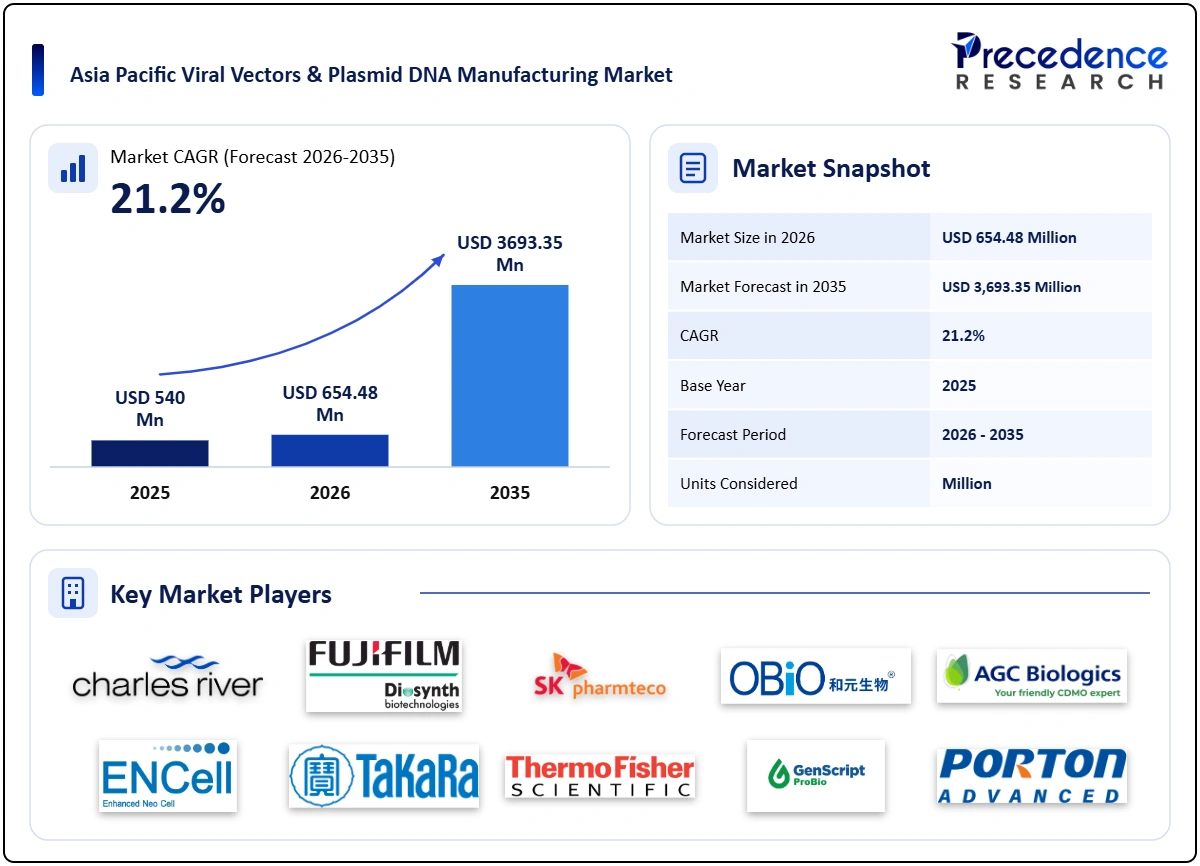
Payal Rabde, a Healthcare Industry Expert, highlights that the Asia Pacific viral vectors and plasmid DNA manufacturing market has reached USD 654.48 million in 2026 and is on track to reach USD 3,693.35 million by 2035, advancing at a CAGR of 21.2%. Key Asia Pacific viral vectors and plasmid DNA manufacturing market companies shaping the market include GenScript ProBio, Obio Technology, Porton Advanced Solutions while major growth segments span product, type, application and region.
Source: https://www.precedenceresearch.com/asia-pacific-viral-vectors-and-plasmid-dna-manufacturing-market
 Get a Sample
 Table Of Content
Key Takeaways
Market Size & Growth Outlook
- Market size in 2025: USD 540.00 million
- Estimated market size in 2026: USD 654.48 million
- Projected market size by 2035: USD 3,693.35 million
- CAGR (2026-2035): 21.2%
Regional Market Spotlight
- China led the market in 2025, capturing 48% of regional revenue.
- In 2025, Japan accounted for 17% of the market.
- South Korea represented a market share of 14% in 2025 and is expected to be the fastest-growing country, registering a CAGR of 22.41% from 2026 to 2035.
Segmental Spotlight
- Viral Vectors accounted for the largest share of the product segment, representing 63% of the market in 2025.
- Lentiviral captured the dominant share of the vector type segment, at 38% in 2025.
- In 2025, Cell Therapy dominated the application segment, accounting for 41% of the regional market.
Asia Pacific Viral Vectors & Plasmid DNA Manufacturing Market Size, 2025-2035 (USD Million)
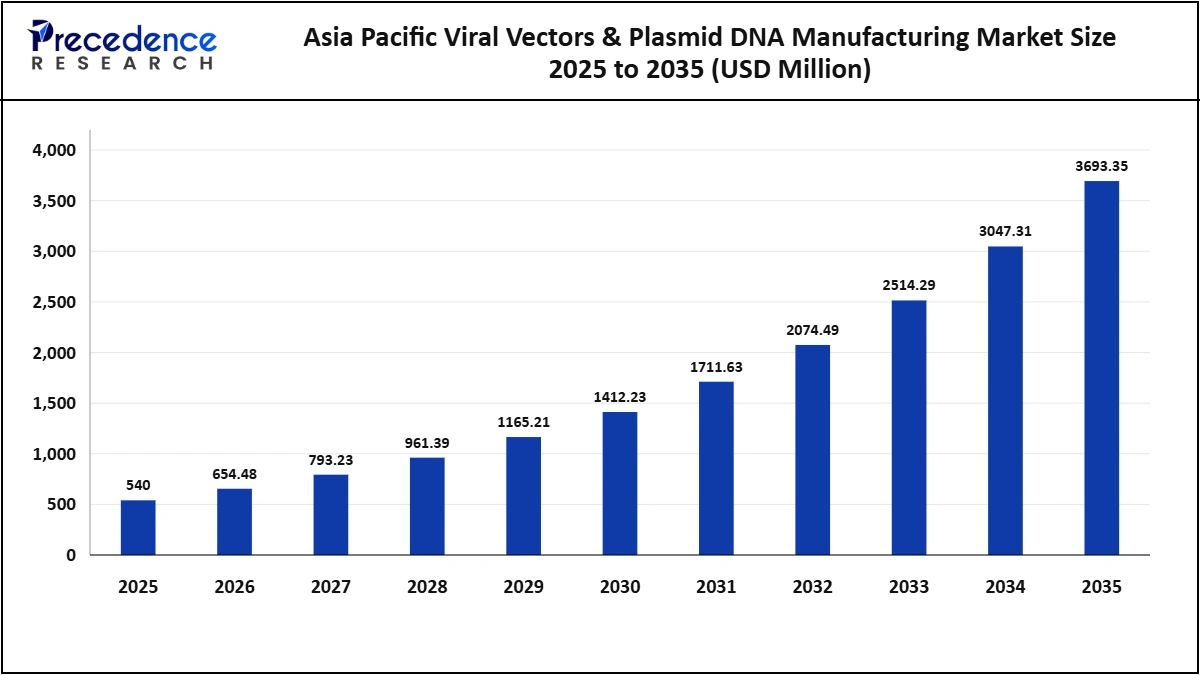
Note: 2025 is the base year; 2026-2035 values are forecasts.
Sources: Expert interviews, secondary sources, Precedence Research database, and Precedence Research analysts.
The Asia Pacific viral vectors and plasmid DNA manufacturing market is expected to grow from USD 540.00 million in 2025 to USD 3,693.35 million by 2035, registering a CAGR of 21.2% from 2026 to 2035. Key factors driving this growth include the expansion of cell and gene therapy pipelines, manufacturing capacity across China, South Korea, and Japan, and rising outsourcing by Western developers. By 2030, the market is forecast to reach USD 1,412.23 million, supported by growing clinical and commercial manufacturing requirements and increasing regional CDMO capacity. Additionally, the regional availability of enzymes and fermentation inputs is supporting plasmid DNA manufacturing and supply chain development.
Analyst View: Our market forecast is based on an assessment of viral vector and plasmid DNA batch volumes by country, differentiated by manufacturing scale and product grade. These estimates are cross-checked against reported CDMO revenues and clinical trial counts to provide a comprehensive regional market outlook.
Asia Pacific Viral Vectors & Plasmid DNA Manufacturing Market Trends
- Korean bio-CDMO growth: Korean conglomerates and specialized manufacturers invest in advanced therapy manufacturing capacity, strengthening the country's position in regional viral vector and plasmid DNA production.
- Biosecure-related shifts: Western sponsors review their exposure to Chinese suppliers, creating opportunities for alternative manufacturing locations across Asia Pacific.
- Linear DNA templates: Enzymatic DNA production is emerging as an alternative to plasmids for mRNA template manufacturing, shaping the development of DNA production technologies.
- Hospital-based CAR-T: Point-of-care CAR-T manufacturing expands in Chinese hospitals, supporting demand for viral vectors and related manufacturing inputs.
- Regional trial supply: Sponsors seek in-country manufacturing capabilities to support clinical trials across Asian markets.
Asia Pacific Viral Vectors & Plasmid DNA Manufacturing Market Dynamics
The Asia Pacific viral vectors and plasmid DNA manufacturing market growth is supported by China's expanding CAR-T pipeline and the rise in manufacturing capacity in South Korea and Japan. Chinese CDMOs offer competitive pricing and faster turnaround times, while Korean manufacturers benefit from substantial conglomerate investments. Market growth is influenced by geopolitical considerations, as U.S. scrutiny of certain Chinese biotech suppliers is encouraging Western developers to evaluate alternative manufacturing locations across the region.
Drivers
Large cell and gene therapy pipeline
The expansion of the cell and gene therapy market in Asia Pacific is increasing the need for viral vectors and plasmid DNA manufacturing. China leads in CAR-T trials, with Japan, South Korea, and Australia also active in early-stage gene therapy research. Each trial necessitates batches of vectors and plasmid DNA, driving manufacturing needs from early development to commercial production.
Government support
Government initiatives and national biotechnology plans are encouraging investment in viral vector and plasmid DNA manufacturing. Key strategies from China, South Korea, and Japan, including grants, tax incentives, and expedited approval processes, are promoting industry growth and reducing investment risks.
Lower manufacturing costs
Lower labor and construction costs in several Asia Pacific countries give manufacturers competitive advantages over the U.S. and Europe. Regional CDMOs attract domestic biotech firms and Western developers looking for cost-efficient manufacturing and outsourcing options.
mRNA and DNA vaccine programmes
The development of mRNA vaccines and therapies across China, South Korea and Japan is generating demand for GMP-grade plasmid DNA templates. Plasmid DNA is crucial for mRNA manufacturing, increasing demand beyond traditional cell and gene therapy and driving investment in specialized production capacity.
Market Drivers - Impact & CAGR Contribution (2026-2035)
| Driver | Impact | ≈ CAGR Contribution | Time Horizon | Key Regions |
| Large cell and gene therapy pipeline | High | +8.28 pp | Short to long term | Asia Pacific-wide, strongest in China |
| Government support | Medium | +6.98 pp | Medium to long term | Asia Pacific-wide, fastest uptake in South Korea |
| Lower manufacturing costs | Medium | +5.95 pp | Short to medium term | Asia Pacific-wide |
| mRNA and DNA vaccine programmes | Low | +4.66 pp | Long term | China and South Korea |
Note: Contributions are indicative estimates of each factor's effect on annual growth.
Sources: Expert interviews, secondary sources, Precedence Research database and Precedence Research analysts.
The expansion of regional cell and gene therapy pipelines, government support, and lower manufacturing costs are the major drivers of the Asia Pacific viral vectors and plasmid DNA manufacturing market. Growing mRNA vaccine and therapy programmes further support demand for GMP-grade plasmid DNA.
Restraints
Geopolitical risk
Geopolitical tensions and U.S. legislation and procurement rules targeting certain Chinese biotechnology companies are creating uncertainty for Western developers working with Chinese suppliers. These developments can make international clients cautious about manufacturing partnerships, delay contract decisions, and encourage relocating manufacturing activities to alternative Asia Pacific countries.
Regulatory differences
Differences in regulatory requirements across Asia Pacific countries create challenges for viral vector and plasmid DNA manufacturers, as clinical and manufacturing data may not be accepted by regulators in different countries. Varying inspection requirements and quality standards also necessitate developers to consider these differences when planning submissions for the U.S. and Europe.
Talent shortage
The availability of experienced viral vector process scientists, manufacturing specialists and quality assurance professionals remains a challenge across the region. Rapid expansion of manufacturing capacity is increasing competition for skilled personnel, potentially affecting production efficiency, batch consistency and manufacturing timelines.
Market Restraints - Impact & Negative CAGR Contribution (2026-2035)
| Restraint | Impact | ≈ Negative CAGR Contribution | Time Horizon | Key Regions |
| Geopolitical risk | High | -2.10 pp | Short to medium term | Asia Pacific-wide |
| Regulatory differences | High | -1.54 pp | Medium term | Smaller and price-sensitive markets |
| Talent shortage | Medium | -1.03 pp | Short term | China and other mature markets |
Note: Contributions are indicative estimates of each factor's effect on annual growth.
Sources: Expert interviews, secondary sources, Precedence Research database and Precedence Research analysts.
Geopolitical risk represents a constraint on the Asia Pacific viral vectors and plasmid DNA manufacturing market, as international procurement restrictions and supplier concerns can influence manufacturing decisions. Regulatory differences and shortages of experienced manufacturing professionals affect market expansion and operational efficiency.
Opportunities
Alternative to China for Western sponsors
Increasing geopolitical and supply chain concerns are opening opportunities for CDMOs in South Korea, Japan, Singapore, and Australia to attract Western biotechnology developers. By enhancing their viral vector and plasmid DNA manufacturing capabilities, these manufacturers can strengthen their market positions for international clients.
Commercial CAR-T supply
The approval and commercialization of CAR-T therapies in China and India are creating opportunities for manufacturers to supply viral vectors at commercial scale. Growing demand for reliable and cost-effective lentiviral vector production is encouraging investment in specialized manufacturing capacity to support commercial cell therapy requirements.
Plasmid capacity
The rise in demand for short lead times in GMP-grade plasmid DNA production is creating opportunities for manufacturers to establish dedicated plasmid production lines. Additional manufacturing capacity can attract customers from both viral vector and mRNA development sectors, supporting demand across multiple advanced therapy and biotechnology applications.
Market Segmentation: 2025 Share and Size
Asia Pacific Viral Vectors & Plasmid DNA Manufacturing Market by Product, 2025-2035 Share (%)
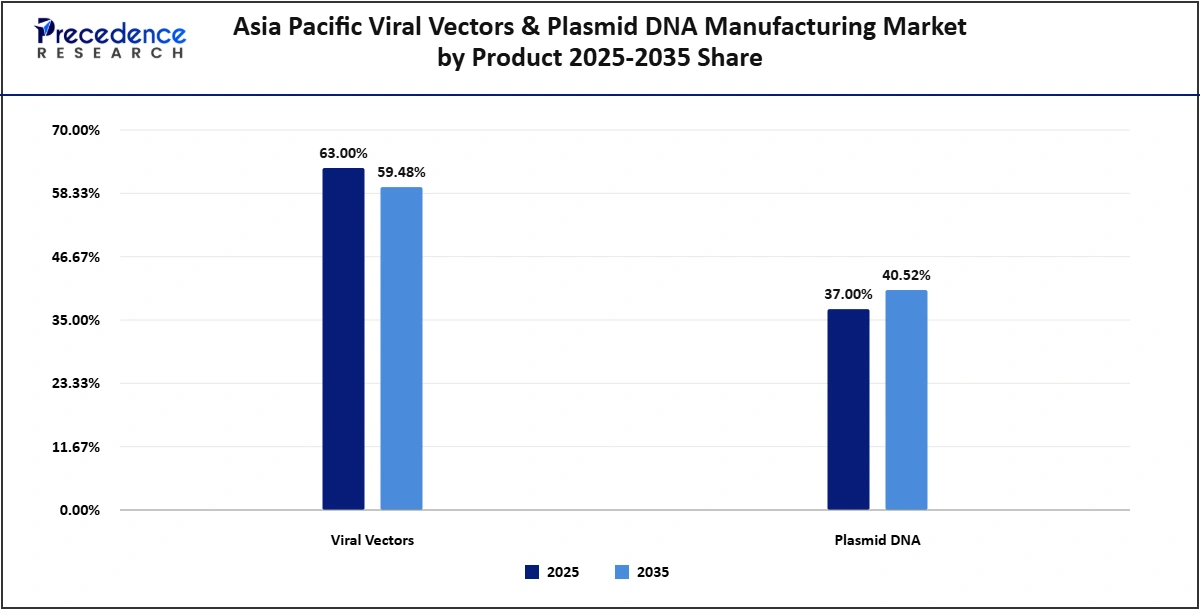
Note: 2025 is the base year; 2035 shares and CAGRs are forecasts.
Sources: Expert interviews, secondary sources, Precedence Research database and Precedence Research analysts.
Viral Vectors dominated the Asia Pacific viral vectors & plasmid DNA manufacturing market, accounting for 63% of the market in 2025. Higher manufacturing costs per batch contribute to the larger revenue contribution of viral-vector manufacturing in the region. Meanwhile, plasmid DNA, though a smaller segment, is growing rapidly due to its applications in viral vector manufacturing, mRNA production, and DNA vaccine development.
Viral Vectors accounted for 63% of the market in 2025. The segment is projected to grow at a CAGR of 20.51% through 2035. Its growth is supported by the demand for lentiviral and AAV manufacturing, particularly from Chinese CAR-T products such as Fucaso and Carteyva and Japanese regenerative medicine programmes that require reliable regional vector supply.
Plasmid DNA represented 37% of the market in 2025 and is projected to record a CAGR of 22.31% from 2026 to 2035. Demand is supported by its use in viral-vector manufacturing, particularly triple-transfection AAV production, as well as in mRNA and DNA vaccine manufacturing. Growth will depend on the expansion of GMP-grade production capacity, demand for clinical and commercial batches, process yields, and the adoption of alternative DNA-template technologies.
Asia Pacific Viral Vectors & Plasmid DNA Manufacturing Market by Vector Type, 2025 Share (%)
| Segments | 2025 Share | 2035 Share | CAGR 2026-2035 |
| Lentiviral | 38.00% | 35.28% | 20.30% |
| AAV | 34.00% | 37.84% | 22.50% |
| Adenoviral | 18.00% | 17.28% | 20.70% |
| Others | 10.00% | 9.60% | 20.70% |
Note: 2025 is the base year; 2035 shares and CAGRs are forecasts.
Sources: Expert interviews, secondary sources, Precedence Research database and Precedence Research analysts.
In 2025, Lentiviral vectors dominated the vector-type segment of the Asia Pacific market, accounting for 38% of the market. Their lead reflects the region's established CAR-T therapy pipeline, particularly in China. AAV represents the second-largest segment and is projected to register the fastest growth during the forecast period, supported by expanding gene therapy pipelines in China and Japan. Adenoviral and other vectors serve additional applications in vaccines, oncolytic therapies, academic research, and early-stage clinical development.
Lentiviral accounted for 38% of the market in 2025. The segment is projected to grow at a CAGR of 20.30% through 2035. Its demand is supported by China's extensive CAR-T clinical trial pipeline, which represents the largest number of registered studies globally. The use of lentiviral vectors in CAR-T manufacturing continues to support demand for specialized production capacity.
In 2025, AAV held 34% of the market and is expected to grow at the fastest CAGR of 22.50% from 2026 to 2035. Demand is supported by Chinese developers such as Belief BioMed and Frontera, alongside Japanese gene therapy programmes targeting Parkinson's disease and haemophilia. The progression of these programmes toward commercial manufacturing is expected to strengthen demand for AAV production.
Adenoviral vectors captured 18% of the market in 2025 and are anticipated to register a CAGR of 20.70% through 2035. These vectors are primarily used in oncolytic therapies and vaccine development, including China's Ad5-based programmes.
In 2025, Other vector types represented the remaining 10% of the market and are expected to grow at a CAGR of 20.70% during the forecast period. This segment includes retroviral, HSV, and newer vector types, which are utilized in academic research and early-stage clinical development.
Asia Pacific Viral Vectors & Plasmid DNA Manufacturing Market by Application, 2025-2035 Share (%)
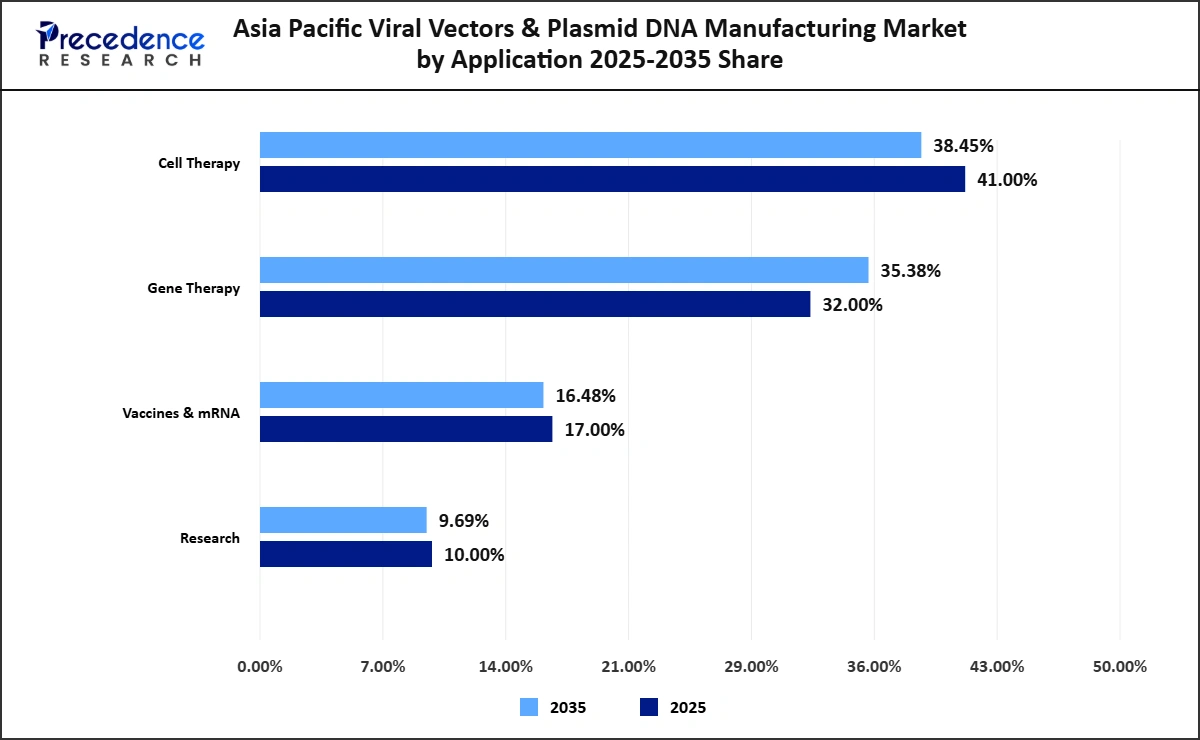
Note: 2025 is the base year; 2035 shares and CAGRs are forecasts.
Sources: Expert interviews, secondary sources, Precedence Research database and Precedence Research analysts.
In 2025, Cell Therapy held the largest share of the Asia Pacific viral vectors & plasmid DNA manufacturing market, accounting for 41% of total revenue. Its leading position is supported by the expansion of CAR-T therapies in China and increasing cell therapy development in South Korea and Japan. Gene Therapy represents the second-largest application and is expected to register the fastest growth during the forecast period as more AAV-based programmes progress toward pivotal clinical trials. Vaccines and mRNA, along with Research provide additional demand for viral vectors and plasmid DNA.
Cell Therapy captured 41% of the market in 2025. The segment is projected to expand at a CAGR of 20.42% through 2035. Demand is primarily supported by autologous CAR-T manufacturing, particularly in China, where hospital-linked facilities are expanding point-of-care production capabilities. Growing cell therapy development in other regional markets further supports demand for viral vector manufacturing.
Gene Therapy held a market share of 32% in 2025 and is expected to register the fastest CAGR of 22.42% from 2026 to 2035. This growth is supported by expanding AAV-based programmes targeting inherited diseases and eye disorders, alongside increasing clinical development activity across China and Japan.
In 2025, Vaccines and mRNA captured 17% of the market and are anticipated to grow at a CAGR of 20.82% through 2035. This segment includes demand for plasmid DNA templates used by mRNA manufacturers and adenoviral vectors utilized in vaccine platforms.
Research represented the remaining 10% of the market in 2025 and is expected to register a CAGR of 20.82% during the forecast period. The segment comprises research-grade viral vectors and plasmids utilized by universities, research institutions, and early-stage biotechnology developers.
Analyst View: Based on our analysis, Plasmid DNA, AAV, and Gene Therapy are expected to gain market share at the fastest rates as regional manufacturing and clinical development activities expand. Meanwhile, Viral Vectors, Lentiviral systems, and Cell Therapy will continue to represent the largest segments of the Asia Pacific viral vectors & plasmid DNA manufacturing market.
Country Analysis of the Asia Pacific Viral Vectors & Plasmid DNA Manufacturing Market
Asia Pacific Viral Vectors & Plasmid DNA Manufacturing Market by Country, 2025 Share (%)
| Country | 2025 Share | 2035 Share | CAGR 2026-2035 |
| China | 48.00% | 46.49% | 20.81% |
| Japan | 17.00% | 17.02% | 21.21% |
| South Korea | 14.00% | 15.47% | 22.41% |
| Australia | 7.00% | 7.01% | 21.21% |
| India | 6.00% | 6.01% | 21.21% |
| Singapore | 4.00% | 4.00% | 21.21% |
| Rest of Asia Pacific | 4.00% | 4.00% | 21.21% |
Note: 2025 is the base year; 2035 shares and CAGRs are forecasts.
Sources: Expert interviews, secondary sources, Precedence Research database and Precedence Research analysts.
In 2025, China led the Asia Pacific viral vectors and plasmid DNA manufacturing market with 48% of revenue, backed by the highest number of cell and gene therapy trials and a strong network of domestic CDMOs. South Korea is projected to achieve the fastest growth in the forecast period, driven by investments from major conglomerates, specialized CDMOs, and government-supported biotechnology initiatives.
Country Insights
China dominated the Asia Pacific viral vectors and plasmid DNA manufacturing market, accounting for 48% of regional revenue in 2025. The country is projected to register a CAGR of 20.81% through 2035. This market significance is supported by the world's largest CAR-T clinical trial pipeline and an established domestic CDMO base. Companies such as GenScript ProBio, Obio, and Porton Advanced supply viral vector and plasmid DNA manufacturing services to domestic and international clients.
Japan accounted for 17% of the Asia Pacific market in 2025. The country's market is supported by its conditional approval pathway for regenerative medicine and the presence of established manufacturers, including AGC Biologics, Takara Bio, and Fujifilm. Japan is projected to register a CAGR of 21.21% from 2026 to 2035, supported by investments in local viral vector manufacturing and regenerative medicine programmes.
South Korea represented 14% of the regional market in 2025 and is expected to register the fastest CAGR of 22.41% through 2035. The country's growth is supported by investments in viral vector manufacturing and advanced therapy CDMO capacity. Companies like SK Pharmteco, Samsung Biologics, ENCell, and Dr. Park are enhancing manufacturing capacity, supported by government initiatives for bio-CDMO development.
Australia captured 7% of the market in 2025 and is projected to register a CAGR of 21.21% during the forecast period. Its clinical trial environment attracts early-stage gene therapy studies, while new viral vector manufacturing investments in Melbourne and Sydney are strengthening domestic production capabilities.
In 2025, India held a 6% share of the regional market and is anticipated to grow at a CAGR of 21.21% from 2026 to 2035. The approval of NexCAR19, India's first home-grown CAR-T therapy, in 2023, alongside the presence of cost-competitive CDMOs, is supporting local demand for viral vector manufacturing.
Singapore covered 4% of the Asia Pacific market in 2025 and is projected to register a CAGR of 21.21% through 2035. The country hosts regional manufacturing operations for multinational companies and benefits from a government-backed cell and gene therapy centre, supporting its role in regional advanced therapy manufacturing.
The Rest of Asia Pacific accounted for the remaining 4% of the market in 2025 and is expected to register a CAGR of 21.21% during the forecast period. Regional activity is supported by Taiwan's growing CDMO sector and academic CAR-T programmes in Thailand.
Analyst View: Our analysis indicates that China will maintain its dominant position in the Asia Pacific viral vectors and plasmid DNA manufacturing market throughout the forecast period, supported by its extensive cell and gene therapy pipeline and established CDMO infrastructure. South Korea is expected to grow the fastest, while Japan and Australia will strengthen their positions through specialized manufacturing capacity and advanced therapy development.
Competitive Landscape
Top 10 Companies in the Asia Pacific Viral Vectors & Plasmid DNA Manufacturing Market, 2025
| Rank | Company Name | 2025 Share (%) | Key Products / Business | Headquarters |
| 1 | GenScript ProBio | 11.00% | plasmid and viral vector CDMO services | China |
| 2 | Obio Technology | 8.00% | AAV and lentiviral CDMO | China |
| 3 | Porton Advanced Solutions | 6.00% | plasmid and vector manufacturing | China |
| 4 | AGC Biologics | 6.00% | cell and gene therapy production in Japan | Japan |
| 5 | Takara Bio | 6.00% | vector manufacturing and reagents | Japan |
| 6 | SK pharmteco | 5.00% | viral vector CDMO network | South Korea |
| 7 | Thermo Fisher Scientific | 5.00% | plasmid, vector services and bioprocess equipment | United States |
| 8 | Charles River Laboratories | 4.00% | plasmid and vector services for Asian sponsors | United States |
| 9 | ENCell | 3.00% | cell and gene therapy CDMO in Korea | South Korea |
| 10 | Fujifilm Diosynth Biotechnologies | 3.00% | advanced therapy manufacturing | Japan |
Note: Company shares are 2025 estimates.
Sources: Company press releases, expert interviews, secondary sources, Precedence Research database and Precedence Research analysts.
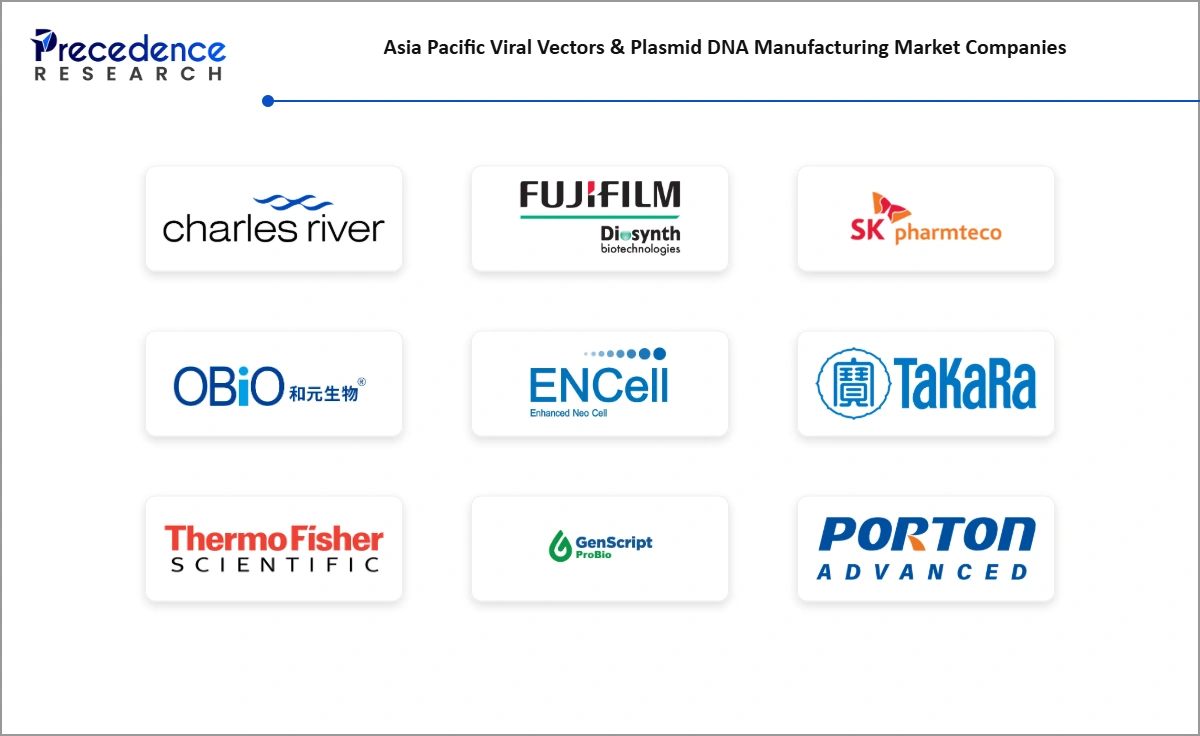
GenScript ProBio led the Asia Pacific viral vectors & plasmid DNA manufacturing market in 2025, with an estimated revenue share of 11%, followed by Obio Technology at 8% and Porton Advanced Solutions at 6%. These companies benefit from their established manufacturing capabilities and specialized CDMO service portfolios.
GenScript ProBio competes through plasmid and viral vector CDMO services, while Obio Technology focuses on AAV and lentiviral CDMO. Porton Advanced Solutions offers plasmid and vector manufacturing, while AGC Biologics participates through cell and gene therapy production in Japan. Takara Bio focuses on vector manufacturing and reagents, and SK pharmteco competes through its viral vector CDMO network. Thermo Fisher Scientific provides plasmid and vector services and bioprocess equipment, while Charles River Laboratories supplies plasmid and vector services for Asian sponsors. ENCell participates through cell and gene therapy CDMO services in South Korea, while Fujifilm Diosynth Biotechnologies focuses on advanced therapy manufacturing.
The top 10 listed companies accounted for an estimated 57% of regional market revenue in 2025, while the remaining 43% was shared among hospital-linked Chinese CAR-T facilities and smaller regional CDMOs. The Asia Pacific viral vectors and plasmid DNA manufacturing market remains fragmented, with competition driven by GMP manufacturing capacity, pricing, regulatory acceptance of manufacturing data across countries, technology transfer timelines, and partnerships with Western developers.
Company Snapshots
GenScript ProBio: GenScript ProBio held the largest estimated share of the Asia Pacific viral vectors and plasmid DNA manufacturing market, accounting for around 11% in 2025. The Chinese company focuses on plasmid and viral vector CDMO services. Its established manufacturing portfolio and regional market presence position it as a Leader in the Precedence Research Companies Quadrant.
Obio Technology: Accounting for an estimated 8% share of the regional market in 2025, the China-based company strengthens its competitive position through AAV and lentiviral CDMO services. Its specialized viral vector manufacturing capabilities position it as a Leader in the Precedence Research Companies Quadrant.
Porton Advanced Solutions: Supported by its plasmid and vector manufacturing capabilities, the China-headquartered company accounted for an estimated 6% share of the Asia Pacific market in 2025. Its manufacturing portfolio places it in the Leader category of the Precedence Research Companies Quadrant.
AGC Biologics: AGC Biologics held an estimated 6% share of the market in 2025. Headquartered in Japan, the company participates through its cell and gene therapy production capabilities in the country, positioning it as a Leader in the Precedence Research Companies Quadrant.
Takara Bio: With an estimated 6% share of the Asia Pacific market in 2025, Takara Bio is a notable participant in the regional viral vector manufacturing industry. The Japanese company focuses on vector manufacturing and reagents and is classified as a Leader in the Precedence Research Companies Quadrant.
SK pharmteco: SK pharmteco accounted for an estimated 5% share of the regional market in 2025. Headquartered in South Korea, the company has established its market position through its viral vector CDMO network, placing it in the Leader category of the Precedence Research Companies Quadrant.
Thermo Fisher Scientific: Holding around 5% of the Asia Pacific viral vectors and plasmid DNA manufacturing market in 2025, Thermo Fisher Scientific participates through plasmid and vector services and bioprocess equipment. The company is headquartered in the United States and is classified as an Innovator in the Precedence Research Companies Quadrant.
Charles River Laboratories: Charles River Laboratories accounted for an estimated 4% share of the regional market in 2025. The United States-based company focuses on plasmid and vector services for Asian sponsors, positioning it as an Innovator in the Precedence Research Companies Quadrant.
ENCell: ENCell held an estimated 3% share of the Asia Pacific viral vectors and plasmid DNA manufacturing market in 2025. Headquartered in South Korea, the company focuses on cell and gene therapy CDMO services and is positioned as an Innovator in the Precedence Research Companies Quadrant.
Fujifilm Diosynth Biotechnologies: Fujifilm Diosynth Biotechnologies accounted for an estimated 3% share of the regional market in 2025. Headquartered in Japan, the company participates in advanced therapy manufacturing and is classified as an Innovator in the Precedence Research Companies Quadrant.
Company Ecosystem
The Asia Pacific viral vectors and plasmid DNA manufacturing market ecosystem connects raw material and equipment suppliers, plasmid manufacturers, vector CDMOs, therapy developers and hospitals, and regulatory authorities. Each participant contributes to the supply, production, development, approval, or commercialization of viral vectors and plasmid DNA before they reach end users. China and South Korea account for a large share of global cell therapy clinical trials, while Japan's regenerative medicine law supports faster conditional approval pathways.
Asia Pacific Viral Vectors & Plasmid DNA Manufacturing Market Ecosystem
| Ecosystem Stage | Role in the Market | Key Companies |
| Raw Material & Equipment Suppliers | Supply media, plasmid backbones and bioreactors | Thermo Fisher, Cytiva, Sartorius, Chinese bioprocess firms |
| Plasmid Manufacturers | Produce research and GMP plasmid DNA | GenScript ProBio, Porton, Charles River |
| Vector CDMOs | Make viral vectors | Obio, AGC Biologics, SK pharmteco, ENCell |
| Developers & Hospitals | Run trials and commercialise therapies | JW Therapeutics, CARsgen, Japanese regenerative medicine firms |
| Regulators | Approve trials and products | NMPA, PMDA, MFDS, CDSCO, TGA |
Sources: Company press releases, expert interviews, secondary sources, Precedence Research database and Precedence Research analysts.
Raw Material & Equipment Suppliers: Suppliers are essential for providing manufacturing inputs such as media, plasmid backbones, and bioprocess equipment. The rise of local bioprocess suppliers in China is reducing dependency on imported materials and equipment.
Plasmid Manufacturers: Plasmid manufacturers supply both research-grade and GMP-grade DNA essential for viral vector production, with their availability and production timelines influencing the start of manufacturing batches.
Vector CDMOs: CDMOs specialize in producing viral vectors for clinical and commercial use, competing on factors such as manufacturing costs, production speed, and service capabilities to appeal to biotechnology developers in both Asia and the West.
Developers & Hospitals: Biotechnology developers and hospitals in China collaborate on clinical trials and commercialization of cell and gene therapies, particularly with CAR-T developers enhancing clinical trial and treatment infrastructure.
Regulators: Regulatory authorities manage clinical trials, manufacturing standards, and product approvals. Variations in regulatory requirements among countries affect both manufacturing sites and the acceptance of products and clinical data in international markets.
The Asia Pacific viral vectors and plasmid DNA manufacturing market value chain begins with upstream raw material and equipment suppliers and continues through plasmid production, viral vector manufacturing, and therapy development and commercialization. Regulatory frameworks influence manufacturing decisions, product approvals, and market access. Companies that integrate multiple stages or establish long-term relationships with therapy developers and end users can strengthen their competitive positions.
Precedence Research Companies Quadrant
The Precedence Research Companies Quadrant positions key participants in the Asia Pacific viral vectors and plasmid DNA manufacturing market by market strength, reflecting revenue scale, market share, and geographic reach, and by innovation and growth strategy, reflecting product portfolio breadth, R&D intensity, and partnerships. Positions reflect each company's estimated 2025 share of the Asia Pacific viral vectors and plasmid DNA manufacturing market and our assessment of its product innovation, portfolio breadth, and partnerships.
Sources: Company press releases, expert interviews, secondary sources, Precedence Research database and Precedence Research analysts.
Leaders: GenScript ProBio, Obio Technology, Porton Advanced Solutions, AGC Biologics, Takara Bio and SK pharmteco combine high market share with broad portfolios and strong innovation.
Innovators: Thermo Fisher Scientific, Charles River Laboratories, ENCell and Fujifilm Diosynth Biotechnologies bring newer technologies and specialised products.
Recent Developments
- April 2026: Andelyn Biosciences and South Korea's ENCell signed a collaboration to link U.S. and Asia Pacific manufacturing, intended to support regional manufacturing and clinical supply for regional clinical trials.
Asia Pacific Viral Vectors and Plasmid DNA Manufacturing Market Segments
By Product
- Viral Vectors
- Plasmid DNA
By Vector Type
- Lentiviral
- AAV
- Adenoviral
- Others
By Application
- Cell Therapy
- Gene Therapy
- Vaccines & mRNA
- Research
By Country
- China
- Japan
- South Korea
- India
- Australia
- Singapore
- Rest of Asia Pacific
Research Methodology: Asia Pacific viral vectors and plasmid DNA manufacturing market was evaluated using a bottom-up assessment of manufacturing volumes and average prices across major product, vector type, application, and country categories. The market includes contract and in-house manufacturing of viral vectors, including AAV, lentiviral, adenoviral, and other vectors, as well as research-grade and GMP-grade plasmid DNA. These products are used in gene therapies, cell therapies, vaccines, mRNA templates, and research applications across China, Japan, South Korea, India, Australia, Singapore, and other Asia Pacific countries. The 2025 base-year estimate was created by analyzing product demand volumes and prices across various categories and countries. It was validated using revenues from leading companies, clinical trial counts, and industry data. Estimates were categorized by product, vector type, and application, while company market shares were based on manufacturing revenues and cross-checked against disclosures, regulatory data, expert interviews, and third-party estimates. All segment, country and company estimates were reconciled to the same 2025 base year. The 2026-2035 forecast incorporates expected changes in cell and gene therapy pipelines, regional CDMO capacity, manufacturing costs, mRNA and DNA vaccine programmes, geopolitical developments and international outsourcing activities. The forecast was recalculated and validated using the projected growth rate from the 2025 base year.
Analyst View: In our assessment, the Asia Pacific viral vectors and plasmid DNA manufacturing market is positioned for strong growth as regional cell and gene therapy pipelines expand and international developers increasingly consider Asia Pacific manufacturing partners. We expect Viral Vectors to maintain their leading product position, supported by demand for lentiviral and AAV manufacturing. Plasmid DNA is anticipated to capture market share rapidly, especially in viral vector production and mRNA manufacturing. Lentiviral vectors will remain the largest segment, while AAV and Gene Therapy are set for significant growth. China will retain its top market position with a robust therapy pipeline and CDMO infrastructure, whereas South Korea is expected to see the fastest growth through investments in manufacturing capacity. Japan and Australia will enhance their specialized capabilities, influenced by geopolitical factors and regulatory variances affecting outsourcing decisions, presenting opportunities for South Korean, Japanese, and Singaporean manufacturers focused on GMP capacity and competitive pricing.
Sources and References
- Manufacturing Chemist. "Andelyn Biosciences and ENCell partner to create US-APAC gene therapy manufacturing corridor". April 2026. News. (Source: manufacturingchemist.com)
For inquiries regarding discounts, bulk purchases, or customization requests, please contact us at sales@precedenceresearch.com
Frequently Asked Questions





Ask For Sample
No cookie-cutter, only authentic analysis – take the 1st step to become a Precedence Research client
 Get a Sample




 sales@precedenceresearch.com
 Schedule a Meeting
