



Beauty Devices Market Size, Key Companies, Company Product Portfolio, Sales Volume, Consumer Demand, Pricing Trends, Market Share Analysis, Distribution Performance, and Growth Forecast
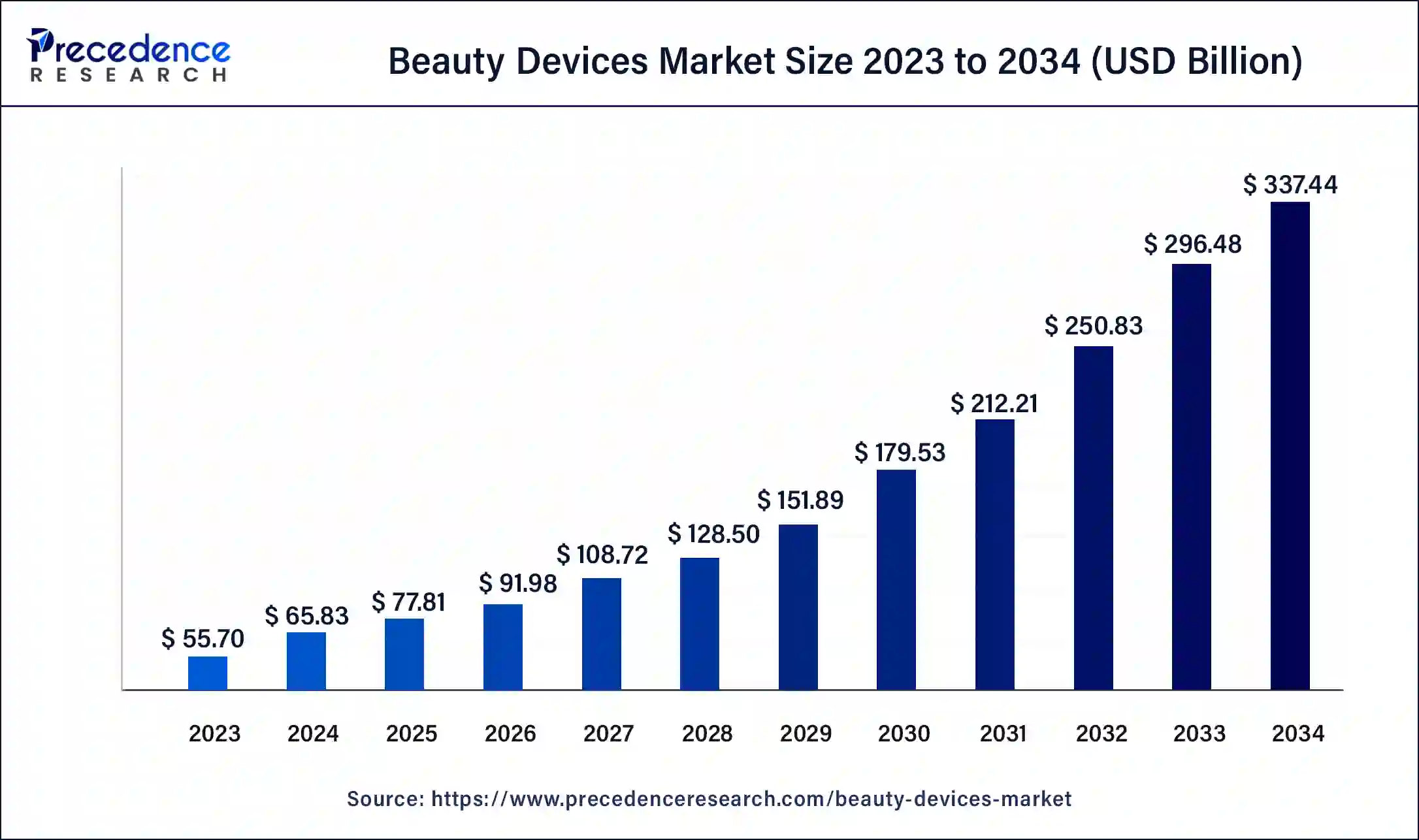
The global Beauty Devices Market was valued at USD 91.98 billion in 2026 and is projected to reach USD 381.52 billion by 2035, expanding at a CAGR of 17.23% from 2026 to 2035. Market growth is driven by the rising demand for at-home beauty treatments, increasing consumer awareness of skincare and personal grooming, and rapid advancements in AI-enabled and smart beauty devices. The growing influence of social media, rising disposable incomes, expanding e-commerce channels, and increasing adoption of LED therapy, IPL hair removal, and facial rejuvenation devices are further accelerating market growth worldwide.
Source: https://www.precedenceresearch.com/beauty-devices-market
 Get a Sample
 Table Of Content


What is Beauty Devices Market Size?
The global beauty devices market size accounted for USD 91.98 billion in 2026 and is expected to reach around USD 381.52 billion by 2035, expanding at a CAGR of 17.23% from 2026 to 2035. The beauty devices market is driven by the increasing consumer need for at-home beauty solutions. The beauty device market is driven by rising social media influence, increasing disposable income and expansion of retail channels.
Market Highlights
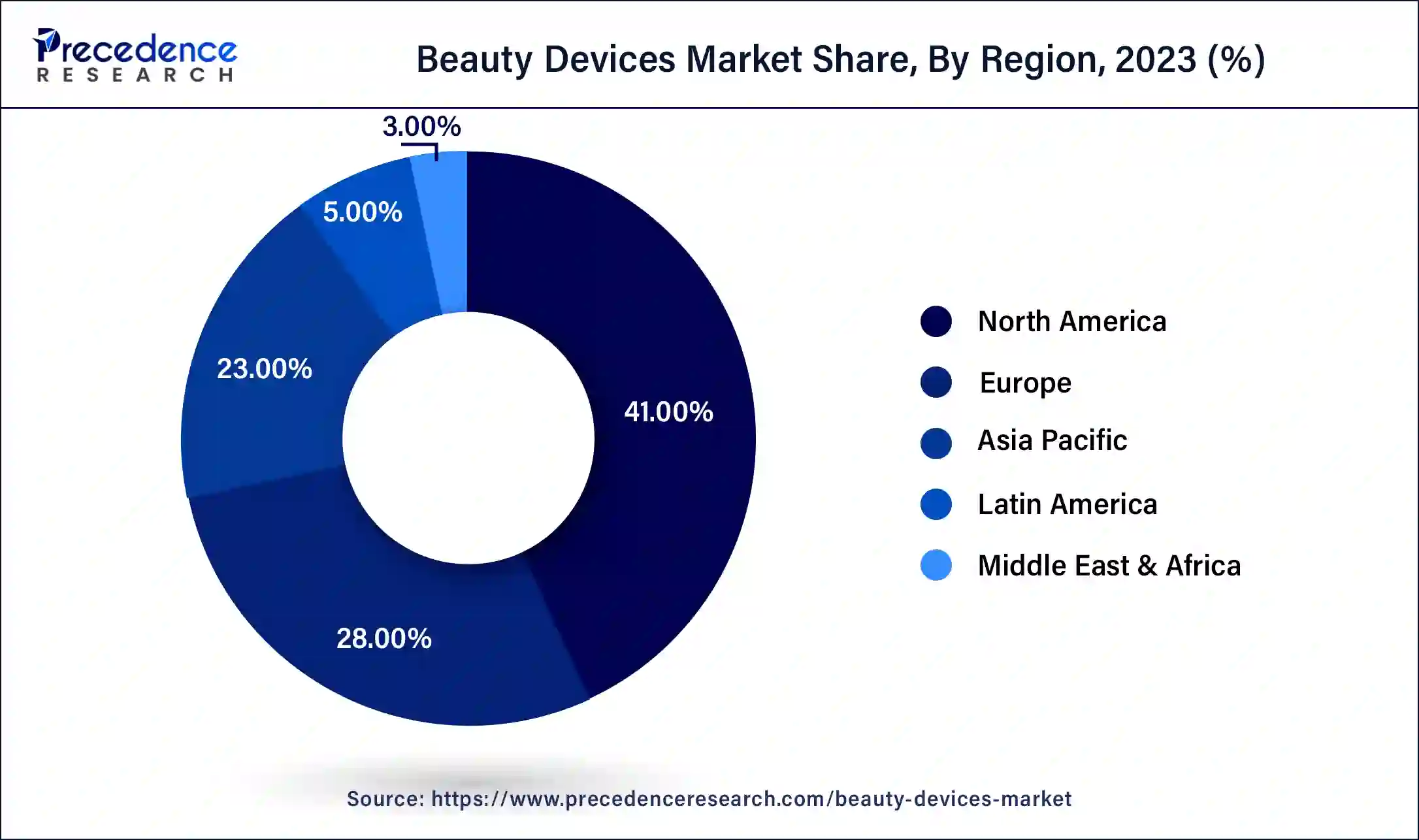
- In 2023, North America accounted for a revenue share of over 41%.
- By application, the salon segment has accounted for a revenue share of 56% in 2025.
- By type, the hair removal device segment has held a 21% revenue share in 2025.
- The LED therapy and photorejuvenation segment is growing at a CAGR of 21.2% over the forecast period.
What are Beauty Devices?
Beauty devices are electronic tools as well as gadgets that use technology (such as LED, microcurrent, sonic vibrations) to improve personal care routines at home, providing professional-level treatments for hair care, skin rejuvenation (cleansing, anti-aging), and hair removal, bridging the gap between basic tools along salon services for convenience and targeted results.
AI in the Market
Artificial intelligence is the ultimate disruptive force in the beauty devices market by amplifying product performance, customer satisfaction, and product innovation. AI skin analysis detects issues such as dryness, dark spots, and wrinkles to create personalized treatment plans. Smart devices are layered with sensors and algorithms for providing real-time feedback, whereas virtual try-ons and augmented reality let the consumer be sure about the purchase. Furthering product development, AI can analyze consumer behavior and trends to speed up the development life cycle. Predictive analytics enable supply chains to be more efficient in both waste minimization and maximizing product availability. Thus, this marriage of high-end technology with consumer requirements is spawning competitive differentiation in the beauty devices market.
Beauty Devices Market Growth Factors
- With those tremendous aesthetic priorities, especially among young circles, adoption of beauty devices has really become one of the major trends.
- The increasing presence of skin disorders like acne, pigmentation, and aging concerns triggers the demand for advanced solutions.
- Development of salons, spas, and professional treatment centers is cited as another positive factor contributing to the targeted market by providing better accessibility to all service providers.
- Now, the age of social media and digital marketing services exercises a great effect on consumer preferences and raises new awareness for the respective solutions.
- Increased disposable income and better lifestyle have been some of the factors driving consumers to purchase personal care and home beauty devices.
Beauty Devices Market Outlook
- Industry Growth Overview: The beauty devices market is driven mainly by technological advancements and the rising need for at-home, personalized beauty solutions.
- Major Investors: It includes large multinational corporations that invest heavily in product development and strategic acquisitions, along with specialized venture capital (VC) firms and even private equity (PE) funds, which invest in innovative startups.
Market Scope
| Report Highlights | Details |
| Market Size in 2025 | USD 77.81 Billion |
| Market Size in 2026 | USD 91.98 Billion |
| Market Size by 2035 | USD 381.52 Billion |
| Market Growth Rate from 2026 to 2035 | CAGR of 17.23% |
| Largest Market | North America |
| Fastest Growing Market | Asia Pacific |
| Base Year | 2025 |
| Forecast Period | 2026 to 2035 |
| Segments Covered | By Type, and By Application, and region |
| Regions Covered | North America, Europe, Asia-Pacific, Latin America, and the Middle East & Africa |
Market Dynamics
Driver
Rising Demand For At Home beauty Treatments
The consumers are increasingly choosing beauty devices that deliver salon like results at home, which is a major factor driving the beauty device market. This offers advantages such as convenience, cost savings and easy solutions for busy lifestyles. Products such as LED therapy masks, IPL hair removal devices, facial cleansing brushes and microcurrent tools are becoming part of an everyday skincare routine. Growing awareness about skin health, the influence of social media and wider product availability through online channels further drive the market growth.
Restraint
High Cost of Advanced Beauty Devices
The upfront cost of advanced beauty devices remains a significant challenge for market growth. The advanced technologies, such as radiofrequency, laser and microcurrent systems, require large investments in development and manufacturing, which results in high retail cost. The expensive products become less accessible to budget-sensitive consumers, which results in less adoption of beauty devices. The concerns about the safety, effectiveness and maintenance costs of expensive products can discourage buyers with limited budgets.
Opportunity
Expansion of Smart and Connected Beauty Devices
The integration of artificial intelligence, mobile applications, and personalized skincare analysis is creating new opportunities for the beauty device market. The machine learning integration can help in skin analysis, which allows real time product and treatment recommendations. The smart devices can track usage and provide real time feedback, which improves the overall consumer experience.
Segmnet Insights
Type Insights
Based on type, the hair removal devices segment dominated the global beauty devices market in 2025, in terms of revenue and is estimated to sustain its dominance during the forecast period. This is attributed to the extensive use of hair removal devices across the globe. Hair removal is the most common issues among the young population especially among the women. Therefore, increased use of hair removal devices has fostered the segment growth in the past years.
On the other hand, the rejuvenation devices segment is estimated to be the most opportunistic segment during the forecast period. This is attributable to the rising adoption of the photo-rejuvenation therapy among the consumers. This therapy is effective in the treatment of hyperpigmentation and skin redness. It stimulates the production of collagen and provides a radiant skin. Therefore, rising awareness regarding rejuvenation devices is expected to foster the growth of this segment.
Application Insights
Based on application, the salon segment accounted largest revenue share in 2023 and is projected to witness steady during the forecast period. The rising penetration of salon in the developed and developing regions has fueled the growth of this segment. The growing needs for removal of among the women is significantly boosting the growth of the salon segment in the beauty devices market.
On the other hand, the home segment is expected to be the fastest-growing segment during the forecast period. With the rising awareness and availability of beauty devices for the consumers as a home appliance is a new and trending topic in the market. The market players are offering beauty devices for at-home use that will spur competition in the global beauty devices market across the globe.
Regional Insights
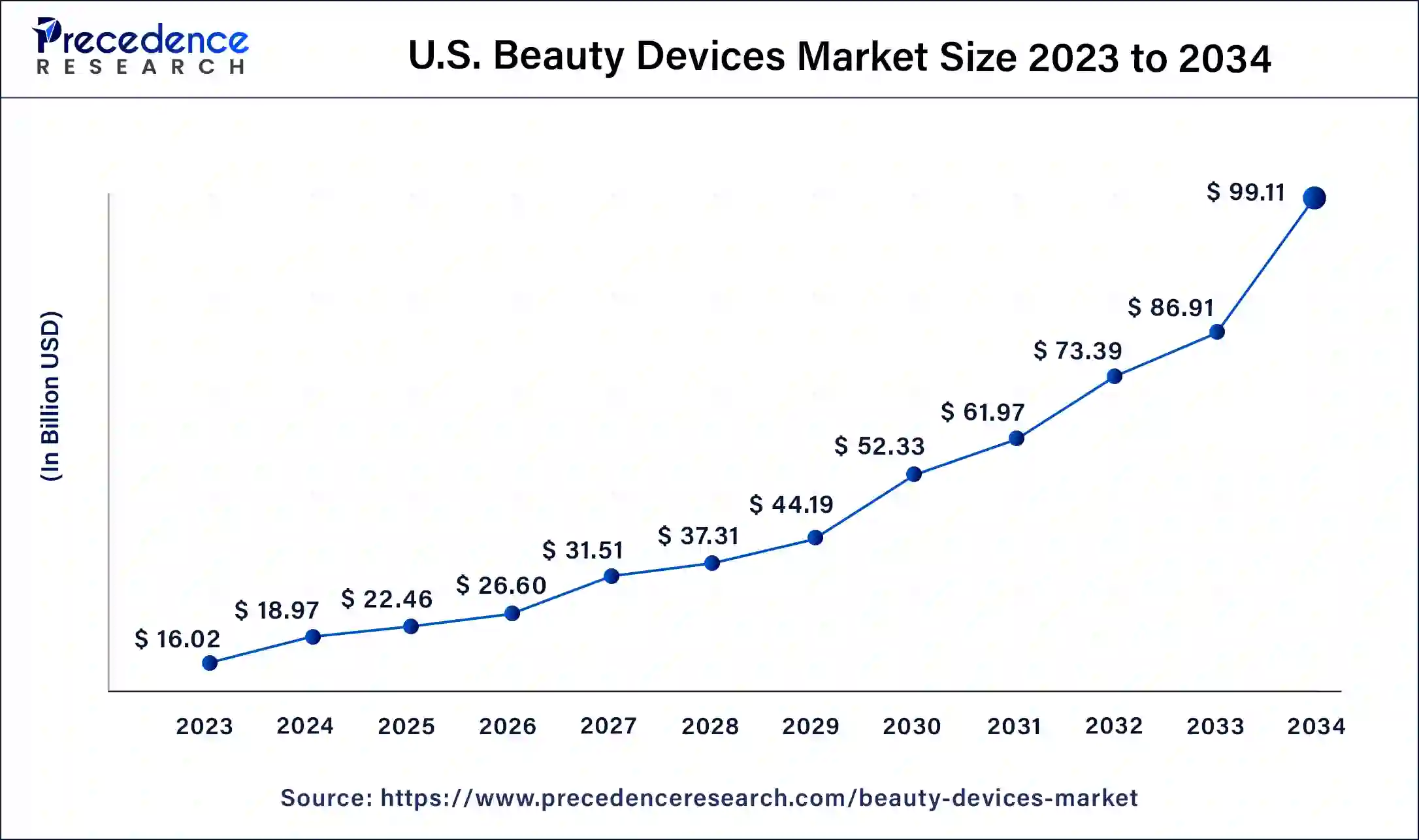
U.S. Beauty Devices Market Size and Growth 2026 to 2035
The U.S. beauty devices market size is estimated at USD 22.46 billion in 2025 and is predicted to be worth around USD 112.19 billion by 2035, at a CAGR of 17.45% from 2026 to 2035
U.S. Beauty Devices Market Trends
The U.S. market is driven by key trends like the growth of at-home treatments, technological integration (AI and smart connectivity), raised consumer self-awareness, and an increasing aging population. Consumers are moving away from a generic solution, seeking devices that provide tailored regimens for their specific skin, along with hair concerns. This involves variable settings and even multifunctional devices to meet individual needs.
Based on region, North America hit the largest revenue share in 2025 and is projected to sustain its dominance during the forecast period. North America has higher adoption rate of technologically advanced and innovative solutions and devices. The increased consumer awareness regarding the availability of various beauty devices and skin treatments has propelled the growth of the market in the region in the past. Further, rising geriatric population in U.S. is a major factor that boosts the demand for the beauty devices. New product launches and various developmental strategies adopted by the regional market players are significantly driving the growth of the beauty devices in the market.
Asia Pacific to Witness the Fastest Growth in the Beauty Devices Market
On the other hand, the Asia Pacific is estimated to be the fastest growing region during the forecast period. This is due to the rising disposable income of the consumers, higher youth population in the region, rising awareness regarding the beauty devices, rising number of spas and salons, and improved living standards. The Asia Pacific provides a lucrative growth opportunities to the market players owing to the presence of huge population, rising urban population, and rising awareness regarding personal hygiene among the consumers. Therefore, this region is expected to grow at a rapid rate during the forecast period.
China Beauty Devices Market Trends
China's market is driven by "skintellectuals" looking for science-backed, functional skincare, a need for at-home medical aesthetic-like results, growing influencer marketing (KOLs/KOCs), and even a shift towards digital channels (Douyin, Xiaohongshu), with strong expansion in hair removal devices along with multi-functional tools, even as users seek value in tough times, thus, favoring localized brands and holistic wellness.
Which Factors Made Europe a Significantly Growing Region in the Market?
Europe is expected to grow at a considerable CAGR in the beauty device market in the coming period. The growth is supported by high consumer spending on skincare, anti-ageing treatments, and at home aesthetic solutions. Countries such as Germany, France, Italy, and the United Kingdom lead the adoption of beauty devices such as LED therapy masks, facial cleaning brushes, and air removal tools. The increasing adoption is supported by a well established retail network and strong e-commerce penetration in the region. The region also benefits from strict product safety regulations.
Germany Market Trends
Germany leads the European beauty device market in 2025 due to a health conscious population and strong purchasing power. The growth in the market is largely influenced by the social media penetration and rapidly growing e-commerce platforms. Consumers are increasingly investing in premium skincare technologies, beauty devices, hair removal systems and anti ageing tools. German buyers prefer clinically tested and scientifically backed products and established brands. The country has stringent safety standards that strengthen consumer trust in approved beauty technologies.
What are the Advancements in the Market in Latin America?
Latin America held a considerable share of the beauty device market in 2025, as consumers seek affordable at home beauty treatments. The region has strong cultural importance in terms of physical and aesthetic appearance. Rising urbanization, increasing social media influence, and growing awareness of skincare routines are boosting sales of facial cleansing devices and hair removal systems. The market is further growing due to increasing middle class incomes and increasing access to international beauty products and tools. Mexico, Brazil and Argentina are among the key markets in the region.
Brazil Market Trends
Brazil accounts for the largest share of the Latin American beauty device market in 2025. The rising demand for hair care technologies, facial treatment devices, and body contouring solutions. Brazil has a well established beauty ecosystem supported by a robust retail network and strong domestic brands. The local brands, such as Natura and The Body Shop Brazil, and international brands, such as L'Oréal and Estee lauder, are competing through retail and e commerce channels. Despite the economic challenges, Brazil's large population and strong beauty culture support the market expansion.
What are the Key Trends in the Market in the Middle East and Africa Region?
The Middle East & Africa held a notable share of the beauty device market in 2025, driven by rising disposable incomes, expanding retail infrastructure, and increasing interest in premium personal care products. The demand is particularly high from countries such as the Gulf Cooperation Council due to their high spending capability on skincare and grooming. The LED facial tools and anti ageing technologies are gaining popularity. In Africa, the growth is gradually increasing from the urban areas where modern retail and online shopping are accessible.
Saudi Arabia Market Trends
Saudi Arabia represents the leading market within the Middle East and Africa beauty device market in 2025, supported by high disposable incomes, a young population, and an increasing focus on personal grooming. The presence of luxury malls and high end spas supports the market expansion. E-commerce platforms and speciality beauty retailers are expanding in the region, which supports the easy availability of international beauty products. The government initiatives supporting retail modernization and digital commerce are also helping market growth.
Value Cain Analysis
- Product Conceptualization and Design: It deals with market needs and developing the initial idea, features, and aesthetics of the beauty device, often pursuing more detailed design specifications through CAD software.
Key Players: Koninklijke Philips N.V., L'Oréal Group - Raw Material Procurement: With a rather vague list, this phase entails choosing suppliers and purchasing components and materials, such as plastic, metals, electronic components, and packaging materials needed for the manufacture of the beauty device.
Key Players: BASF, Clariant, Dow Chemical Company, Evonik - Manufacturing and Assembly: This is the stage of processing actual production, fabrication of components, assembly of the beauty device, finishing with a quality check to confirm that it really works and that it adheres to specifications.
Key Players: Koninklijke Philips N.V., L'Oréal Group, Panasonic Corporation, Home Skinovations, Ltd. - Branding and Packaging: This stage includes establishing a brand identity for the beauty device, creating packaging for the beauty device that is attractive and protects the product, and ensuring that all necessary labels and instructions are present.
Key Players: Albéa Group, AptarGroup,HCP Packaging - Retail Distribution (Online/Offline):-This stage covers the logistics from the manufacturer all the way to the customer through the different channels such as e-commerce, brick-and-mortar stores, or specialty beauty outlets.
Key Players: Nykaa, Tata Cliq Palette, Amazon, and Tmall
Competitive Landscape
The beauty device market is highly competitive, with global consumer electronics companies, beauty technology specialists, and personal care product innovation and brand positioning. The leading companies in the market include Nu Skin Enterprises, Panasonic Corporation, Syneron Medical Ltd, NuFACE, Home Skinovations Ltd, TRIA Beauty Inc, Procter &Gamble Co and Syneron Medical Ltd. Companies are expanding their portfolio with LED therapy devices, IPL hair removal systems, and facial cleansing tools to meet changing consumer preferences. Strong investments in research and development, strategic partnerships, and influencer marketing have increased competition.
To strengthen future growth in the beauty device market, companies should focus on developing clinically proven and user friendly devices and improving affordability without compromising quality, and adopting sustainable materials and packaging.
Top Companies in Beauty Devices Market & Their Offerings
- Home Skinovations Ltd.: Home Skinovations Ltd. provides innovative, FDA-cleared at-home beauty devices, thus, notably their flagship Tria Beauty line, which aims on professional-grade treatments for anti-aging, hair removal, and acne. This line brings salon-quality skincare along with hair removal into homes, impacting safety, efficacy, and also user-friendly technology for personal care.
- Nu Skin Enterprises: Nu Skin provides a range of advanced, science-backed beauty devices, which include the ageLOC LumiSpa iO, ageLOC Boost, ageLOC Galvanic Spa, and the new RenuSpa iO, programmed for at-home use to offer personalized, clinically proven results for firming, cleansing, brightening, and thus, overall skin rejuvenation, usually paired with proprietary serums.
Beauty Devices Market Companies
- Panasonic Corporation
- YA-MAN Ltd.
- MTG Co. Ltd.
- TRIA Beauty, Inc.
- L'Oreal S A
- Lumenis Ltd.
- Carol Cole Company Inc.
- Koninklijke Philips N.V.
- LightStim
- Conair Corporation
- Candela Corporation
- Spectrum Brands Holdings Inc.
- Capillus LLC.
Recent Developments
- In July 2026, Solawave extended its LED skincare portfolio by promoting advanced home use devices, including its facial wand and LED mask. The LED mask and devices target puffiness, fine lines, redness and discolouration around the neck and chest area. The consumers are increasingly adopting science backed non invasive skincare solutions. The company is strengthening its position in the fast growing at home beauty device segment.
- In May 2025, CHANEL launches Fragrance & Beauty products on Nykaa, India's leading beauty destination, available in select stores and online via Nykaa's app and website. (Source: https://www.business-standard.com)
- In April 025, Clariant Beauty launches a comprehensive personal care portfolio, combining high performance with sustainability, addressing market trends and consumer demands across hair, skin, and sun protection categories. (Source: https://www.clariant.com)
Segments Covered in the Report
By Type
- Acne Devices
- Hair Removal Devices
- Hair Growth Devices
- Cleansing Devices
- Rejuvenation Devices
- Oxygen & Steamer Devices
- Others
By Application
- Salon
- Spa
- Home
- Others
By Region
- North America
- Europe
- Asia-Pacific
- Latin America
- Middle East and Africa
For inquiries regarding discounts, bulk purchases, or customization requests, please contact us at sales@precedenceresearch.com
Frequently Asked Questions
Tags





Ask For Sample
No cookie-cutter, only authentic analysis – take the 1st step to become a Precedence Research client
 Get a Sample




 sales@precedenceresearch.com
 Schedule a Meeting
