


Brain Cancer Diagnostics Market Size, Key Companies, Company Market Share, Patient Volume, Treatment Adoption Rates, Pricing Analysis, Regulatory Landscape, Competitive Positioning, and Demand Forecast
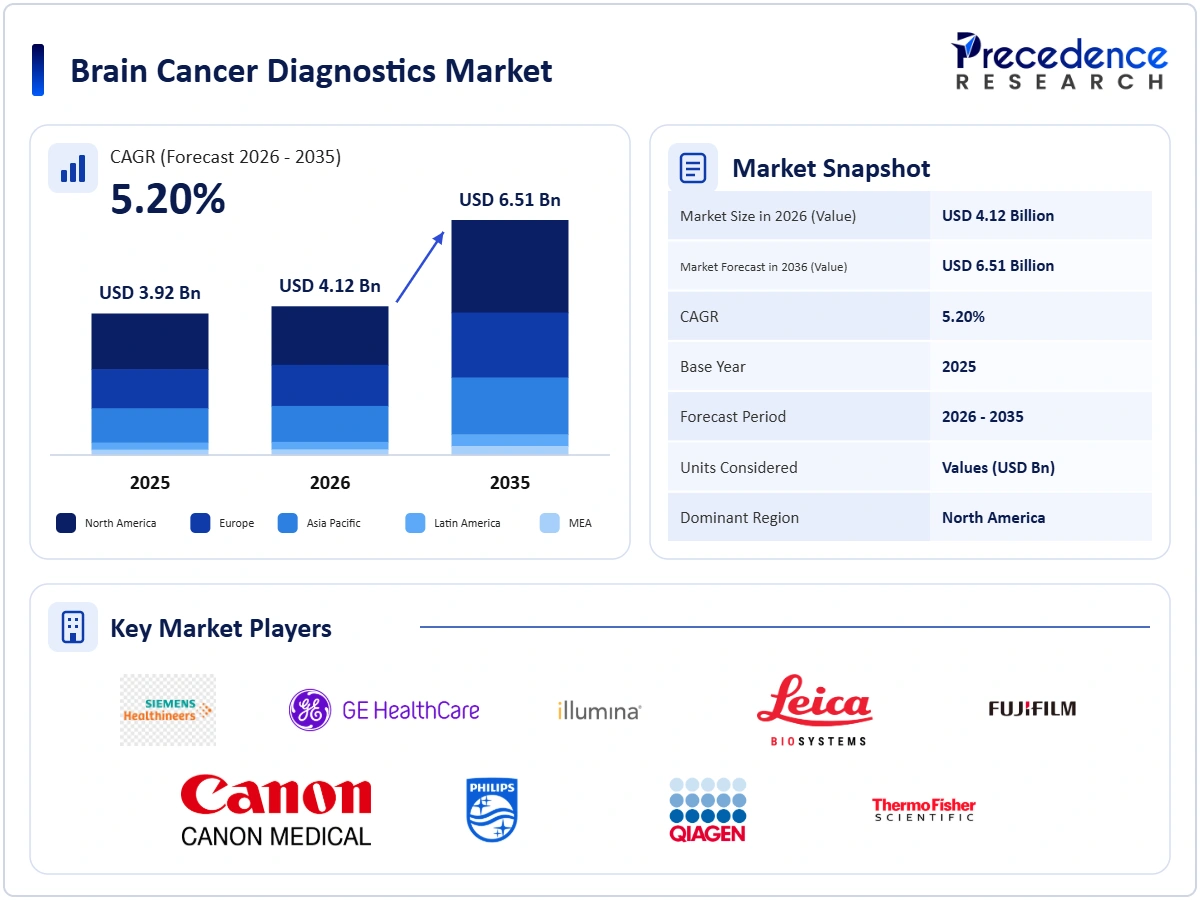
Payal Rabde, a Healthcare Industry Expert, highlights that the brain cancer diagnostics market has reached USD 4.12 billion in 2026 and is on track to reach USD 6.51 billion by 2035, advancing at a CAGR of 5.20%. Key brain cancer diagnostics market companies shaping the market include Siemens Healthineers, GE HealthCare, Philips, while major growth segments span diagnostic type, diagnostic type, tumor type, end user and region.
Source: https://www.precedenceresearch.com/brain-cancer-diagnostics-market
 Get a Sample
 Table Of Content


Brain Cancer Diagnostics Market Size, Trends, Share, and Innovations 2035
The brain cancer diagnostics market is forecasted to expand from USD 4.12 billion in 2026 to USD 6.51 billion by 2035, growing at a CAGR of 5.20% from 2026 to 2035.
Key Takeaways
Market Size & Growth Outlook
- Market size in 2025: USD 3.92 billion
- Estimated market size in 2026: USD 4.12 billion
- Projected market size by 2035: USD 6.51 billion
- CAGR (2026-2035): 5.20%
Regional Market Spotlight
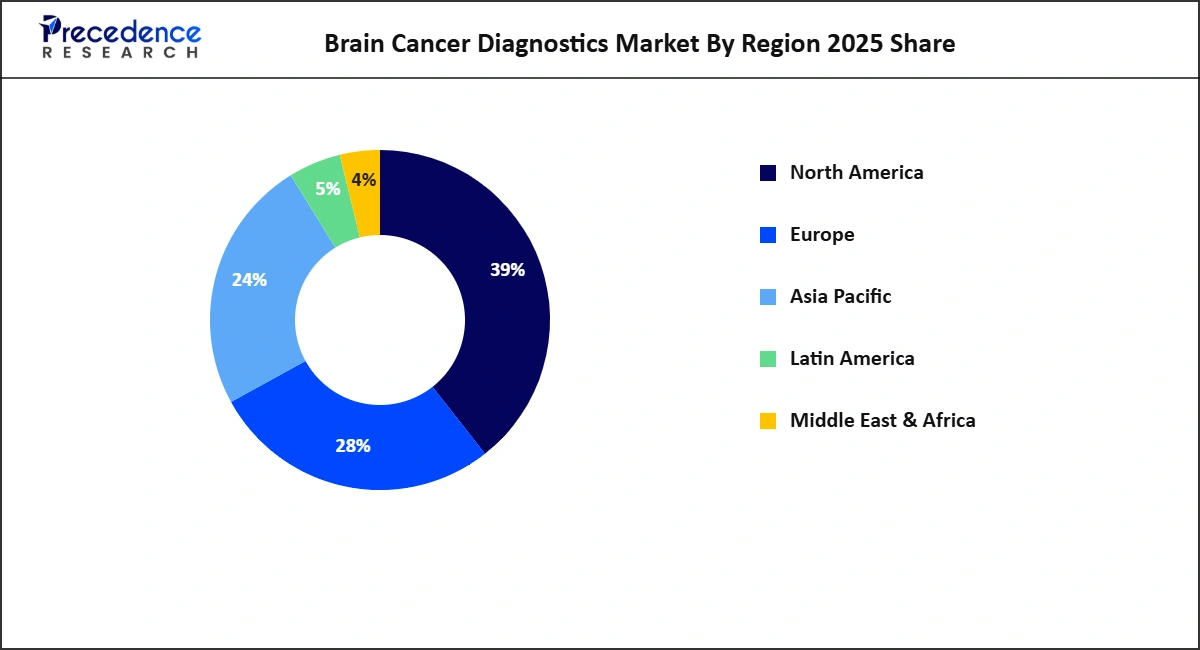
- North America led the market with a 39.40% (USD 1.54 billion) share in 2025.
- Europe accounted for 27.60% (USD 1.08 billion) of the market in 2025.
- Asia Pacific accounted for 24.20% (USD 0.95 billion) of the market in 2025 and is projected to be the fastest-growing region, at a CAGR of 6.47% from 2025 to 2035.
Segmental Spotlight
- By diagnostic type, Imaging accounted for 58.40% (USD 2.29 billion) in 2025.
- By tumor type, Metastatic Brain Tumors accounted for 34.60% (USD 1.36 billion) in 2025.
- By end user, Hospitals accounted for 61.40% (USD 2.41 billion) in 2025.
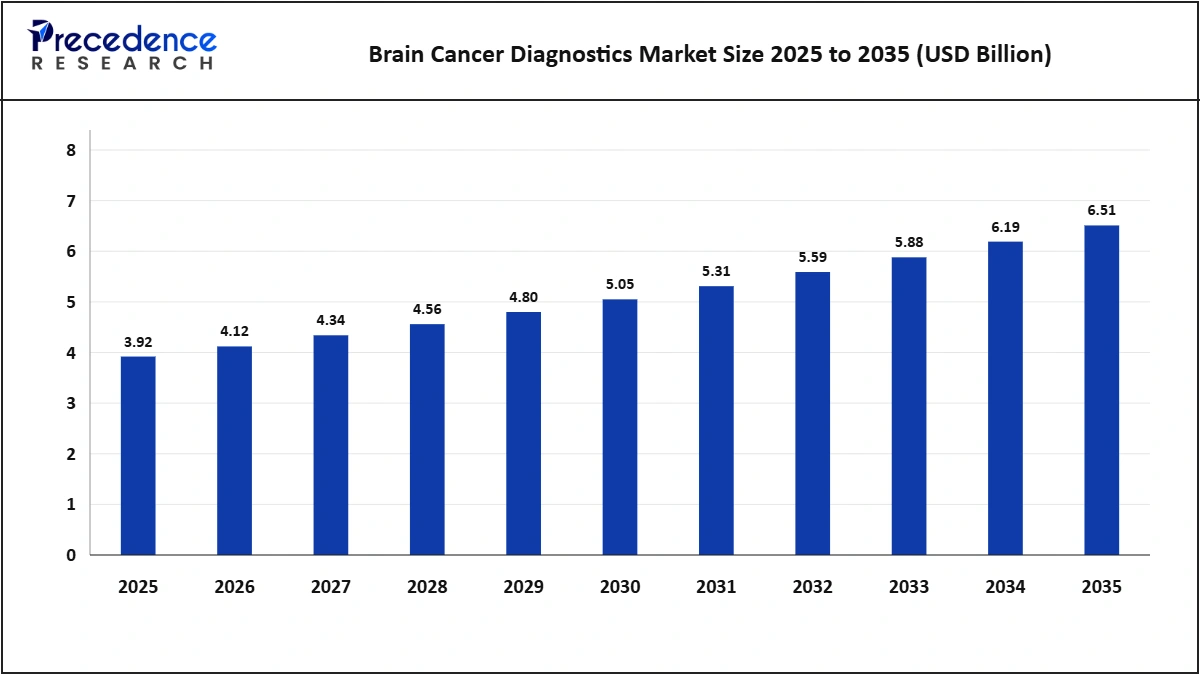
Brain Cancer Diagnostics Market Size and Forecast, 2025-2035 (USD Billion)
Sources: Expert interviews, secondary sources, Precedence Research database, and Precedence Research analysts.
The brain cancer diagnostics market is expected to increase from USD 3.92 billion in 2025 to USD 6.51 billion in 2035 due to a higher number of brain tumours and metastases scans, as well as additional molecular testing by pathologists to define tumours based on WHO criteria. AI algorithms for tumour volume and methylation pattern analysis increase the market size to USD 5.05 billion in 2030 while maintaining CAGR at 5.20% in 2026-2035.
- Analyst View: We developed our estimate based on brain tumour and follow-up scan case numbers and associated cost of imaging procedures, biopsy, histopathology, and molecular testing, as well as revenues from imaging equipment and software sales. Case numbers include primary brain tumour incidence cases as well as metastatic brain tumours from lung, breast, and melanoma cancer incidence, plus monitoring scans for treated patients. This figure was then benchmarked against the neuro-imaging and oncology diagnostics revenues of the leading firms and external projections, which put us slightly above the comparables for our base year.
Market Trends
- Molecular markers are now required to classify many brain tumours.
- DNA methylation classifiers are refining tumour diagnosis.
- AI software measures tumour volume on MRI over time.
- Blood-based glioma tests are moving through regulatory review.
- Advanced MRI sequences help separate tumour from treatment effects.
- Brain metastasis screening is rising with longer cancer survival.
Drivers, Restraints and Opportunities
Drivers
Cases of brain tumours and brain metastases have been on the rise due to the aging population and survival of patients with other forms of cancer. The World Health Organization's classification of central nervous system tumours involves the use of molecular markers; therefore, there is an increase in the number of tumours that need genetic and methylation analysis. There is no doubt that MRI is very important in diagnosis, surgical intervention, and monitoring, and now better sequences and artificial intelligence have improved its accuracy.
Restraints
The cost of advanced MRI machines and molecular assays makes them inaccessible in many nations. Tumour biopsies are invasive procedures and cannot always be performed, which hinders histopathological assessment. It is challenging to differentiate tumour growth from the impact of treatment interventions in imaging. Reimbursements for methylation assays and artificial intelligence tools remain limited. The shortage of neuroradiologists and neuropathologists delays the diagnosis.
Opportunities
Blood and cerebrospinal fluid tests may aid the detection and monitoring of brain tumours in a non-invasive manner. Artificial intelligence imaging software may standardize tumor measurement and reporting. Methylation classifiers provided through laboratory services will become available even in facilities that do not have neuropathology specialists. The increase in MRI capacity in Asia and Latin America widens access.
Market Segmentation: 2025 Share and Value
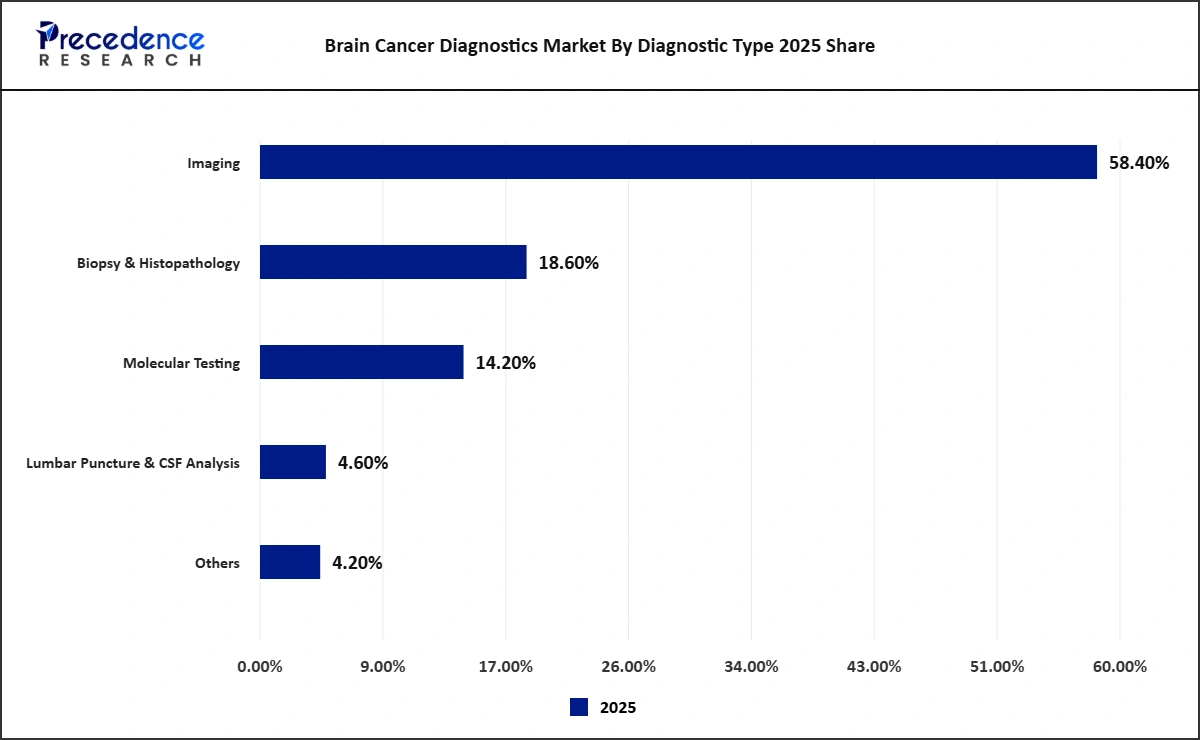
Brain Cancer Diagnostics Market By Diagnostic Type 2025 Share & Size
Sources: Expert interviews, secondary sources, Precedence Research database, and Precedence Research analysts.
Imaging formed 58.40% (USD 2.29 billion) of the market in 2025, as MRI (with contrast, perfusion, and spectroscopy sequences) and CT imaging modalities are used to detect, localize, measure, and monitor the progress of the tumour in the brain. AI-based software that can segment the tumours and measure the tumour volumes is proving useful in MRI interpretations and response assessment to treatment. Biopsy and histopathology formed 18.60% (USD 0.73 billion) and confirm the diagnosis and tumour grade, whereas molecular testing formed 14.20% (USD 0.56 billion) and is the fastest-growing segment since the criteria by WHO now require markers, such as IDH, 1p/19q, and MGMT, as well as DNA methylation classifiers. Lumbar puncture and CSF analysis formed 4.60% (USD 0.18 billion) for lymphoma and leptomeningeal disease, and other methods, including blood tests, formed 4.20% (USD 0.16 billion).
Brain Cancer Diagnostics Market by Tumor Type 2025 Share & Size
| Segments | 2025 Share | 2025 Market Value |
| Metastatic Brain Tumors | 34.60% | USD 1.36 billion |
| Gliomas & Glioblastoma | 28.40% | USD 1.11 billion |
| Meningioma | 18.20% | USD 0.71 billion |
| Pituitary Tumors | 9.60% | USD 0.38 billion |
| Others | 9.20% | USD 0.36 billion |
Note: 2025 is the base year.
Sources: Expert interviews, secondary sources, Precedence Research database, and Precedence Research analysts.
Brain metastases represented 34.60% (USD 1.36 billion) in 2025 owing to the fact that brain metastases are much more frequent compared to primary brain tumours, and people who have been diagnosed with lung, breast, and melanoma cancer undergo frequent brain imaging. Gliomas and glioblastoma make up 28.40% (USD 1.11 billion) and require extensive imaging and molecular testing for proper diagnosis and treatment, making it the most valuable primary brain tumours segment. Meningiomas represented 18.20% (USD 0.71 billion), pituitary tumours 9.60% (USD 0.38 billion), and other brain tumours 9.20% (USD 0.36 billion).
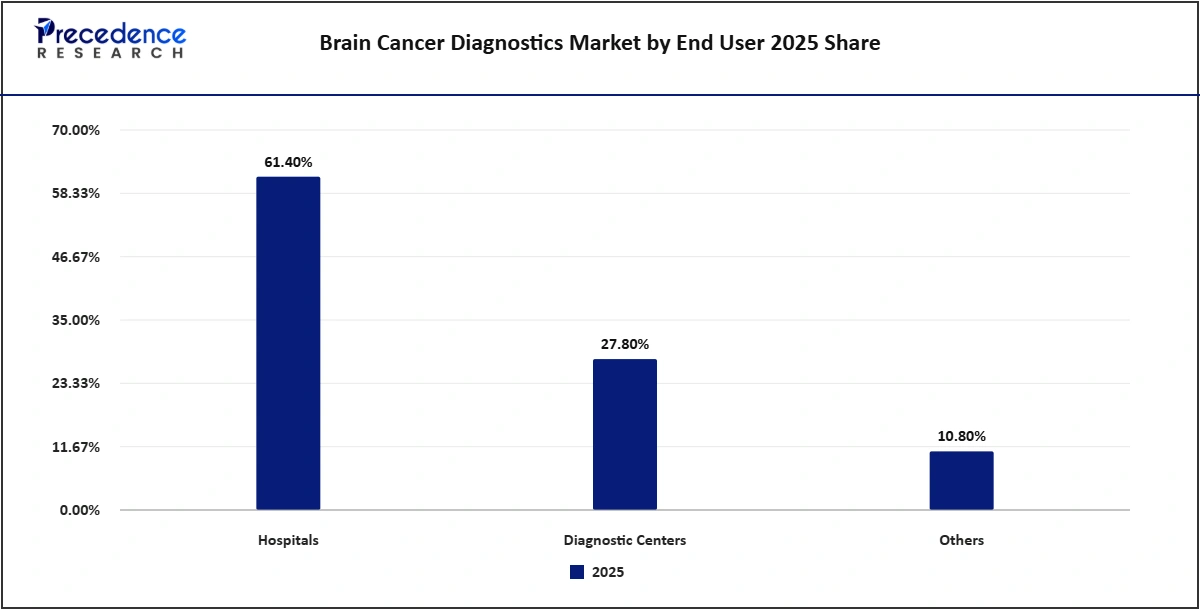
Brain Cancer Diagnostics Market by End User 2025 Share & Size
Sources: Expert interviews, secondary sources, Precedence Research database, and Precedence Research analysts.
Hospitals contributed 61.40% (USD 2.41 billion) of market revenues in 2025 because diagnosis of brain tumours is done through advanced MRI, neurosurgical procedures for biopsies, and pathology studies, which are mostly carried out in hospitals and specialized cancer treatment centers. Diagnostic centers made up 27.80% (USD 1.09 billion) due to their role in carrying out outpatient MRI, CT, and sending tests out for molecular studies, which has increased due to imaging taking place outside the hospital setting. Others represent 10.80% (USD 0.42 billion).
- Analyst View: Market values in the segments were calculated through mapping of diagnostics and follow-ups on a per-tumour basis and then calculating their costs based on imaging and molecular tests and dividing them on a care setting basis. Imaging will continue to lead in the market because every patient has to undergo multiple scans, whereas molecular tests have high values per case.
Regional Analysis
Brain Cancer Diagnostics Market By Region 2025 Share & Size
Sources: Expert interviews, secondary sources, Precedence Research database, and Precedence Research analysts.
North America captured 39.40% (USD 1.54 billion) in 2025, fueled by a well-established infrastructure of high-field MRIs, neuro-oncology specialty programs, and reimbursement for molecular tumor profiling. The US-based cancer centers are pioneers in AI-based imaging software and methylation classification tools. Europe accounted for 27.60% (USD 1.08 billion) owing to established neuropathology practices, including the Heidelberg methylation classifier, and cancer programs of Germany, the United Kingdom, France, and Italy. Asia-Pacific held 24.20% (USD 0.95 billion) market share in 2025, which is expected to grow at the fastest rate, supported by an increasing number of MRIs and cancer centers in China, India, Japan, and South Korea. Latin America, which held 5.00% (USD 0.20 billion), and the Middle East & Africa, which held 3.80% (USD 0.15 billion) market share in 2025, are relatively smaller markets where availability of MRI and molecular pathology is increasing in major cities.
North America accounted for 39.40% (USD 1.54 billion) in 2025. Advanced MRI capacity and neuro-oncology centres drive demand. Molecular profiling of brain tumours is widely covered. AI tumour measurement software is gaining use.
Europe accounted for 27.60% (USD 1.08 billion) in 2025. Strong neuropathology and methylation-based classification support diagnosis. National cancer plans fund imaging and molecular testing. Germany and the UK are leading markets.
Asia Pacific accounted for 24.20% (USD 0.95 billion) in 2025 and is the fastest-growing region. MRI installations are rising in China and India. Japan and South Korea have high scanner density and growing molecular testing. Expanding cancer centres increase diagnostic volumes.
Latin America accounted for 5.00% (USD 0.20 billion) in 2025. Private hospitals in Brazil and Mexico drive demand. Access to molecular pathology is growing in large cities.
The Middle East and Africa accounted for 3.80% (USD 0.15 billion) in 2025. Gulf hospitals invest in advanced imaging. Access remains limited across much of Africa.
- Analyst View: The regional shares are based on patients with brain tumors, imaging availability, and use of molecular tests in each region. The North American region ranks first owing to its high imaging intensity and molecular test usage. Asia Pacific gets assigned the greatest growth premium owing to increasing MRI availability and oncology services.
Top 10 Companies in the Brain Cancer Diagnostics Market
| Rank | Company Name | Market-Specific Revenue (USD Billion) | 2025 Share | Key Products / Business | Headquarters |
| 1 | Siemens Healthineers | 0.52 | 13.27% | MRI and CT systems with neuro applications | Germany |
| 2 | GE HealthCare | 0.48 | 12.24% | MRI, CT and PET imaging and contrast agents | United States |
| 3 | Philips | 0.38 | 9.69% | MRI systems and neuro imaging software | Netherlands |
| 4 | Canon Medical Systems | 0.22 | 5.61% | MRI and CT systems | Japan |
| 5 | Fujifilm | 0.18 | 4.59% | MRI, CT and imaging informatics | Japan |
| 6 | Thermo Fisher Scientific | 0.14 | 3.57% | Molecular and sequencing assays for tumour profiling | United States |
| 7 | Roche Diagnostics | 0.12 | 3.06% | Tissue diagnostics and molecular assays | Switzerland |
| 8 | Illumina | 0.10 | 2.55% | Sequencing and methylation arrays | United States |
| 9 | Leica Biosystems | 0.09 | 2.30% | Histopathology systems and stains | Germany |
| 10 | QIAGEN | 0.06 | 1.53% | Molecular assays including MGMT testing | Netherlands |
Note: Company revenues and shares are 2025 estimates.
Sources: Company press releases, expert interviews, secondary sources, Precedence Research database and Precedence Research analysts.
Siemens Healthineers had the leading share in the brain cancer diagnostics market with an estimated revenue share of 13.27% (USD 0.52 billion), followed by GE Healthcare with 12.24% (USD 0.48 billion), and Philips with 9.69% (USD 0.38 billion). Siemens Healthineers, GE Healthcare, and Philips are leaders owing to their huge installed base of MRI/CT systems in hospitals/imaging centers and software services for neuro-imaging. GE Healthcare also provides contrast media used in brain MRI. Molecular and pathology players such as Thermo Fisher Scientific, Roche, Illumina, Leica Biosystems and QIAGEN provide the test kits used for classifying the tumours according to WHO classification criteria.
The total revenue generated from the top 10 companies constituted approximately 58.42%, which was USD 2.29 billion in 2025, whereas the balance of 41.58% was contributed by smaller imaging firms, AI software firms, molecular laboratories, and academic diagnostic spin-offs. The brain cancer diagnostics market is relatively concentrated for imaging products and fragmented for molecular and software products, and competition is based on factors such as image resolution, scanning speed, integration of AI, test results, and billing/reimbursement.
Recent Developments
- October 2026: Research done by the Mayo Clinic, which was published in the Journal of Neuro-Oncology, indicates that studying DNA in cerebrospinal fluid can be used as an alternative way to gain more data when an MRI fails to make a definite diagnosis or biopsy is impossible.
- September 2026: The latest fast test for brain tumours, which is being used by the NHS, will significantly reduce the time taken to diagnose it from eight weeks to just two hours.
- December 2025: Researchers at KiTZ, DKFZ, and Heidelberg University Hospital released version 12.8 of the AI-based Heidelberg CNS tumour methylation classifier, able to identify more than 180 tumour types.
Market Segments
By Diagnostic Type
- Imaging
- Biopsy & Histopathology
- Molecular Testing
- Lumbar Puncture & CSF Analysis
- Others
By Tumor Type
- Metastatic Brain Tumors
- Gliomas & Glioblastoma
- Meningioma
- Pituitary Tumors
- Others
By End User
- Hospitals
- Diagnostic Centers
- Others
By Region
- North America (U.S., Canada, Mexico)
- Europe (Germany, U.K., France, Italy, Spain, Rest of Europe)
- Asia Pacific (China, Japan, India, South Korea, Taiwan, Rest of Asia Pacific)
- Latin America (Brazil, Argentina, Rest of Latin America)
- Middle East & Africa (GCC, South Africa, Rest of MEA)
Research Methodology
The brain cancer diagnostics market was segmented into imaging, biopsy & histopathology, molecular testing, cerebrospinal fluid analysis, and associated software used for diagnosing and monitoring brain tumors globally. The base year 2025 was derived bottom-up by assessing the number of brain tumor diagnoses and follow-up imaging and testing conducted, their volume and cost, and validating the top-down by assessing the revenue generated by leading players through their neuroimaging and oncology diagnostic products. Values of segments, regions, and companies were allocated from diagnostic methods, tumor type, end-users, and diagnostic capabilities of regions. Estimates were corroborated by comparing company reports, regulatory and industry data, and third-party estimates, and all those inputs that could not be reconciled were ignored. All values pertaining to segments, regions and companies were harmonized to the base year 2025, and the forecast for 2026 to 2035, using a constant CAGR based on 2025, was reworked and validated.
Analyst View: Overall Market
Imaging is the dominant technology in the brain cancer diagnostics market, with molecular classification and artificial intelligence contributing value on a case-by-case basis. Our forecast connects demand to the number of tumours, imaging, testing volumes and procedure costs, so it follows cancer prevalence rates, imaging capabilities and molecular testing rates. Upside is mainly from molecular classification, AI imaging and liquid biopsy, while risks come from high costs, low reimbursements and specialist shortages.
Sources and References
- DKFZ. "AI-supported molecular cancer diagnosis for brain tumors". 2025-12-08. Heidelberg CNS tumour methylation classifier v12.8. https://www.dkfz.de/en/news/press-releases/detail/ai-supported-molecular-cancer-diagnosis-for-brain-tumors
- Diagnostic Imaging. "Adjunctive AI software for brain MRI gets FDA clearance for assessing high-grade gliomas". 2022-10-10. Neosoma HGG clearance. https://diagnosticimaging.com/view/adjunctive-ai-software-for-brain-mri-gets-fda-clearance-for-assessing-high-grade-gliomas
- BioWorld. "Datar gets FDA breakthrough device designation for brain tumor blood test". 2023-01-09. Trinetra-Glio designation. https://www.bioworld.com/articles/693124-datar-gets-fda-breakthrough-device-designation-for-brain-tumor-blood-test
For inquiries regarding discounts, bulk purchases, or customization requests, please contact us at sales@precedenceresearch.com
Frequently Asked Questions





Ask For Sample
No cookie-cutter, only authentic analysis – take the 1st step to become a Precedence Research client
 Get a Sample




 sales@precedenceresearch.com
 Schedule a Meeting