



Cardiovascular Ultrasound Market Size, Key Companies, Company Market Share, Patient Volume, Treatment Adoption Rates, Pricing Analysis, Regulatory Landscape, Competitive Positioning, and Demand Forecast
Cardiovascular Ultrasound Market (By Type: Transthoracic Echocardiography, Transoesophageal Echocardiography, Foetal Echocardiography, Others; By Technology: 2D, 3D/4D, Doppler, Others; By Display: Black & White (B/W), Color; By End-use: Hospital, Diagnostic Centers, Ambulatory Care Centers, Others) By Type: Transthoracic Echocardiography, Transoesophageal Echocardiography, Foetal Echocardiography, Others; By Technology: 2D, 3D/4D, Doppler, Others; By Display: Black & White (B/W), Color; By End-use: Hospital, Diagnostic Centers, Ambulatory Care Centers, Others) - Global Industry Analysis, Size, Trends, Leading Companies, Regional Outlook, and Forecast 2026 to 2035
Source: https://www.precedenceresearch.com/cardiovascular-ultrasound-market
 Get a Sample
 Table Of Content


What is the Cardiovascular Ultrasound Market Size?
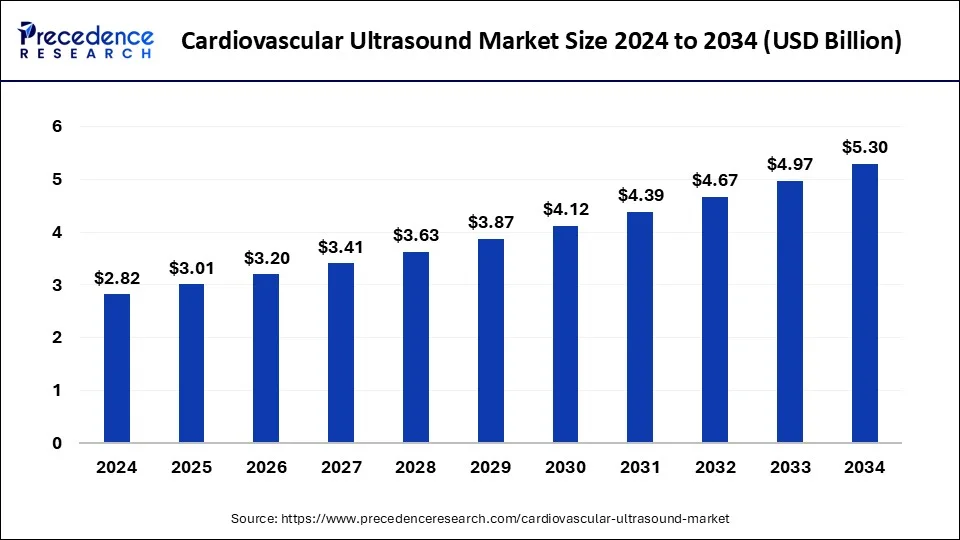
The global cardiovascular ultrasound market size accounted for USD 3.01 billion in 2025 and is predicted to increase from USD 3.20 billion in 2026 to approximately USD 5.61 billion by 2035, expanding at a CAGR of 6.42% from 2026 to 2035. The cardiovascular ultrasound market is driven by rising cardiovascular disease prevalence and demand for non-invasive diagnostics.
Cardiovascular Ultrasound Market Key Takeaways
- By Region, North America held a majority revenue share of the cardiovascular ultrasound market in 2025.
- By Region, Asia Pacific is expected to grow at the fastest CAGR in the market during the forecast period.
- By type, the transthoracic echocardiography segment held a dominant position in the market in 2025.
- By type, the transoesophageal echocardiography segment is expected to grow at the fastest CAGR in the market between 2026 and 2035.
- By technology, the Doppler segment accounted for a considerable revenue in the market in 2025.
- By technology, the 2D segment is expected to grow with the highest CAGR in the market during the studied years.
- By display, the black and white segment led the global market in 2025.
- By display, the color segment is expected to expand rapidly in the market with a CAGR in the coming years.
- By end-use, the hospital segment registered its dominance over the global market in 2025.
- By end-use, the diagnostic centers segment is expected to witness the fastest growth in the market with a CAGR over the forecast period.
Transforming the Cardiovascular Ultrasound Market Through Targeted Biologic Innovations
New targeted biologic breakthroughs are improving the management of cardiovascular diseases in both diagnostic and therapeutic areas, through earlier diagnosis and targeted treatment planning. Biologic therapies are used more for patients with inflammatory and vascular conditions, and these systems can be used to track their effectiveness through cardiovascular ultrasound. The advanced imaging methods allow for obtaining a high-resolution visualization of the cardiac structures and dynamics of blood flow. Contrast-enhanced ultrasound is useful for better assessment of myocardial perfusion and viability.
Key AI Integration in the Cardiovascular Ultrasound Market
Cardiovascular ultrasound systems are being assisted by AI to achieve improved diagnostic accuracy, automate measurements, and acquire images. Structural Heart AI algorithms are used to enhance structural anomaly detection. Automated workflow resources help maximize resources for the examination staff and boost productivity. Real-time optimization and cardiac function analysis of images with the help of machine learning. Cloud-based solutions are able to support collaborative work and data sharing from afar between healthcare facilities.
Cardiovascular Ultrasound Market Growth Factors
The central point for the development of the cardiovascular ultrasound framework market incorporates - the rising occurrence of cardiovascular sicknesses (CVDs), ascend in mechanical headways, and benefits of echocardiography over obtrusive heart analytic strategies.
Cardiovascular sicknesses (CVD) stay a significant reason for dismalness and mortality in the created world and are turning into an undeniably significant reason for death in non-industrial nations. According to the 2020 updates of the World Health Organization, ischemic coronary illness, liable for 16% of the world's complete passings. Starting around 2000, the biggest expansion in passings has been for ischemic coronary illness, ascending by multiple million to 8.9 million passings in 2019. Subsequently, the expansion in the quantity of cardiovascular illnesses has expanded the interest for the cardiovascular ultrasound framework for finding.
Mechanical headway, for example, man-made reasoning emphatically affects cardiology with further developed capacities to analyze specific heart conditions. For example, in October 2020, GE Healthcare got the US FDA 510k freedom for its ultra version bundle of distinctive cardiovascular ultrasound frameworks, which incorporates new highlights in view of man-made reasoning (AI) that empower clinicians to procure quicker, more repeatable tests reliably.
An ascent in entrance of preventive medication and expanding predominance of cardiovascular diseases (CVDs) are supposed to drive the market development. The COVID-19 pandemic hampered the worldwide market development as short-term imaging administrations were unfavorably impacted. Cardiovascular sicknesses, for example, coronary illness, respiratory failure, and stroke, are among the significant reasons for death in the U.S. Changing way of life has expanded inclination to CVDs. For example, as per the CDC, in 2017, 28.2 million grown-ups were determined to have coronary illness in the U.S. ultrasound innovation is utilized to actually take a look at irregularities in the working of the heart, for example, siphoning limit of the heart, working of valves, and plaque in the heart.
These gadgets go about as significant symptomatic gear that can help in diminishing the frequency of cardiovascular failure and stroke by giving an early determination. Accordingly, the developing predominance of heart issues is expected to drive the market over the gauge period. Cardiovascular ultrasound (CVUS) played a significant device to survey cardiovascular capabilities in the COVID-19 patients since any circumstances connected with the heart framework expanded the gamble of mortality.
Cardiovascular harm post-COVID-19 recuperation is one of the central point expected to drive the market development. As indicated by a worldwide concentrate by New York's Mount Sinai Hospital, 66% of the COVID-19 recuperated patients were seen to have a heart primary irregularity. Cardiovascular ultrasound is broadly utilized in surveying these patients. This is supposed to help the interest for new and high level CVUS frameworks during the figure time frame. There are different repayment strategies connected with ultrasound, internationally. The U.S. involved HOPPS pay strategy to finish up on repayment strategy for various kinds of heart ultrasounds.
The extension for heart ultrasound methods depends on conditions and conditions specified under a singular's protection plan, as there are different kinds of techniques like electrocardiography, transthoracic echocardiography, and 3D echocardiography. Protection associations have different rules that are utilized to set repayment rates. They can deny protection in view of inclining factors. On occasion, protection refusal might be in light of the fact that a trained professional and protection organization have changing treatment rationalities.
Strategic Growth Opportunities
- High-Growth Commercial Opportunities: A huge market is opening up in portable and point-of-care cardiovascular ultrasound systems in all hospitals, ambulatory care, and emergency care centers. South of England drug providers' push to improve early diagnosis of cardiac disease will continue to drive growth in the market.
- Emerging Technology Opportunities:The times are different, and possibilities are all around, such as AI-assisted image analysis, 3D/4D echo, cloud-based imaging, and portable ultrasound. These innovations increase efficiencies in the process, diagnosis, and clinical decisions.
- Geographic Expansion Opportunities: Asia-Pacific, Latin America, and the Middle East are experiencing high prevalence of cardiovascular diseases and increasing healthcare infrastructure, thus providing a huge growth opportunity. Companies extend their co-operation and distribution mechanism to improve market penetration.
- White Space Analysis: There is tremendous promise in the field of rural health care, home cardiac monitoring, tele-ultrasound, and AI-driven remote diagnosis. Improving cardiovascular imaging in underserved locations can be achieved by increasing the availability of portable ultrasound delivery options that are cost-effective.
Market Scope
| Report Coverage | Details |
| Growth Rate from 2026 to 2035 | CAGR of 6.42% |
| Market Size in 2025 | USD 3.01 Billion |
| Market Size in 2026 | USD 3.20 Billion |
| Market Size by 2035 | USD 5.61 Billion |
| Base Year | 2025 |
| Forecast Period | 2026 to 2035 |
| Segments Covered | Type, Technology, Display, End-use, Geography |
| Regions Covered | North America, Europe, Asia-Pacific, Latin America, and Middle East & Africa |
Market Dynamics
Driver
Rising Prevalence of Cardiovascular Diseases
The growing prevalence of cardiovascular diseases across developed and emerging nations is the major growth driver of the cardiovascular ultrasound market. Rising demand for cardiac diagnostic procedures as the population is ageing. Increased awareness of early disease detection enables ultrasound imaging to be adopted. Advancements in technology have enhanced image quality and diagnostic confidence. With an increase in healthcare dollars, hospitals are able to implement more sophisticated imaging equipment.
Restraint
High Equipment Costs
The price of sophisticated cardiovascular ultrasound devices prevents the use of the technology in limited-resource healthcare environments. Total ownership costs involve maintenance and software upgrade costs. Healthcare facilities with a smaller size might have budget constraints for buying the equipment. The lack of adequate skilled sonographers adversely impacts system utilization. Limits to the market due to reimbursement regulations in certain geographic areas.
Opportunity
Expansion of Point-of-Care Cardiac Imaging
Point-of-care ultrasound is rapidly gaining adoption and is a key market driver, resulting in a robust growth opportunity for the market. Portable and handheld systems are helping to increase access to cardiac diagnostics. AI-powered images lead to improved diagnostics in the outpatient and emergency settings. Utilization of telemedicine can enhance out-of-hospital cardiac evaluation. The investments in the emerging economies are toward infrastructure in health care and diagnostics.
Segment Insights
Type Insights
Based on type, the worldwide market has been fragmented into transthoracic echocardiography, transesophageal echocardiography, fetal echocardiography, and others. The transthoracic echocardiography segment represented over 55% of the general income share in 2025. Then again, the fetal echocardiography section is supposed to witness the quickest CAGR of 7.5% during the estimate time frame.
A fetal echocardiogram is one of the pregnancy tests, which is acted in the second trimester to check whether each of the four offices of the heart are created in the hatchling. It permits picturing the construction of the unborn youngster's heart. Expanding levels of mindfulness about hatchling wellbeing are driving the development of this portion.
The transoesophageal echocardiography segment is projected to grow at a notable pace because of its high resolution to view the cardiac anatomy. Capable of producing very high-resolution images to diagnose complex structural heart diseases. This method is referenced widely in cardiac surgery and when performing interventional procedures. Technological advances help to improve the quality of images and the safety of the patient.
The foetal echocardiography segment is expected to witness steady growth during the forecast period as it plays a significant role in prenatal cardiac assessment. The earlier the defect is found, the better treatment can be planned, and it results in a better neonatal outcome. An enhanced awareness among mothers about health care provisions promotes wider uptake. Advanced ultrasound techniques improve fetal heart visualisation.
Technology Insights
In view of innovation, the market is divided into 2D, 3D/4D, and Doppler ultrasound frameworks. Doppler is the most favored framework as they give sharp pictures in a more limited time and the fragment represented the greatest income portion of more than 47% in 2024. The strategy is acquiring unmistakable quality in agricultural nations, like India and China, attributable to the rising entrance of mechanically progressed frameworks in these nations.
Doppler echocardiography assists measure with blooding stream inside the heart without utilizing any obtrusive techniques. What's more, studios directed for Doppler echocardiography are supposed to support its reception. For example, in March 2019, Radcliffe Cardiology directed a studio on 2D and Doppler echocardiography in Vail. It covered points, like the utilization of the Doppler strategy for hemodynamics and cardiovascular capability and its application in hemodynamics, remembering for valvular coronary illness. In this way, progressions in Doppler innovation to upgrade heart imaging are supposed to support the general section development.
The COVID-19 affected the development of 2D cardiovascular ultrasound frameworks in 2020. Moreover, the deferral of elective methodology because of COVID-19-related gauges antagonistically impacted the cardiovascular clinical gadgets market, particularly in the year 2020. While a few cardiovascular systems are thought of as critical, others have been deferred and postponed starting from the start of the worldwide pandemic. Subsequently, way of life changes and medicine can be briefly endorsed rather than cardiovascular techniques for certain patients. Another element adversely affecting the verticle is the decrease in the analysis of cardiovascular illnesses because of medical services assets being held for COVID-19 patients.
2D ultrasound imaging is otherwise called B-mode echography or sonography. It shows a 2D guide of B-mode information and is as of now the most widely recognized type of heart ultrasound imaging utilized around the world. It utilizes numerous transducers. It empowers the age of numerous pictures of the field or approaches consistently on the screen, giving a deception of development. It is essentially used to gauge heart chamber aspects, survey valvular construction and capability, and work on the exactness of translation of Doppler modalities.
2D ultrasound is one of the most well-known types of innovation utilized. Notwithstanding, it has weaknesses, similar to low goal, contortion of ultrasound wave bringing about wrong pictures, perspective on the inward bone design, and local situation.
Additionally, innovative headways, similar to Doppler imaging and 3D/4D ultrasound imaging, are supposed to influence the worldwide 2D imaging market during the conjecture time frame. For example, in October 2020, Royal Philips sent off the Ultrasound 3300, another imaginative ultrasound series custom-made for general Imaging and cardiovascular imaging methods. Such item progression will help vertical development throughout the next few years.
The 3D/4D segment is expected to witness steady growth during the forecast period due to its ability to provide detailed real-time cardiac visualization. These technologies boost diagnostic accuracy and surgical planning. Advanced imaging is growing to be generally preferred by clinicians for complex cardiovascular evaluations. By leveraging AI, image reconstruction is improved, and measurement precision is boosted.
Display Insights
Based in display view, the market is sectioned into black and white (B/W) and variety ultrasound frameworks. The variety frameworks section represented the most noteworthy income portion of over 89% in 2024. This is on the grounds that variety frameworks are generally liked over B/W because of the lucidity of pictures presented by these frameworks. Also, variety cardiovascular ultrasound helps in better conclusion. Hitachi has a progression of variety frameworks, which are accessible across the globe.
Because of this multitude of elements, the variety frameworks fragment is additionally expected to enlist the quickest CAGR of around 7.4% over the gauge period. B/W frameworks can be utilized with 2D, 3D/4D, and Doppler ultrasound gadgets. Many driving organizations, like Siemens Healthcare and Philips Healthcare, have B/W gadgets. These gadgets are utilized in wellbeing communities with financial plan limitations to move to the variety mode.
The color segment is projected to grow at a healthy pace as color Doppler imaging allows for accurate blood flow visualization and helps to detect vascular abnormalities. It aids the diagnosis of cardiac dysfunction and/or valvular diseases. Color imaging is increasingly being used in the complete evaluation of the heart by clinicians. New technologies are always improving the clarity and sensitivity of the image.
End User Insights
Which Hospital Segment Led the Cardiovascular Ultrasound Market?
The hospital segment dominated the market in 2025. Hospitals carry out great numbers of cardiovascular diagnostic and cardio interventional procedures. As it is now, sophisticated imaging equipment enables general use. Professional healthcare practitioners deliver greater accuracy in diagnosis and treatment. Increasing AI-powered ultrasound spending at hospitals further fortifies market leadership.
The diagnostic centers segment is expected to witness notable growth driven by increasing demand for specialized imaging services. These centers provide affordable and prompt heart tests. Referrals from physicians continue to rise, helping to build volume. Modern cutting-edge ultrasound equipment boosts a facility's diagnostic armamentarium.
The ambulatory care centers segment is expected to grow steadily, due to the rising trend of preference for ambulatory cardiac diagnostics. These facilities not only cut down healthcare costs, but also offer efficient imaging services. Portable ultrasound systems provide flexibility in operation. Improved reimbursement policies also help to promote adoption.
Regional Insights
North America's Dominance in the Cardiovascular Ultrasound Market
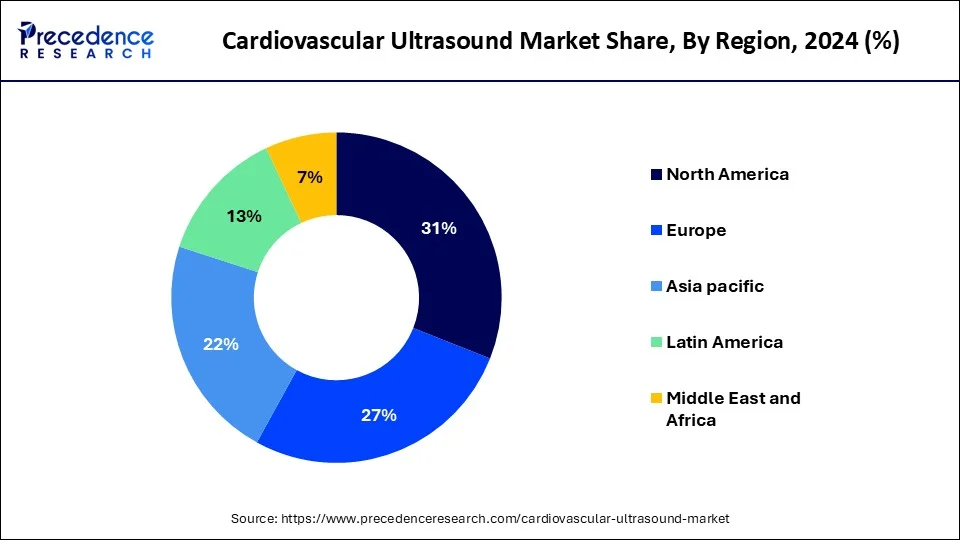
North America held the biggest income portion of over 31% in 2025 attributable to the better framework in medical care offices and the high reception of CVUS in preventive medication.
In the U.S., the installments for Medicare are settled on different elements including relative worth units, transformation factors, and geographic practice cost records. The Medicare accompanies new guidelines, which choose the repayment strategy. The steady repayment strategy and administrative structure are supposed to assist with impelling the market development around here over the conjecture period.
North America is expected to lead the market attributable to the high reception of ultrasound methodology overall diagnostics and the rising predominance of way of life related ongoing infections. The popularity for mechanically progressed clinical gadgets is supposed to impel market development in the area.
As per the American Heart Association Research Report 2018, Heart sickness represents 1 of every 7 passings in the United States. Coronary Heart Disease is the main source (43.8%) of passings owing to cardiovascular sickness in the United States, trailed by stroke (16.8%), cardiovascular breakdown (9.0%), hypertension (9.4%), illnesses of the veins (3.1%), and other cardiovascular illnesses (17.9%). This situation prompts a more popularity for cardiovascular ultrasound frameworks for better determination, which will drive the market in the United States.
Besides, strong mindfulness drives for sickness mindfulness are projected to help the market for cardiovascular gadgets in North America. For example, in 2020, Mexico joined the HEARTS drive to reinforce essential medical services for CVD. Advanced by the Pan American Health Organization/World Health Organization (PAHO/WHO), the drive plans to work on the anticipation and control of hypertension at the essential consideration level.
What is the U.S. Cardiovascular Ultrasound Market Size?
The expansion of point-of-care ultrasound, integration of AI and automation, and a massive shift towards portable devices drive the U.S. market. The American Society of Echocardiography introduced revolutionary cardiovascular ultrasound innovations at the Oregon Convention Center in Portland.
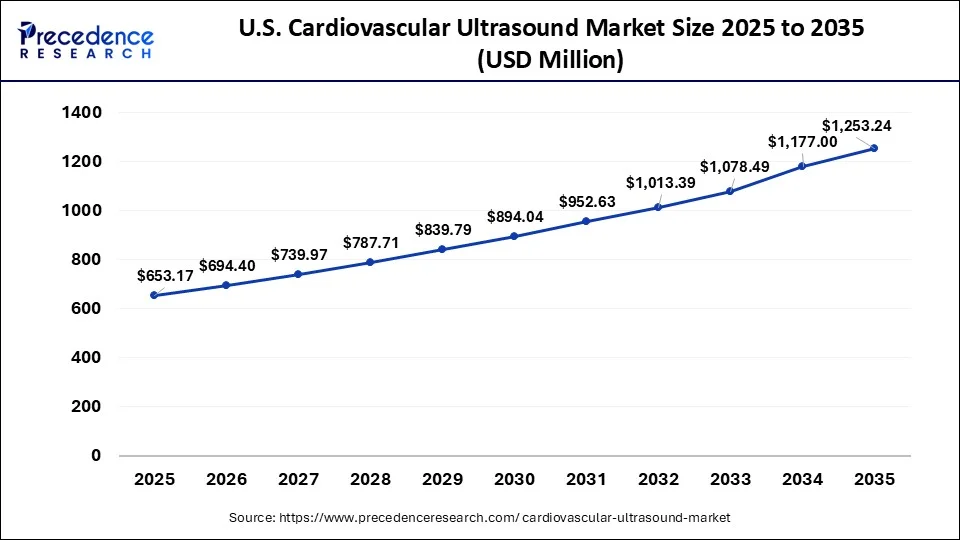
The U.S. cardiovascular ultrasound market size was evaluated at USD 694.40 million in 2026 and is expected to be worth around USD 1,253.24 million by 2035, rising at a CAGR of 6.73% from 2026 to 2035.
Asia Pacific's Leading Growth in the Cardiovascular Ultrasound Market
Notwithstanding, Asia Pacific is supposed to be the quickest developing provincial market at a CAGR of over 7% over the estimated period. This development can be credited to the rising commonness of ongoing circumstances in the district.
Asia Pacific is expected to grow at the fastest rate in the market as healthcare facilities are being developed rapidly and the number of cardiovascular diseases keeps on rising. The government is allotting a lot of resources to research and development of diagnostic imaging technologies. Increased healthcare spending facilitates equipment modernization. Early diagnosis is promoted by the increase in awareness of preventive healthcare.
China Market Trends
China's cardiovascular ultrasound market is anticipated to grow significantly, driven by the rising investments made in healthcare, the considerable patient base in the region, and rising awareness around the subject. The prevalence of cardiovascular diseases is increasing, consequently driving up the diagnostic need. Regulatory changes in the healthcare sector are promoting the use of advanced imaging technologies. The advent of AI is improving the diagnostic process.
India Cardiovascular Ultrasound Market Trends
The rising burden of diseases, demand for non-invasive diagnostics, and government initiatives like Ayushman Bharat and Production Linked Incentive (PLI) are accelerating the growth of the Indian market. Additionally, rising healthcare expenditure, expanding insurance coverage, and training programs for sonographers are further supporting market growth in India.
Europe's Notable Reach in the Cardiovascular Ultrasound Market
Europe is expected to grow at a notable rate in the market, owing to government policies, healthcare spending, and integration of AI into ultrasound devices to enhance diagnostic precision, automate image analysis, and reduce dependency on operators. There's a noticeable shift toward portable and point-of-care devices in ambulatory and outpatient settings, reflecting broader trends in decentralized healthcare delivery.
The German market is advancing due to favorable reimbursement policies for advanced therapies, such as ultrasound, and the rising demand for portable devices used in outpatient clinics and emergency services.
Key Trends in the Cardiovascular Ultrasound Market in Latin America
Latin America is expected to witness significant growth in the market owing to the rising investments in the healthcare industry and growing access to cardiac diagnostics services. Early detection of disease in cardiovascular health is aided by increased awareness of cardiovascular health. Modernization of the imaging infrastructure is underway in public and private healthcare providers. The government provides health care programs to promote the use of diagnostic technology.
Brazil Market Trends
Brazil's cardiovascular ultrasound market is anticipated to grow significantly, driven by enhanced healthcare facilities and escalated turmoil of cardiovascular diseases in the country. Investment in diagnostic imaging being bolstered by public healthcare. Private hospitals persist in being upgraded with advanced ultrasound systems. Demand for non-invasive diagnostics is a bulwark to market growth. Expansion of med school programs leads to better skills in the clinical arena.
Growth of the Middle East and Africa in the Cardiovascular Ultrasound Market
The Middle East and Africa region is expected to witness significant growth in the market with healthcare modernization. Hospital infrastructure is being enhanced by investments made by the government. The prevalence of cardiovascular disease is growing, which is driving up the requirements for imaging. International producers are adding more business in the region. Portable ultrasound devices are also contributing to improved accessibility in remote areas.
Saudi Arabia Market Trends
Saudi Arabia market is anticipated to grow significantly due to Vision 2030's healthcare transformation initiatives. The affordability of technologies such as CT, MRI, and X-rays is gaining pace through government investment. Cardiovascular healthcare opportunities continue to grow at hospitals. Stimulating demand from the rising prevalence of lifestyle-related heart disease. The market is developing with a strong contribution from private healthcare investments.
Cardiovascular Ultrasound Market-Value Chain Analysis
- R&D: This stage includes AI-enhanced diagnostics and automation adopted by leading companies like Siemens Healthineers, Philips, and GE HealthCare.
Key Players: GE HealthCare, Philips, Siemens Healthineers, Canon Medical Systems, Mindray, Samsung Medison, Fujifilm Healthcare, Boston Scientific, Abbott Laboratories, Butterfly Network, Clarius. - Distribution to Hospitals & Pharmacies: In this stage, distribution centers deliver high-end cart-based systems for 3D/4D imaging and complex surgeries for patient care.
Key Players: GE HealthCare, Philips Healthcare, Siemens Healthineers, Canon Medical Systems, Mindray. - Patient Support & Services: This stage involves AI-guided diagnostics, cloud-based patient management, remote technical and clinical support, and decentralized care delivery.
Key Players: Philips Healthcare, GE Healthcare, Siemens Healthineers, Canon Medical Systems, Samsung Medison, Mindray Medical, Hitachi Healthcare, Clarius, Butterfly Network.
Competitive Landscape
The cardiovascular ultrasound market includes medical imaging equipment manufacturers and healthcare technology companies that develop cardiovascular diagnostic ultrasound systems and cardiovascular-related imaging services. The global players like GE HealthCare, Koninklijke Philips N.V., Siemens Healthineers AG, Hitachi Medical Corporation, and Samsung Medison Co., Ltd. are some of the prominent companies commanding a strong presence in the market.
Furthermore, market actors are stepping out of their geographical borders as they begin to partner with hospitals, research institutions, and healthcare providers for enhancing cardiovascular diagnostics. Enhanced clinical efficiency and patient outcomes are of focus as businesses prioritize product innovation, regulatory approval, cloud-based imaging platforms, and workflow automation. Consideration of equipment costs, regulatory standards, reimbursement limitations, and the potential competition from new advances in diagnostic imaging are significant challenges.
Cardiovascular Ultrasound Market Companies
- GE Healthcare
- Koninklijke Philips
- Siemens Healthineers AG
- Hitachi Medical Corp.
- Samsung Medison Co. Ltd.
- Shenzhen Mindray Bio-Medical Electronics Co., Ltd. (Mindray)
- Chison Wuxi Xiangsheng Medical Technology Co., Ltd.
- Fujifilm Sonosite, Inc.
Recent Developments
- In September 2025, GE Healthcare launched a new ultrasound system for cardiovascular imaging, which deploys advanced probe technology and the cSound Pioneer architecture to provide high-resolution cardiac imaging. This system is integrated with AI to enhance the speed and quality of imaging.
(Source: https://www.medicaldevice-network.com) - In October 2025, Siemens Healthineers AG launched an all-in-one ultrasound system, which is specifically designed for structural heart, diagnostics, electrophysiology, and pediatric applications by addressing the need for improved cardiac care. This system is powered by over 2 billion medical images, which offers best-in-class speed and accuracy with more than 5,600 automated AI measurements and one-touch usability.
(Source:https://www.siemens-healthineers.com) - In October 2020, GE Healthcare got the FDA leeway for Vivid Ultra Edition, an AI-controlled intended to abbreviate symptomatic test time and further develop estimation consistency.
- In August 2020, Philips sent off its new Affiniti CVx and 7.0 for EPIQ CVx cardiovascular ultrasound arrangements, which incorporate upgrades to improve trust in determination and systems and further develop the client experience.
- In October 2020, Royal Philips sent off Ultrasound 3300 in India. The item can be utilized for a large number of utilizations including OB/GYN, cardiovascular imaging, and general imaging.
- In 2015, GE Healthcare marked a notice of understanding with the Oregon Health and Science University (U.S.) to embrace cooperative R&D concentrates on in the field of cardiovascular imaging and treatment as well as in large information research
- In 2015, GE Healthcare sent off another 4D heart ultrasound programming — cSound — for three new ultrasound frameworks, to be specific, VividS70, VividE90, and VividE95 in the U.S. what's more, a few nations in Europe, Asia, and Latin America.
Segments Covered in the Report
By Type
- Transthoracic Echocardiography
- Transoesophageal Echocardiography
- Foetal Echocardiography
- Others
By Technology
- 2D
- 3D/4D
- Doppler
- Others
By Display
- Black & White (B/W)
- Color
By End-use
- Hospital
- Diagnostic Centers
- Ambulatory Care Centers
- Others
By Geography
- North America
- U.S.
- Canada
- Europe
- U.K.
- Germany
- France
- Asia-Pacific
- China
- India
- Japan
- South Korea
- Malaysia
- Philippines
- Latin America
- Brazil
- Rest of Latin America
- Middle East & Africa (MEA)
For inquiries regarding discounts, bulk purchases, or customization requests, please contact us at sales@precedenceresearch.com
Frequently Asked Questions





Ask For Sample
No cookie-cutter, only authentic analysis – take the 1st step to become a Precedence Research client
 Get a Sample
.webp)



 sales@precedenceresearch.com
 Schedule a Meeting
