



Cellulose Fiber Market Size, Key Companies, Trends, Segments, and Forecast 2026-2035
Cellulose Fiber Market (By Product: Natural, Synthetic; By Application: Textile, Hygiene, Industrial, Others; By Geography: North America, Asia Pacific, Europe, Latin America, Middle East and Africa) - Global Industry Analysis, Size, Trends, Leading Companies, Regional Outlook, and Forecast 2026 to 2035
Source: https://www.precedenceresearch.com/cellulose-fiber-market
 Get a Sample
 Table Of Content


What is the Cellulose Fiber Market Size?
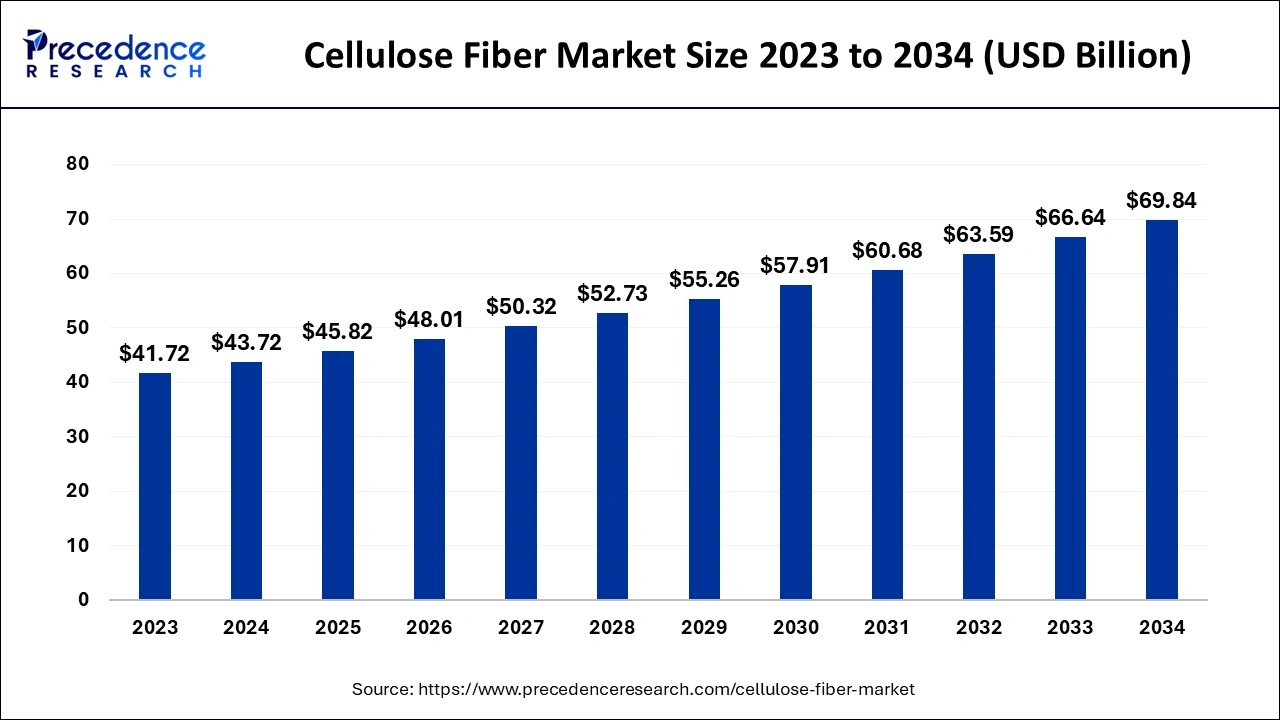
The global cellulose fiber market size was estimated at USD 48.01 billion in 2026 and is projected to reach approximately USD 72.94 billion by 2035, representing a CAGR of 4.76% from 2026 to 2035. Increasing environmental concerns across industries is the key factor driving the growth of the market. Also, the rising demand for sustainably sourced material, along with the technological advancements in cellulose fiber production, can fuel market growth shortly.
Cellulose Fiber Market Key Takeaways
- The global cellulose fiber market was valued at USD 48.01 billion in 2026.
- It is projected to reach USD 72.84 billion by 2035.
- The cellulose fiber market is expected to grow at a CAGR of 4.76% from 2026 to 2035.
- By product, the synthetic products segment has dominated the market with a revenue share of 62.8% in 2026.
- By product, the natural products segment is anticipated to grow at a significant rate over the projected period.
- By application, in 2026, the textile segment led the cellulose fiber market by holding the largest market share of 47%.
- By application, the industrial segment is expected to witness notable growth during the projected period.
Market Overview
Cellulose fibers are derived from cellulose, a structural component of plant cell walls. They include natural fibers, such as cotton, and manufactured regenerated fibers, such as viscose, modal, and lyocell, produced from cellulose-rich raw materials. Cellulose for fiber production can be sourced from wood pulp and other plant-based materials. Natural cellulose fibers include cotton and flax, while regenerated cellulose fibers include viscose, modal, and lyocell. This fiber is known for its renewability, biodegradability, and environmental friendliness. Cellulose fiber can be used in textiles to design technical textiles that have a special purpose and involve physical properties. Future environmental issues have shifted toward more eco-friendly practices over the technological textile supply chain.
How is AI Impacting the Cellulose Fiber Market?
Artificial Intelligence (AI) is increasingly revolutionizing the market by improving production quality and efficiency. AI can support cellulose fiber manufacturing through process monitoring, predictive maintenance, quality inspection, demand forecasting, and supply-chain optimization. Actual adoption and cost benefits vary by manufacturer. Furthermore, the advancement in AI technology enables consumers to fulfill rising consumer demand and adapt to changing industry standards.
Cellulose Fiber Market Growth Factors
- Increasing demand for technical textiles in various industries is expected to boost the cellulose fiber market growth soon.
- The rapidly expanding paper and construction sectors can propel the growth of the market further.
- The growing global need for versatile, biodegradable, and cost-effective fibers will likely help in the market expansion over the forecast period.
Market Outlook
- Industry Growth Overview: The cellulose fiber market is expanding due to rising demand for eco-friendly textiles, nonwoven fabrics, and sustainable packaging solutions across multiple industries. Growing consumer preference for natural, biodegradable, and renewable materials is fueling innovation and adoption globally.
- Sustainability Trends: The sustainability trend is reshaping the market by driving demand for biodegradable, renewable, and low-carbon footprint fibers, pushing companies to innovate and adopt circular economy principles. This trend is encouraging manufacturers to evaluate natural and regenerated cellulose fibers alongside conventional synthetic fibers, considering renewable feedstocks, manufacturing impacts, durability, and end-of-life performance.
- Global Expansion: The market is growing worldwide due to increasing awareness of sustainable materials, rising textile and apparel production, and demand for biodegradable alternatives to synthetic fibers. Emerging regions present significant opportunities as governments and manufacturers invest in green textiles, bio-based composites, and renewable fiber production to meet environmental regulations and consumer demand.
- Major Investors: Major investors in the market include large textile and chemical manufacturers, private equity firms, and sustainable materials startups who fund R&D, production scale-up, and global distribution. Their investments enable the development of high-quality, eco-friendly fibers, enhance supply chain capabilities, and accelerate adoption in textile, packaging, and industrial applications.
Market Dynamics
Driver
Rising Demand in Textile Industry
The textile industry is a major driver of cellulose fibers, particularly in manufacturing fabrics like lyocell, rayon, and modal. The fashion industry's requirement for breathable, comfortable, and sustainable textiles has raised the utilization of cellulose fibers. Fashion brands use regenerated cellulose fibers, including TENCEL™ lyocell and modal fibers, in apparel and other textile products. These fibers are convenient for performance and activewear textiles due to their breathability, softness, and moisture absorption properties.
Restraint
Fluctuations in raw material prices
The fluctuating raw material prices have a significant negative impact on the growth of the cellulose fibers market. These fluctuations can increase production costs, create pricing uncertainty, and constrain market expansion. Moreover, changes in forestry methods, growing demand for wood pulp, and climate-related issues can negatively influence the overall supply chain of cellulose fiber.
Opportunity
Increasing awareness of biodegradability
The rising global awareness of environmental concerns, coupled with the increasing issues about the influence of non-biodegradable materials, creates substantial market opportunities. Furthermore, consumers increasingly seek products with greater biodegradability and lower environmental footprints, supporting interest in cellulose-based materials. Also, regulatory standards promoting eco-friendly practices encourage market players to utilize materials like cellulose fibers.
Segment Insights
Product Insights
The synthetic products segment dominated the cellulose fiber market in 2026. The dominance of the segment can be attributed to the scalability, cost-effectiveness, and superior performance provided by artificial fibers. The performance characteristics of manufactured fibers vary by polymer and production process. Regenerated cellulose fibers typically offer different moisture-management, strength, and comfort properties from conventional synthetic fibers. Additionally, the manufacturing of synthetic fibers depends less on environmental conditions and location than on natural fibers.
The natural products segment is anticipated to grow at a significant rate in the cellulose fiber market over the projected period. The growth of the segment can be driven by the rising focus on eco-friendly and sustainable practices by end users. Natural fibers are soft to the touch which makes them suited for textiles. However, they promote renewable methods in different industries like construction and fashion. Also, the breathability, biodegradability, and sustainability of these fibers are of high importance.
Application Insights
In 2026, the textile segment led the cellulose fiber market by holding the largest market share. The dominance of the segment can be credited to the wide consumer base offered by the textile industry to cellulose fibers, using them as a major raw material in the manufacturing of an extensive range of products, like home furnishings, apparel, and industrial textiles. Furthermore, these fibers are in demand because of their eco-friendly properties and natural feel, which contribute to comfortable and sustainable textile products ranging from high-end fashion to casual wear.
The industrial segment is expected to witness notable growth in the cellulose fiber market during the projected period. The growth of the segment can be credited to the development of cellulose fiber technology along with the sector's increasing demand for cellulose fibers. Cellulose fibers have unique physical properties, including absorbency, high strength, and biodegradability, which makes them important in applications ranging from filtration and paper production to construction and insulation.
Regional Insights
What Made Asia Pacific the Dominant Region in the Market
Asia Pacific dominated the cellulose fiber market in 2026. The region's dominance is attributed to the well-established textile sectors, which are major consumers of cellulose fibers. Furthermore, Asia Pacific contains abundant resources that are crucial inputs for cellulose fiber manufacturing. In Asia Pacific, China leads the market by holding the largest market share. This is due to increasing demand from neighboring economies like India and Bangladesh.
China Cellulose Fiber Market Trends
China is a major contributor to the market in Asia Pacific due to its large-scale textile and apparel manufacturing industry, which heavily relies on both natural and regenerated cellulose fibers. The country benefits from well-established supply chains, advanced production technologies, and abundant raw material availability, enabling high-volume fiber production. Additionally, growing government support for sustainable and eco-friendly textile initiatives is boosting the adoption of cellulose fibers.
What Makes North America the Second-Largest Market?
North America was the second-largest regional market in 2026, according to the report's estimates. The growth of the region can be linked to the increasing demand for fashion apparel created from biodegradable fibers. The region also has wide forestlands that offer a sustainable and robust supply of wood pulp, which is the key raw material for fiber production. However, increasing the domestic market for these products, especially in sectors like textiles, hygiene, and construction, is fuelling the cellulose fiber market growth in the region.
U.S. Cellulose Fiber Market Trends
The U.S. is a major contributor to the North American cellulose fiber market due to its well-established textile, nonwoven, and packaging industries that demand high-quality natural and regenerated fibers. Advanced manufacturing technologies, extensive R&D, and strong investment in sustainable materials drive innovation and production efficiency in the country. Additionally, increasing consumer preference for eco-friendly products and regulatory support for sustainable textiles further bolsters the adoption of cellulose fibers in North America.
What Potentiates the Growth of the Cellulose Fiber Market in Europe?
The market in Europe is driven by rising demand for sustainable and eco-friendly textiles, nonwoven fabrics, and packaging materials. Strict environmental regulations, growing consumer awareness of biodegradable alternatives, and investments in innovative fiber technologies are further accelerating market adoption. Additionally, European manufacturers are focusing on circular economy practices, boosting the production and use of cellulose fibers across multiple industrial sectors.
Germany Cellulose Fiber Market Trends
Germany is an important market for cellulose-based materials, supported by its textile, industrial, and manufacturing sectors. There is a high adoption of cellulose fiber due to the country's commitment to sustainability and its excellent manufacturing capabilities. The country benefits from advanced production technologies, robust R&D capabilities, and government support for eco-friendly and circular economy initiatives. Additionally, Germany's focus on innovation and adoption of biodegradable materials drives the growth and application of cellulose fibers across textiles, nonwovens, and packaging industries.
Value Chain Analysis
- Raw Material Procurement
By strategically acquiring plant-based raw materials, companies are able to produce cellulose fiber that is reliable and sustainable.
Key Players: International Paper and Stora Enso - Chemical Synthesis and Processing
In a series of chemical reactions, controlled processes occur where cellulose materials are transformed into usable fibers.
Key players: BASF SE and DuPont - Compound Formulation and Blending
Cellulose components are mixed with additives or polymers to get the desired performance characteristics.
Key Players: FKuR, BASF - Quality Testing and Certification
The cellulose fibers finally obtained are inspected to verify their compliance with performance, safety, and regulatory standards.
Key Players: Global Organic Textile Standard (GOTS) and the International Organization for Standardization (ISO) - Distribution & Supply Chain
Finished cellulose fibers are distributed to apparel brands, textile mills, and industrial clients through global logistics and wholesale networks.
Key Players: Arvind Limited, Reliance Industries, Indo Rama Synthetics
Supply Chain Analysis - Cellulose Fiber Market
- Raw Material Procurement
Prioritize sustainable, high-purity plant-based sources, especially dissolving wood pulp, cotton linters, bamboo, and agricultural waste.
Key Players: Sappi Limited, Bracell, Lenzing AG - Processing and Preservation
Raw cellulose becomes usable fiber through chemical extraction, dissolution, and regeneration of natural polymers.
Key Players: Lenzing AG, ANDRITZ GROUP, Sateri - Quality Testing and Certification
Laboratory testing must follow international standards to ensure compliance throughout global supply chains and markets.
Key Players: SGS S.A., Intertek Group plc, TÜV SÜD - Packaging and Branding
To support MMCFs' eco-friendly image, manufacturers are replacing plastic wraps with circular packaging materials.
Key Players: Mondi Group, Futamura Chemical Co., Smurfit Westrock - Logistics and Storage
Warehousing facilities need strict environmental controls to prevent degradation, weakening, and inventory weight fluctuations.
Key Players: Kuehne+Nagel, A.P. Moller - Maersk, DHL Global Forwarding - Distribution to Retail
It includes direct-to-manufacturer sales, regional distributor networks, and consignment stocking as key channels.
Key Players: Brenntag SE, Barentz International, Univar Solutions - Retail Sales and Marketing
Translating industrial B2B material metrics into compelling, high-value benefits that resonate with consumers.
Key Players: Lenzing AG, Birla Cellulose, Eastman Chemical Company - Waste Management and Recycling
Driven by strict global regulations, it closes the loop for textile, paper, and industrial biomass waste.
Key Players: Lenzing AG, Birla Cellulose, Circulose
Cellulose Fiber Market Companies
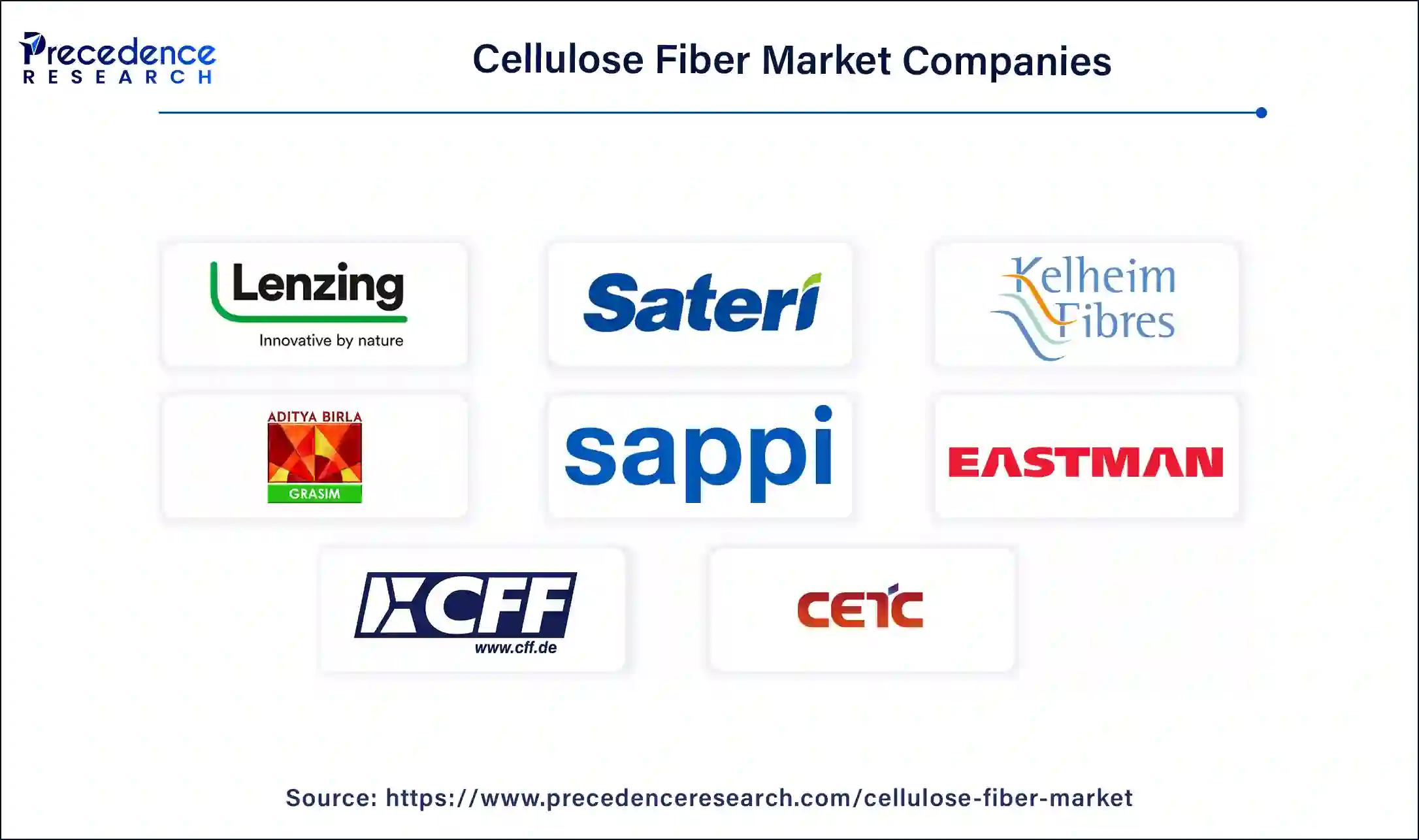
- LENZING AG (Austria): Produces high-quality, sustainable cellulose fibers such as TENCEL lyocell and modal fibers for textiles, nonwovens, and technical applications.
- Bambro Textile Co. Ltd (China): Manufactures viscose and blended cellulose fibers for apparel, home textiles, and industrial fabrics.
- Sateri (China): Specializes in large-scale production of viscose staple fibers for textiles, nonwovens, and hygiene products with an emphasis on sustainable sourcing.
- Shandong Helon Textile Sci. & Tech. Co. Ltd (China): Offers cellulose fibers and yarns tailored for textile manufacturing, focusing on quality, strength, and eco-friendly production.
- Kelheim Fibers GmbH (Germany): Supplies specialty regenerated cellulose fibers for hygiene, medical, and technical applications with high purity and customizable properties.
Other Major Key players
- Grasim (India)
- Fulida Group Holding Co. Ltd (China)
- Sappi (South Africa)
- Tangshan Sanyou Group (China)
- Eastman Chemical Company (US)
- CFF GmbH & Co. KG (Germany)
- China Hi-Tech Group Corporation (China).
Recent Developments
- In March 2026, Birla Cellulose unveiled its latest sustainable innovation, Livaeco™ Lyocell, during Confluence 2026, the company's premier industry event in Coimbatore. This launch gathered influential figures from the textile value chain, including spinners, fabric manufacturers, brands, and key industry stakeholders, to discuss innovations, sustainability initiatives, and forward-thinking solutions for the sector. (Source: https://www.indiantextilemagazine.in)
- In January 2026, American Industrial Partners (AIP) announced the successful acquisition of International Paper's Global Cellulose Fibers (GCF) business, which will now function as an independent entity. (Source: https://www.investing.com)
- In October 2025, Birla Cellulose launched Liva Reviva M, India's first next-generation circular fiber made from up to 50% mechanically recycled post-consumer textile waste, tackling the growing issue of global textile waste projected to rise by 45% in five years. (Source: apparelresources.com)
- In January 2025, Panasonic Holdings Corporation developed a molding material that is fully biodegradable in marine environments by incorporating high concentrations of plant-derived cellulose fibers into resins, resulting in excellent mechanical properties along with biodegradability.(Source: news.panasonic.com/)
Cellulose Fiber Market Segments
By Product
- Natural
- Synthetic
By Application
- Textile
- Hygiene
- Industrial
- Others
By Geography
- North America
- Asia Pacific
- Europe
- Latin America
- Middle East and Africa
For inquiries regarding discounts, bulk purchases, or customization requests, please contact us at sales@precedenceresearch.com
Frequently Asked Questions
Tags





Ask For Sample
No cookie-cutter, only authentic analysis – take the 1st step to become a Precedence Research client
 Get a Sample




 sales@precedenceresearch.com
 Schedule a Meeting
